

What Does Anago Meaning Tell You About Sourcing Eel for Sushi?
For food importers and restaurant chains, the terms 'anago' and 'unagi' can seem interchangeable on a menu. Both are types of eel used in Japanese cuisine, often grilled and sauced. But this similarity is deceptive. Understanding the true anago meaning—and how it differs from unagi—is critical for making the right sourcing decision, ensuring menu consistency, and managing costs. The wrong choice leads to mismatched flavor profiles and dissatisfied customers.
As a quality specialist with over a decade in seafood export compliance, I've seen firsthand how a simple misunderstanding between these two eels can cause significant supply chain issues. They come from different habitats, have distinct textures and fat content, and require completely different preparation methods. This guide breaks down the essential differences to help you source the correct product for your specific needs.
The Key Difference: How Habitat Shapes Anago vs. Unagi
The most fundamental distinction between anago and unagi is their environment. Anago is a saltwater eel, while unagi is a freshwater eel. This single factor dictates everything from their diet and fat content to their texture and ideal cooking method. For a buyer, this means you are not just choosing an "eel"; you are choosing a specific culinary profile.
Let's compare them directly:
| Feature | Anago (Saltwater Eel) | Unagi (Freshwater Eel) |
|---|---|---|
| Habitat | Saltwater (marine environments) | Freshwater (rivers, lakes) |
| Species | Conger eels, primarily Conger myriaster | Freshwater eels, primarily Anguilla japonica |
| Fat Content | Low. Leaner, more delicate meat. | High. Rich, fatty, and robust. |
| Texture | Extremely soft, fluffy, and light. Tends to fall apart easily. | Firm, meaty, and oily with a satisfying bite. |
| Flavor Profile | Subtle, sweet, and clean. Less "fishy" or earthy. | Rich, bold, and savory with a deeper umami flavor. |
| Common Preparation | Simmered (ni-anago) or deep-fried (tempura). Served with a light, sweet soy glaze (tsume). | Grilled over charcoal (kabayaki) with a thick, rich soy-based sauce (tare). |
| Typical Sourcing | Often wild-caught, leading to potential variability in size and supply. | Primarily farmed, allowing for high consistency in size, quality, and year-round availability. |
What this means for your business: If your menu features rich, grilled eel over rice (Unadon), you need unagi. Its high fat content allows it to withstand high-heat grilling without drying out, creating a crispy skin and succulent interior. Sourcing anago for this dish would result in a mushy, delicate product that falls apart on the grill. Conversely, anago's gentle texture makes it perfect for classic Edomae-style sushi, where it is lightly simmered and draped over rice.
Sourcing Unagi: Ensuring Consistency and Safety for Your Business
While anago has its place in traditional sushi, unagi offers significant advantages for large-scale foodservice and retail operations. The key benefits are consistency, traceability, and processing efficiency—all areas where a reliable supplier is non-negotiable.
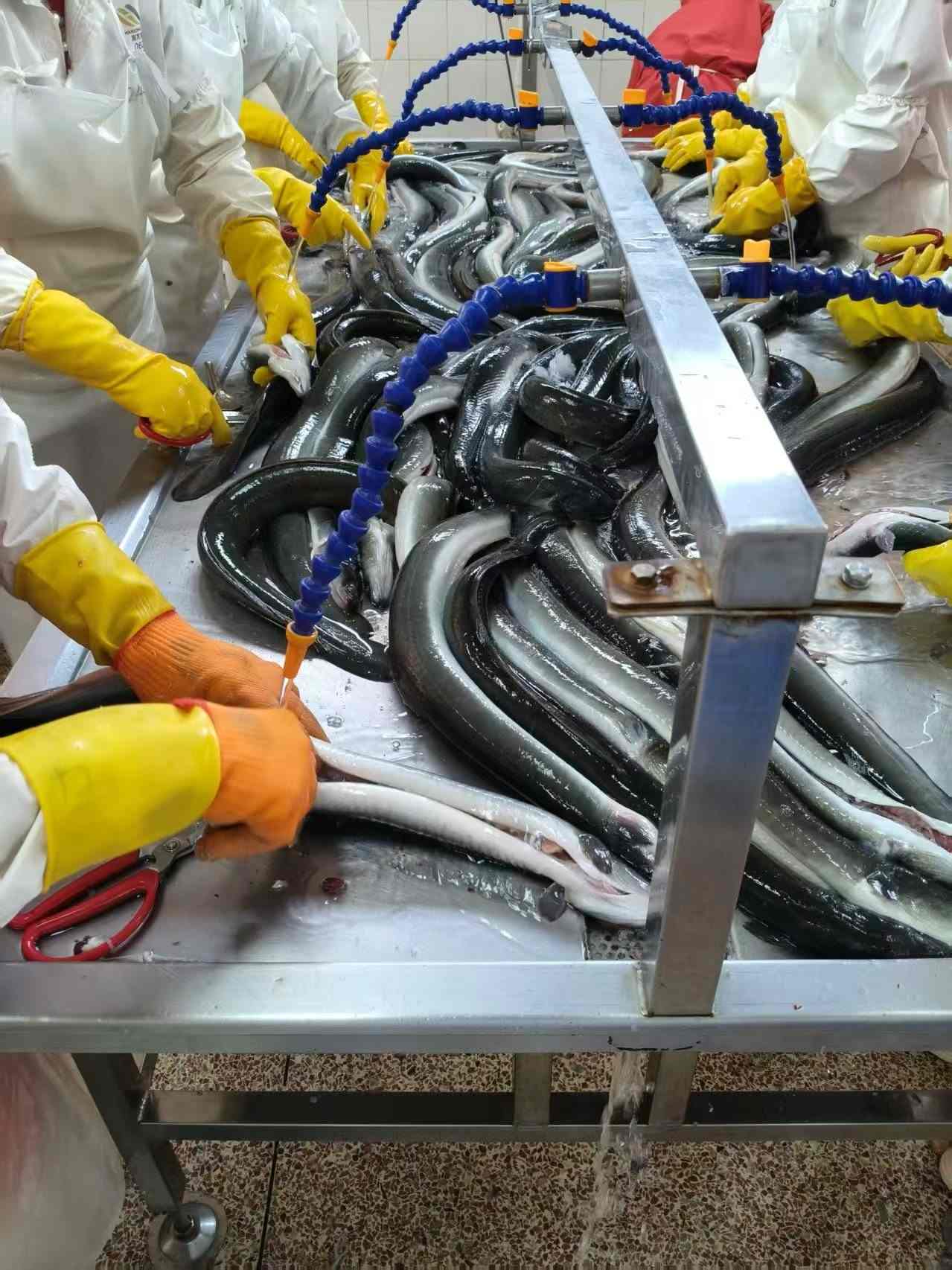
At Eelpro, we've built our entire operation around delivering export-grade unagi. Because unagi is farmed, we can exercise full-chain control. This starts at our approximately 20 customs-registered eel farming bases, which cover over 2,150 mu and supply more than 5,000 tons of raw materials annually. This scale ensures a stable, predictable supply chain, unlike the fluctuations common with wild-caught seafood.
This control continues in our processing facility. Our 4,000-ton annual production capacity is driven by two modern production lines. Here, we utilize patented technologies for low-fat roasting and deodorizing. Our signature process involves four precise layers of soy sauce applied at carefully controlled temperatures. This creates the perfect rich, savory glaze that defines high-quality unagi kabayaki.
For buyers, this level of control translates to several direct benefits:
- Food Safety Assurance: Our facility is ISO 22000:2018, HACCP, and HALAL certified. We maintain our own professional laboratory and use metal detectors at critical control points. This ensures our products meet the strict veterinary drug residue and microbiological standards of the EU, US, and Japan, protecting you from import risks.
- Operational Efficiency: Our products are designed for the foodservice supply chain. We provide boneless, deboned eel with standardized custom cutting (shredding, dicing, sushi slices). This ready-to-heat format significantly reduces back-of-house labor and food waste for your clients.
- Stable Logistics: Once processed, products are stored in our 1,000-ton cold storage facility, guaranteeing an unbroken cold chain from our door to yours.
Common Sourcing Mistakes and How to Avoid Them
Choosing between anago and unagi requires precision. A mistake on a purchase order can have a significant impact on your final product. Based on my experience guiding clients through import compliance, here are the most common errors I see and how to prevent them.
Buyer's Checklist: Avoiding Eel Sourcing Errors
-
Mistake 1: Using "Eel" as a Generic Term.
Never specify just "frozen eel" on an RFQ. You will likely receive offers for whichever is cheaper or more available, which may not fit your recipe.
Solution: Always specify the species or preparation style. Use "Frozen Roasted Freshwater Eel (Unagi Kabayaki)" for grilled applications or "Frozen Simmered Saltwater Eel (Ni-Anago)" for delicate sushi. -
Mistake 2: Mismatching the Sauce and the Eel.
Anago's delicate flavor is overpowered by the thick, dark tare used for unagi. Unagi's richness, in turn, needs that strong sauce to balance its fat.
Solution: Ensure your sauce choice matches your eel. If you are sourcing unagi, you need a quality kabayaki sauce, also known as eel sauce (unagi tare). A good sauce should complement, not mask, the eel's flavor. -
Mistake 3: Neglecting Traceability and Certifications.
This is especially critical for farmed unagi. Sourcing from uncertified farms or processors exposes you to risks of banned veterinary drug residues, leading to rejected shipments and financial loss.
Solution: Demand documentation. Ask for copies of ISO 22000, HACCP, and any relevant export registrations. A reliable partner will have a complete traceability system from the farm to the final package. For example, our system tracks each batch from our certified farming bases through every processing step. -
Mistake 4: Ignoring Product Form and Labor Costs.
Buying whole, unprepared eel might seem cheaper upfront, but the labor costs for deboning, gutting, and cutting in a commercial kitchen are high.
Solution: Calculate the "landed cost" per usable portion. Pre-cut, boneless products like our sushi slices or diced unagi often provide a lower total cost and greater consistency for restaurant chains and food manufacturers.
Ultimately, while anago holds a respected place in Japanese culinary tradition, unagi offers the consistency, safety, and scalability required by most international food businesses. By understanding the core differences and partnering with a certified, vertically integrated supplier, you can confidently add this popular item to your product line.
For a consistent, fully traceable supply of high-quality unagi kabayaki that meets global safety standards, contact our team to request a spec sheet or discuss your sourcing needs.