

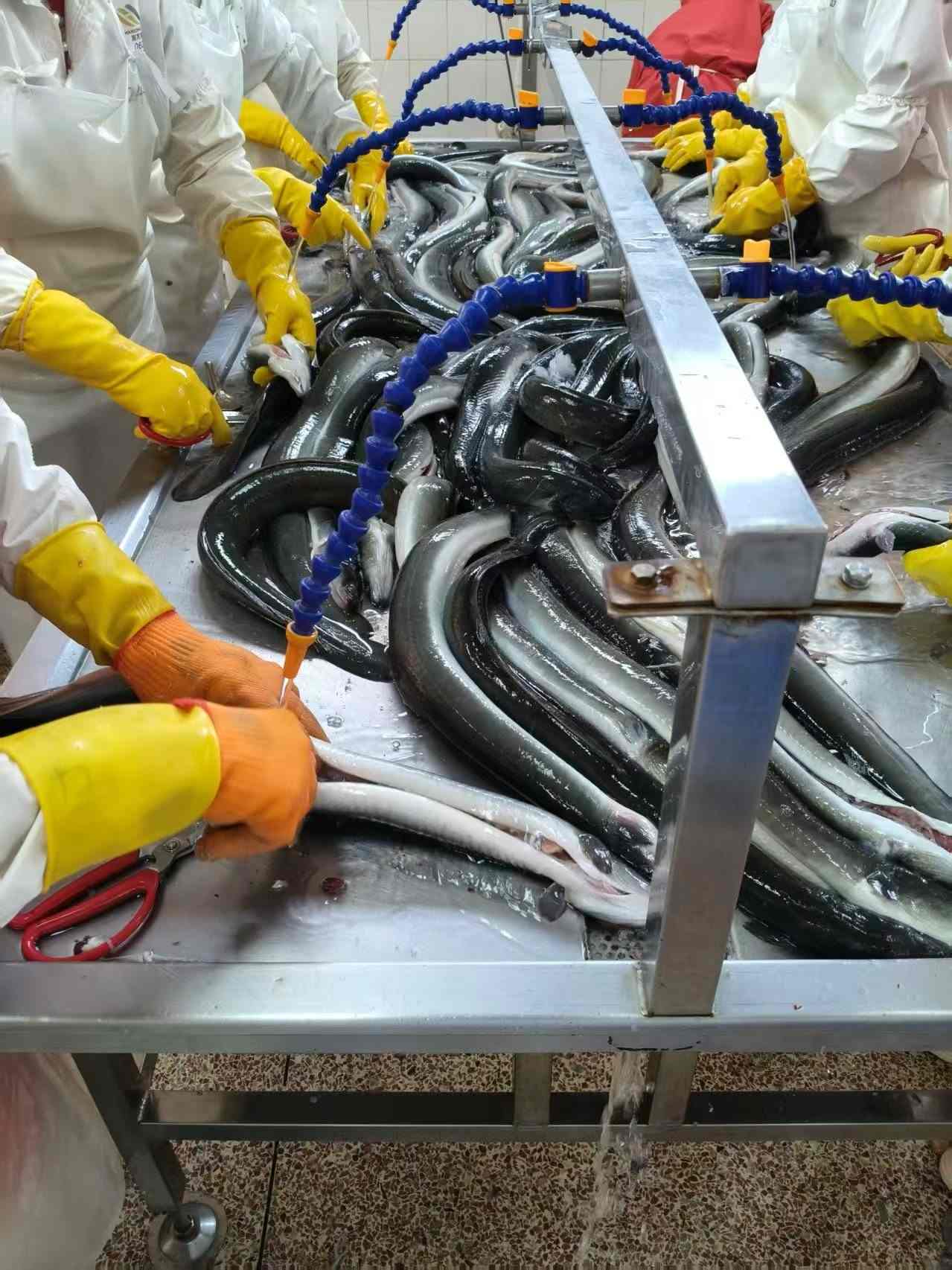
Eel Nutrition by Fat Type Explains Why Not All Eel Fat Is Equal
Ask ten buyers what "healthy eel" means and you'll get ten different answers. Some think total fat grams tell the whole story. They don't. Eel nutrition depends less on how much fat sits in a 100g portion and more on which fatty acid family makes up that fat. A serving of eel can carry roughly 18g of fat per 100g — but that single number hides three very different fat types, each behaving differently in the freezer, on the grill, and on a nutrition label. Get this wrong and you'll misprice a menu item or send an importer a spec sheet that fails inspection.
This matters more for eel than for most seafood because eel is genuinely fat-rich compared to lean whitefish. That fat is also the reason kabayaki eel tastes rich after roasting with soy-based glaze — see how the process works in our kabayaki sauce breakdown. But taste aside, buyers sourcing for foodservice or retail need the actual fat-type numbers, not marketing language.
How Saturated, Monounsaturated, and Polyunsaturated Fat Break Down in Eel Per 100g
Using standard nutrient reference data for raw freshwater eel, here's how a typical 100g portion splits out:
| Fat type | Grams per 100g (raw) | Share of total fat |
|---|---|---|
| Total fat | ~18.8g | 100% |
| Saturated fat | ~3.7g | ~20% |
| Monounsaturated fat | ~11.2g | ~60% |
| Polyunsaturated fat | ~2.8g | ~15% |
These figures shift after roasting, since the process renders out some surface fat while the glaze adds a thin sugar-and-soy coating. But the ratio between fat types stays roughly consistent — and that ratio is what buyers should actually be reading.
Here's what each fat type affects in practice, and what happens if a buyer or menu planner ignores it:
- Saturated fat (~3.7g) — affects shelf stability and mouthfeel. Get this wrong by assuming it's negligible, and you'll misjudge how the product firms up under refrigeration versus how it behaves frozen. It's also the number regulators in the US and EU check first on nutrition labels for "low-fat" or "reduced-fat" claims.
- Monounsaturated fat (~11.2g) — the dominant fraction in eel, similar in proportion to olive oil's fat profile. This is why monounsaturated fat gives eel its silky texture rather than a waxy one. Miscalculate this and a "light" positioning on a menu can backfire — eel is not a low-fat protein, even if it's not saturated-heavy.
- Polyunsaturated fat (~2.8g) — includes omega-3 fatty acids, the fraction most health-conscious buyers actually care about. If this number is confused with total fat, buyers overstate the omega-3 claim on packaging, which is a compliance risk in EU and US labeling reviews.
The practical takeaway: don't quote "18g of fat" on a spec sheet and stop there. A nutritionist, chef, or import compliance officer will ask for the breakdown, and having it ready avoids a second round of paperwork.
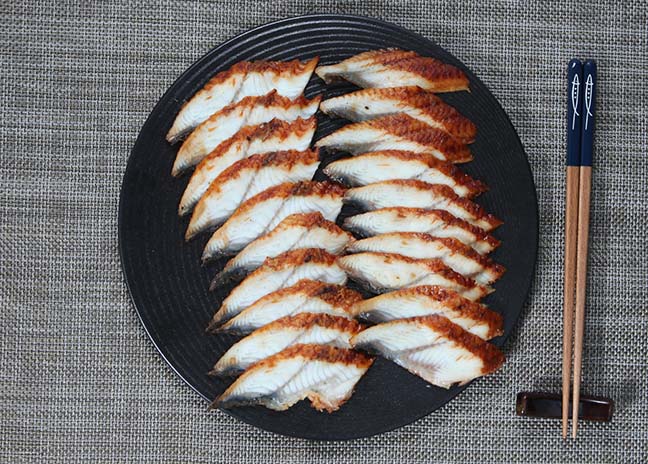
What This Fat Profile Means for Menu Planning and Cold-Chain Storage
Once you understand this side of eel nutrition, sourcing decisions get easier. A high monounsaturated share means the fat is more prone to oxidation at inconsistent freezer temperatures than a fully saturated fat would be. That's a storage issue, not just a nutrition issue.
This is one reason cold-chain consistency matters more for eel than for some other frozen seafood. A facility running stable frozen storage — for reference, ours holds 1,000 tons of finished product in dedicated cold storage — keeps the monounsaturated fraction from breaking down into off-flavors before the product reaches a kitchen.
Roasting technique also interacts with fat type. Our production uses a patented low-fat roasting and deodorizing process paired with a 4-layer soy sauce coating, which reduces surface fat oxidation during the roasting stage rather than masking it afterward with heavier glaze. For buyers comparing suppliers, ask specifically how the roasting process manages fat rendering — not just what the finished fat percentage is.
Scenario: A US importer sourcing for a sushi-focused chain needs consistent fat texture across batches, since customers notice inconsistency in mouthfeel more than they notice a 1-2g fat swing. In that case, sourcing from a single certified production run with documented roasting parameters matters more than chasing the lowest fat number on paper. A wholesale buyer supplying grocery retail, on the other hand, may prioritize the omega-3 (polyunsaturated) figure for label claims — a different priority from the same raw fat data.
Common Mistakes When Comparing Eel Nutrition Across Suppliers
When eel nutrition sheets from different suppliers land on the same desk, a few recurring errors show up:
- Comparing raw-fish data to roasted kabayaki data as if they're interchangeable — roasting changes moisture and fat retention, so the per-100g numbers won't match.
- Treating "total fat" as a proxy for "unhealthy fat" — ignoring that roughly 60% of eel's fat is monounsaturated, not saturated.
- Assuming all cuts have identical fat content — belly sections carry noticeably more fat than tail cuts, which matters for portion costing on skewers versus sushi slices.
- Skipping verification of the testing method — lab methodology (wet weight vs. dry weight basis) changes the reported numbers significantly, and suppliers don't always disclose which basis they used.
- Overlooking sauce contribution — kabayaki glaze and eel sauce add sugar and sodium that show up on the nutrition label separately from the fish's own fat profile.
Any one of these mix-ups can lead to a mislabeled product or an awkward correction after goods have shipped. It's worth requesting the raw lab report, not just a summary sheet, when the order size justifies it.
A Buyer's Checklist for Sourcing Eel by Fat and Cut Specification
Before finalizing a purchase order or menu spec tied to eel nutrition figures, run through this sequence:
- Confirm the basis — ask whether fat data is reported raw or post-roast, and whether it's per 100g edible portion or whole fish.
- Match the cut to the use case — skewers, cut pieces, or sushi slices carry different fat ratios; request cut-specific data if the application is precision-driven (e.g., sushi bars).
- Check certification scope — verify the supplier's laboratory testing covers fat breakdown, not just microbiological indicators.
- Request traceability — for eel specifically, farm-level traceability affects fat consistency since diet and farming duration change fat deposition. Suppliers with customs-registered farming bases and full-chain tracking can usually provide batch-level data.
- Ask about roasting method — a 4-layer soy sauce coating process with temperature control produces more consistent fat rendering than a single-pass glaze.
- Cross-check against your market's labeling rules — Japan, the US, and EU each have different thresholds for what counts as a "reduced-fat" or "source of omega-3" claim.
This checklist takes maybe 20 minutes per supplier to run through, but it prevents a much longer conversation after a shipment arrives with numbers that don't match the label.

Where Eel Fits Among Common Seafood Proteins
For context, buyers often ask how eel nutrition compares to salmon or mackerel on the same shelf. Eel runs higher in total fat than most whitefish and closer to fatty fish like mackerel, but its fat leans more heavily monounsaturated than salmon's, which carries a larger polyunsaturated share. Neither is "better" outright — it depends on whether a menu is built around omega-3 messaging or around texture and richness, which is where eel tends to win on the plate.
If you're sourcing unagi kabayaki for a menu that leans on richness rather than a low-fat claim, the monounsaturated-heavy profile works in your favor. If the goal is a specific omega-3 percentage for packaging, ask for the polyunsaturated figure in writing before printing labels. Suppliers producing under ISO 22000:2018 and HACCP systems, with an in-house lab and metal detection at critical control points, should be able to provide this without delay.
Whichever direction a buyer takes, the underlying lesson stays the same: eel nutrition data is only useful when it's broken down by fat type, matched to the right cut, and tied to a documented process — not just quoted as one aggregate fat number.
Looking to compare fat-content specs across cuts or roasting formats? Request a sample nutrition data sheet and product spec from our team to check against your menu or label requirements.