


Checking Unagi Kabayaki Labels Before You Place an Order Saves You From Costly Returns
A container of unagi kabayaki arrives at your warehouse. The invoice says 500 kg. But once your receiving team unpacks it, the actual eel content is closer to 350 kg — the rest is ice glaze. That gap is exactly what buyers regret discovering after the purchase order is signed, not before. Reading the label correctly, before you commit to an RFQ, is what separates a stable supply chain from a chargeback dispute three weeks later.
This article breaks down exactly what should appear on a packaged unagi kabayaki label, why each data point matters commercially, and how to verify claims before you sign a contract — not after a container is already on the water.
Why Label Verification Matters More Than Price Per Kilo
Buyers comparing quotes often focus on price per kilo. That number is meaningless without knowing the glaze percentage, because glaze weight is frozen water, not product. Two suppliers quoting the same price per kg can deliver very different amounts of actual eel.
| Quoted Price | Declared Glaze | Net Eel per 1 kg Case | Effective Cost per kg of Eel |
|---|---|---|---|
| $8.00/kg | 20% | 800 g | $10.00 |
| $8.50/kg | 10% | 900 g | $9.44 |
| $7.50/kg | 25% | 750 g | $10.00 |
The middle option looks more expensive per kilo but is actually cheaper per kg of eel delivered. This is a common mistake in RFQ comparisons — buyers rank suppliers by invoice price alone and miss the real cost driver. Always ask for the declared glaze percentage in writing before comparing quotes side by side.
The Six Label Questions Every Buyer Must Answer Before Ordering
These are the specific checks a purchasing or QA team should run on any unagi kabayaki label, with honest answers including where limitations exist.
- Species: The label should state the scientific or common species name — typically Japanese eel (Anguilla japonica) or related farmed freshwater eel. If a label only says "eel" with no species identifier, ask for a specification sheet before ordering. Species substitution is one of the most common disputes in seafood import audits.
- Origin: Country of origin and, where possible, the farming region should be traceable. A supplier with customs-registered eel farming bases can usually provide a farm code tied to each production batch — that is a stronger guarantee than a generic "Product of China" label.
- Net weight versus glaze weight: Net weight should be the drained product weight after glaze removal. Glaze weight is the ice coating applied during freezing to protect the product. Regulations in most import markets require this distinction to be declared separately — do not accept a single "total weight" figure.
- Allergens: Soy sauce-based kabayaki glaze typically contains soy and may contain wheat, depending on formulation. Labels should declare these explicitly, not bury them in an ingredient list without bolding or a dedicated allergen statement.
- Storage temperature: Frozen unagi kabayaki should be held at -18°C or below throughout transport and storage. Any temperature excursion above this threshold, even briefly, can affect texture and shelf life — ask your supplier for cold-chain logs, not just a printed storage instruction.
- Best-before dating: Check that the date format matches your destination market's labeling rules (day/month/year versus month/day/year varies by country) and confirm the shelf life basis — frozen at -18°C typically supports a longer declared shelf life than product held at higher freezer temperatures.
None of these checks guarantee a defect-free shipment. They reduce the risk of label-related rejection at customs or retail audit, which is the most common cause of delayed container release.
How Production Controls Back Up What's on the Label
A label is only as reliable as the system behind it. At Eelpro, label claims tie back to specific process controls rather than marketing language:
- Our facility operates under ISO 22000:2018 and HACCP, with an Export Food Producer Registration Certificate and HALAL certification, plus SC Food Production License No. SC11135062401122 covering quick-frozen cooked and seasoned aquatic products.
- Raw material comes from roughly 20 customs-registered eel farming bases covering over 2,150 mu, giving us farm-to-shipment traceability — the basis for the origin claims printed on each case.
- Every batch passes through our in-house laboratory and metal detectors at critical control points before release, which is how species and contamination checks get verified before labeling.
- A 1,000-ton cold storage facility keeps finished product at stable sub-zero temperatures, supporting the storage instructions printed on the label rather than just stating them.
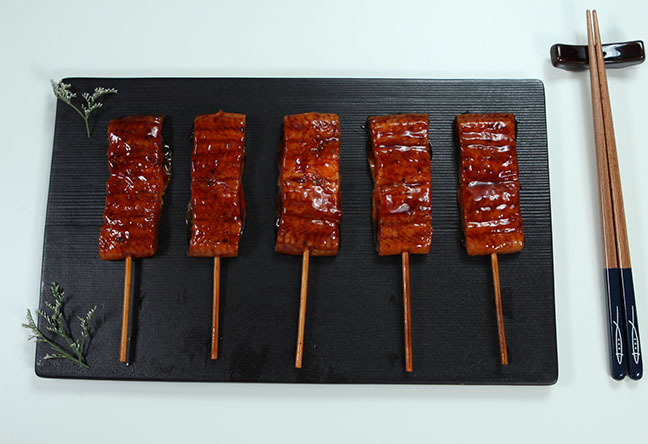
- Our roasting process uses a patented low-fat and deodorizing method with a four-layer soy-sauce coating — this is what separates "white-roasted" color standards from the darker, fully-coated finish buyers see on our frozen unagi kabayaki line.
This matters for foodservice buyers specifically: boneless, standardized-cut unagi kabayaki with verified labeling cuts back-of-house processing time, because your kitchen staff aren't re-checking weights or guessing at thaw instructions.
A Step-by-Step Label Verification Checklist for Purchasing Teams
- Request the spec sheet before the first sample order. It should list species, net weight, glaze percentage, allergen declaration, and storage temperature as separate line items.
- Cross-check the glaze percentage against the physical sample. Weigh a thawed, drained unit and compare to the declared net weight — a variance over 5% is worth raising with the supplier directly.
- Confirm the best-before date format matches your market's regulation. US, EU, and Japanese labeling rules differ on date order and required wording.
- Ask for traceability documentation tied to the farm registration or batch code, not just a general "China origin" statement.
- Verify cold-chain records for the specific shipment, not a generic temperature claim from a brochure.
- Keep a signed copy of the label and spec sheet on file for every order — this is what you'll need if a customs inspector or retail auditor asks questions post-arrival.
This checklist applies to first-time orders and new suppliers. For repeat orders from an already-audited supplier, steps 2 and 5 can be sampled periodically rather than on every shipment — full re-verification every time adds cost without adding meaningful risk reduction once a track record is established.
Common Label Mistakes That Lead to Rejected Shipments
- Accepting "total weight" instead of net weight. Customs in several EU countries specifically require drained weight disclosure — a combined figure can trigger a hold.
- Missing allergen bolding. Soy and wheat traces in kabayaki glaze must often be visually distinguished from the rest of the ingredient list, not just listed in plain text.
- Vague storage instructions. "Keep frozen" without a specific temperature threshold does not meet most retail private-label requirements.
- No species name. Generic "eel" labeling is a common reason for retailer rejection in markets with strict mislabeling enforcement, including under HACCP-aligned import audits.
- Date format mismatches. A best-before date printed in day/month/year format can be misread as expired stock in markets expecting month/day/year, causing unnecessary returns.
Most of these mistakes are caught at the spec-sheet stage, before production even starts — which is why requesting documentation early saves far more time than resolving it after a shipment lands.
Where Label Checks Fit Into the Bigger Sourcing Decision
Label accuracy is one piece of a larger quality picture. It should sit alongside checks on eel sauce consistency, cutting specification accuracy (skewers, cut pieces, sushi slices), and delivery timing — our standard order cycle runs about 30 days from confirmation to shipment, adjustable based on spec and volume. None of these factors substitute for the others. A perfectly labeled case with inconsistent sauce color or inconsistent cut sizing still creates downstream problems in a restaurant kitchen or retail display.
If you're comparing suppliers right now, pull the label questions above into your RFQ template directly. It takes one extra email round to get species, net-versus-glaze weight, and storage temperature confirmed in writing — far less time than resolving a customs hold after arrival. For background on how the sauce itself affects both flavor and shelf stability, see this breakdown of kabayaki sauce formulation.
Request a Spec Sheet Before Your Next Order
If you're sourcing unagi kabayaki for a restaurant chain, wholesale distribution, or retail private label, ask for a full spec sheet — species, net weight, glaze percentage, allergen statement, and storage requirements — before you submit your next RFQ. We're glad to send sample documentation and a product sample alongside it.