

How to Portion Eel for a Sushi Eel Roll That Slices Cleanly
A common frustration in high-volume kitchens is a sushi eel roll that falls apart upon slicing. The ingredients tear, the rice compresses, and the final presentation is inconsistent, leading to food waste and higher labor costs. The problem often isn't the chef's knife skills but the physical properties of the core ingredient: the portioned eel. The thickness of the unagi, the depth of the rice, and the position of the fillings all interact, determining whether you get a clean cut or a costly mess.
As a quality specialist who has helped dozens of overseas clients in Japan, the US, and the EU optimize their foodservice operations, I've seen firsthand how standardized, correctly portioned unagi kabayaki is the foundation for a repeatable, profitable menu item. Understanding the mechanics of portioning moves this from a daily challenge to a controlled, predictable process.
The Physics of a Perfect Slice: A Portioning and Placement Guide
Achieving a clean slice through a sushi eel roll depends on managing pressure and friction. When the knife descends, it must cut through the ingredients without dragging or compressing them. The eel's thickness, the rice's depth, and the filling's placement are the three key variables that control this outcome. Getting them wrong results in torn nori, squashed rice, and a roll that loses its shape.
For foodservice chains and importers, specifying these parameters correctly with your supplier is critical for back-of-house efficiency. The following table breaks down how each element affects the final cut and provides guidance for consistent results.
| Parameter | Impact on Slicing & Presentation | Recommended Spec for Foodservice | Common Mistake & Result |
|---|---|---|---|
| Eel Thickness | Thicker cuts require more downward pressure, which can compress softer fillings. Thinner cuts offer less resistance but may lack texture and flavor presence. | Specify a uniform thickness (e.g., 5-7mm) for sushi slices. This ensures consistent knife pressure is needed for every cut, improving speed and uniformity. | Using eel with variable thickness. The chef has to adjust pressure mid-roll, slowing them down and increasing the chance of a messy cut. |
| Rice Depth | A deep rice layer acts like a cushion, absorbing knife pressure and making it harder to cut cleanly through the bottom layer of nori. It can also overwhelm the eel's flavor. | A consistent layer of 7-10mm. This provides enough structure to hold the roll together without creating excessive resistance during slicing. | Too much rice. The roll becomes bulky, the slice compresses, and the rice-to-eel ratio is poor, increasing food cost with a lower-value ingredient. |
| Filling Position | Placing hard fillings (like cucumber) directly under the eel creates a point of high resistance. Softer fillings (like avocado) are prone to smearing if the eel shifts during slicing. | Center the eel strip precisely. Place firmer ingredients adjacent to, not directly under, the primary eel portion to distribute pressure evenly. | Off-center eel placement. The knife pushes the eel to one side, smearing other ingredients and creating a lopsided, unappealing final slice. |
Sourcing Specification: A Buyer's Checklist for Sushi-Grade Frozen Eel
When sourcing frozen eel for a sushi eel roll, consistency is paramount. Inconsistent product leads directly to inconsistent output, affecting customer experience and your bottom line. As you evaluate suppliers, use this checklist to ensure the product you source is optimized for high-performance kitchen use.
- Glaze Quality and Coverage: The eel sauce (tare) glaze should be viscous enough to adhere to the eel without being overly thick, which can make slicing sticky. At Eelpro, our 4-layer coating process ensures even coverage that caramelizes perfectly upon heating without running. Does the supplier provide a consistent glaze percentage per batch?
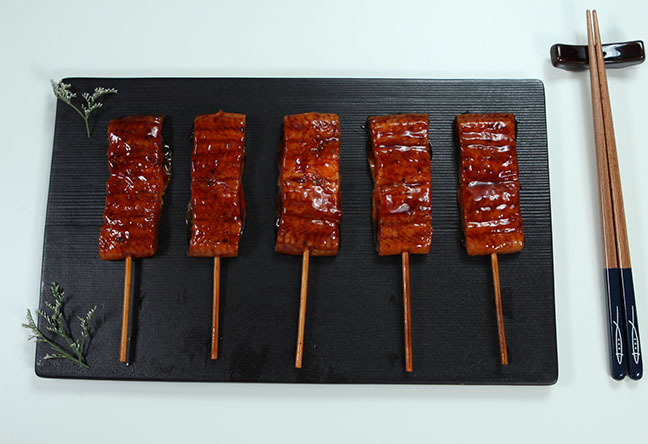
- Cut Standardization: Requesting pre-cut, standardized portions is the single most effective way to improve consistency. We offer custom cutting services including sushi slices, shredding, dicing, and strip-cutting to match your exact menu requirements. This eliminates a variable preparation step in your kitchen.
- Deboning and Defect Rate: The product must be guaranteed boneless. A single pin bone can ruin a customer's experience. Our process includes rigorous quality control checks to ensure a completely deboned product, minimizing this risk for our foodservice clients in Germany and Australia.
- Packaging and Cold Chain Integrity: Proper packaging, like vacuum skin-packs, prevents freezer burn and protects the delicate texture of the eel. It also ensures accurate portioning. Verify that your supplier has robust cold storage facilities—our 1,000-ton cold storage ensures product quality is maintained from our facility to yours.
- Traceability and Food Safety Certification: Your supplier must provide full traceability from the farm to the finished product. This is non-negotiable for meeting import standards in the EU and US. We operate with ~20 customs-registered eel farming bases, providing full-chain control and documentation supported by our ISO 22000:2018 and HACCP certifications.
How Raw Material Control Impacts Roll Quality and Consistency
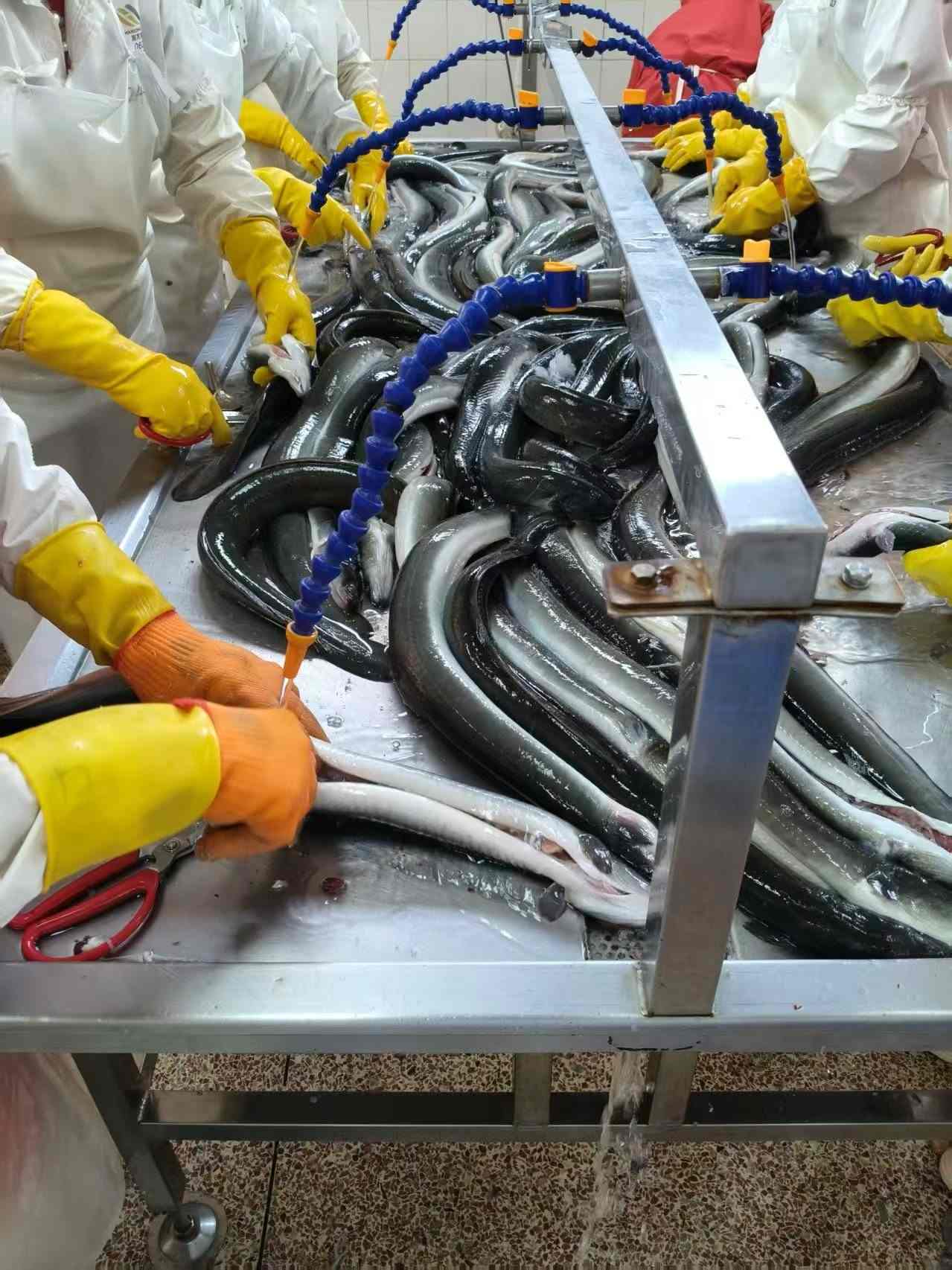
The quality of a finished sushi eel roll begins long before it reaches the kitchen. It starts at the farm. The texture, fat content, and size of the raw eel directly influence how the final roasted product performs. Inconsistent raw materials lead to variable thickness, uneven cooking, and a final product that is difficult for chefs to work with.
This is why full-chain control is a critical differentiator for a reliable frozen eel supplier. By managing a network of 19 self-operated and cooperative certified farming bases, we ensure a steady supply of over 5,000 tons of high-quality raw eels annually. This control allows us to select for specific characteristics ideal for unagi kabayaki production.
Our patented low-fat roasting and deodorizing technologies further standardize the product. This process yields a cleaner flavor profile and a firmer texture that holds up better during rolling and slicing. When a restaurant chain in Japan needs thousands of identical portions for their menus, this level of process control is what makes it possible. It ensures that the unagi roll served in one location is identical to the one served in another, protecting brand consistency.
Meeting International Standards: Mitigating Import Risks
For importers in the United States, Poland, Indonesia, and across the European Union, sourcing food products comes with significant compliance risks. Shipments can be rejected due to issues with veterinary drug residues, microbiological indicators, or improper documentation. These risks translate directly into financial losses and supply chain disruptions.
Working with a certified manufacturer is the primary way to mitigate these risks. Our facility is certified under ISO 22000:2018 (Food Safety Management System) and holds HALAL certification, an Export Food Producer Registration Certificate, and an SC Food Production License. These are not just logos on a box; they represent auditable systems that ensure every batch of product meets strict international standards.
Our in-house professional laboratory and metal detectors at critical control points are key parts of this system. We conduct targeted sampling and traceability tracking from farming registration through final processing. This means that when we ship to our partners, the product is already validated to meet the stringent food inspection standards of Japan, the US, and the EU, helping our buyers avoid trade risks and ensure a smooth import process.
Ultimately, a clean-slicing sushi eel roll is the result of a controlled, end-to-end process. It starts with quality-managed farming and continues through precise processing, certified food safety systems, and reliable cold-chain logistics. By focusing on these upstream factors, foodservice businesses can ensure their final product is not only delicious but also consistent, safe, and profitable.
If you require specific cuts or portion sizes for your menu, contact us to discuss your specifications. Our technical team can help you develop a product that meets your exact needs.