


Are Gulper Eels Dangerous To Humans? The Real Safety Facts Behind Their Scary Looks
A fisherman hauls up a trawl net from 3,000 feet down and finds something with a mouth bigger than its body, hanging open like a broken umbrella. It looks like it belongs in a nightmare. So the question people search for immediately is simple: are gulper eels dangerous to humans, or is this just another case of a deep-sea animal looking scarier than it actually is? The short answer is no — gulper eels pose almost no real risk to people. But the "why" matters more than the answer, especially if you work around seafood, diving, or deep-sea research.
What Is a Gulper Eel and Where Does It Live
The gulper eel, scientifically known as Eurypharynx pelecanoides, lives in the bathypelagic zone — roughly 3,000 to 6,000 feet below the surface. At that depth, sunlight never reaches, water temperature hovers near freezing, and oxygen is scarce. Gulper eel habitat spans tropical and temperate oceans worldwide, but because of the depth, encounters with humans are rare and almost always accidental, usually through deep trawl nets or submersible cameras.
This habitat detail matters more than people think. A species that lives thousands of feet below any diver, swimmer, or boat hull simply never crosses paths with humans under normal circumstances. No lifeguard has ever posted a gulper eel warning sign, and there's a reason for that.
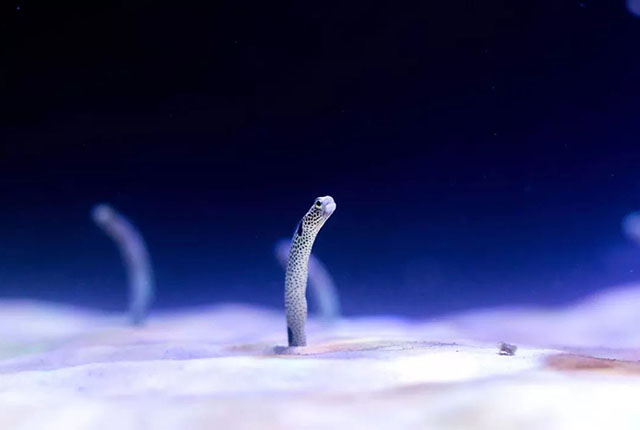
Gulper Eel Behavior: How This Deep-Sea Hunter Actually Feeds
Gulper eel behavior is built entirely around conserving energy in a food-scarce environment. The oversized "pelican mouth" isn't a weapon — it's a trap. The eel expands its jaw to engulf prey whole, often swallowing animals larger than its own head, similar to how a pelican scoops fish. It doesn't chase, doesn't bite repeatedly, and doesn't have the muscle mass to strike with force.
Its tail tip carries a light-producing organ, a small bioluminescent lure that attracts curious prey close enough to be engulfed. That's the entire hunting strategy: wait, flash a light, open wide. Compare that to an ambush predator on land — it's patient, not aggressive.
Gulper Eel Anatomy vs Farmed Food Eel: What Each Trait Actually Means for Human Safety
This is where most of the confusion starts. People see the mouth and assume danger. But each anatomical trait needs to be judged by what it actually does, not how it looks on camera. Here's a breakdown of the traits that matter, and what goes wrong if you misread them.
| Trait | What It Looks Like | What It Actually Means in Practice |
|---|---|---|
| Jaw size | Mouth can be larger than the whole head | Low bite force — the jaw is thin cartilage-like tissue built for engulfing, not crushing. It cannot generate the pressure needed to injure a human hand. |
| Teeth | Small, backward-curving rows | Designed to stop prey from escaping once swallowed, not to tear flesh. A gulper eel bite on a human would be closer to a scrape than a puncture wound. |
| Body size | Can reach 2 to 6 feet long | Most of that length is a thin, gelatinous tail with very little muscle. Physical strength does not scale with length here. |
| Habitat depth | 3,000–6,000 feet down | Removes any realistic chance of human contact outside of research trawls or submersibles. |
| Metabolism | Extremely slow, cold-adapted | Limits activity level — this is not a fast, reactive animal capable of chasing or ambushing a diver. |
None of these traits point to a species that threatens people. That's a very different profile from the farmed freshwater eel species used in food production, where anatomy is evaluated for an entirely different reason — yield, fat distribution, and bone structure for products like unagi kabayaki. Gulper eels are not edible, not farmed, and not part of any commercial seafood supply chain. Food-grade eels come from controlled, traceable farming operations — a completely different category of animal and process than what you see in a deep-sea trawl net.
Is a Gulper Eel Bite Dangerous? Documented Interactions and Realistic Risk
There are no documented cases of a gulper eel bite causing serious injury to a human. Most recorded interactions happen when research vessels bring specimens to the surface for study, and even then, handling is done with care simply because the animal's body is fragile, not because it's aggressive. The pressure change alone from deep water to the surface is usually fatal to the eel within minutes, which tells you how poorly suited it is to any environment near humans.
That said, mishandling any unfamiliar marine species carries risk — just not the risk people assume. Common mistakes when handling deep-sea bycatch include:
- Assuming a big mouth equals a strong bite — jaw size and bite force are not the same thing.
- Mistaking gulper eels for venomous or toxic species — gulper eels carry no known venom.
- Handling without gloves — not because of bite risk, but because deep-sea skin and slime can carry bacteria uncommon at surface depths.
- Assuming any deep-sea catch is edible — gulper eels are not a food species and should never be prepared or consumed.
- Keeping a live specimen out of water too long — this harms the animal and offers no benefit to the handler.
Deep-Sea Eel Safety: Practical Guidance for Divers, Researchers, and Seafood Buyers
Deep-sea eel safety really comes down to respecting an animal that evolved for a pressure and temperature environment humans aren't built for. If you're a researcher, trawl operator, or even a curious diver who stumbles on footage, here's a short checklist worth following:
- Verify species identification before assuming any risk level — misidentification causes more unnecessary fear than the animal itself.
- Never attempt to consume unidentified deep-sea bycatch, regardless of species.
- Leave handling of live deep-sea specimens to trained marine biologists or crew with proper protocol.
- If sourcing eel for food service or retail, confirm the supplier works with known, traceable freshwater or farmed species — not wild deep-sea catch.
This last point is where the conversation shifts from marine biology to food sourcing. Buyers who source eel products for restaurants or retail need traceability, not folklore. Operations with full-chain tracking — from certified farming bases through laboratory testing and metal-detection checkpoints — give buyers a documented safety record that a wild-caught deep-sea species simply can't offer. That's also why farmed eel products, like those used for eel sauce and kabayaki, go through veterinary residue testing to meet Japan, US, and EU inspection standards before they ever reach a kitchen.
For home cooks curious about the edible side of eel rather than the deep-sea kind, there's a real difference worth knowing — one is a biological curiosity from the ocean floor, the other is a farmed food product raised under food safety oversight. If you want to see how that process works, or you're sourcing eel for a menu or retail line, our team can walk you through spec sheets and sample options.
Request a product spec sheet or sample from Eelpro to see how traceable, food-grade eel sourcing compares to the wild deep-sea species you've been reading about.