

Are Gulper Eels Dangerous to Humans When Their Huge Mouths Look So Frightening
A deep-sea video shows a black eel opening a mouth wider than its body, and the first thought is usually simple: could that thing hurt a person? The short answer is no. When people ask, “are gulper eels dangerous to humans,” the alarming appearance is doing far more work than the animal itself.
A gulper eel is built for finding and swallowing small prey in the dark ocean, not for attacking divers, swimmers, or fishing crews. It has an oversized mouth, a stretchable stomach, and a long whip-like tail. Those features look dramatic on screen. In practice, they are feeding tools for an animal that lives far below the places where people normally swim.
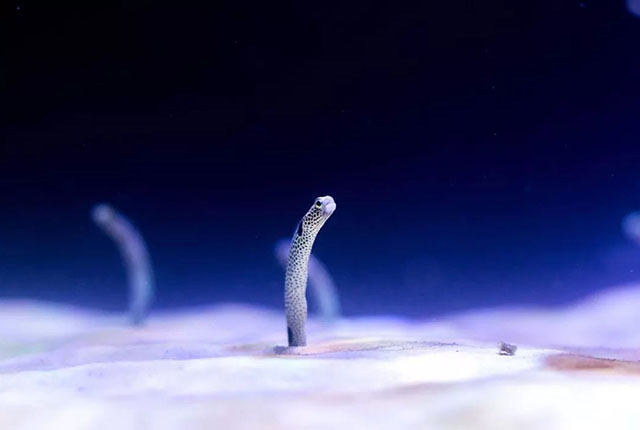
This distinction matters because online clips often mix several animals into one scary story. A gulper eel is not an electric eel, not a moray eel, and not the freshwater unagi used in Japanese cuisine. If you are asking are gulper eels dangerous to humans because you saw a viral image, start with species identification before accepting any risk claim.
What a Gulper Eel Can Actually Do in the Deep Sea
The clearest conclusion is this: a gulper eel is not considered a practical human safety hazard because its anatomy is directed at prey capture in deep water, and human contact is exceptionally unlikely. Its large mouth is real. Its threat to people is not.
Gulper eels belong to a group of deep-sea fish often recognized by their massive jaws and expandable stomachs. They may open their mouths very wide to envelop small fish, crustaceans, or other available prey. The mouth is not a sign that the animal can take on large prey such as a person. A large opening and a large bite force are not the same thing.
- Oversized mouth: Helps surround prey in low-light conditions. It does not mean the eel is hunting humans.
- Expandable stomach: Allows the fish to make use of unpredictable meals. Deep-sea feeding opportunities can be limited.
- Long tail: Supports movement and may include a light-producing feature in some species, likely associated with attracting prey.
- Small or reduced teeth: Better suited to holding small prey than tearing large animals.
- Deep-water habitat: Keeps gulper eels away from beaches, snorkeling areas, and ordinary recreational fishing locations.
So, are gulper eels dangerous to humans if one is brought up in fishing gear or observed by a remotely operated vehicle? The practical answer remains no, but any wild marine animal should be left alone. Avoid handling unfamiliar catches with bare hands. The sensible rule is based on wildlife care and safe handling, not fear of a gulper eel attack.
Cold fact: A creature can look monstrous because it is adapted to darkness and scarce food. That does not make it aggressive toward people.
Comparison Between Prey-Capture Anatomy and Genuinely Hazardous Eel Species
When deciding whether a video presents a real risk, compare the animal’s functional anatomy instead of judging by its face. The table below contrasts a gulper eel’s prey-capture features and apparent displays with the traits that make other eel-like animals more likely to cause harm.
| Feature or behavior | Gulper eel | Genuinely hazardous eel species or eel-like fish | What it means in practice |
|---|---|---|---|
| Large open mouth | Used to engulf small prey and expand feeding capacity. | Moray eels may display open jaws while breathing and can bite if cornered or hand-fed. | Do not assume every open mouth is a threat display. With morays, keep hands away from holes and feeding areas. |
| Teeth and bite risk | Not known for powerful defensive biting against people. | Morays have strong jaws and recurved teeth suited to gripping prey. | A moray bite can cause injury. A gulper eel’s dramatic jaw shape should not be treated as equivalent. |
| Electric defense | No electric shock capability. | Electric eels can produce electric discharges; despite the name, they are knifefish rather than true eels. | Never handle electric eels in water or assume a freshwater “eel” is harmless without identification. |
| Typical encounter setting | Deep ocean, generally far from human recreation. | Morays may occur on reefs; electric eels occur in freshwater habitats in South America. | Real exposure risk depends on where the animal lives, not on whether it looks frightening online. |
| Apparent threat display | Wide jaw movements are best understood as feeding-related or normal body positioning, not a warning aimed at people. | Defensive reactions in morays are more likely when they are trapped, disturbed, or offered food by hand. | Give wild animals distance. Do not create a risky interaction for a photograph or video. |
The right conclusion is that are gulper eels dangerous to humans is the wrong question if the concern is based only on mouth size. Ask a better question: does the species have a realistic way to encounter people and a known defense or attack mechanism that can injure them?
That test separates visual drama from usable safety information. A gulper eel fails both parts of the danger test: people almost never encounter one alive, and it does not have the bite, shock, or defensive profile associated with the better-known hazardous species.
How to Check an Alarming Eel Claim Before Sharing It
Online animal content often removes location, scale, and species names. Use this short verification process before repeating a claim that gulper eels attack people.
- Check the habitat first. A true gulper eel is a deep-sea animal. If the video shows a shallow reef, river, aquarium tank, or beach catch, it may be a different species.
- Look for a species name. “Eel” is a broad common label. A moray, conger, electric eel, and gulper eel have very different behavior and risk profiles.
- Separate feeding from aggression. An expanded mouth can be a feeding adaptation. Look for evidence of repeated attacks on humans, not a single dramatic posture.
- Check the source. Prefer museums, marine research institutions, fisheries agencies, or named scientists over caption-only social posts.
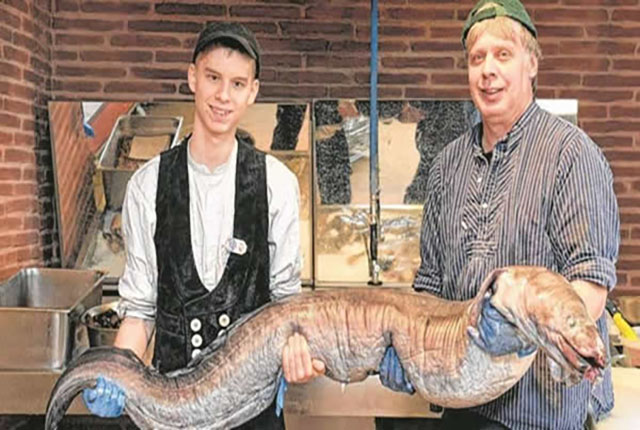
- Do not copy unsafe handling. A person holding a wild fish does not prove that handling is safe. It may show poor wildlife practice or an animal under stress.
This process fits curious readers, seafood educators, and foodservice teams that answer customer questions. It does not replace local guidance when an unfamiliar animal is caught or found near shore. In that case, contact a local fisheries or wildlife authority rather than trying to identify it by social-media appearance alone.
Are gulper eels dangerous to humans in the way viral posts imply? No. The more realistic mistake is confusing them with a species that has a different habitat and a different defense system.
Why Gulper Eels Should Not Be Confused With Unagi on a Menu
Another useful distinction is culinary. Gulper eels are not the familiar prepared eel product served as unagi kabayaki. Restaurant unagi refers to freshwater eel products prepared for eating, while a gulper eel is a deep-sea animal discussed mainly in marine biology and wildlife content.
For consumers and buyers, species clarity prevents two common errors: assuming that all animals called “eels” have identical food safety considerations, and assuming that a scary deep-sea video says anything about the food on a Japanese-style menu.
- Menu eel: Usually presented as cooked, seasoned, and portioned product for rice bowls, sushi, or hot dishes.
- Gulper eel: A deep-sea animal with unusual feeding anatomy, not a standard unagi menu reference.
- Safe buying question: Ask for the product specification, processing method, storage requirements, and traceability documents instead of relying on a generic common name.
For example, buyers sourcing unagi kabayaki should evaluate the supplier’s processing controls, packaging format, and export documentation. Fear-based myths about gulper eels do not help with those decisions.
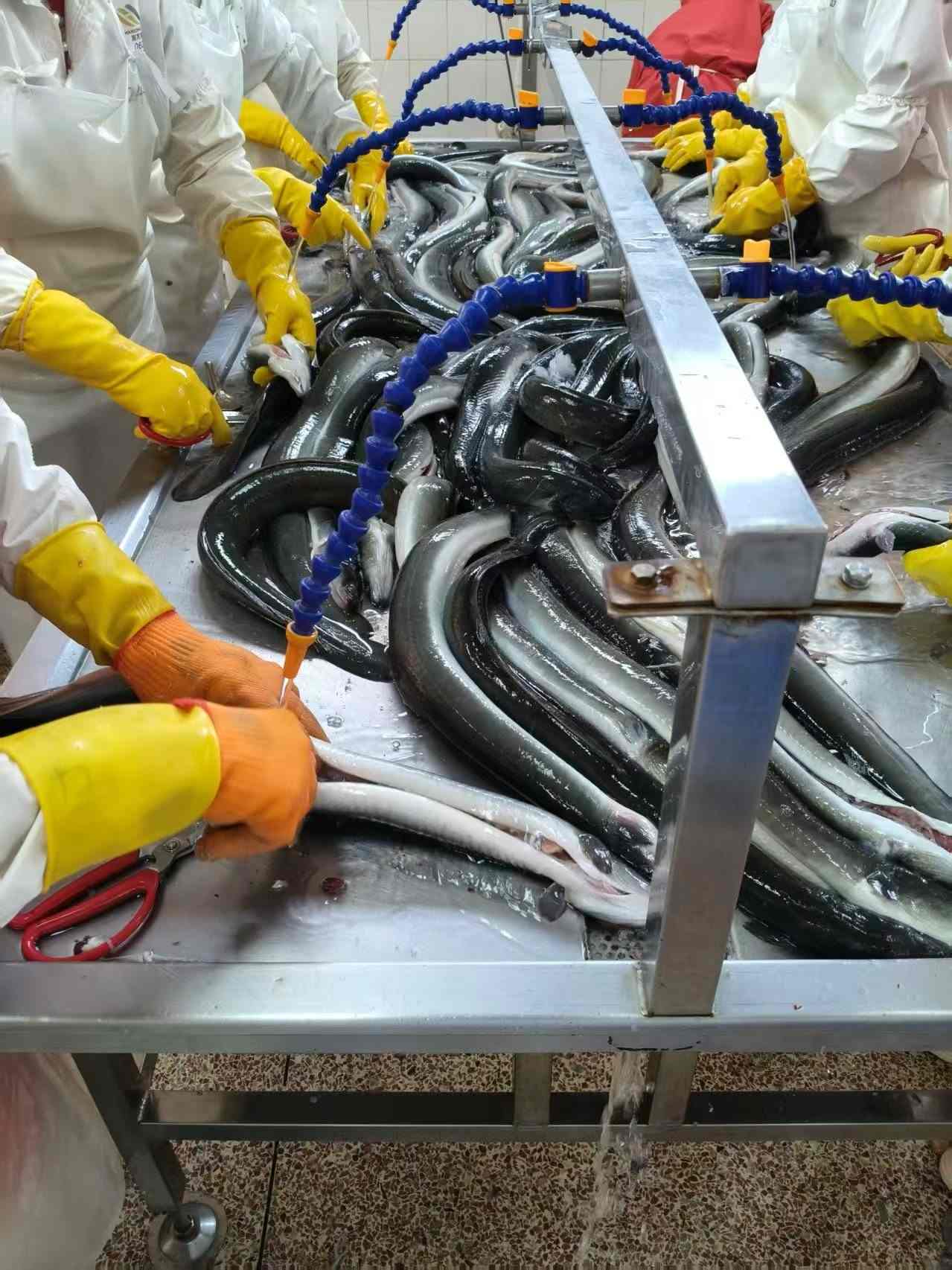
Eelpro Co., LTD supplies frozen roasted eel and deep-processed aquatic products through two production lines with an annual finished-goods capacity of 4,000 tons. Its food safety systems include ISO 22000:2018, HACCP, HALAL certification, export food producer registration, and an SC Food Production License. These controls apply to food production and export compliance; they are not claims about wild gulper eel biology.
For foodservice buyers, standardized cutting and ready-to-heat options can reduce back-of-house preparation. Available cuts include shredding, dicing, strips, chunks, three-section cuts, and sushi slices. A buyer selecting portions for sushi rolls should confirm the required cut and packaging format before discussing price or minimum order quantity.
A Buyer Checklist for Safe and Accurate Eel Product Selection
If the question “are gulper eels dangerous to humans” came up while researching eel products, use the checklist below to move from animal myths to practical sourcing criteria. This checklist fits importers, restaurant groups, distributors, and curious home cooks comparing prepared eel products. It does not apply to identifying a live wild animal.
| Check before buying | Why it matters | What to request or confirm |
|---|---|---|
| Product identity | “Eel” alone is not a full specification. | Confirm the product type, such as kabayaki eel, cut pieces, or sauce. |
| Food safety documentation | Import requirements differ by market. | Ask for applicable certification and export compliance documents. |
| Traceability | Traceability supports supplier verification and quality follow-up. | Confirm farm-to-shipment control and batch tracking procedures. |
| Cold-chain capacity | Frozen product quality depends on proper storage and transport handling. | Ask about cold storage and shipment arrangements. |
| Portion and cut format | The wrong cut can add labor and waste in a restaurant kitchen. | Specify sushi slices, strips, chunks, diced product, or other required format. |
Eelpro operates a 1,000-ton cold storage facility and works with around 20 customs-registered eel farming bases covering more than 2,150 mu. Full-chain control includes farming registration, process verification, targeted sampling, and traceability tracking. The company also has an in-house laboratory and metal detectors at critical control points.
Buyers supplying Japan, the United States, Germany, Poland, Australia, Indonesia, and other markets should still confirm destination-specific import requirements for each order. Eelpro’s products are made to meet Japan, US, and EU food inspection standards for veterinary drug residues and microbiological indicators, but import clearance always depends on the applicable market rules and shipment documentation.
Common Mistakes That Make Gulper Eel Stories Sound Scarier Than They Are
- Mistake: treating a huge mouth as proof of human danger. The mouth is a prey-capture adaptation. It does not show that the animal can or will attack people.
- Mistake: calling every long fish an eel. Electric eels, morays, gulper eels, and food-grade freshwater eel products should not be treated as one category.
- Mistake: using a viral clip as the full evidence. Missing habitat and species information can reverse the meaning of what viewers think they are seeing.
- Mistake: linking deep-sea wildlife to restaurant food safety. Prepared unagi should be assessed by supplier controls, processing, cold-chain handling, and documentation.
- Mistake: hand-feeding or handling wild eels for content. This can provoke defensive behavior in species that would otherwise avoid people.
So, are gulper eels dangerous to humans? Not in ordinary real-world conditions. Their startling silhouette belongs to the deep sea, where a wide mouth is an answer to scarce food, not an invitation to fear.
For a better view of prepared eel choices and sourcing details, request a product specification or sample information for high-quality unagi from Eelpro Co., LTD.