

Decoding Eel Unagi Labels for Species, Origin, and Processing
For a food importer, the product label is more than just branding; it's a declaration of compliance, quality, and origin. An inaccurate or misunderstood label on a shipment of eel unagi can lead to customs delays, rejected containers, and significant financial loss. The difference between "Kabayaki" and "Shirayaki," or between *Anguilla japonica* and *Anguilla rostrata*, has direct implications for your import duties, market acceptance, and legal obligations. Understanding these details is the first step in vetting a potential supplier.
As a quality assurance specialist who has guided dozens of clients through EU, US, and Japanese import requirements, I’ve seen firsthand how seemingly small label details can become major sourcing risks. This guide breaks down the critical information on frozen eel packaging, showing you what to look for to ensure the product you source matches your exact specifications and meets your market's standards.
How to Verify Unagi Product Identity from the Label
A comprehensive label provides the data needed to verify a product's authenticity and suitability for your market. For importers and large-scale foodservice buyers, every field is a checkpoint. Skipping this verification can result in sourcing a product that fails to meet consumer expectations or, worse, violates import regulations. Here is a breakdown of the essential elements on an unagi kabayaki label and why they matter.
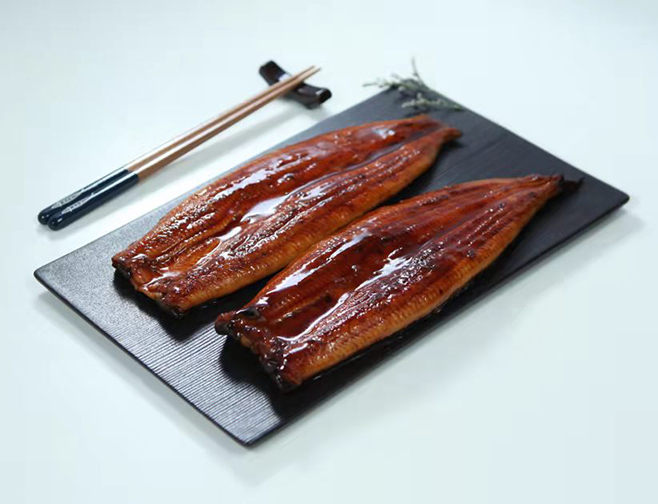
The following table outlines key label components, their meaning, and the common pitfalls to avoid during procurement.
| Label Element | What It Means | Why It Matters for Importers | Common Sourcing Mistake |
|---|---|---|---|
| Scientific Species Name | The specific biological name of the eel, e.g., Anguilla japonica (Japanese eel) or Anguilla anguilla (European eel). | Certain species face trade restrictions (e.g., CITES listings). The species also determines the texture, fat content, and authentic taste profile expected in specific markets like Japan. | Accepting a generic term like "Freshwater Eel" without demanding the scientific name, which can obscure the true origin and quality grade of the raw material. |
| Country of Origin (Farming/Harvest) | The country where the eel was farmed or caught. This is distinct from the Country of Processing. | Import tariffs, food safety regulations, and veterinary drug residue standards are origin-specific. Full traceability to the source farm is a requirement in markets like the EU and Japan. | Confusing the processing country with the origin country. A product processed in China may use eels farmed elsewhere, impacting its customs classification and compliance profile. |
| Processing Method | Describes how the eel was prepared. Key terms include Kabayaki (grilled with a sweet soy glaze), Shirayaki (plain roasted, unglazed), or "White-Roasted." | This defines the product's culinary application and flavor. Sourcing Shirayaki when you need ready-to-serve Kabayaki adds labor and material costs to your or your client's kitchen. | Assuming "roasted eel" always means it includes a glaze. The absence of "Kabayaki" often implies an unseasoned product requiring further preparation. |
| Cut & Size Specification | Details the format of the eel, such as "Whole Fillet," "3-Section Cut," "Sushi Slices (Neta)," "Diced," or "Shredded." Often includes a size/weight grade. | Directly impacts foodservice efficiency and portion control. Pre-cut portions reduce back-of-house labor, ensure consistency, and minimize waste for restaurant chains. | Ordering by total weight without specifying the cut, leading to a product that requires significant in-house processing and yields inconsistent portion sizes. |
From Farm to Label: Verifying Origin Claims with Full-Chain Traceability
A "Country of Origin" claim on a label is only as reliable as the traceability system that backs it up. For high-value products like eel, regulators in Japan, the US, and the EU demand verifiable proof of origin to manage food safety risks and enforce trade policies. At Eelpro, we built our supply chain around this principle.
Our traceability is not just a document trail; it's a fully integrated system. We operate and manage approximately 20 customs-registered eel farming bases covering over 2,150 mu. This control allows us to provide clients with absolute confidence in our origin declarations. When our label says the eel is from one of our certified farms, we have the data to prove it.
Here’s how our system ensures the integrity of every shipment:
- Farm Registration & Auditing: Each of our 19 cooperative and self-operated unagi eel farms is registered with customs authorities (CIQ) and adheres to strict aquaculture practices. This is the first link in the traceability chain.
- Targeted Raw Material Sampling: Before eels are even harvested, our quality control team conducts targeted sampling to test for veterinary drug residues and other contaminants. This preemptive screening ensures only compliant raw materials enter our facility.
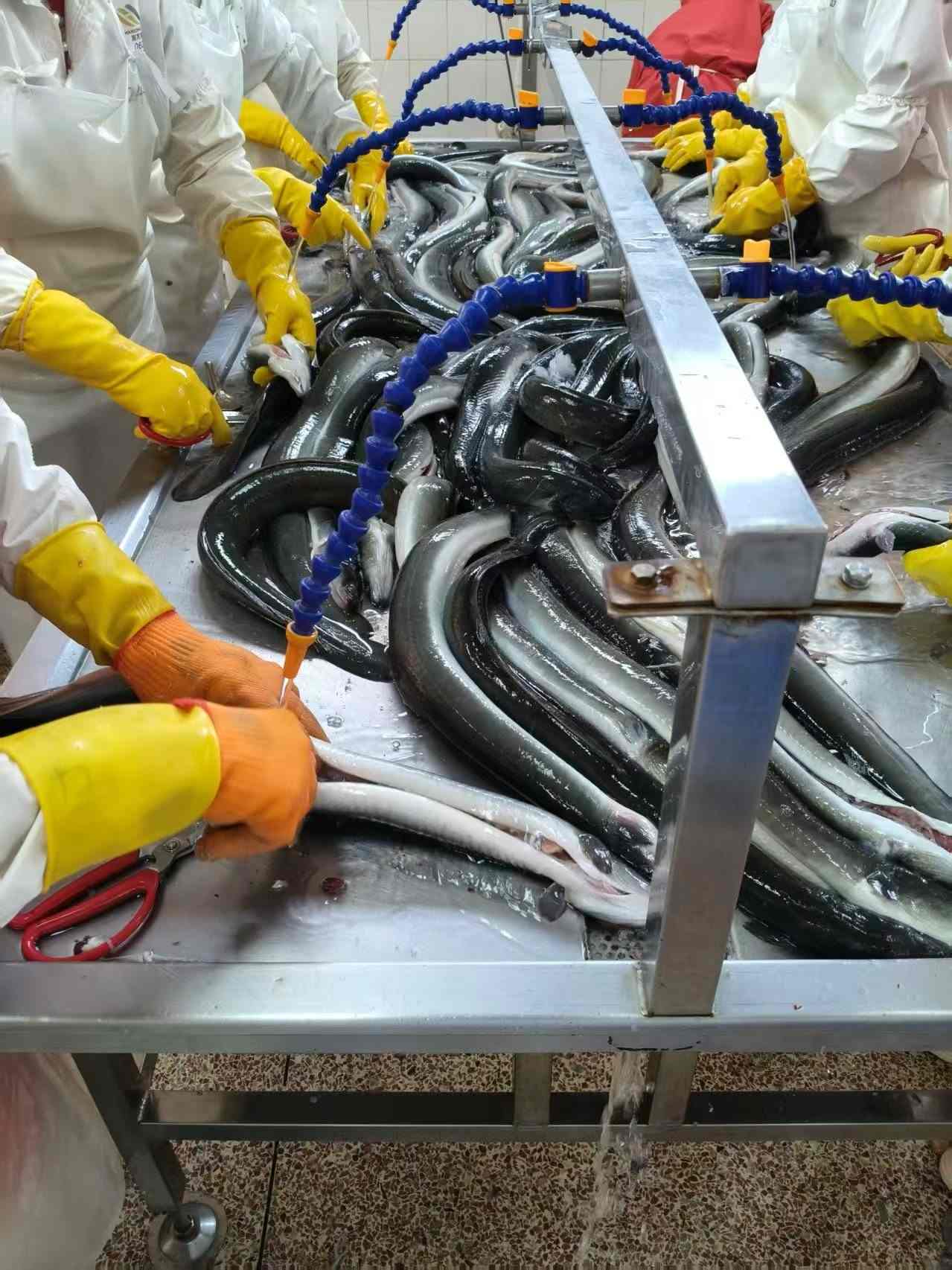
- Batch-Specific Processing Logs: From the moment live eels arrive at our workshop, they are assigned a batch number. This number follows them through every processing step, from deboning and roasting to glazing and freezing.
- Finished Goods Traceability: Every carton of finished product is labeled with its production date and batch code, linking it directly back to the specific farm, processing date, and quality control reports.
This system allows us to provide a complete history for any box of frozen eel unagi, giving our export partners in Germany, Poland, and Australia the documentation they need to clear customs without issue.
How Processing Technology Validates Quality Claims
Label claims like "Low-Fat" or "Premium Glaze" can feel like marketing fluff. However, legitimate claims are backed by specific processing technologies and quality management systems. As a high-quality unagi kabayaki manufacturer, we've invested in patented equipment and process controls to ensure these claims are quantifiable and consistent.
Our facility is certified for ISO 22000:2018, HACCP, and HALAL, which means our production processes are audited against international food safety standards. This foundation of quality control is enhanced by proprietary technologies that differentiate our products.
Buyer's Checklist for Verifying Processing Claims:
When evaluating a supplier, ask for evidence behind their on-label claims. Here are key points to check:
-
Glazing Process: A superior eel sauce (unagi tare) application is critical for authentic Kabayaki.
- Our Standard: We use a proprietary 4-layer glazing process. Each layer of our premium soy sauce is applied at a precisely controlled temperature, ensuring deep flavor penetration without burning the sauce or making the fillet soggy. We've even established internal color standards for "white-roasted" and each of the four soy-sauce coating stages.
- What to Ask: "Can you describe your glazing process? How do you ensure consistency in sauce coverage and flavor?"
-
Fat Content & Texture: The roasting process determines the final fat content and texture.
- Our Standard: We employ a patented low-fat roasting technology and specialized deodorizing equipment. This process renders excess fat while keeping the meat tender and moist, resulting in a cleaner flavor profile that is preferred in discerning markets.
- What to Ask: "What technology do you use to control fat content and texture during roasting?"
-
Food Safety Controls: Claims of "Export-Grade" must be supported by in-house testing and physical safeguards.
- Our Standard: Our 25-person quality control team works out of our professional eel lab to test against Japan, US, and EU standards for microbiological indicators and drug residues. We also have metal detectors at critical control points to prevent physical contamination.
- What to Ask: "What are your critical control points, and can you provide a Certificate of Analysis (COA) for a recent batch exported to my region?"
With an annual production capacity of 4,000 tons and a 1,000-ton cold storage facility, our processes are designed for consistency at scale. This ensures that the product you approve based on a sample is the same high quality you’ll receive in every container, whether you're a restaurant chain in Japan or a food importer in the United States.
For foodservice clients, the specifications on a label translate directly to operational efficiency. Standardized cuts, boneless fillets, and ready-to-heat packaging eliminate variables in the kitchen, reduce labor costs, and guarantee a consistent customer experience. Our ability to provide custom cuts—from shreds and dice for rice bowls to precise sushi slices—allows foodservice channels to streamline their back-of-house workflow and control portion costs effectively.
To ensure your product meets both regulatory and culinary standards, a thorough review of the label is your first and most important step. If you require specific cuts or have questions about our traceability documentation, contact our team to discuss your needs.