

Understanding the Unique Life Cycle of Eel Unagi
As a food safety specialist with over a decade in seafood exports, I often speak with buyers who are surprised to learn a fundamental fact about their product: the freshwater eel they source for unagi kabayaki begins and ends its life in the deep ocean. This isn't just a biological curiosity. Understanding this complex journey is critical for importers evaluating supply chain stability, product quality, and traceability. The unique life cycle of the eel unagi (Anguilla japonica) directly influences farming practices, raw material availability, and the ultimate quality of the finished product that reaches your customers.
This journey from ocean to river and back again is what makes sourcing high-quality eel so challenging. It requires a supplier with deep control over their entire production chain, from the earliest farming stages to final processing. At Eelpro, our entire quality management system is built around managing the complexities of this remarkable fish.
The Catadromous Journey: Why a Freshwater Eel Spawns at Sea
Most fish are either exclusively freshwater or saltwater. Eels are different. They are catadromous, meaning they are born in the ocean, migrate to freshwater rivers to grow and mature, and finally return to the ocean to spawn and die. This multi-stage migration is a key factor that every eel buyer should understand, as each stage presents different challenges and opportunities for quality control.
Here is a breakdown of the eel's life stages and what they mean for your business:
| Life Stage | Environment | Key Characteristics | Implication for Food Importers |
|---|---|---|---|
| 1. Spawning & Egg | Deep Ocean (e.g., Mariana Trench) | Adult eels spawn and die. Eggs hatch into larvae. | This stage is wild and cannot be replicated commercially. The entire eel aquaculture industry depends on a sustainable wild catch of glass eels. Supply is seasonal and variable. |
| 2. Leptocephalus (Larva) | Ocean Currents | Transparent, leaf-shaped larvae drift on currents for months. | The duration and path of this drift affect the timing and volume of glass eels arriving at coastlines, influencing annual supply forecasts. |
| 3. Glass Eel | Coastal Estuaries | Larvae metamorphose into tiny, transparent eels and begin migrating inland. | Critical Sourcing Stage. This is when alevins (young eels) are collected for aquaculture. The quality and health of these glass eels are foundational to the entire farming process. |
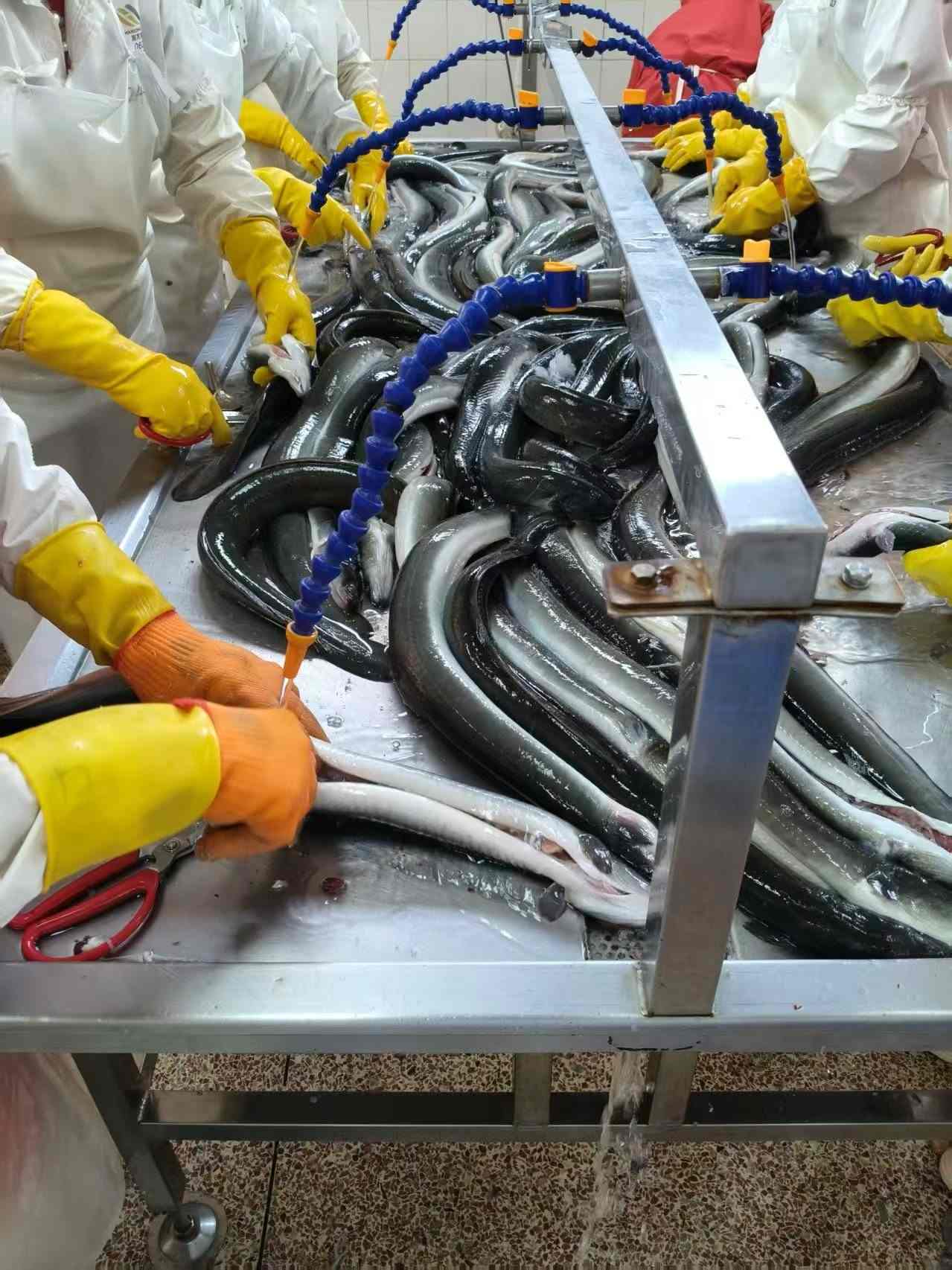
| 4. Elver & Yellow Eel | Freshwater Rivers & Farms | Eels develop pigment and grow for 6-12 months or more, feeding and maturing. | This is the primary growth phase in aquaculture. The controlled environment of the unagi eel farm, including water quality, feed, and health monitoring, determines the final size, fat content, and texture of the eel. |
| 5. Silver Eel | Freshwater to Ocean | Mature eels undergo physiological changes, stop feeding, and begin their migration back to the ocean spawning grounds. | Eels are harvested for processing before this stage. Understanding this trigger prevents sourcing eels that are too mature, which can have a different texture and lower fat content. |
This dependency on wild-caught glass eels makes traceability and responsible sourcing paramount. When you partner with a supplier, you are trusting their ability to manage the sensitive freshwater growth phase. This is where quality is either built or lost.

How Full-Chain Traceability Protects Your Business
Given that the eel life cycle starts in the wild, how can an importer guarantee food safety and consistent quality? The answer lies in rigorous, documented control from the moment glass eels enter the aquaculture system. A supplier without end-to-end traceability is a supplier with significant risk.
At Eelpro, we've built our operations around this principle. With over 160 employees, including 25 dedicated technical and quality-control specialists, we manage a closed-loop system. This system is designed to provide complete transparency and mitigate risks for our clients in demanding markets like Japan, the US, and the European Union.
Here’s a checklist B2B buyers can use when evaluating a potential eel supplier’s traceability:
- Registered Farming Bases: Does the supplier operate or partner with officially registered farms? We manage a network of approximately 20 customs-registered eel farming bases, covering over 2,150 mu. This ensures all raw materials originate from monitored and compliant sources.
- Batch-Level Tracking: Can the supplier trace a finished product batch back to a specific farm, pond, and feed batch? Our system links every shipment to its farming origin, processing date, and quality control records.
- In-House Laboratory Testing: Does the supplier rely solely on third-party tests, or do they have their own lab for continuous monitoring? Our professional eel lab of Eelpro Co., Ltd performs targeted sampling for veterinary drug residues and microbiological indicators, ensuring problems are caught long before a product is shipped.
- Compliance with International Standards: Can the supplier provide documentation proving their products meet your market’s specific import requirements? My role involves ensuring every batch meets the strict standards of Japan, the US, and the EU, helping our clients avoid costly customs rejections and trade risks.
- Certifications: Are their facilities certified under globally recognized food safety schemes? Our operations are certified under ISO 22000:2018, HACCP, and HALAL, providing third-party validation of our quality management systems.
This verifiable chain of custody is not just a certificate on the wall; it is your assurance that the eel unagi you import is safe, high-quality, and fully compliant.
From Premium Raw Material to Perfectly Roasted Unagi
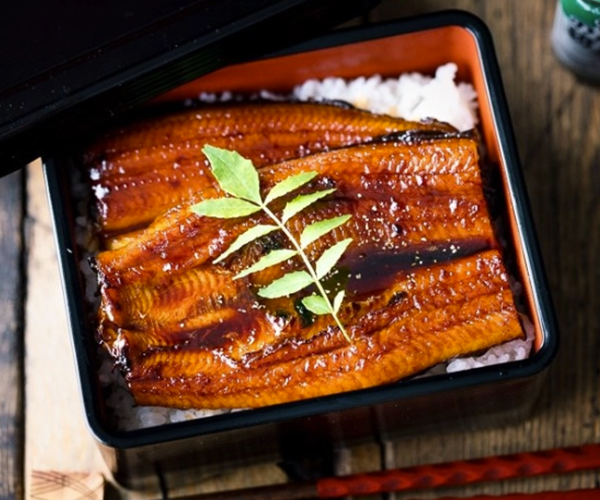
Traceability secures the quality of the raw material. The next step is a processing method that enhances its natural attributes. The flavor and texture of premium unagi kabayaki come from a combination of high-quality eel and a meticulous cooking process. Our annual production capacity of 4,000 tons is supported by two modern production lines designed for precision.
Our export-grade roasting process involves four distinct layers of soy sauce application, each at a controlled temperature. This builds a deep, complex flavor that cannot be achieved with a single coating. We have established internal color standards for both "white-roasted" eel and each of the four soy-sauce coating stages, ensuring absolute consistency from one order to the next. This attention to detail is why restaurant chains in Japan and foodservice distributors in Germany and Poland rely on our products.
Furthermore, we utilize patented technologies to improve the final product:
- Low-Fat Roasting Technology: This process renders excess fat during cooking, resulting in a cleaner flavor and a more pleasant, less oily mouthfeel without drying out the meat.
- Deodorizing Equipment: This specialized equipment removes any residual "muddy" or earthy notes that can sometimes be present in freshwater fish, ensuring a pure and savory unagi flavor profile.
The final product is then prepared to client specifications. For foodservice supply chains, this means providing boneless, deboned eel in standardized cuts—shredded, diced, sliced, or chunked. This ready-to-heat convenience significantly reduces labor and processing costs in a commercial kitchen, a key benefit for our clients in Australia and Southeast Asia. Products are stored in our 1,000-ton cold storage facility, guaranteeing the integrity of the cold chain from our door to yours.
The journey of the eel unagi is a testament to nature's complexity. For food businesses, it underscores the importance of choosing a partner who can master that complexity through science, technology, and an unwavering commitment to quality control. From the ocean currents to your customer's plate, every step matters.
To learn more about our processing standards or request a sample of our frozen unagi kabayaki, please send us your specifications.