


Eel Roll Sushi Ingredients Checklist for Foodservice Buyers
Why does one eel roll taste like a restaurant signature dish, and another taste like a thawed afterthought? The answer rarely comes down to knife skills. It comes down to the eel roll sushi ingredients sourced before the roll ever hits the cutting board. Fat content in the eel, glaze consistency in the sauce, moisture balance in the rice — these variables decide whether a kitchen gets repeatable plates or a different roll every batch. This checklist breaks down what foodservice buyers actually need to specify, and what goes wrong when they don't.
The Core Eel Roll Sushi Ingredients List for Commercial Kitchens
Before negotiating price with any supplier, get the ingredient list locked down by spec, not just by name. A standard kabayaki roll menu needs these sushi roll components:
- Kabayaki eel — pre-glazed, boneless, ready-to-heat. See a sample spec on the frozen unagi kabayaki product page.
- Sushi rice — short-grain, cooked at a consistent vinegar-to-water ratio, served at room temperature (roughly 32-35°C at plating for correct texture).
- Nori sheets — full or half-size, low moisture content to prevent sogging during rolling.
- Eel sauce (unagi tare) — thick, glossy, sweet-savory glaze used both in roasting and as a finishing drizzle.
- Fillings — cucumber, avocado, cream cheese, or scallion, chosen for crunch-to-richness balance against the fatty eel.
- Garnish — toasted sesame seeds, scallion threads, or tobiko for texture contrast.
Most of these items are commodity-grade and easy to source locally. The eel and the sauce are where quality actually separates one supplier from another — and where most sourcing mistakes happen.
Eel Specification Parameters That Actually Matter
Buyers often ask for "kabayaki eel" without specifying anything beyond size and price. That's a mistake. Each parameter below changes how the roll performs on the line — and what happens if you order the wrong one.
| Parameter | What It Actually Affects | Risk If Ignored |
|---|---|---|
| Fat content / low-fat roasting process | Mouthfeel, oiliness on the palate, how the glaze adheres during reheating | Greasy rolls, uneven glaze, customer complaints about heaviness |
| Soy-sauce coating layer (1st through 4th) | Color depth, flavor penetration, caramelization when reheated in-house | Pale, flat-tasting rolls that don't match menu photos |
| Boning method (deboned eel) | Prep speed at the back of house, bone-fragment risk | Slower assembly line, safety complaints, wasted labor hours |
| Cut specification (strip-cut, sushi slices, 3-section cut) | Roll uniformity, portion cost, plating consistency | Uneven rolls, inconsistent food cost per plate |
| Packaging format (skin-pack vs. bulk block) | Thaw time, portion control, freezer-burn exposure | Over-ordering, wasted stock, inconsistent portion sizes |
A deodorizing and low-fat roasting process, for example, is a patented step that reduces the "fishy" aftertaste some operators associate with frozen eel. If a buyer skips asking about this and just orders by weight, they may receive eel that tastes fine raw but turns greasy once reheated under heat lamps — a problem that only shows up after the order has already landed in the freezer.
Eel Sauce and Flavor Consistency Across Batches
Unagi tare isn't just a sweetener — it's what carries the "signature" flavor across every roll on the menu. Viscosity and sugar ratio determine how the sauce clings to rice versus pooling on the plate. A sauce that's too thin will soak into the nori and make rolls soggy within minutes of plating; one that's too thick won't distribute evenly during the final glaze pass.
For operators building a menu around kabayaki, consistency matters more than intensity. Switching sauce suppliers mid-contract — even for a cheaper price — is one of the fastest ways to get customer complaints about "the eel roll tasting different." Read more on how sauce formulation affects finished flavor in this breakdown of kabayaki sauce composition, and check the eel sauce product specs before locking in a supplier.
Quick Sauce Quality Check
- Pour a tablespoon onto a cold plate — it should hold a ribbon shape for a few seconds before spreading.
- Check color consistency batch to batch; cloudy or separated sauce usually means poor storage temperature control.
- Taste for balance — overly sweet sauce usually signals corner-cutting on soy fermentation time.
Common Mistakes When Sourcing Unagi Maki Supplies
Most sourcing failures aren't about bad suppliers — they're about missing a spec during the RFQ stage. A first-time buyer importing frozen eel, for instance, might order purely by kilogram weight and skip the fat-grade conversation entirely, only to find the reheated rolls look oily under kitchen lighting. These are the mistakes that come up most often:
- Ordering by weight alone — ignoring fat grade or roasting layer specification, which changes finished color and taste.
- Skipping traceability documentation — buyers who don't ask about farming base registration have no way to verify veterinary drug residue compliance later.
- Not testing thaw yield — some frozen eel loses more moisture after thawing than expected, throwing off portion costing.
- Mixing sauce brands mid-month — causes visible color and flavor shifts customers notice immediately.
- Ignoring cold-chain storage temperature — eel and rolls held above -18°C during transit risk texture breakdown before they even reach the kitchen.
Supplier Selection Checklist Before You Place an RFQ
Use this before sending a purchase order, not after receiving the first shipment:
- Does the supplier hold ISO 22000 and HACCP certification, plus HALAL where required by your market?
- Can they provide an export food producer registration and a valid production license number?
- Do they operate certified farming bases with full traceability from farm to shipment?
- Is there cold storage capacity large enough to buffer seasonal order spikes?
- Do they run an in-house laboratory and metal detection at critical control points?
- What's the standard lead time — and is it negotiable for smaller test orders?
- Do their products meet residue and microbiological standards referenced by bodies like the European Food Safety Authority for EU-bound shipments?
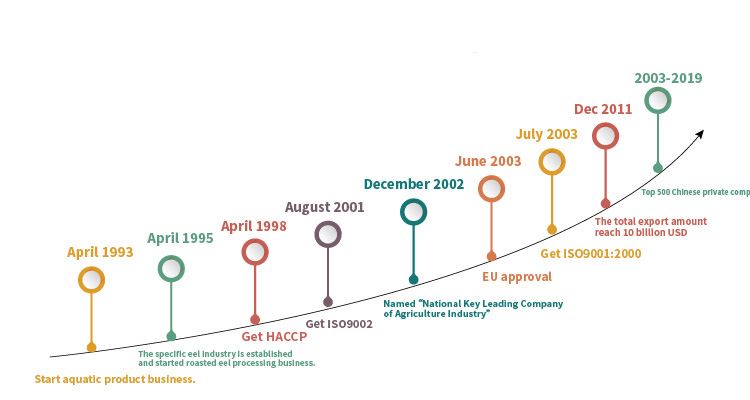
A supplier backed by around 20 customs-registered farming bases covering over 2,150 mu, with a 1,000-ton cold storage facility and an annual output near 4,000 tons, generally has the volume and documentation depth to support both wholesale distributors and foodservice chains without last-minute substitutions. That combination — traceability plus storage capacity — is what keeps a roll on the menu tasting the same in month twelve as it did in month one.
Putting the Roll Together: A Prep Line Example
For a kitchen running a steady eel roll program, a practical prep sequence looks like this:
- Thaw kabayaki eel under refrigeration, not at room temperature, to protect glaze texture.
- Reheat per the coating layer spec — a 4th-layer-coated piece needs less added sauce than a 1st-layer piece.
- Cook and season sushi rice to the correct vinegar ratio; cool to plating temperature before rolling.
- Layer nori, rice, eel, and fillings in consistent order for every roll to control portion cost.
- Finish with a drizzle of eel sauce and garnish just before service, not during prep, to avoid sogging.
For operators building out a broader menu, pairing kabayaki with other frozen seafood items or testing variations like the unakyu maki format can diversify the roll lineup without adding new supplier relationships.
If you're building or refining an eel roll program and want to confirm specs before committing to volume, request a sample pack or a spec sheet covering fat grade, coating layers, and sauce viscosity — it's a faster way to avoid a mismatched reorder six months in.