


Frozen Unagi Portioning Helps Foodservice Teams Protect Yield
A tray of eel rice bowls can look profitable on paper, then lose margin at the pass when portions are inconsistent. The question is simple: how much of each frozen unagi fillet becomes a sellable menu serving after cutting, glazing, and plating?
For restaurant operators, caterers, and seafood distributors, frozen unagi portioning is not only a kitchen task. It determines purchasing volume, menu pricing, labor needs, and guest consistency. A long kabayaki fillet may become several sushi slices, neat bowl toppings, or a single center-of-plate serving. The right choice depends on the menu format, not on the fillet alone.
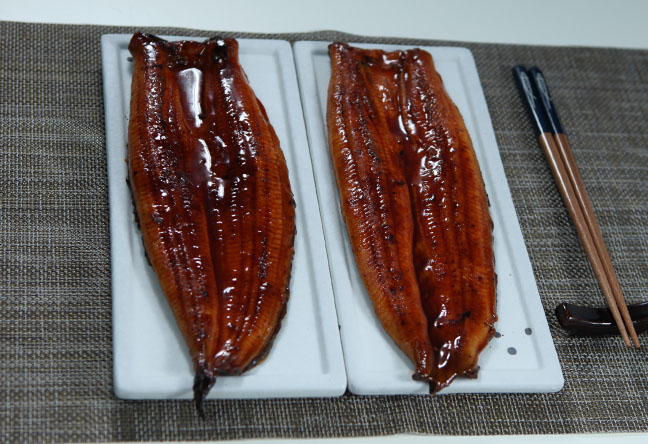
This guide explains how to plan frozen unagi portions using measurable kitchen controls rather than assumptions. It also shows where yield is commonly lost, how to build a usable-yield calculation, and when a different cut format is the better commercial decision.
Start Portion Planning With the Menu Format, Not the Carton Weight
The best first decision is the finished dish you need to serve. A buyer who orders whole fillets for a sushi program has a different requirement from a caterer assembling rice bowls or a distributor supplying prepared-food counters. Frozen unagi can be supplied as kabayaki fillets, cut pieces, strips, chunks, sushi slices, shredded eel, or diced eel, depending on the agreed specification.
Conclusion: Select the cut format that matches the final plate. This reduces secondary cutting and makes portion control easier. It suits operations with repeatable menu items and known plating standards. It does not apply when the kitchen deliberately uses a whole fillet as a premium visual feature, where the full-fillet presentation matters more than labor savings.
| Serving format | Best starting form | What it affects in practice | When it may not fit |
|---|---|---|---|
| Eel rice bowl | Strips, chunks, or portioned fillet | Speeds assembly and helps distribute eel across the rice surface | Less suitable when the menu requires one visually intact fillet |
| Sushi or unagi rolls | Sushi slices or standardized strips | Supports even slice appearance and repeatable topping placement | Less flexible for mixed hot-kitchen applications |
| Buffet or catering tray | Chunk-cut or strip-cut eel | Makes batch plating and replenishment easier | May not create the premium look required for plated service |
| Ramen, noodle soup, or small-plate garnish | Shredded or diced eel | Allows controlled distribution across many servings | Not appropriate where guests expect a large visible eel topping |
| Premium main dish | Whole or larger kabayaki fillet section | Keeps a strong visual focus on the eel itself | Requires tighter control of fillet size variation |
A practical buying brief should name the dish, the target eel placement on the plate, and the cutting format. “Eel for bowls” is too broad. “Kabayaki strips for a fixed bowl build with rice, sauce, and garnish” gives the supplier and kitchen team a usable direction.
For menus built around classic grilled eel, review the available unagi kabayaki product format before setting your prep process. The product form should support the dish, rather than forcing the dish to work around an unsuitable cut.
How Yield Parameters Change the Usable Portion in Practice
Foodservice buyers often use the phrase unagi fillet yield as if it were one fixed number. It is not. Yield is the amount of purchased product that becomes sellable food after the kitchen completes its intended work. With frozen unagi, the useful result changes according to cut specification, trimming rules, breakage handling, sauce use, and the serving format.
This matters because the wrong assumption can make a menu price look sound before launch and unprofitable after the first busy service.
| Parameter | What the buyer should define | What happens when it is wrong | Practical control |
|---|---|---|---|
| Fillet or piece format | Whole fillet, strip, chunk, diced, shredded, or sushi slice | Staff may create uneven servings or spend unnecessary time cutting | Match the cut specification to the plated dish before purchase |
| Target serving weight | The approved eel amount for one finished menu item | Over-portioning raises food cost; under-portioning weakens guest value | Use a scale during setup and document the target in the recipe card |
| Trim rule | Which edges, small pieces, or appearance defects are accepted for service | Useful food may be discarded, or inconsistent pieces may reach guests | Assign acceptable trim to bowls, rolls, staff meals, or other approved dishes |
| Breakage policy | Whether broken pieces can be used in a secondary menu item | Breakage becomes an unplanned loss if there is no approved use | Separate intact and broken pieces during prep, then allocate both intentionally |
| Sauce application | Whether sauce is supplied on the eel, applied in the kitchen, or both | Flavor and finished appearance can vary from plate to plate | Set one sauce step and one serving utensil for each menu item |
| Plate architecture | Whether eel is the centerpiece, topping, filling, or garnish | The same purchase format may look either generous or sparse | Build one photographed reference plate for every service point |
Conclusion: Treat yield as a kitchen-controlled result, not a supplier label. This approach fits operators managing menu margins across multiple sites. It has a limit: a written standard only works if kitchen staff follow it during peak service, so managers should audit actual plated portions rather than relying only on recipe cards.
Food safety controls also matter during receiving, storage, and preparation. Eelpro operates under HACCP and ISO 22000:2018 food safety management systems, with an in-house laboratory and metal detectors at control points. Buyers should still set their own receiving checks, storage procedures, and local regulatory requirements for each market.
Build a Frozen Unagi Yield Calculation Before You Set the Menu Price
A workable calculation does not require guessed percentages. Use your own receiving records and test-prep results. This is especially useful when comparing frozen unagi portions with whole fillets that your team will cut in-house.
Use this formula:
Usable yield = sellable eel weight after approved preparation ÷ purchased eel weight
Then calculate:
Cost per sellable portion = total product cost ÷ number of approved menu portions produced
The calculation should include the product that actually reaches guests. Do not count discarded trim, unplanned breakage, or pieces that cannot be used in the menu item being costed.
- Receive one representative frozen unagi batch and record the purchased weight shown on the approved purchasing documents.
- Prepare it exactly as the kitchen will during service, using the same cutting pattern, sauce procedure, and plating standard.
- Separate sellable portions from trim, breakage, and pieces assigned to another menu use.
- Count the portions that meet the approved visual and weight standard.
- Record the weight of sellable eel and calculate usable yield.
- Repeat the test when the cut specification, menu build, or supplier specification changes.
- Use the lower-performing documented result for cautious menu-cost planning until further receiving data supports a revision.
Here is a practical worked example without assuming a universal yield figure. A caterer buys frozen unagi for two dishes: a premium rice bowl and a mixed appetizer tray. During the test batch, intact strips that meet the bowl standard are assigned to the rice bowl. Smaller approved pieces are assigned to the appetizer tray rather than discarded. The operator calculates yield separately for each dish.
The lesson is clear. A piece that is unusable for a premium bowl may still be usable for another approved format. But it should not be counted twice. Keep the two menu calculations separate, assign each piece once, and price both dishes from the actual allocation.

Choose Eel Serving Sizes With Plate Value and Labor in Mind
Eel serving sizes should be defined by the customer experience you are selling. A bowl with rice, vegetables, and soup needs a different eel presence from a sushi tasting plate. The correct answer is not “more eel” or “less eel.” It is a repeatable portion that looks intentional, delivers the planned flavor balance, and supports the target menu cost.
Conclusion: Set one approved serving size for each menu item and make it visible to staff through a photo, portion guide, or pre-portioned pack. This works well for restaurant groups, caterers, and prepared-food programs. It may not suit a chef-led tasting menu where each course is intentionally adjusted by the chef.
- For rice bowls: Spread the eel across the rice so guests see it in the first bite and the last. A narrow pile in the center can look small even when the portion is correct.
- For sushi: Standardized slices help maintain even appearance and prevent one piece from carrying most of the eel.
- For buffet service: Use a serving utensil and a clear replenishment rule. Open self-service portions can drift quickly.
- For delivery: Place eel where steam and sauce will not make other components soggy before the guest opens the container.
- For catering: Prepare a small reserve allocation for replenishment, but keep it recorded separately from the planned guest count.
A useful menu-development check is to plate the dish under normal service lighting, close the container if it is for delivery, then inspect it from the guest’s viewpoint. This identifies presentation gaps before the dish reaches a paying customer.
For operators using a separate finishing sauce, the eel sauce product page can help start a specification discussion. Sauce changes perceived richness and surface coverage, but it should not be used to hide an undersized eel portion.
Common Portioning Mistakes That Quietly Raise Food Cost
Frozen unagi is a high-value ingredient. Small inconsistencies can accumulate across a lunch rush, a catering contract, or a multi-site rollout. These are the mistakes worth stopping early.
- Buying by carton weight only: Carton weight does not tell you how many finished portions meet your own plate standard. Run a preparation test first.
- Using one cut for every dish: Whole fillets, strips, and diced eel create different labor and presentation outcomes. Choose the form for the actual menu use.
- Discarding small approved pieces: If your food safety and quality rules permit it, assign them to a designated secondary dish rather than treating them as waste.
- Leaving portioning to visual judgment: Visual estimates vary among cooks, especially during busy service. Use a documented standard and verify with a scale during training.
- Counting sauce as protein value: Sauce adds flavor and finish, but it does not replace the planned eel quantity on the plate.
- Ignoring packaging requirements: Confirm whether you need retail-ready skin packaging, foodservice packing, or gift-box presentation before requesting a quotation.
Cold fact: The most useful trim is the trim you planned for. If a smaller piece has an approved destination before prep begins, it can support yield. If it has no destination, it often becomes a loss even when the product itself is acceptable.
This is where unagi foodservice planning connects purchasing, prep, and menu design. Eelpro can discuss custom cutting specifications including shredding, dicing, strip-cutting, chunk-cutting, three-section cuts, and sushi slices. MOQ is negotiable according to product specification and packaging format, so buyers should submit a clear portioning brief rather than requesting a generic eel quotation.
Use a Supplier Checklist Before Ordering for a New Menu
Before placing an order for frozen unagi, align the commercial and operational details in writing. This reduces avoidable surprises after the product arrives.
- State the intended dish and whether eel is a centerpiece, topping, filling, or garnish.
- Specify the desired cut format and the approved appearance of each piece.
- Define the target serving size in your internal recipe documentation.
- Confirm whether smaller pieces can be used in a secondary menu item.
- State the required packaging format, including foodservice, skin-packaging, or gift-box needs.
- Ask for product specifications and relevant export documentation for your destination market.
- Confirm your required delivery schedule. Eelpro’s regular order delivery time is approximately 30 days from order confirmation to shipment, with timing negotiable according to specification and quantity.
- Check traceability expectations. Eelpro works with approximately 20 customs-registered farming bases covering more than 2,150 mu, applying full-chain control from farming registration through process verification, targeted sampling, and traceability tracking.
For buyers serving Japan, the United States, Germany, Poland, Australia, Indonesia, or other Southeast Asian markets, export compliance should be discussed early. Eelpro supplies kabayaki eel to Japanese restaurant chains, exports unagi kabayaki and eel sauce to United States importers, and supplies eel products to importers and foodservice channels in Germany, Poland, Australia, Indonesia, and Southeast Asia. Products are produced to meet Japan, United States, and European Union food inspection standards for veterinary drug residues and microbiological indicators; importers should still confirm destination-specific requirements.
Ask for a specification discussion or sample plan for your frozen unagi menu so your team can test yield, portion presentation, and packaging before committing to a full order.