

Can Eel's Omega-3 Support Heart Health? A Buyer's Look at the Health Benefits of Eel
A menu planner asked us a fair question last month: "Is eel actually good for you, or is that just sushi-bar marketing?" It's a reasonable thing to want answered before you commit to a supplier or a purchase order. The short version: eel does carry real omega-3 content, along with protein, vitamin D, and B12 — but the phrase "health benefits of eel" gets stretched further in marketing copy than the science actually supports. This article separates what's established from what's overstated, and gives you numbers you can actually use when comparing product formats.
What Omega-3 in Eel Actually Does — and Where It Falls Short
Omega-3 fatty acids, specifically EPA and DHA, are the fats most researchers associate with cardiovascular support. Eel contains both, and it's a fattier fish than cod or tilapia, which is part of why buyers ask about it.
Here's what happens if a buyer misunderstands this parameter:
- Overclaim risk: Marketing eel as a "heart medicine" invites regulatory pushback in the US and EU, where health claims on food labels are tightly controlled.
- Underclaim risk: Ignoring the omega-3 content entirely means missing a genuine selling point for health-conscious menu segments — hospital catering, senior living, or premium Japanese restaurant menus.
- The middle ground: Omega-3 fats are established as supporting normal heart function as part of a balanced diet. That's the accurate, defensible claim. "Eel prevents heart disease" is not — no single food does that.
For menu planners writing nutrition callouts, the safe framing is: "contains omega-3 fatty acids, which contribute to normal heart function" — not "reduces heart disease risk." That distinction matters for compliance in the US, Germany, Poland, and across the EU.
Comparison of Omega-3, Protein, Vitamin D, and B12 by Eel Preparation
Nutrient content shifts depending on how the eel is prepared — roasting method, sauce coating, and cut all affect the final values. Below is a general comparison based on typical eel nutrition profiles reported by food composition databases. Actual values vary by fat content of the raw fish, roasting time, and glaze thickness — always confirm with a spec sheet for your specific order.
| Preparation | Omega-3 (per 100g, approx.) | Protein (per 100g) | Vitamin D | Vitamin B12 |
|---|---|---|---|---|
| Raw freshwater eel | Moderate-high (naturally fatty fish) | ~17g | High — one of the richest dietary sources among common fish | High |
| Kabayaki (soy-glazed, roasted) | Slightly reduced vs. raw due to roasting fat loss | ~20-23g (concentrated by moisture loss) | Retained at moderate-high levels | Retained — B12 is fairly heat-stable |
| White-roasted (no soy glaze) | Closest to raw fish levels | ~19-21g | Moderate-high | High |
| Low-fat processed eel | Lower — fat content reduced by processing | Higher relative protein density | Moderate | High |
Established, supportable claims:
- Eel is a source of omega-3 fatty acids, which contribute to normal cardiovascular function.
- Eel is a source of vitamin D, relevant for populations with limited sun exposure or dietary D intake.
- Eel is a source of vitamin B12, which supports normal red blood cell formation and nervous system function.
- Roasted eel remains a high-protein food per serving, useful for protein-focused menu positioning.
Unsupported or overstretched claims to avoid in marketing copy:
- "Eel cures cardiovascular disease" — no.
- "Eating eel replaces medication" — no.
- "One eel meal fixes vitamin D deficiency long-term" — nutrient needs depend on total diet, not a single food.
How Roasting and Sauce Coating Change the Nutrition Profile
Buyers sourcing frozen unagi kabayaki often assume the soy-glaze roasting process strips out nutrients. That's only partly true. Here's the mechanism:
- Layer 1-4 soy coating: Each pass of sauce is applied at a controlled temperature. This builds flavor and color ("1st-through-4th soy-sauce coating color" is an internal quality standard), but it also adds sodium and sugar — worth noting on nutrition labels for EU and US markets.
- Roasting heat: High heat renders some subcutaneous fat, which is part of why low-fat roasting technology exists — it controls fat loss while keeping the eel from drying out.
- Moisture loss: As water evaporates during roasting, protein becomes more concentrated per 100g, which is why roasted kabayaki often shows higher protein density than raw eel by weight.
If a buyer wants a lower-sodium, lower-glaze option for a health-focused menu, white-roasted eel (no soy coating) is the better format request — not the standard 4-layer kabayaki.
Common Mistakes Buyers Make When Evaluating Eel Nutrition Claims
- Treating "eel" as one product. Kabayaki, white-roasted, and cut pieces carry different sodium and fat profiles. Ask your supplier for cut-specific data, not a generic "eel nutrition fact sheet."
- Copying health claims from unrelated markets. A claim allowed in one country's labeling rules may violate another's. US, EU, and Japan each regulate structure/function claims differently.
- Ignoring the sauce. Eel sauce (unagi tare) itself carries sodium and sugar that should be counted separately from the fish's nutrition profile when building a menu nutrition panel.
- Assuming frozen loses nutrients. Properly frozen and cold-chain-stored eel (held in facilities like our 1,000-ton cold storage) retains its nutrient profile close to fresh — freezing itself does not meaningfully degrade omega-3 or B12 content.
A Sourcing Scenario: Building a Health-Positioned Menu Item
Say a US foodservice buyer wants to add an "omega-3 rich" eel rice bowl to a health-focused menu. Here's a practical checklist before placing the order:
- Confirm the cut and prep format — white-roasted vs. kabayaki changes sodium content significantly.
- Request a lab-verified nutrition spec sheet, not a generic industry average — our in-house laboratory can support this documentation.
- Check residue testing results — veterinary drug residue and microbiological testing matter for US/EU import clearance, and our products are tested against those standards.
- Decide on portion size — nutrient claims per serving depend on gram weight, so confirm the cut-piece or skewer weight your kitchen will actually plate.
- Draft label language carefully — stick to "contains omega-3" and "source of B12/vitamin D," not disease-prevention language.
This approach fits health-conscious retail and foodservice launches. It does not fit a scenario where a client wants aggressive disease-prevention marketing — that framing simply isn't supportable by current nutrition science, regardless of product quality.
Where Sourcing Quality Actually Affects the Nutrition Story
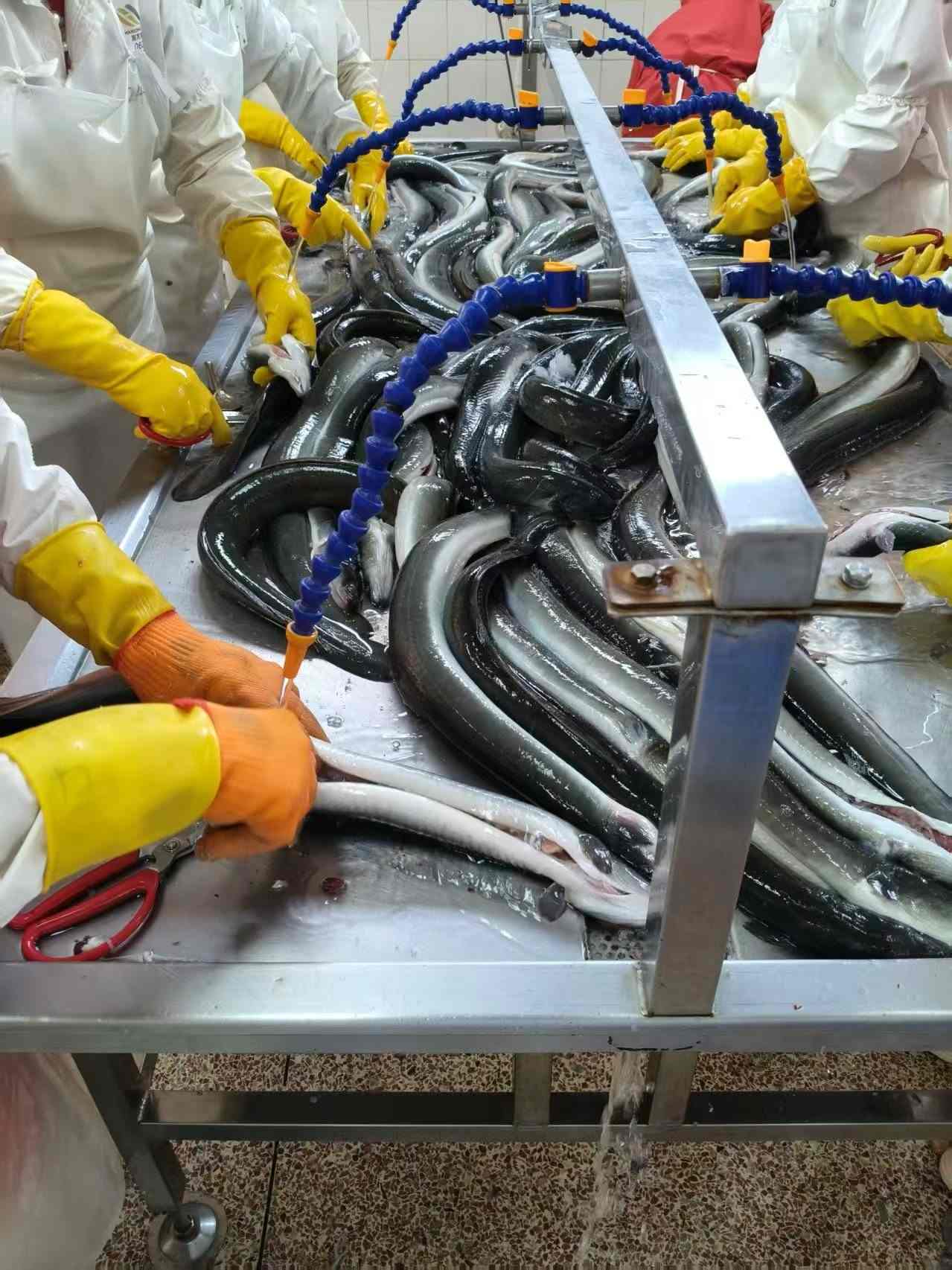
Nutrient content on paper means little if the product doesn't hold up through cold-chain shipping. Our farming bases — around 20 customs-registered sites covering over 2,150 mu — feed into a traceability chain from registration through lab verification, so buyers checking origin claims have documentation to point to. Metal detection at critical control points and ISO 22000:2018 plus HACCP certification cover the safety side; the nutrition side still depends on cut, prep method, and glaze choice, which is why we recommend buyers ask specifically about unagi kabayaki manufacturing specs rather than relying on generic eel nutrition charts.
For teams building recipes around these nutrition angles, our notes on eel noodle soup preparation and glaze balance in our kabayaki sauce breakdown cover how sodium and flavor intensity shift by recipe — useful if you're trying to keep a health-positioned dish from tasting flat.
Quick Reference: What to Ask Your Supplier
| Question | Why it matters |
|---|---|
| What's the fat content of this specific cut? | Affects both flavor and omega-3 concentration per serving |
| Is this white-roasted or soy-glazed? | Sodium and sugar content differ significantly |
| Do you have residue and microbiological test data? | Required for import clearance in Japan, US, EU markets |
| What's the cold storage and shipping timeline? | Affects nutrient retention and product texture on arrival |
If you're evaluating eel for a health-positioned menu or retail line, we can share lab-backed spec sheets and sample cuts — reach out for a quote or a sample request, and we'll walk through which format fits your labeling needs.