

How to Choose Eel Portions for Real Health Benefits Without Excess
A distributor asked us recently: "Can we call our unagi kabayaki a health food on the menu insert?" Good question. The honest answer is: partly, and only within limits. The health benefits of eel are real — it's a dense source of omega-3 fatty acids, vitamin A, and vitamin B12 — but the way it's usually served (glazed, grilled, sauced) can undercut those benefits if portion size and sauce volume aren't controlled. This matters for import buyers and foodservice teams writing product descriptions, because overstating a health claim creates regulatory and reputational risk in markets like the US, EU, and Japan.
This guide is written for people building menu copy, spec sheets, or import documentation — not consumers looking for a diet plan. We'll cover what eel actually delivers nutritionally, where the kabayaki sauce changes the picture, and how to set portion guidance that stays defensible.
What Nutritional Claims Actually Hold Up
Eel (unagi) is genuinely rich in several nutrients that support common health claims:
- Omega-3 fatty acids — supports cardiovascular health messaging, backed by general seafood nutrition research from bodies like the FDA
- Vitamin A — eel is one of the higher natural sources among seafood, relevant for eye health claims
- Vitamin B12 — supports nerve function and red blood cell claims
- High-quality protein — supports muscle maintenance claims, especially relevant for foodservice targeting athletic or senior demographics
These are legitimate, well-documented properties of freshwater eel as a raw ingredient. Where claims start breaking down is at the plate level — once eel is roasted with a soy-based glaze (kabayaki style) and served over rice in a 150-200g portion, calorie and sodium math changes significantly. A menu description that says "packed with omega-3 and vitamin B12" is accurate for the ingredient. A menu description implying the finished dish is "light" or "low-calorie" usually isn't.
Boundary Guidance: When Calories, Sodium, and Portion Size Outweigh the Benefits
This is the section most buyers skip — and the one most likely to cause problems if skipped. Here's where the nutritional upside of eel gets diluted or reversed by preparation and serving choices.
| Factor | Where it stays a benefit | Where it becomes a limitation |
|---|---|---|
| Calories | A 100g portion of grilled unagi kabayaki (unsauced) runs roughly 280-300 kcal — reasonable for a protein-forward entrée | A double-glazed portion with extra tare sauce and a rice bowl can push a single serving past 550-600 kcal, which no longer fits "light meal" positioning |
| Sodium from sauce | A light, single-pass glaze keeps sodium in a moderate range per serving | Traditional kabayaki sauce (unagi tare) is soy-based and reduced repeatedly — multiple coating passes can push sodium well past 700-900mg per serving, a concern for buyers serving hypertension-conscious markets |
| Portion size | 50-80g as a topping (donburi, sushi roll) keeps nutrient density high relative to calorie load | 200g+ whole-fillet servings, common in some Western fusion menus, shift the dish from "nutrient-dense protein" to "calorie-dense entrée" |
| Frequency | 1-2 servings per week fits general dietary guidance for oily fish | Daily inclusion in set menus, without sodium rotation, can conflict with sodium-reduction guidance from health authorities |
Practical takeaway for buyers: if you're writing product descriptions for retail or foodservice, pair any health claim with a stated serving size. "Rich in omega-3 per 100g serving" is defensible. An unqualified "healthy choice" claim on a sauced, rice-topped dish is not — and could trigger scrutiny under EU or FDA labeling rules for prepared foods.
Setting a Defensible Portion Standard — A Step-by-Step Approach
For importers and foodservice groups building spec sheets or menu language, here's a practical sequence we recommend:
- Start from the raw fillet weight. Base nutrition claims on the unsauced, cooked eel weight — not the finished plated weight with rice and garnish.
- Separate the sauce nutrition profile. Request a separate sodium and sugar breakdown for the eel sauce component from your supplier. Tare sauce composition varies by coating layers.
- Define your standard serving size in writing. 80-100g of eel per serving is a common foodservice benchmark that keeps calorie and sodium counts in a moderate range.
- Cap sauce volume per serving. A common mistake is letting kitchen staff free-pour tare sauce — this alone can double sodium content per dish without changing the listed recipe.
- Cross-check against target market rules. EU and Japanese labeling standards differ on sodium disclosure thresholds; confirm before finalizing packaging copy.
- Re-verify after any recipe change. If your roasting process changes (more soy layers, thicker glaze), the nutrition panel needs updating — don't reuse old figures.
Common Mistakes We See in Menu and Packaging Copy
- Quoting raw fish nutrition data for a fully glazed, cooked product
- Omitting serving size next to a health claim ("high in omega-3" with no gram reference)
- Treating all unagi kabayaki products as nutritionally identical, when soy-sauce coating layers vary by producer and process
- Ignoring sodium contribution from rice seasoning or additional dipping sauce served alongside the eel
- Assuming frozen eel has lower nutrient retention than fresh — properly blast-frozen and cold-chain-stored eel retains comparable omega-3 and vitamin content
A Worked Example: Building a Menu Description That Holds Up
Say a foodservice group in Germany wants to add a kabayaki eel bowl to a "balanced protein" menu section. Here's a sequence that keeps the claim accurate:
- Base serving: 90g cooked unagi kabayaki fillet, standard glaze (not double-coated)
- Sauce: 15g tare, applied once, not pooled on the plate
- Rice: standard 150g portion, unsalted preparation
- Resulting calorie range: roughly 420-460 kcal per bowl — reasonable for a protein entrée category
- Sodium: kept under 600mg by limiting sauce volume — worth stating on the menu insert if sodium-conscious guests are part of your customer base
This kind of specific, portion-anchored description is far more defensible than a blanket "heart-healthy" label, and it gives your foodservice partners something concrete to train kitchen staff on.
Sourcing Considerations That Support Accurate Claims
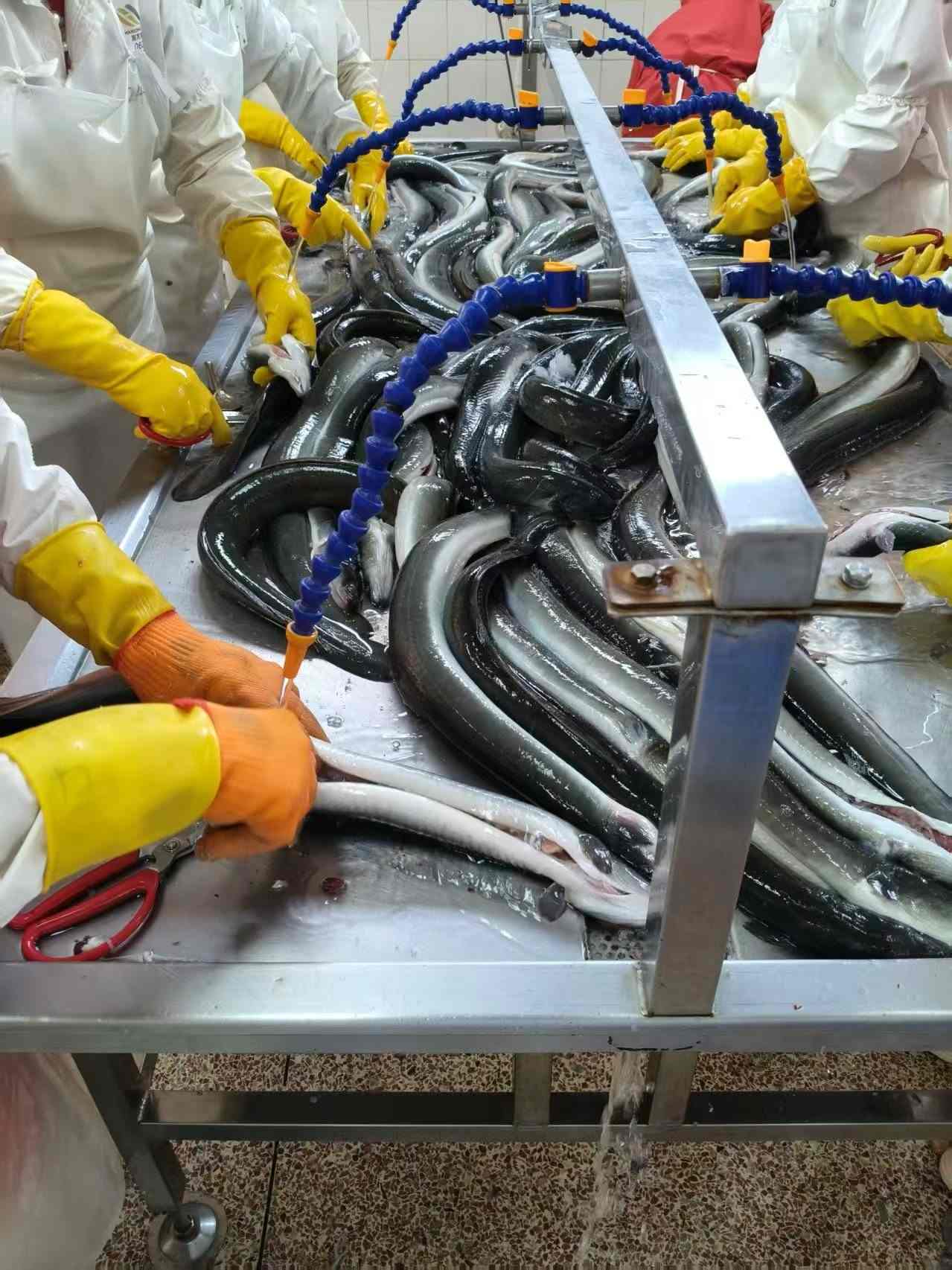
Nutrition consistency starts upstream. Eel raised across registered, traceable farming bases and processed under HACCP-controlled conditions gives buyers a stable baseline to build accurate spec sheets from — rather than re-testing every batch. Our own supply runs through roughly 20 customs-registered farming bases covering 2,150 mu, with process verification and traceability tracking from farm to shipment, plus in-house lab testing and metal detection at critical control points. That consistency matters when you're trying to keep a nutrition panel accurate across repeat orders, not just a single shipment.
For teams sourcing frozen eel or prepared kabayaki for retail or foodservice, it also helps to review farm-to-processing traceability documentation and lab testing records before finalizing product copy — this is what regulatory reviewers in the EU and US will ask for if a health claim gets questioned.
Quick Decision Checklist for Buyers and Menu Planners
- Have you separated raw fillet nutrition from finished-dish nutrition?
- Is your stated serving size actually what's plated in the kitchen?
- Have you confirmed sodium content from your specific sauce formulation, not a generic figure?
- Does your health claim match the labeling rules of your target export market?
- Have you documented traceability back to a registered, tested source?
If most of these are unanswered, it's worth pausing before finalizing packaging or menu language — a vague claim is a bigger liability than no claim at all.
For portion-controlled recipe ideas that keep sauce volume in check, our guide on eel sauce preparation and storage is a useful reference for kitchen teams standardizing pour amounts.
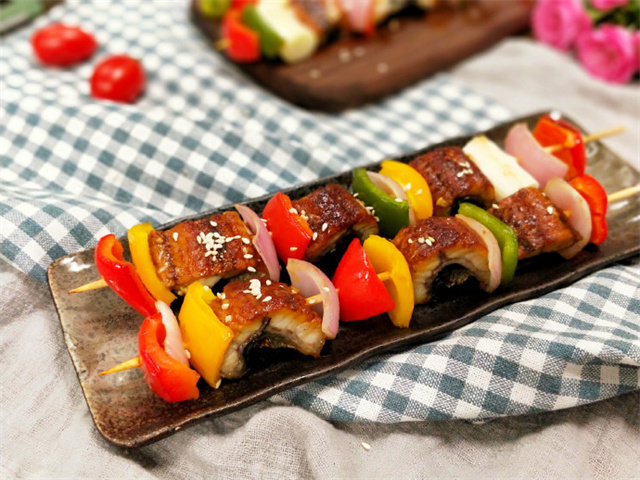
If you're building a spec sheet or menu description and want accurate nutrition and sodium data for a specific product cut, request a sample and technical data sheet from our team — we can provide batch-specific figures rather than generic estimates.