


How Japanese Eels Migrate From Rivers to the Ocean
Why would an eel leave a river, cross the open ocean, and later send its young back toward freshwater? The answer is a life cycle built around two different habitats. Japanese eels spend much of their growing life in rivers and coastal waters, yet reproduce in the ocean.
For seafood buyers, menu planners, and unagi fans, this matters because the familiar grilled fillet is the final food product of an animal with a very different biological history. Understanding that history helps you read sourcing claims more carefully, ask better traceability questions, and distinguish a species life-cycle fact from a processing claim.
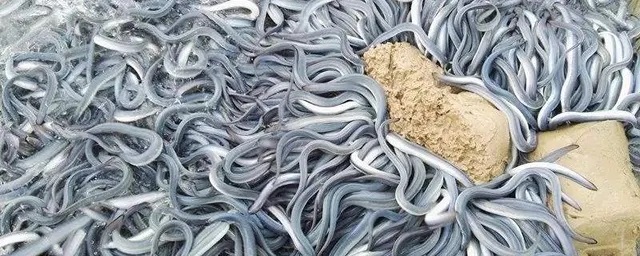
The direct answer is that this species grows in freshwater and reproduces at sea
The Japanese eel, scientifically known as Anguilla japonica, is a catadromous fish. That term means adults move from freshwater or coastal growing habitats toward the sea to reproduce. Their offspring then move in the opposite direction, from ocean waters toward estuaries, rivers, lakes, and other inland habitats.
The key point is simple: river residence and ocean reproduction are not competing explanations. They are consecutive parts of one cycle. An eel that has spent years feeding in freshwater changes into a reproductive adult, leaves inland waters, and travels offshore. The next generation begins at sea and later arrives near the coast as transparent young eels.
Conclusion: Do not describe unagi as a fish that “lives only in rivers.” That description is incomplete. It may fit the feeding stage, but it misses reproduction and early development.
Why this matters in practice: A buyer researching freshwater eels may see “river eel” used as a commercial shorthand. It can describe the species’ growing habitat, but it does not establish where the eel was spawned, how it was raised, or whether its supply chain has documented farm-to-shipment controls.
Where this explanation does not apply: It should not be used to assume that all eel species follow identical migration routes. Different Anguilla species have different spawning areas, ranges, and management concerns. Product documents should identify the species rather than relying only on the word “eel.”
How larval, glass eel, yellow eel, and silver eel stages enable ocean-to-river migration
Each life stage has a different job. The migration is not one long swim by a single, unchanging animal. It is a sequence of developmental changes that prepares the eel for open-ocean drift, coastal entry, freshwater feeding, and the return trip to sea.
| Life stage | Main habitat direction | What changes biologically | What this means for readers and buyers |
|---|---|---|---|
| Larval eel | Develops in ocean waters and moves with marine currents | The early body form is leaf-like and suited to an oceanic beginning rather than river feeding | Shows that the life cycle starts at sea, not in a river farm or inland channel |
| Glass eel | Approaches estuaries and coastal waters, then begins entering freshwater systems | The young eel becomes small and transparent, marking the transition toward coastal and inland habitat | This is the stage often discussed when people ask how freshwater eel production begins |
| Yellow eel | Feeds and grows in freshwater and brackish environments | Body coloration becomes more visible and the animal focuses on growth rather than reproduction | This is the long growing phase most closely associated with the “freshwater eel” description |
| Silver eel | Leaves rivers and coastal growing waters for offshore spawning waters | The adult undergoes maturation changes that support the seaward reproductive migration | Explains why an adult eel does not remain in a river for its whole life |
Larval eels are built for an ocean beginning
After hatching in the ocean, larvae are carried and dispersed through marine waters. Their role is not to feed in rivers immediately. First, they must survive an offshore stage and reach waters connected to their later coastal range.
Practical interpretation: Ocean currents and larval transport help explain why eel abundance can vary by year and region. This is not merely a local river issue. Conditions far offshore can influence how many young eels eventually approach a coastline.
Limit: A general life-cycle diagram cannot predict the availability of a particular commercial lot. Supply availability depends on legal sourcing, farming conditions, processing plans, inventory, and buyer requirements.
Glass eels make the ocean-to-river transition possible
When young eels near coastal waters, they reach the glass eel stage. Their transparent appearance is why they are called “glass” eels. At this point, they enter estuaries and may continue upstream into freshwater habitats.
A common misunderstanding is that glass eels hatch in rivers. They do not. Their arrival in estuaries is the return leg of the species cycle, not the starting point.
Useful fact: Estuaries are not just a line on a map. They connect marine and freshwater conditions, giving young eels a passage between the oceanic larval stage and inland growth habitat.
Yellow eels prioritize feeding and growth
Once established in freshwater or brackish habitat, the eel enters its yellow eel phase. This is the stage associated with feeding and body growth. It can last for a substantial part of the animal’s life, which is why consumers often think of the species as a river fish.
For food professionals, the distinction is helpful when discussing ingredient origin. “Freshwater” can accurately describe the broader growing context, while the full biological description must still include the ocean-spawning phase.
Silver eels reverse the route
The silver eel phase is the departure stage. The adult stops being mainly a freshwater grower and becomes a seaward migrant preparing to reproduce. That reversal closes the migration loop.
Conclusion: The four stages work as a linked system. Larvae support ocean dispersal; glass eels enable coastal and river entry; yellow eels support growth; silver eels enable the return to sea.
What changes if you misunderstand the sequence: You may incorrectly treat an eel farm as the beginning of the whole biological story. Farming and processing are part of the food supply chain, but they are not a substitute for understanding the natural marine-to-freshwater cycle.
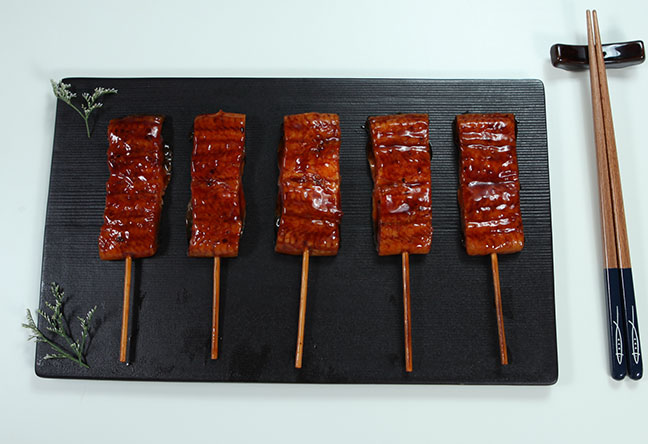
Migration depends on habitat change, body change, and timing working together
No single factor explains the route. The eel’s migration depends on the interaction of developmental stage, salinity transition, feeding priorities, and reproductive maturity.
- Habitat transition affects direction. Larvae begin in marine water, while glass eels shift toward coastal and inland environments. Silver eels later move outward again. If habitat is considered without life stage, the direction appears contradictory.
- Body condition affects purpose. Yellow eels are associated with feeding and growth. Silver eels are associated with reproductive migration. Treating both as the same adult stage hides why one remains inland while the other departs.
- Ocean and river systems affect each other. The ocean stage influences recruitment toward coasts, while river and estuary access influences where young eels can settle and grow. A life cycle cannot be explained using only one environment.
- Species identification affects interpretation. “Unagi” is often used in menus for grilled eel, but a culinary term is not by itself a biological specification. Species, origin records, product form, and processing controls answer different questions.
For a menu planner, this means the migration story is best used as product education, not as a flavor guarantee. Life stage explains ecology. Roast profile, sauce application, cut style, bone treatment, reheating method, and packaging determine the eating experience of a prepared eel product.
For example, a rice-bowl menu needs consistent portion handling and a stable glaze more than a long explanation of migration. A restaurant team can pair this article’s biological background with our unagi kabayaki product information when assessing finished product formats.
Use this checklist to separate life-cycle facts from sourcing claims
Biological context is useful, but it should not replace supplier verification. The right question changes with the task. A chef may need portion and reheating information. An importer may need traceability, food-safety documentation, and product specifications.
- Ask for the species name. Confirm whether the supplier identifies the eel as Anguilla japonica or another species. This avoids treating every “unagi” label as biologically identical.
- Separate farm information from processing information. Farming records concern raw-material control. Roasting, sauce, cutting, freezing, and packaging describe the finished product.
- Request traceability evidence appropriate to your market. A useful record should connect the farm or raw-material source to processing and shipment documentation.
- Check food-safety qualifications against your destination requirements. Certifications do not replace destination-country import rules, but they show the operating systems a supplier has in place.
- Specify the finished format before comparing quotations. Whole fillets, cut pieces, sushi slices, strips, chunks, and skewers involve different handling and menu uses.
- Ask how sauce is handled. A kabayaki product and a separate tare supply offer different menu-control options. Review the eel sauce product page if your kitchen needs a separate sauce item.
Recommendation: Use life-cycle knowledge to frame your questions, then use documents to verify the commercial answer. This approach suits importers, distributors, and restaurant groups that need facts they can place in a procurement file.
When this checklist is not enough: If you are importing into a market with product-specific labeling, veterinary residue, or border-inspection requirements, consult the applicable local regulations and your importer-of-record process. A general supplier checklist cannot replace legal or customs advice.
What Eelpro controls after the eel enters the food supply chain
The natural migration cycle explains the species. Our role begins with controlled sourcing and processing for commercial foodservice and retail needs. Eelpro operates with approximately 20 customs-registered eel farming bases covering more than 2,150 mu, supporting full-chain traceability from farm registration through process verification, targeted sampling, and traceability tracking.
For buyers, the practical benefit is not a claim that farming removes all supply risk. It is that documented control points give the buyer a clearer basis for reviewing raw-material origin and processing records. Our in-house laboratory and metal detectors at critical control points support this process, alongside a quality team within a workforce of more than 160 employees.
Finished-product controls are a separate layer. Eelpro holds ISO 22000:2018, HACCP, and HALAL certification, as well as export food producer registration and an SC Food Production License covering quick-frozen prepared foods. These controls matter when the discussion moves from eel biology to frozen unagi kabayaki, eel sauce, or other frozen seafood.
Our two modern production lines have an annual finished-goods capacity of 4,000 tons, supported by a 1,000-ton cold storage facility. For regular orders, delivery is generally around 30 days from order confirmation to shipment, with the actual schedule negotiated by specification and quantity. This is relevant for planned purchasing, not for urgent assumptions about every SKU or destination.
For restaurant chains, the migration story can become a concise menu note, while the operational focus stays on consistent serving. Our 4-layer soy-sauce coating process, patented low-fat roasting and deodorizing technology, and available custom cuts such as sushi slices, strips, diced pieces, chunks, and three-section cuts help align the finished eel with the intended dish.
We have supplied kabayaki eel to Japanese restaurant chains and exported unagi kabayaki and eel sauce to United States importers. We also supply eel products to importers and foodservice channels in Germany, Poland, Australia, Indonesia, and Southeast Asia. These examples show market experience, but they are not a promise that every product format or shipment condition is identical.
Match the migration story to the right menu and buying conversation
There are two useful ways to apply this information.
- For customer education: Explain that unagi comes from a species that grows in freshwater but reproduces at sea. Keep the message short, accurate, and separate from recipe claims.
- For menu development: Choose prepared format based on the dish. Sushi slices suit portioned assembly, strips can fit noodle or rice applications, and larger fillets suit traditional grilled presentations.
- For procurement: Ask for species identification, cut specification, sauce format, packaging preference, certification documents, and traceability records in the same request.
- For culinary training: Explain that biological migration does not tell a cook how to reheat a product. Preparation instructions still depend on the specific frozen item and serving format.
If your team is building an educational menu around unagi, our unagi ramen guide can help connect the species story with a practical serving idea without confusing ecology with preparation.
Request product selection advice or a specification sheet from Eelpro when you are ready to match an eel format, traceability requirement, and target market.