





How to Choose Canned Eel for Retail or Foodservice
A can that looks attractive on a buyer’s desk can become a costly problem after it reaches a warehouse. Before ordering canned eel, check what is inside, how it is labeled, and whether the format actually fits retail shelves or kitchen operations.
For importers and distributors, the first mistake is assuming all eel products serve the same purpose. A retail buyer may need a consumer-ready can with a finished label, a defined net weight, and a shelf-life statement suitable for local sale. A restaurant distributor may need larger packs, less decorative packaging, and a sauce profile that performs well over rice, noodles, or sushi.
The product name alone does not settle these questions. Canned eel can refer to different species declarations, cuts, sauces, processing methods, and usage occasions. A sourcing decision should begin with the intended sales channel, then move backward through product specification, documentation, packaging, and supplier controls.
Start with the sales channel before comparing suppliers
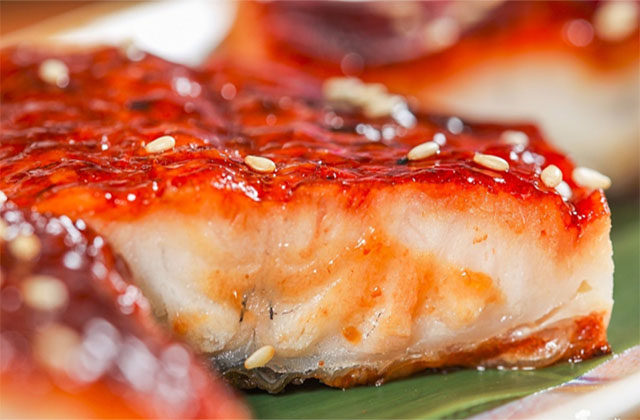
Choose the channel first, not the lowest quoted pack price. The reason is simple: a retail-ready product and a foodservice-oriented pack carry different commercial risks. Retailers face label compliance, shelf presentation, and consumer complaints. Foodservice buyers face portion consistency, kitchen handling, waste, and menu flavor.
A canned product may work well in one channel and fail in another. A small can with printed consumer instructions can be sensible for an Asian grocery retailer, but it may create unnecessary labor and packaging waste for a restaurant group that needs multiple portions per kitchen order.
| Buyer situation | Recommended starting point | Why it fits | When it may not fit |
|---|---|---|---|
| Asian retail importer | Consumer-ready pack with complete market-specific labeling | Supports shelf sale, product identification, and retailer receiving checks | Not suitable if the buyer plans to apply its own private-label artwork |
| Restaurant distributor | Foodservice-oriented pack and a clear portion or cut specification | Helps kitchens plan menu use and reduce preparation steps | Not suitable when restaurant locations need individual retail resale units |
| Private-label buyer | Supplier qualification before artwork approval | Packaging design should follow product, regulatory, and labeling decisions | Not suitable for buyers needing immediate stock goods |
| Mixed retail and catering distributor | Separate SKUs for each channel | Prevents one compromise pack from performing poorly in both channels | May not fit an early test order with limited assortment space |
For buyers considering alternatives to canned formats, frozen roasted eel deserves a separate comparison. Eelpro Co., LTD supplies frozen unagi kabayaki, eel sauce, frozen seafood, and freshwater eels. Our unagi kabayaki is designed for buyers looking for roasted eel rather than a canned product. Do not treat a frozen kabayaki specification as interchangeable with a shelf-stable can. The storage conditions, reheating plan, packaging, and buyer documentation are different.
A sourcing checklist that separates retail-ready canned eel from foodservice packs
Use this checklist before requesting samples. Each line protects against a different sourcing failure. A supplier’s product photograph or general catalog is not enough, because important details can be hidden behind a broad product name.
| Check item | Retail-ready canned eel | Foodservice pack | Why the check matters |
|---|---|---|---|
| Species | Species declaration should match the sales label and buyer’s import requirements | Species declaration should match menu, procurement, and traceability records | “Eel” is not always sufficient for customs, labeling, or customer communication. Ask for the declared species name in writing. |
| Sauce style | Finished flavor should suit the target consumer market and retail positioning | Sauce level should suit the kitchen’s menu use, including rice bowls, sushi, or noodle dishes | A sweet soy-style sauce can be appropriate for one menu but too strong for another. Request a clear sauce description and sample review. |
| Net weight | Net weight must be clear for consumer value comparison and shelf labels | Net weight must support kitchen portion planning and cost control | Buyers should distinguish total pack weight from actual eel content and sauce content where applicable. |
| Shelf life | Retail label needs the applicable date format and storage statement | Foodservice buyers need a receiving and stock-rotation plan | Never assume shelf life from the can’s appearance. Ask for the documented product shelf-life statement and storage instructions. |
| Labeling | Consumer-facing information, importer details, ingredients, allergens, and market requirements need review | Case labels and operational identification may be more important than shelf artwork | An attractive label does not prove legal suitability for the destination market. Review draft artwork before production. |
| MOQ | MOQ should match the retailer’s launch quantity and SKU plan | MOQ should match expected restaurant volume and warehouse turnover | MOQ affects working capital and inventory exposure. Confirm whether it is set by product, can size, artwork, or carton format. |
The practical conclusion is clear. Do not approve canned eel until the supplier answers all six points in one specification sheet. This approach fits early-stage supplier qualification and sample planning. It does not replace destination-market legal review, import registration, or a buyer’s own label approval process.
A useful extra question is whether the sauce is packed as part of the finished product or handled separately in the buyer’s program. Buyers developing grilled-eel menus can compare sauce direction with an eel sauce product page before deciding whether a ready-sauced product or a separate sauce supply better fits their business.
Check the product specification before judging appearance
Ask for the specification sheet before asking for a quotation. A quote without a locked product description can produce false comparisons. One supplier may quote eel portions in sauce, while another quotes a can with a different eel-to-sauce balance, cut form, or label format.
For canned eel, the buyer should request the following information in a written format:
- Declared species and country-of-origin information where applicable.
- Cut style, such as whole section, pieces, strips, or other defined format.
- Ingredients and allergen declaration.
- Sauce style and whether sauce is included in the stated net weight.
- Net weight, drained weight if applicable, and units per carton.
- Storage statement and documented shelf-life statement.
- Primary packaging material, outer carton information, and pallet configuration if available.
- Draft label artwork for the destination market.
- MOQ basis, including whether MOQ changes with private-label packaging.
- Sample availability and the sample’s relationship to final commercial production.
This checklist is especially useful when two offers look similar but are not. A lower unit price may reflect a different can size, a different sauce level, fewer label services, or a larger MOQ. The correct comparison is not “price per can.” It is “price per approved specification.”
For buyers who prefer a frozen, ready-to-heat route, Eelpro uses a four-layer soy-sauce coating process for roasted eel, with color standards covering white-roasted eel and the first through fourth soy-sauce coatings. This is relevant to frozen kabayaki sourcing, not a claim about canned processing. Review the difference carefully before combining product categories in the same RFQ.
Assess shelf life, labeling, and processing evidence without making assumptions
A sealed can can create false confidence. Do not assume that all canned eel has the same shelf life, storage requirement, or import documentation. Product stability depends on the validated process, package, formula, and supplier documentation.
Buyers should ask how the supplier controls the product’s processing and what documents can support the commercial specification. The technical term thermal processing is relevant to canned foods because the heat treatment and package system are part of food safety control. For purchasing purposes, the immediate action is not to guess at process details. Ask the supplier for the product’s documented process information, shelf-life statement, storage instruction, and relevant market documents.
Labeling needs the same discipline. Retail labels commonly require more finished consumer information than foodservice outer cartons. A buyer should confirm who is responsible for:
- Ingredient list and allergen statement review.
- Net weight expression and unit presentation.
- Country-of-origin and importer information where required.
- Lot coding and date-format presentation.
- Language requirements in the destination market.
- Nutrition information when required by the local market.
- Retail barcode preparation when the product will enter stores.
Cold fact: a can label can be legally incomplete even when the product itself is acceptable. The risk is not limited to food quality. Incorrect artwork can delay customs clearance, warehouse receiving, retailer onboarding, or relabeling approval.

Use supplier controls to screen risk before requesting a commercial trial
For canned eel buyers, a supplier review should cover more than product images and a sample tasting. The buyer needs to know who controls raw material, production verification, foreign-material prevention, cold-chain steps where applicable, and traceability records.
Eelpro Co., LTD is certified to ISO 22000:2018 and HACCP systems, holds HALAL certification and an Export Food Producer Registration Certificate, and operates under SC Food Production License No. SC11135062401122 for quick-frozen prepared foods, including cooked products and seasoned aquatic products. These qualifications apply to our stated quick-frozen production scope. They should not be interpreted as a canned-food certification claim.
For frozen eel programs, Eelpro’s supply system includes approximately 20 customs-registered eel farming bases covering more than 2,150 mu, with traceability controls from farm registration through processing verification, targeted sampling, and shipment tracking. The company also operates an in-house laboratory and uses metal detectors at critical control points. Buyers can review the eel lab of Eelpro Co., LTD when assessing our frozen seafood quality-control approach.
This level of review fits importers that are qualifying a frozen unagi supplier, a seafood distributor adding eel items, or a restaurant group sourcing standardized roasted eel. It does not remove the buyer’s responsibility to confirm destination-country import rules, label requirements, and product-category requirements for canned eel.
Relevant export references include long-term kabayaki eel supply to Japanese restaurant chains, unagi kabayaki and eel sauce exports to United States food importers, eel product supply to German and Polish importers, and exports meeting European Union food safety and veterinary drug residue standards. Eelpro also supplies eel products to foodservice and retail channels in Australia, Indonesia, and Southeast Asia. These references concern stated eel export activities and should be discussed against the buyer’s specific requested format.
A practical RFQ process that prevents mismatched samples
Send an RFQ in stages. This reduces the chance that a supplier sends a sample that tastes acceptable but does not match your intended pack, label, or channel.
- Define the channel: State whether the item is for retail, foodservice, private label, or a mixed program.
- Define the product: Specify species declaration needs, cut style, sauce style, net weight, and expected usage occasion.
- Define packaging: State whether you require consumer-ready cans, plain foodservice packs, gift-box presentation, or private-label artwork.
- Request documents: Ask for the specification sheet, ingredient and allergen details, shelf-life statement, storage statement, and available certifications relevant to the supplier’s product scope.
- Confirm MOQ: Ask whether MOQ changes by can size, product formulation, packaging artwork, or carton design.
- Evaluate the sample: Taste it in the intended use, not only straight from the pack. A rice-bowl application, sushi application, and bar snack application may need different sauce balance.
- Approve a final specification: Lock the written specification before discussing recurring orders.
For example, a distributor serving Asian grocery stores and Japanese restaurants should not request one generic sample of canned eel. The retail team should review label readability, net weight, and consumer appeal. The foodservice team should test the product on a prepared menu item and calculate portions from the actual pack format. If both teams approve different requirements, create separate SKUs rather than forcing one pack into two incompatible jobs.
Common buying mistakes that create avoidable cost
- Comparing only unit prices: This fails when net weight, sauce content, labeling services, or MOQ differ. Compare offers only after the specification is aligned.
- Using “eel” as the full product description: This is too vague for sourcing. State species declaration requirements, cut, sauce, pack format, and market destination.
- Approving artwork before confirming the formula: Ingredients, allergens, and nutrition details may change with the final recipe. Confirm the product first.
- Assuming retail and foodservice use the same pack: Retail needs consumer-facing information; kitchens need operational convenience. Separate the decision paths.
- Treating a sample as final production: Ask whether the sample reflects the intended commercial specification, packaging, and sauce profile.
- Ignoring supplier scope: A supplier may be strong in frozen roasted eel but not offer canned products. Confirm product category capability directly rather than relying on broad seafood claims.
The best buying decision is not always the one with the most decorative can or the lowest opening quote. It is the one where product definition, channel needs, documentation, and supplier scope all match. Buyers seeking frozen alternatives can also review Eelpro as an unagi kabayaki manufacturer for export-oriented roasted eel supply.
Request a specification review and sample discussion for your retail or foodservice eel program.
 WhatsApp
 sales@chinaeels.com
 +8619937922411