

Choosing Unagi Kabayaki Frozen for Your Sushi Menu Starts With What the Spec Sheet Won't Tell You
Here's the risk nobody flags until the first pallet arrives: two suppliers can sell the same "grade A" unagi kabayaki frozen product, yet one thaws into a firm, evenly glazed fillet and the other collapses into mush with a bone splinter in bite three. By the time you find out, you've already committed container space, deposit money, and a menu launch date. This guide breaks down exactly what to check before you send an RFQ.
Why Fillet Size and Sauce Coverage Decide Your Plate Cost, Not Just Your Flavor
Restaurant buyers often shortlist suppliers on price per kilogram alone. That's the wrong first filter. Fillet size determines portion consistency — and portion consistency is what keeps your food cost stable across a 200-cover Friday night.
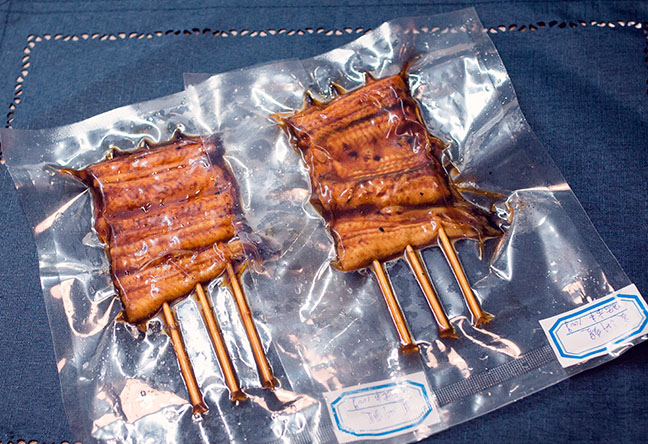
A fillet running 180-220g is standard for a la carte donburi service; anything under 150g forces you to double-plate, which quietly erodes margin. Sauce coverage matters just as much. A properly built kabayaki uses a 4-layer soy-sauce coating process, applied in temperature-controlled stages, so the glaze caramelizes into the flesh instead of sitting on top as a sticky shell that burns under the salamander.
A Sourcing Specification Matrix for Sushi Operators
Before you request a sample, ask your supplier to fill in a matrix like this one. If they can't answer every row with a number, treat that as a warning sign — not a minor gap.
| Spec Item | What to Ask For | Why It Matters |
|---|---|---|
| Fillet size | Weight range per piece (e.g. 180-220g), length in cm | Inconsistent sizing means inconsistent plating and unpredictable yield per case |
| Sauce coverage | Number of coating layers, sauce viscosity spec | Thin, single-pass sauce burns or flakes off during reheating; multi-layer coating holds up under a broiler |
| Bone removal | Deboning method, residual bone tolerance (visual/metal-detected) | Undetected bone fragments are the #1 cause of guest complaints and liability claims in sushi service |
| Glazing finish | White-roasted vs. soy-glazed standard, color grade reference | Color consistency signals process control — uneven glaze often means uneven roasting temperature |
| Cold-chain requirement | Core temperature at loading, transit temperature log availability | Eel held above -18°C during transit risks texture breakdown and drip loss on arrival |
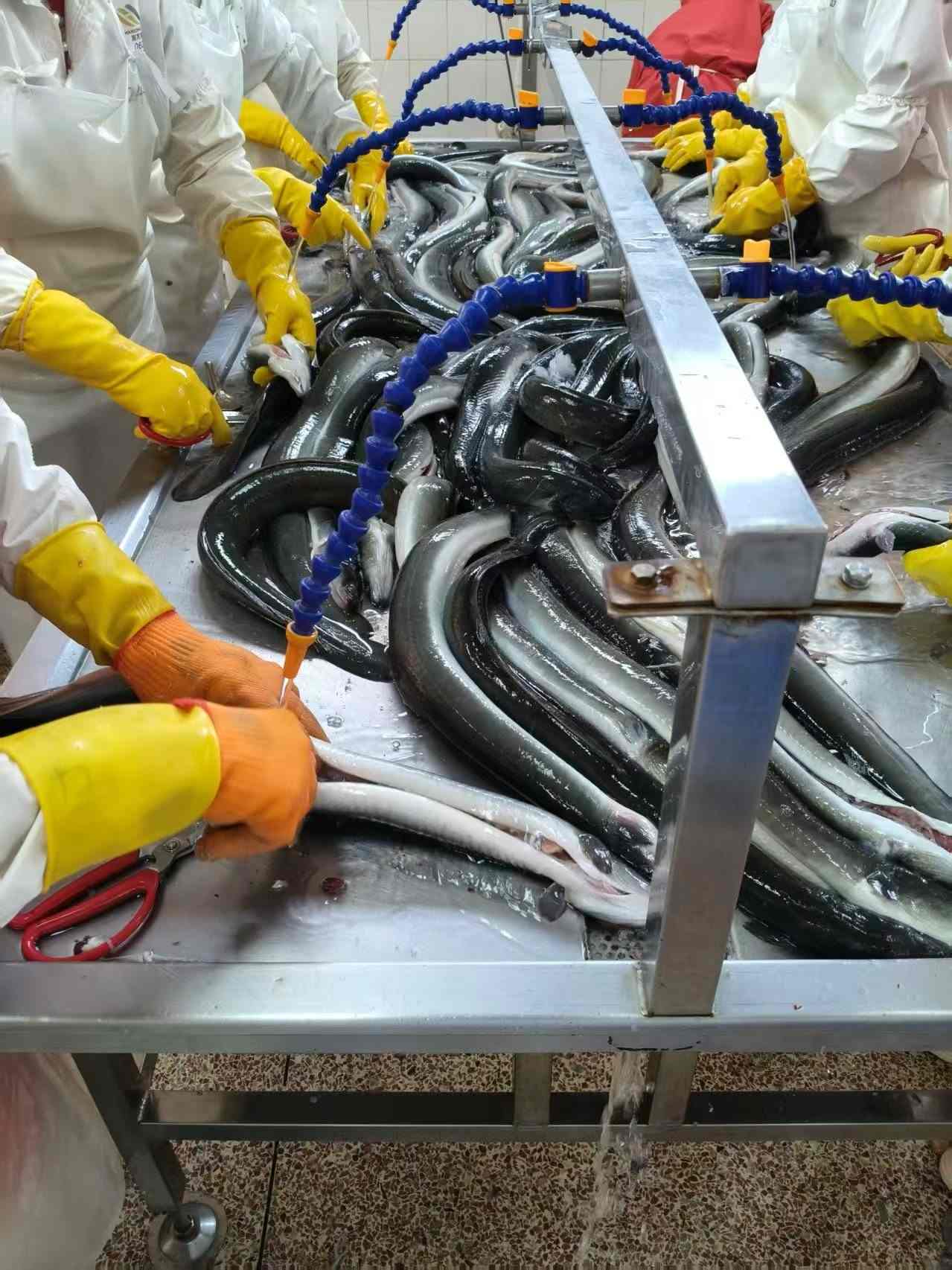
Bone removal deserves extra attention here. Even boneless-labeled eel can carry stray pin bones if the deboning line lacks metal detection at critical control points. Ask specifically whether the plant runs in-house laboratory testing and metal detection as a standard step, not an occasional audit.
Certifications That Actually Reduce Your Import Risk
Not every certificate on a supplier's website is doing real work for you. Some are marketing. Others directly reduce your customs clearance risk and product liability exposure. Here's the distinction that matters for eel imports specifically:
- ISO 22000:2018 and HACCP — these govern the process controls inside the plant, from raw material intake to packaging. They tell you the supplier has documented control points, not just good intentions.
- HALAL certification — needed if you're supplying markets in Indonesia or Southeast Asia where halal compliance is a purchasing requirement, not a preference.
- Export Food Producer Registration and SC Production License — without these, the shipment may not clear inspection at all, regardless of product quality.
Nancy Chen, a food safety specialist who has spent over a decade auditing seafood export operations under HACCP frameworks, points out that veterinary drug residue testing is where many first-time importers get caught off guard. Japan, the US, and the EU each run different residue thresholds, and a supplier that only tests against domestic Chinese standards may pass local checks and still fail at your port of entry. Products verified against Japan, US, and EU inspection standards for veterinary drug residues and microbiological indicators close that gap before the container ever ships.
Traceability — The Question That Separates Serious Suppliers From Traders
Ask this one question early: "Can you trace this batch back to the farm?" A supplier backed by certified farming bases — in this case around 20 customs-registered farms covering roughly 2,150 mu — should be able to answer in minutes, not days. Full-chain traceability means farming registration, process verification, targeted sampling, and shipment records are linked, so if a residue issue ever surfaces downstream, you can isolate the batch instead of pulling your entire inventory.
Traders reselling third-party stock usually can't do this. That's not automatically disqualifying — some traders offer better pricing on standard cuts — but it does mean you're accepting more risk on anything destined for markets with strict inspection regimes, like the EU or Japan.
Cold Storage and Logistics — Where Quality Quietly Degrades
Frozen eel doesn't fail at the factory. It fails in transit, or worse, in your own back-of-house freezer. A 1,000-ton cold storage facility at origin only protects the product until it leaves the dock. After that, the cold chain is your responsibility too.
- Check the loading temperature — product should leave the freezer at or below -18°C, with a logged reading, not a verbal assurance.
- Confirm transit time realistically — standard order lead time from confirmation to shipment runs around 30 days, negotiable by spec and volume; rushed timelines sometimes mean skipped freezing dwell time.
- Ask about the packaging format — skin-packaging holds glaze integrity better for retail-facing display; gift-box or bulk cut-piece formats suit foodservice back-of-house prep.
Common Mistakes Buyers Make Before Placing the First Order
- Judging quality by photo alone — glaze color in a marketing photo tells you nothing about roasting temperature control. Ask for the white-roasted color and soy-sauce coating color standards in writing.
- Skipping the MOQ conversation — MOQ differs sharply between catering-chain volumes, wholesale orders, and export-trader lots. Confirm which tier applies to you before quoting yourself a landed cost.
- Ignoring cutting specification options — shredding, dicing, strip-cutting, chunk-cutting, 3-section cut, and sushi slices are not interchangeable. A sushi bar needs sushi-slice spec; a ramen kitchen needs strip-cutting. Ordering the wrong cut means re-processing labor you didn't budget for.
- Not asking who the product ships to already — a supplier with existing shipments into Japan, the US, Germany, Poland, or Australia has already been through those countries' inspection regimes at least once. That's a meaningfully lower-risk starting point than a first-time exporter to your market.
A Worked Example — Shortlisting for a Sushi Chain Opening in the EU
Say you're sourcing for a 12-location sushi chain launching in Poland. Your checklist should look like this:
- Confirm the supplier holds ISO 22000 and HACCP certification, plus documentation showing EU veterinary drug residue compliance.
- Request the fillet size range and ask for sushi-slice cut samples, not generic kabayaki chunks.
- Verify cold-chain temperature logs for a previous EU shipment, if available.
- Check MOQ against your projected weekly volume across 12 locations — export-trader MOQ tiers usually fit multi-location rollouts better than single-restaurant catering MOQs.
- Confirm lead time against your opening date, building in the standard ~30-day window plus ocean transit.
Skipping step 3 is the mistake we see most often — buyers confirm certification on paper but never ask for actual transit temperature evidence, which is the part that predicts real-world product condition on arrival.
Pairing the Product With Your Menu
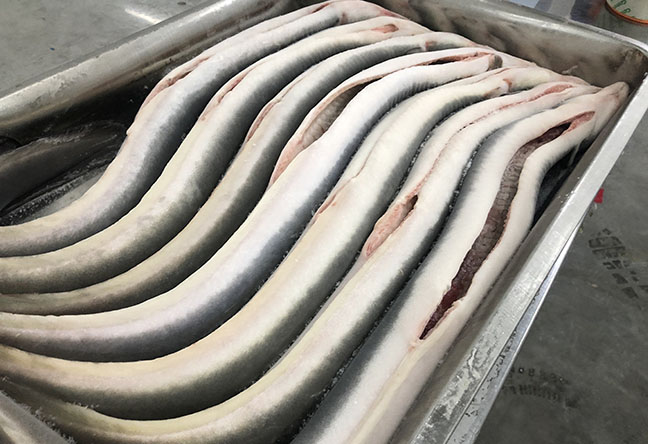
Once the eel itself checks out, the sauce is the next variable worth locking down. A well-built eel sauce should match the glaze on the fillet rather than fight it — inconsistent tare is a common reason kitchens end up doctoring sauce on the line, which adds labor and variability. For teams building out a donburi or nigiri program, it's worth reviewing how unagi kabayaki is roasted and cut before finalizing your spec sheet, and checking what makes a properly built kabayaki sauce hold up under high-volume plating.
Quick Decision Checklist Before You Send the RFQ
- Does the supplier provide a written fillet-size and sauce-coverage spec, not just marketing photos?
- Can they trace the batch to a specific certified farming base?
- Do they test against your destination market's residue and microbiological standards, not just domestic ones?
- Can they confirm loading temperature and transit logs?
- Does their MOQ tier match your order volume and channel type?
If a supplier answers all five with specifics rather than generalities, you've cleared the shortlisting stage. From there, request a sample cut in the exact spec your menu needs, along with a spec sheet you can hold them to. Reach out with your target volume, cut type, and destination market, and ask for a sample or a formal quote before committing to a full container.