

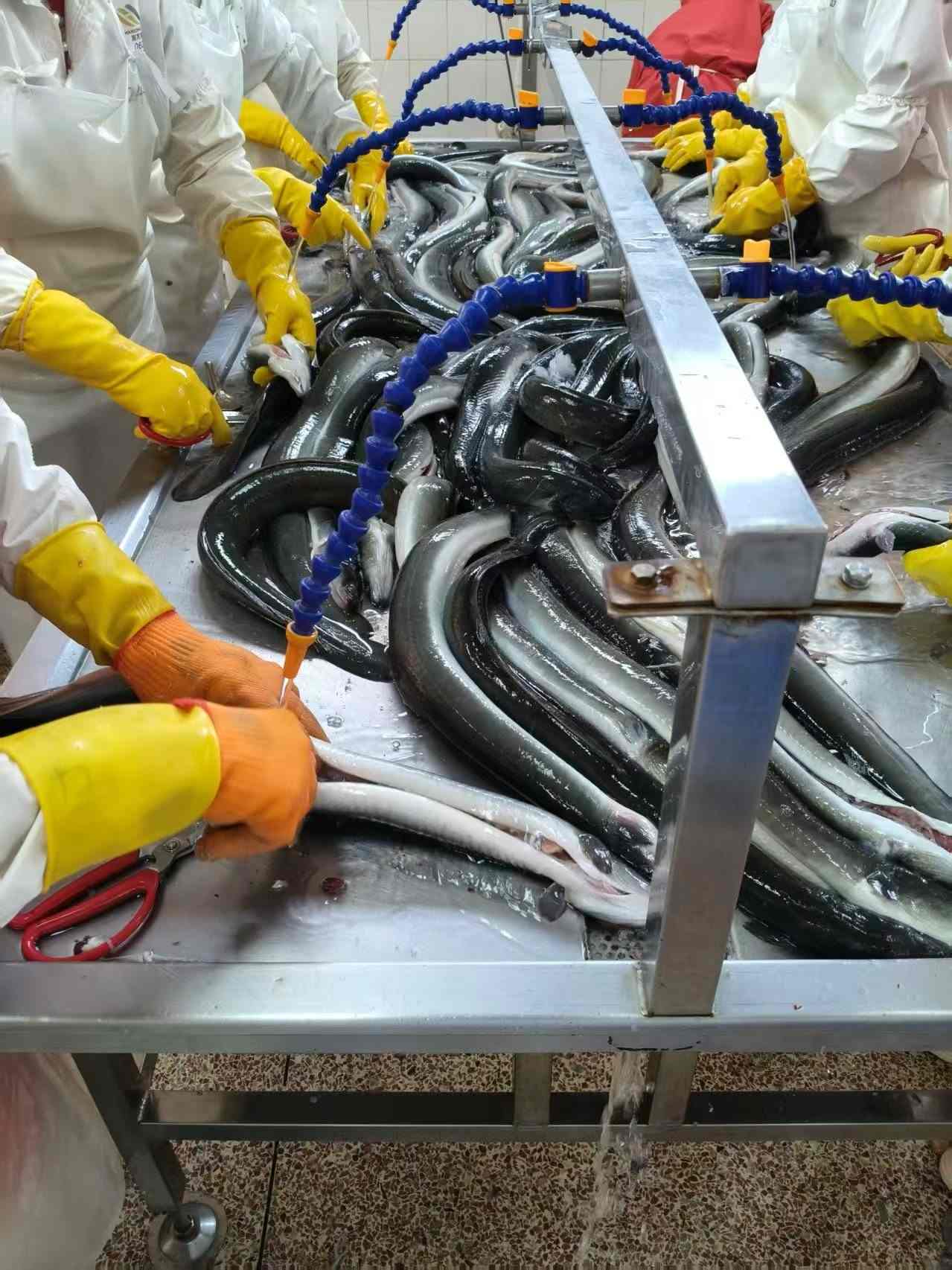
Buyers Comparing Unagi Kabayaki Frozen Offers Should Price by the Portion, Not the Case
A cheap case price looks great on a quote sheet. It looks a lot less great once the kitchen weighs what's actually left on the plate. That's the regret many foodservice buyers report after their first container of unagi kabayaki frozen fillets arrives lighter, once ice glaze, trim, sauce, and thaw loss get subtracted from the printed case weight. If you're building a purchase budget or comparing two suppliers side by side, the number that matters is cost per usable portion — not the number stamped on the carton.
Why Case Price Lies to Foodservice Buyers
Case price tells you what you pay per kilogram of frozen product as shipped. It doesn't tell you how many servable portions you get after thawing, trimming, and portioning to your menu spec. Two suppliers quoting the same $/kg case price can produce very different plate costs once you factor in:
- Net weight versus gross weight (glaze/ice percentage on the fillet)
- Thaw loss during defrosting and re-heating
- Usable yield after skin, bone fragments, or trim removal
- Sauce weight added per serving (unagi tare is rarely "free")
- Actual serving size on your menu — 100g fillet vs. 140g fillet changes the math entirely
This is exactly why kitchens comparing frozen unagi kabayaki product offers on case price alone often overspend on the second reorder, once real usage data comes in.
The Per-Portion Cost Method: Pack Weight, Yield, Thaw Loss, Sauce, and Serving Size
The reliable way to price frozen unagi kabayaki is a five-input formula. Each input has a different level of certainty, and treating an estimate as a confirmed fact is the single most common budgeting mistake we see from new importers.
| Cost Input | Status | How to Confirm It |
|---|---|---|
| Case price and net pack weight | Confirmed | From the supplier's commercial invoice and carton spec sheet |
| Glaze/ice percentage | Confirmed (should be on COA) | Request drained net weight on the Certificate of Analysis |
| Thaw loss % | Estimated | Run a controlled thaw test — weigh before and after defrost |
| Usable yield after trim | Estimated | Portion 5–10 fillets and record trim waste weight |
| Sauce weight per serving | Confirmed once recipe-set | Standardize grams of tare per plate in your recipe card |
| Freight, duty, storage to destination | Unknown until quoted | Get landed cost from your freight forwarder, not the FOB price |
The formula itself:
Cost per portion = [(Case price ÷ Net pack weight) × Serving size ÷ (1 − Thaw loss %) ÷ Usable yield %] + (Sauce cost per gram × Sauce weight per serving)
Never publish a menu cost based only on the confirmed inputs — the estimated ones (thaw loss, yield) swing the result by 8–15% in practice, and skipping them is how buyers end up underpricing a dish.
A Worked Example Comparing Two Frozen Unagi Kabayaki Offers
Say you're comparing two suppliers for a donburi program. Both quote a similar per-kilogram price, but the real numbers differ once you run the test:
| Supplier A | Supplier B | |
|---|---|---|
| Case price | $8.50/kg | $8.20/kg |
| Net pack weight | 10 kg | 10 kg (glazed, 8% ice) |
| Drained net weight | 10 kg | 9.2 kg |
| Thaw loss (tested) | 4% | 9% |
| Serving size | 120 g | 120 g |
| Sauce (tare) per serving | 15 g @ $0.03/g | 15 g @ $0.03/g |
| Estimated cost per portion | $1.51 | $1.64 |
Supplier B looked cheaper by $0.30/kg on paper. After accounting for glaze weight and a higher thaw loss figure, the actual plate cost runs about 9% higher. This is a hypothetical illustration to show the method — always run your own thaw test with sample product before locking in a supplier decision.
Common Mistakes That Inflate Real Menu Cost
- Quoting from gross case weight instead of drained weight — ask for the net weight after glaze on the COA, not the printed carton figure.
- Skipping a thaw-loss test on first order — a single 5-fillet test batch takes under an hour and saves recurring miscalculation.
- Forgetting sauce cost entirely — a standardized eel sauce portion adds real cost per plate, not a rounding error.
- Assuming boneless means zero trim loss — even deboned cuts lose a small percentage to edge trim during plating.
- Locking pricing before checking Incoterms — landed cost (freight, duty, cold storage) is often the largest unknown variable in the whole calculation.
Buyer's Decision Checklist Before You Send an RFQ
- Request drained net weight (not gross) on the product specification sheet
- Ask the supplier for their own thaw-loss and yield data, then verify with your own test
- Confirm whether kabayaki sauce is included in the case price or billed separately
- Check cutting specification (skewer, cut piece, sushi slice) against your recipe's serving size
- Confirm cold storage capacity and delivery lead time — production-to-shipment timelines typically run around 30 days and are negotiable by spec and volume
- Verify certifications (ISO 22000, HACCP, export food producer registration) before, not after, contract signing
What Traceability and Certification Add to Cost Confidence
Estimated inputs like thaw loss and yield stay more stable when the supplier's process is controlled end to end. As a food safety auditor who has worked across ISO 22000 and HACCP systems for seafood exporters, I can say the biggest variable-cost swings usually trace back to inconsistent raw material or inconsistent roasting, not bad luck.
Suppliers operating under HACCP and ISO 22000:2018 with a documented production line — from customs-registered farming bases through an in-house lab and metal-detector checkpoints — tend to deliver tighter batch-to-batch consistency. A supplier drawing raw material from roughly 20 customs-registered farming bases covering over 2,150 mu, with full traceability from farm registration through process verification, gives buyers a narrower range on yield and thaw-loss estimates, because the eel size and fat content going into the roasting line stays more uniform. A patented low-fat roasting and 4-layer soy-sauce coating process also affects how much sauce clings to the fillet after cooking, which directly changes your sauce-weight input in the formula above. A 1,000-ton cold storage facility supports stable cold-chain handling between production and shipment, which matters if your thaw test happens weeks after the container clears customs rather than immediately at the factory.
None of this replaces your own thaw test. But it does mean your estimated inputs are less likely to shift wildly between purchase orders — which is the real cost risk in bulk frozen eel sourcing.
Building This Into Your Purchase Budget
Once you've run the formula with real thaw and yield data, apply it across your projected monthly volume rather than a single case. A 5% miscalculation on thaw loss barely matters on one case; multiplied across a 500-portion weekly menu run, it becomes a budget line you'll notice by month three. If you're scaling a donburi, ramen, or sushi program, request a sample case first, run the test on your own equipment — thaw behavior differs by fridge and by kitchen — and only then finalize your frozen seafood purchase order against the confirmed number, not the quoted one. For teams still developing recipes around portion sizing, our eel rice bowl toppings guide is a useful reference point for standard serving weights.
If you'd like help running this calculation against your own menu spec, request a sample case and a spec sheet — we're happy to walk through the numbers with your kitchen team before you commit to a purchase order.