





Revealing the Most Surprising Facts About the Gulper Eel and Its Hunting Strategy
The deep ocean is a world of extremes, where pressure is immense, light is non-existent, and food is incredibly scarce. For the creatures that live here, survival depends on extraordinary adaptations. One of the most striking examples is the gulper eel (Eurypharynx pelecanoides), a fish that has mastered the art of eating anything it can find, even prey larger than itself. Understanding the key facts about the gulper eel begins with one question: how does it accomplish this seemingly impossible feat?
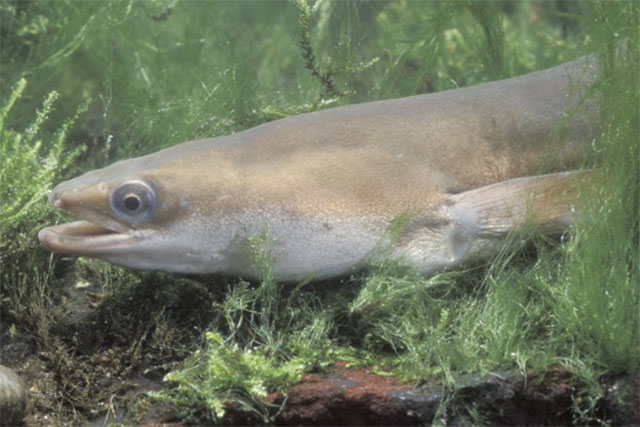
Unlike the freshwater eels prized in cuisine, such as the Japanese eel (Anguilla japonica) used for unagi kabayaki, the gulper eel is not a commercial species. It is a creature of the bathypelagic zone, or "midnight zone," living at depths of 500 to 3,000 meters (1,600 to 9,800 feet). Its unique anatomy is a direct response to the challenges of its environment, offering a fascinating look at evolution in action. In this article, we'll explore the mechanics of its incredible mouth and other adaptations that make it a true deep-sea survivor.
The Gulper Eel's Jaw and Pouch: A Masterclass in Deep-Sea Adaptation
The most defining feature of the gulper eel, also known as the pelican eel, is its enormous mouth. Its lower jaw is disproportionately large and loosely hinged, allowing it to open wide enough to engulf prey much larger than its own head. This isn't just about a big bite; it's a highly specialized system for maximizing every rare opportunity for a meal in the food-scarce deep.
When the gulper eel encounters potential prey, it opens its mouth and creates a massive net-like scoop. This action also inflates its throat and stomach area into a huge pouch, trapping the prey along with a large volume of water. The eel then slowly expels the water through its gill slits while swallowing the captured animal. This mechanism allows it to be a non-selective feeder, consuming fish, crustaceans, and cephalopods that happen to swim by.
To fully appreciate this adaptation, it’s helpful to compare its feeding anatomy to that of a more typical surface-dwelling fish. The differences highlight why the gulper eel is so unique.
Comparative Anatomy: Gulper Eel vs. Typical Bony Fish
| Feature | Gulper Eel (Eurypharynx pelecanodes) | Typical Bony Fish (e.g., Cod) |
|---|---|---|
| Jaw Hinge | Loosely articulated and unattached to the skull, allowing for an exceptionally wide gape. | Firmly attached to the cranium, limiting the mouth's maximum opening size. |
| Gape Size | Can open to a size many times larger than its own head, creating a huge "net." | Gape is proportional to the head and skull structure. |
| Throat & Stomach | The pharynx and stomach are highly expandable and distensible, forming a large pouch to hold prey and water. | Stomach is relatively inelastic, designed for prey that fits comfortably within the body cavity. |
| Hunting Strategy | Engulfs prey by expanding its mouth and pouch. It is an opportunistic "trapper." | Relies on suction feeding, direct biting, or chasing down prey of a specific size. |
| Practical Implication | Can successfully capture and consume a wide range of prey sizes, which is critical when meals are infrequent. | Prey selection is strictly limited by mouth size, requiring more frequent hunting of appropriately sized food. |
Beyond the Mouth: Other Adaptations for Survival in the Deep
While the jaw is its most famous feature, the gulper eel possesses several other adaptations essential for life in the crushing blackness of the deep sea. These traits, when viewed together, paint a picture of a creature perfectly honed for its environment.
- Bioluminescence: The gulper eel has a photophore, or light-producing organ, at the tip of its long, whip-like tail. Scientists believe this glowing lure, a form of bioluminescence, is used to attract curious prey in the absolute darkness. By wiggling the lure, it can draw small fish and crustaceans closer to its massive, waiting mouth.
- Reduced Anatomy: Many features common in other fish are reduced or absent in the gulper eel. It has no scales, no pelvic fins, and very small pectoral fins. Its eyes are also tiny, as vision is nearly useless in the pitch-black midnight zone. These reductions conserve energy, a vital strategy when food is unpredictable.
- Highly Developed Sensory System: To compensate for its poor eyesight, the gulper eel likely has a well-developed lateral line system. This system of sensory organs runs along the sides of its body, detecting minute vibrations and pressure changes in the water, allowing it to sense nearby prey or predators without seeing them.
From Deep-Sea Survival to Foodservice Excellence: The Importance of Controlled Environments
The gulper eel is a marvel of natural engineering, built to survive in an unpredictable and harsh environment. However, for the global food industry, predictability, safety, and quality are paramount. This is where the world of commercial eel production diverges completely from the wild. The eels we supply for foodservice are freshwater species like Anguilla japonica, which are raised in highly controlled environments to ensure they meet strict international standards.
A B2B buyer in Japan, the US, or Germany cannot afford the variability that comes with a "wild catch" mentality. They need a consistent supply chain built on precision and control. At Eelpro, we achieve this through our fully integrated system, which stands in stark contrast to the gulper eel's life of chance.
Our process starts at our ~20 customs-registered unagi eel farms, covering over 2,150 mu. This allows for full-chain traceability, from the moment an eel is farmed to the final shipment. We monitor water quality, feed composition, and animal health to produce high-quality raw materials. This control eliminates the risks associated with wild-sourcing, such as inconsistent size, texture, and potential contaminants. Our in-house eel lab and team of 25 quality-control specialists conduct rigorous testing for veterinary drug residues and microbiological indicators, ensuring every batch meets the stringent food inspection standards of the EU, Japan, and the United States.
A Buyer's Checklist for Sourcing High-Quality Commercial Eel
When sourcing frozen eel products for your market, whether for restaurant chains in Australia or importers in Poland, relying on a supplier with robust systems is non-negotiable. The fascinating facts about the gulper eel remind us that nature is wild, but your supply chain shouldn't be. Here is a checklist to help you evaluate potential suppliers.
- ☐ Certification Verification: Does the supplier hold internationally recognized food safety certifications? Look for ISO 22000:2018 and HACCP as a baseline. We hold these, along with HALAL certification and an Export Food Producer Registration, providing verifiable proof of our commitment to safety.
- ☐ Farm-to-Fork Traceability: Can the supplier trace the product back to its source? A vertically integrated supplier with its own registered farming bases can offer a level of transparency that a simple processor cannot.
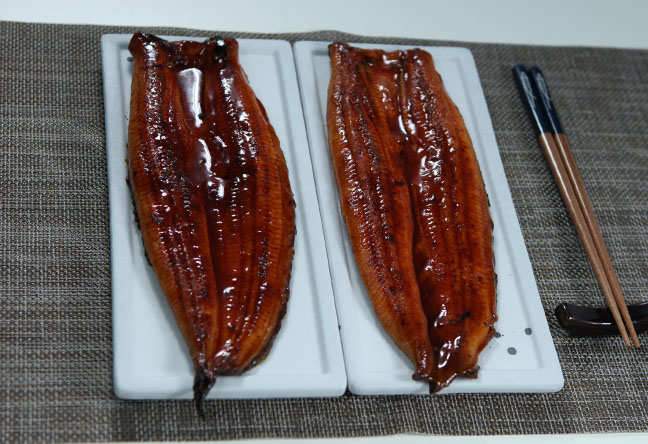
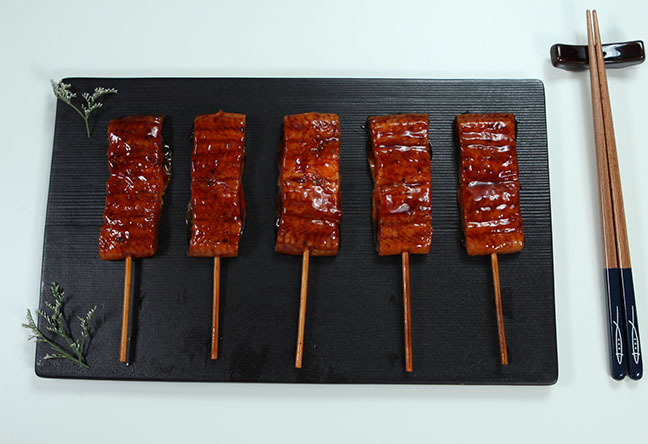
- ☐ Advanced Processing Technology: What technology is used to ensure product quality and consistency? Our facility utilizes patented low-fat roasting and deodorizing equipment. Our signature 4-layer soy-sauce coating process uses precise temperature controls to achieve a perfect glaze and flavor profile in every batch of high-quality unagi.
- ☐ Proven Export Compliance: Does the supplier have a track record of successfully exporting to markets with strict regulations? We have long-term supply relationships with clients in demanding markets like Japan, the US, and the EU, demonstrating our expertise in navigating complex import requirements.
- ☐ Sufficient Production Capacity: Can the facility meet your volume needs without compromising quality or delivery timelines? Our two modern production lines have a combined annual capacity of 4,000 tons, supported by a 1,000-ton cold storage facility to ensure stable logistics.
The gulper eel is an incredible example of adaptation for survival. In the world of B2B food supply, success is built on a different kind of adaptation: one of precision, control, and an unwavering dedication to quality. By managing every step of the process, from our farms to our advanced production lines, we provide the reliability global food businesses need to thrive.
For consistent, high-quality frozen eel products that meet global standards, send us your specifications for a detailed quote.

 WhatsApp
 sales@chinaeels.com
 +8619937922411