


The Nutritional Value of Eel Changes Once It Is Grilled, Glazed and Served on Rice
You look up eel in a nutrition database. You copy the numbers onto your menu card. Then a diner orders a bowl of unagi over rice, and none of those numbers describe what is on the plate.
That gap is the real question behind the nutritional value of eel. Raw figures describe a fillet. Your guest eats a grilled, glazed fillet on a bed of rice.
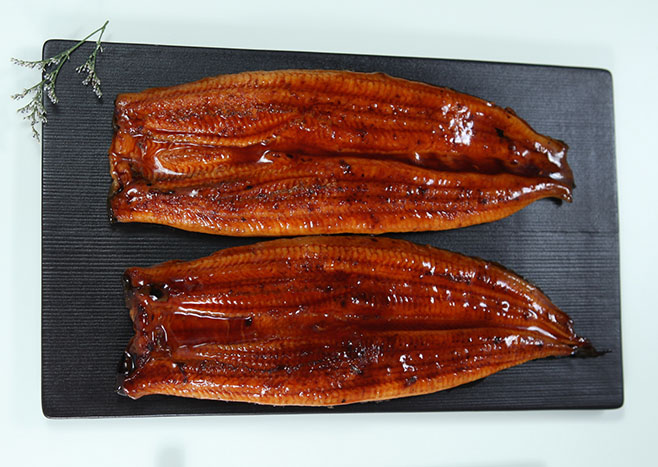
Why raw database figures mislead menu planners
Public databases such as USDA FoodData Central list eel by weight, usually per 100 g, and often for a raw or plainly cooked entry. They are useful starting points. They were never built to describe a finished restaurant dish.
Most pages that rank for this topic stop there. They list calories, protein, fat, vitamin A and vitamin D, then summarize health benefits. That is observation. What they rarely do is translate it into a dish.
Scope of this article: it is an evergreen explanation of how preparation changes a per-serving estimate. It is not a lab report and it does not quote measured values for any specific product. Where you need exact figures, you need a supplier spec or a lab analysis of your own recipe.
Raw versus grilled eel per serving: what moves and why
Three things change between the database line and the plate. Cooking loss, sauce and rice. Each one pushes the numbers in a different direction.
| Factor | What happens | Effect on a per-serving estimate | Planning implication |
|---|---|---|---|
| Cooking loss (grilling) | Water leaves the fillet, and some fat renders out. The piece weighs less than before. | Per 100 g, grilled eel looks denser in calories and protein than raw. Per piece, the total can be lower than the raw weight suggests. | Always state whether a figure is per raw weight or per cooked weight. |
| Sweet soy glaze | Sugar and soy sauce coat the surface in layers. | Adds carbohydrate (sugar) and sodium that the raw entry does not contain. | Glaze level is a spec variable, not a constant. |
| Rice base | Cooked rice is added in a bowl or sushi format. | Adds carbohydrate and bulk. Eel's share of total calories falls, while the protein per bite is diluted. | Rice weight can matter more than eel weight for the plate total. |
| Extra sauce at the table | Diners add more tare to taste. | Adds more sugar and sodium that the kitchen did not plan. | Decide whether sauce is plated, side-served or self-serve. |
Conclusion: compare dishes per serving, not per 100 g. Reasoning: a diner eats a plate, and the plate includes sauce and rice. Fits: donburi, sushi and set-meal planning. Limit: for a plain grilled fillet sold by weight, a per-100 g figure on cooked weight is still reasonable.
Cold fact: grilling does not "add" fat
Grilled eel often shows a higher calorie figure per 100 g than the raw entry. That does not mean the grill put fat in. Water left the fillet, so the same nutrients now sit in less weight. Check the unit before you conclude anything.
Drivers, and other explanations for the differences
Documented drivers are simple. Water loss concentrates nutrients. Sugar and soy sauce add what raw eel lacks. Rice adds bulk.
Plausible interpretations are less certain. Fat rendering during roasting may lower fat per piece, but the amount depends on fillet size, temperature and time. We do not publish a universal figure for it.
Our process is relevant here as a spec variable. Eelpro's kabayaki uses a 4-layer soy-sauce coating with temperature-controlled steps, and we maintain colour standards from white-roasted through the first to fourth coating. We also hold patented low-fat roasted eel processing technology. Those facts tell you the glaze level is controllable. They do not tell you a nutrition number. For that, ask for analysis.
An alternative explanation worth checking: differences between two suppliers' labels may come from different glaze levels, different moisture, or different serving weights. They may not reflect any difference in the eel.
Worked example: building a per-serving estimate step by step
Use this procedure for any eel bowl, with your own numbers. We deliberately leave the values blank because they depend on your recipe.
- Weigh the cooked eel portion. Use the weight on the plate, not the raw weight.
- Find a matching cooked-eel or supplier-spec entry. Per 100 g on cooked weight. Check the source, for example the database above or the product's spec sheet.
- Weigh the sauce actually applied. Brush, ladle or pre-glazed? Record grams per serving.
- Weigh the cooked rice. Not dry rice. Cooked rice, in grams.
- Calculate each component as grams divided by 100, times its per-100 g value. Add the three.
- Compare against a plain-fillet version of the same dish to see how much the sauce and rice contribute.
You will usually find that two things drive the surprise: the rice weight, and how much glaze the plate carries. Neither shows up on a raw nutrition page.
Common mistakes when translating eel nutrition to a menu
- Mixing raw and cooked weights. A raw per-100 g value applied to a cooked portion misstates the total.
- Ignoring the sauce. Glazed eel carries sugar and sodium that a plain-eel entry does not. Our kabayaki sauce article explains why the glaze is central to the dish, which is also why you cannot leave it out of the numbers.
- Treating rice as a garnish. In a donburi the rice is usually the larger part of the plate. See eel rice bowl toppings for how toppings and rice proportions change a bowl.
- Quoting a vitamin figure without context. Vitamin A and D are often highlighted for eel. A raw-entry value does not confirm what survives your specific preparation, so keep claims on the menu modest.
- Copying one supplier's label onto another's product. Glaze level and moisture differ by product.
What this means for sourcing decisions
If you serve finished kabayaki, the sauce is already on the fillet. That turns a nutrition question into a specification question. We supply kabayaki eel to Japanese restaurant chains and export unagi kabayaki and eel sauce to US food importers. In both channels, the product arrives glazed and ready to heat, so the buyer's questions are about the finished item. This is an illustration of how we work, not proof of any wider market trend.
Before you lock a menu card or label, use this checklist:
- Is the nutrition value on the spec per raw weight or per cooked weight?
- What is the weight of one piece or portion as shipped?
- Which glaze level is the product (lighter or heavier coating)?
- Is the sauce supplied separately, so you control the amount? Our eel sauce product page covers the tare we offer.
- Is there lab analysis available, or only a database estimate?
- Which food-safety documents come with the batch?
On the last point, our facility holds ISO 22000:2018 and HACCP certification, and we run our own laboratory with metal detectors at critical control points. You can see the testing side at the eel lab of Eelpro Co., Ltd. Be clear about what that covers: quality and safety control. It is not a substitute for a nutrition analysis of your finished dish.
What would change the assessment
Three open questions remain. First, how much fat actually renders out in your own grill or oven setup. Second, how much glaze your kitchen applies compared with the supplier's pre-glazed product. Third, how much rice your portion standard uses.
If a lab analysis of your finished bowl differs noticeably from your calculation, trust the lab and revise the recipe card. If your portions or sauce volumes change by season or by cook, your estimate is only as steady as that process.

Want to plan portions with a real product? Request a sample of our unagi kabayaki product and ask for the spec sheet with piece weight and coating level, so your per-serving calculation starts from the right inputs. If you are comparing options, our page for a frozen eel supplier shows what we produce. Tell us in the comments how you handle sauce and rice in your own eel dishes.