

Pick Frozen Eel Suppliers by Origin and Processing
A buyer can regret an RFQ long before the first carton arrives. If the supplier cannot identify the farming source, explain the cut specification, confirm sauce treatment, and match packaging to the menu, the product may look acceptable on paper but fail in a sushi counter, rice-bowl chain, or central kitchen. Selecting frozen eel should start with the processing requirement, not the lowest quoted price.
For importers, distributors, and restaurant groups, the useful question is not simply “Where is this unagi from?” It is “Can this supplier provide traceable raw material and process it into the format my customers can use consistently?” That distinction affects menu labor, product appearance, sauce control, import documentation, and cold-chain handling.
Eelpro Co., LTD supplies frozen unagi kabayaki, eel sauce, freshwater eel products, and frozen seafood for buyers who need an export-oriented supply partner. Our production scope includes roasted eel and deep-processed aquatic products, supported by two modern production lines with annual finished-goods capacity of 4,000 tons. This scale can suit recurring import and foodservice demand, but buyers should still confirm the requested specification, package format, quantity, and shipment plan before treating capacity as available allocation.
Start supplier screening with origin evidence and processing control
Conclusion: Shortlist suppliers that can connect raw-material origin to processing records and shipment documentation. This is the right approach for importers facing residue, traceability, and consistency requirements. It does not replace the buyer’s own destination-market import review, product registration obligations, or contract-level acceptance criteria.
“Origin” has two practical meanings in an eel sourcing discussion. First, it can mean the farming source and its registration status. Second, it can refer to the producing country shown in commercial and customs documents. Buyers should request proof for both rather than relying on a general origin statement in a sales quotation.
Eelpro is supported by approximately 20 customs-registered eel farming bases covering more than 2,150 mu. The company applies full-chain control from farming registration through process verification, targeted sampling, and traceability tracking. This matters when a buyer needs to identify the source associated with a lot after shipment. It is especially relevant for distributors serving regulated channels or restaurant groups that need supplier records for internal audits.
The processing system matters just as much. Eelpro holds ISO 22000:2018, HACCP, HALAL certification, Export Food Producer Registration, and an SC Food Production License covering quick-frozen prepared foods, including cooked products and seasoned aquatic products. HACCP is a food-safety control approach based on identifying hazards and managing designated control points. Certification supports supplier qualification, but it does not automatically satisfy every customer’s destination-market documentation or labeling requirements.
Ask for these documents before comparing prices
- Farm-source and traceability information: Ask how the lot can be linked to a registered farming base. This fits buyers that need source verification. It may not answer final country-of-origin labeling rules, which should be confirmed separately.
- Product specification sheet: Request species description, cut style, sauce status, packaging format, storage requirement, and intended use. A generic “grilled eel” description is not enough for a restaurant chain.
- Food-safety credentials: Request current copies of the relevant certificates and production license information. This supports supplier review; it does not remove the need for buyer audits where required.
- Inspection and compliance discussion: Eelpro states its products meet Japan, United States, and European Union food inspection standards for veterinary drug residues and microbiological indicators. Buyers should specify the destination market and ask which records are available for the selected item and lot.
- Cold-chain plan: Confirm storage, loading, shipping responsibility, and temperature-record expectations in writing. Eelpro has a 1,000-ton cold storage facility, which supports storage quality and cold-chain logistics, but route-specific carrier performance must be agreed for each shipment.
A supplier that cannot distinguish farm traceability from product processing may leave a buyer with a difficult import file. That risk grows when the product will be resold under a distributor label or supplied to multi-site foodservice customers.
Match farming origin, cut style, sauce treatment, and pack format to the end use
Conclusion: Build the RFQ around the final dish and operating method. Sushi, rice bowls, and foodservice portions use the same broad product family but require different cuts, glazing decisions, and pack choices. This sourcing action is useful when buyers have a known channel or menu. It is less useful when the buyer is still testing several concepts and has not yet set a serving format.
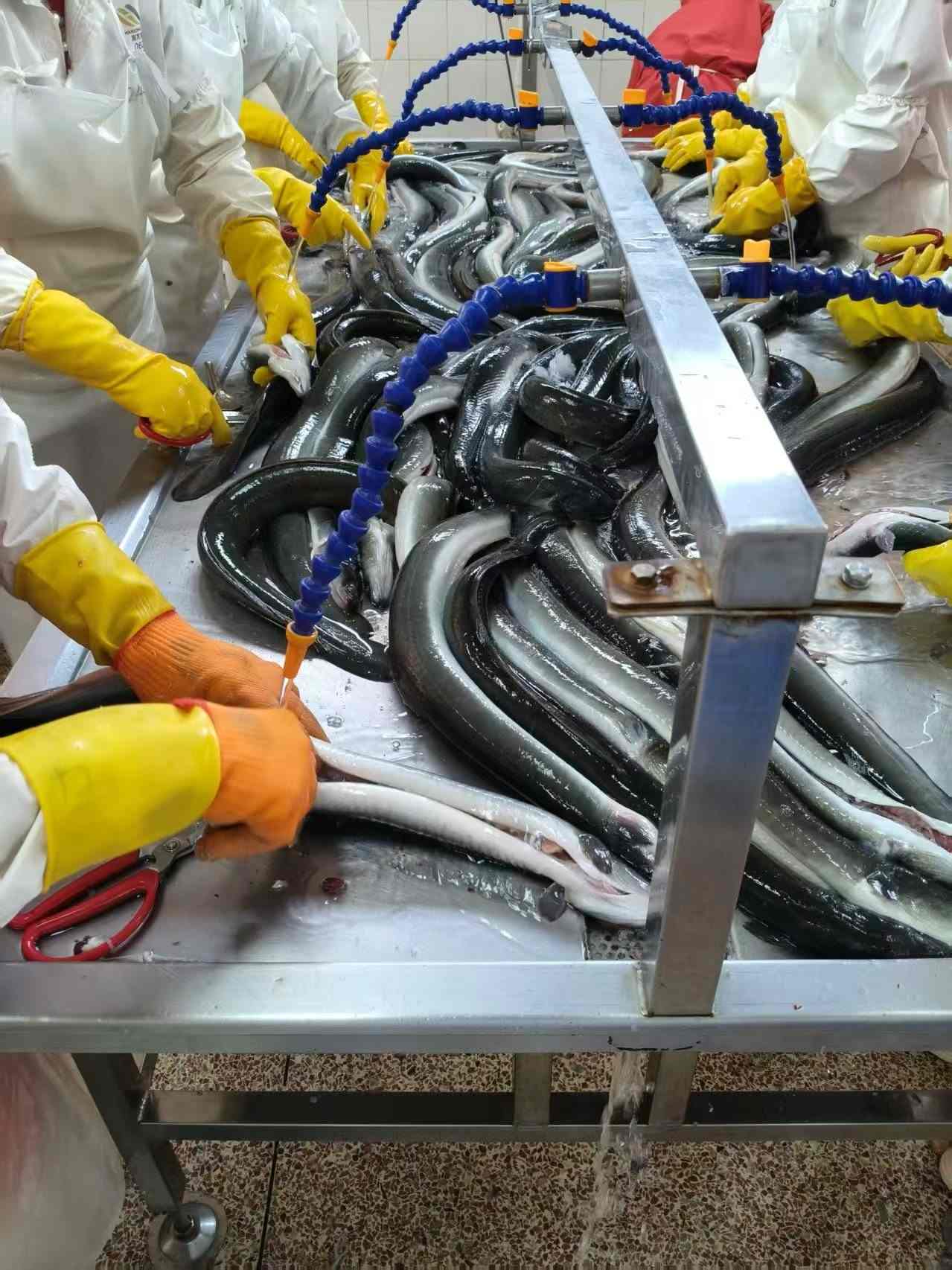
At Eelpro, custom cutting can include shredding, dicing, strip-cutting, chunk-cutting, three-section cuts, and sushi slices. The company also offers boneless or deboned eel options intended to reduce back-of-house preparation. These choices should be treated as an operational decision, not an afterthought.
| End use | Origin and processing question | Suitable cut direction | Sauce treatment decision | Pack format discussion | When this option may not fit |
|---|---|---|---|---|---|
| Sushi counter or sushi retail | Request lot traceability and consistent appearance requirements for display-oriented portions. | Sushi slices or standardized portions. | Confirm whether the buyer wants kabayaki glaze applied or a separate sauce program. | Discuss vacuum or skin-packaging based on display and handling needs. | Not ideal for kitchens that need chopped topping material rather than intact slices. |
| Unagi rice bowls | Confirm the intended bowl portion and reheating method before choosing the cut. | Three-section cuts, strips, or portions suited to bowl assembly. | Pre-sauced kabayaki can simplify assembly; separate tare gives more menu control. | Choose a format that supports portion control and kitchen throughput. | Less suitable if each outlet uses a different bowl size or sauce profile. |
| Central kitchen or catering chain | Prioritize source records, standardized processing, and workable handling for repeated production. | Diced, shredded, chunk-cut, or strip-cut formats for mixed dishes and batch preparation. | Ask whether sauce should be applied before shipment or added during recipe production. | Discuss bulk foodservice packing and carton configuration with the supplier. | May not suit premium retail presentation where individual visual portions matter. |
The farming-origin question should remain part of every row. A sushi importer may need a clear traceability record for retailer review. A rice-bowl chain may place greater weight on repeatable portioning and glaze behavior. A central kitchen may value deboned material and a cut that reduces knife work. None of these priorities are interchangeable.
For kabayaki products, sauce treatment deserves detailed attention. Eelpro uses an export-grade roasting process with four precise layers of soy sauce and temperature-controlled steps. The company has established white-roasted color and first-through-fourth coating color standards. This can be a useful fit for buyers seeking a defined kabayaki finish. It may not fit a customer who requires an unsauced white-roasted base, a private sauce recipe, or a different final color target.
Buyers wanting separate seasoning control can review the eel sauce product page alongside the fish specification. Do not assume that the sauce packed for retail, restaurant finishing, and factory use should have the same format or application method.
Compare supplier capability by the risks it solves
Conclusion: Use capabilities as evidence against a defined risk list: raw-material continuity, food safety, physical contamination, roast consistency, and cold-chain stability. This works for a supplier-shortlisting exercise. It does not prove that a given SKU will meet a buyer’s exact sensory, commercial, or regulatory standard without specification review.
| Buyer risk | Eelpro evidence | Why it matters | Buyer follow-up |
|---|---|---|---|
| Raw-material supply uncertainty | Supported by 19 self-operated and cooperative certified farming bases supplying more than 5,000 tons of eel raw materials annually. | Offers a documented supply base behind processing activity. | Confirm availability for the requested size, cut, and delivery period. |
| Food-safety verification gaps | ISO 22000:2018, HACCP, HALAL certification, export food producer registration, and SC production license. | Gives procurement teams specific qualification records to review. | Request current documents and destination-market records needed for the shipment. |
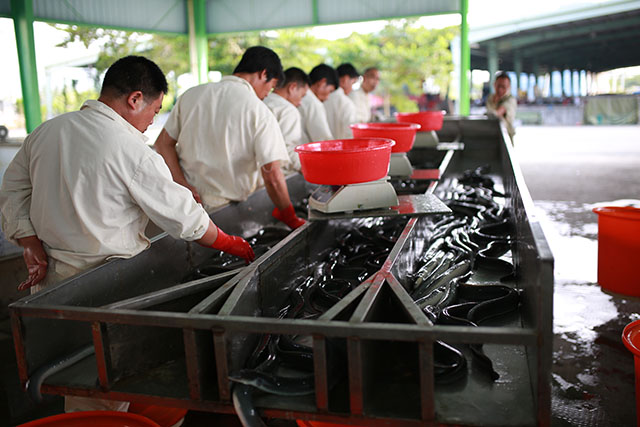
| Physical contamination concern | In-house laboratory and metal detectors at designated control points; more than 160 employees, including 25 technical and quality-control personnel. | Shows dedicated internal quality resources and control equipment. | Agree product acceptance standards and any third-party inspection terms. |
| Finished-product flavor or odor concern | Patented low-fat roasting and deodorizing technology, plus the four-layer soy-sauce coating process. | Relevant to buyers evaluating roasted eel character and menu consistency. | Confirm the selected product’s sauce, roast, and sensory requirements before ordering. |
| Cold storage and shipment readiness | 1,000-ton cold storage facility and regular order delivery time of approximately 30 days from order confirmation to shipment. | Supports planned shipment preparation and product storage. | Confirm whether the requested specification, quantity, and shipping schedule change the lead time. |
The listed delivery time is a planning reference, not a universal shipping promise. Product specification and order quantity can change it, and the parties should agree shipment timing during quotation. The same restraint applies to minimum order quantity. Eelpro uses differentiated MOQ policies for domestic catering chains, wholesale clients, and export traders. Specific MOQ is negotiable according to product format, including white-roasted skewers, kabayaki eel, cut pieces, skin-packaging, and gift boxes.
For product-format review, buyers can compare the available unagi kabayaki product information with their own menu and carton requirements. A supplier page is a starting point. The signed specification remains the commercial reference.
Use a disciplined RFQ process before selecting a supplier
Conclusion: A specification-led RFQ avoids false price comparisons. Send the same requirement sheet to each shortlisted supplier so quotations reflect the same product, packing, and service assumptions. This is best for buyers ready to purchase or establish a distributor line. It does not solve uncertainty about consumer demand; that requires separate market testing.
- Define the sales channel. State whether the item is for sushi, rice bowls, retail, catering, or a distributor catalog. Include the final market and importer role.
- State the raw-material and traceability requirement. Ask for farming-base traceability information and identify any destination-market documentation your import program requires.
- Specify the processing format. Identify kabayaki, white-roasted, deboned, or another requested form. State the cut: sushi slice, strip, dice, shred, chunk, or three-section cut.
- Set the sauce requirement. Clarify whether sauce should be applied during production, supplied separately, or left off entirely. Buyers developing their own recipe can also consult this kabayaki sauce article when defining flavor expectations.
- Describe the packaging need. State whether the product will use skin-packaging, gift boxes, or another agreed format. Include carton, labeling, and destination-market requirements where applicable.
- Request commercial terms in the same format. Ask for MOQ, quotation basis, lead-time estimate, cold-chain responsibility, documentation scope, and acceptance conditions.
- Record unresolved items before order confirmation. Agree what will be checked at production, before shipment, and at receipt. If a point is not written into the specification or contract, do not assume it is included.
Common mistakes that weaken a supplier comparison
- Comparing whole fish with processed portions: A lower unit price may reflect a different cut, bone status, sauce application, or pack format. Compare like with like.
- Using “origin” as a vague request: Ask separately for farming traceability and final commercial origin documentation.
- Ignoring kitchen labor: A deboned, standardized cut may cost more per unit but reduce preparation work. It may not be necessary for operations with trained prep teams and low labor pressure.
- Leaving sauce terms undefined: “Kabayaki” does not settle coating depth, color expectations, or whether additional tare is included.
- Assuming every market has the same import rules: Eelpro has supplied customers in Japan, the United States, Germany, Poland, Australia, Indonesia, and Southeast Asia, including long-term kabayaki supply to Japanese restaurant chains. These cases show relevant export experience, not automatic approval for every importer, label, or destination program.
One useful sourcing check is simple: ask the supplier to restate your requirement in one line before quoting. For example: “Traceable farm-source kabayaki, sushi-slice cut, four-layer sauce finish, agreed retail pack, for a Japanese restaurant distributor.” If the restatement is vague, the quote will likely be vague too.
Nancy Chen, Senior Food Safety & Quality Specialist, brings more than 12 years of seafood export quality-assurance experience and oversees HACCP and ISO 22000 systems for eel and seafood export work. Her practical advice is to qualify the traceability record, processing specification, and cold-chain responsibilities as one buying decision rather than three separate conversations.
Send Eelpro your destination market, intended menu use, cut style, sauce preference, packaging format, and estimated quantity to request a specification-based quote.
===