


How to Price Your Unagi Hand Roll for Maximum Profitability
Miscalculating the cost of your unagi hand roll is one of the fastest ways to erode your menu's profitability. Many restaurant operators focus solely on the per-kilogram price of frozen eel, overlooking critical variables like meat yield after thawing, sauce absorption, and inconsistent fillet sizes. This leads to unpredictable plate costs and shrinking margins. Sourcing from a supplier who guarantees standardized, high-yield product isn't a luxury; it's the foundation of a profitable menu item.
As a quality specialist who has helped foodservice clients in Japan, the US, and the EU navigate import compliance, I've seen firsthand how back-end supply chain decisions directly impact front-of-house success. A cheap fillet that loses 20% of its weight to excess water and skin is more expensive than a premium, ready-to-use product. At Eelpro, we've built our entire process around delivering cost certainty. Our patented low-fat roasting and 4-layer soy-sauce coating process ensures you receive a consistent product that performs predictably in your kitchen, order after order.
Beyond the Fillet Price: Uncovering the True Cost of Your Unagi Supply
The invoice price for frozen unagi is just the starting point. To understand the true cost, you must analyze what happens between receiving the case and serving the final dish. Inconsistent sizing, excess glazing, and poor deboning can add significant labor costs and product waste, directly impacting the profitability of every unagi hand roll you sell. A reliable supplier provides more than just eel; they provide operational efficiency.
Consider the back-of-house labor required. If your kitchen staff must spend time trimming, deboning, or portioning inconsistent fillets, that's a direct labor cost added to each roll. Our unagi kabayaki eel is fully prepared—boneless, skin-on, and roasted—ready to be heated and served. We also offer custom cutting specifications, including shredding, dicing, and sushi slices, which eliminates these costly prep steps entirely. This is a key advantage for large catering chains in Japan and foodservice channels in Poland that rely on speed and consistency.
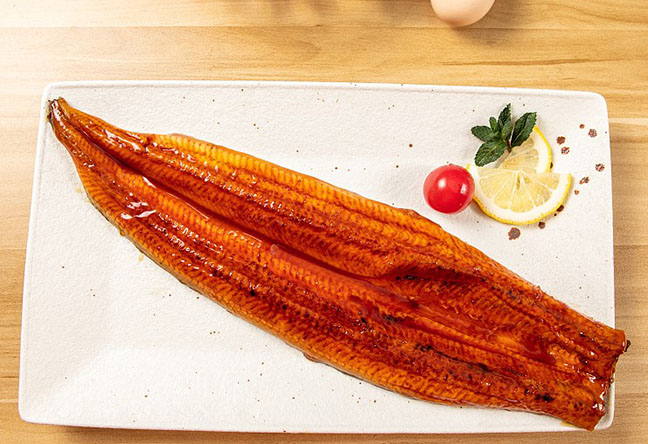
Here’s a comparison to illustrate how a higher initial price can lead to a lower final cost-per-serving:
| Factor | Standard "Low-Cost" Supplier | Eelpro Co., LTD (High-Yield Supplier) |
|---|---|---|
| Advertised Price | Appears lower per kilogram. | Reflects a fully prepared, high-yield product. |
| Yield After Thawing | Variable; often lower due to excess ice glazing or water content. | Consistent and high, thanks to controlled processing. |
| Bone & Trim Waste | May require in-house deboning and trimming, leading to product loss. | Zero waste. Our products are fully deboned and ready to use. |
| Portion Consistency | Inconsistent fillet sizes require weighing and cutting for each order. | Standardized cuts (dicing, shredding, slices) ensure exact portion control. |
| Labor Cost | Higher due to required prep work (deboning, trimming, portioning). | Minimal; primarily heating and assembly. |
| True Cost Per Serving | Often higher than expected once waste and labor are factored in. | Predictable and stable, allowing for accurate menu pricing. |
The Per-Roll Food Cost Formula Your P&L Is Missing
To price your unagi hand roll accurately, you must move beyond simple estimates and build a precise cost formula. This ensures every roll sold contributes to your target profit margin. The formula needs to account for every single ingredient, from the most expensive component (the eel) to the smallest garnish. Below is a structured approach to calculate your cost per roll, separating confirmed costs from variables that require estimation.
This method prevents hidden costs from eating into your profits and gives you a clear baseline for setting your menu price. Remember, the goal is to calculate the Cost of Goods Sold (COGS) for one unagi hand roll.
Step-by-Step Cost Breakdown for One Unagi Hand Roll
Use this framework and substitute the values from your own invoices and recipes. We'll use example values for demonstration.
-
1. Confirmed Costs (from supplier invoices):
- Unagi Kabayaki Cost:
- Supplier Price: $30.00 per kg (1,000g)
- Portion per Roll: 40g
- Calculation: ($30.00 / 1,000g) * 40g = $1.20
- Sushi Rice Cost:
- Bag Price: $50.00 per 20kg (20,000g) of raw rice
- Cooked Yield: Raw rice typically triples in weight. So, 20,000g becomes ~60,000g.
- Cost per gram (cooked): $50.00 / 60,000g = $0.00083/g
- Portion per Roll: 80g of cooked rice
- Calculation: $0.00083 * 80g = $0.066
- Nori (Seaweed) Cost:
- Pack Price: $10.00 for 50 sheets
- Cost per Sheet: $10.00 / 50 = $0.20 per sheet
- Portion per Roll: Half a sheet
- Calculation: $0.20 * 0.5 = $0.10
- Unagi Kabayaki Cost:
-
2. Estimated Variable Costs (based on your recipes and operations):
- Eel Sauce (Unagi Tare) Cost:
- If buying pre-made eel sauce (unagi tare), calculate the cost per ml/g. If making in-house, cost out the soy sauce, mirin, sake, and sugar.
- Estimated Portion Cost: $0.05
- Garnish Cost (e.g., Sesame Seeds, Cucumber):
- Estimate the cost of small components.
- Estimated Portion Cost: $0.03
- Waste Factor (optional but recommended):
- Add a small percentage (e.g., 3-5%) to cover occasional mistakes, dropped rolls, etc.
- Calculation: ($1.20 + $0.066 + $0.10 + $0.05 + $0.03) * 3% = $1.446 * 0.03 = $0.043
- Eel Sauce (Unagi Tare) Cost:
-
3. Final Calculation:
- Total Food Cost (COGS) Per Roll:
- $1.20 (Eel) + $0.066 (Rice) + $0.10 (Nori) + $0.05 (Sauce) + $0.03 (Garnish) + $0.043 (Waste) = $1.49 per roll
- Calculating Menu Price based on Target Food Cost Percentage:
- Let's assume your target food cost is 25%.
- Formula: Total Food Cost / Target Food Cost % = Menu Price
- Calculation: $1.49 / 0.25 = $5.96
- You might round this to a final menu price of $6.00.
- Total Food Cost (COGS) Per Roll:
Standardizing Operations for Consistent Quality and Cost Control
Once you've established your costs, the next step is to ensure consistency. Variation in portion size, preparation, or ingredient quality can quickly undo all your careful calculations. This is where partnering with a manufacturer committed to international standards becomes a competitive advantage. Our operations are built on a foundation of process control, ensuring the unagi kabayaki manufacturer you source from provides a product that behaves identically every time.
This consistency begins at the source. We manage approximately 20 customs-registered unagi eel farms, covering over 2,150 mu, which supply over 5,000 tons of high-quality raw eels annually. This full-chain traceability allows us to control for quality from the very beginning. Our roasting process is a perfect example of standardization. The 4-layer soy-sauce coating is not an arbitrary number; it’s a precise, temperature-controlled procedure that creates a perfect glaze without adding unnecessary weight. Each layer is applied and roasted to meet our established color standards, from the initial 'white-roasted' stage to the final deep brown of the fourth coating.
To help our clients maintain consistency, here is a checklist for evaluating a potential unagi supplier:
Supplier Evaluation Checklist for Standardization
- Certifications: Do they hold internationally recognized food safety certifications like ISO 22000:2018 and HACCP? These are non-negotiable for ensuring process control. Eelpro is also HALAL certified.
- Traceability: Can the supplier trace the product back to the farm? Ask for documentation on their farming base registrations and traceability systems.
- Processing Technology: Do they use modern equipment and patented technologies? Our patented low-fat roasting and deodorizing equipment produces a cleaner flavor and better texture.
- Customization Capability: Can they provide custom cuts (dicing, shredding, slices) to fit your exact recipe? This eliminates portioning errors in your kitchen.
- Export Compliance Record: Have they successfully exported to demanding markets like Japan, the US, or the EU? This demonstrates their ability to meet strict standards for veterinary drug residues and microbiological indicators. We have a proven track record supplying importers in Germany, Poland, and Australia.
- Facility and Capacity: Do they have the production capacity (we have 4,000 tons annually) and cold storage (our facility holds 1,000 tons) to ensure a stable, uninterrupted supply?
By vetting your supplier against these criteria, you protect your business from the risks of inconsistent product and ensure every unagi hand roll you serve meets the same high standard of quality and cost-effectiveness.
For more details on our quality control measures, you can learn about our in-house eel lab of Eelpro Co., LTD, where our team of 25 technical and quality-control personnel verify product safety and compliance.
If your menu would benefit from a reliable supply of high-yield, ready-to-use frozen unagi kabayaki, contact us to request a product specification sheet or a sample.