


What is the Correct Term for Unagi in English on a Food Menu?
As a food importer, distributor, or restaurant chain operator, you know that menu clarity is non-negotiable. When a customer sees "unagi," they expect a specific taste and texture. But translating this for a purely English-speaking market presents a challenge. Is it "Freshwater Eel," "Grilled Eel," or "Barbecued Eel"? Choosing the wrong term can confuse customers, create supply chain friction, and even trigger regulatory issues. The best term for unagi in english depends entirely on the species, the preparation method, and the final dish format.
Getting this right is not just about translation; it's about setting accurate customer expectations and ensuring your product description matches the item you've sourced. As a quality assurance specialist who has guided dozens of clients through US, EU, and Japanese import compliance, I've seen firsthand how precise labeling prevents costly delays and builds consumer trust. It reflects the quality of the product, from the farm to the fork.
Decoding Unagi: From Species to Plate for Accurate English Labels
The first step in accurate labeling is understanding that "unagi" specifically refers to freshwater eel (genus Anguilla), most commonly the Japanese eel (Anguilla japonica). This is distinct from anago, which is saltwater conger eel and has a different texture and flavor profile. Using "eel" as a generic descriptor is too broad and can be misleading. For international trade and menu accuracy, specificity is key.
The cooking style is the next critical layer. An unseasoned, plain-grilled eel is a completely different product from one that has been repeatedly dipped and grilled in a sweet soy-based glaze. Your English label must reflect this difference. A vague description fails to communicate the value and culinary intent of the dish, especially for premium products like unagi kabayaki.
To help you choose the clearest and most accurate English labels for your products, here is a breakdown of common Japanese terms and their ideal translations for a commercial setting.
| Japanese Term | Direct Meaning | Recommended English Menu Label | Commercial Context & When to Use It |
|---|---|---|---|
| Unagi (うなぎ) | Freshwater Eel | Freshwater Eel | Use this for raw or unprocessed product listings where the species is the primary identifier. It's technically correct but often lacks culinary appeal on a restaurant menu. |
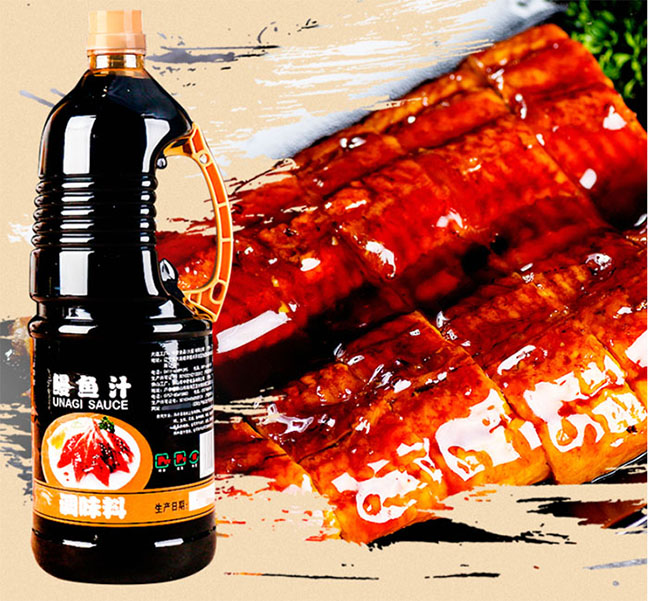
| Kabayaki (蒲焼) | "Cattail-roast" style | Glazed Grilled Eel or Barbecued Freshwater Eel | This is the most common preparation. Use it when the eel is split, deboned, grilled, and basted with a sweet soy-based eel sauce (tare). "Barbecued" resonates well in Western markets. |
| Shirayaki (白焼き) | "White-roast" | Plain-Grilled Eel or Salt-Roasted Eel | Use for eel that is roasted without tare sauce, allowing the natural flavor to dominate. It is typically served with wasabi and soy sauce on the side. This term signals a different, more subtle flavor profile. |
| Unadon (鰻丼) | Eel bowl | Grilled Eel Rice Bowl | This describes the final dish. It's the most direct and appealing description for a menu item featuring kabayaki-style eel served over a bowl of steamed rice. |
Why "Barbecued" Works for Kabayaki
While not a literal translation, "Barbecued Eel" effectively communicates the cooking process—grilling with a thick, sweet, and savory glaze—to a Western audience. It implies a rich, smoky flavor profile that customers find appealing. At Eelpro, our 4-layer soy-sauce coating process is specifically designed to create that deep, caramelized finish that justifies the "barbecued" description.
Why Vague Eel Labeling Creates Business Risks for Importers
Imprecise menu language is more than a simple translation error; it can become a significant business liability. For food importers and distributors supplying markets like the United States, European Union, and Australia, accurate labeling is a matter of strict regulatory compliance.
Government bodies, such as the U.S. Food and Drug Administration (FDA), have specific rules regarding the acceptable market names for seafood. Labeling a product with the wrong species name or failing to declare ingredients in a glaze (like soy or wheat) can result in shipment holds, forced re-labeling, or even product seizure. These are expensive and time-consuming problems that can be avoided with clear, verifiable product information from your supplier.
Here are common mistakes I've seen in my 12+ years in quality assurance and how they impact business operations:
- Mistake 1: Generic "Eel" Labeling. Not distinguishing between freshwater unagi and saltwater anago. This misleads consumers and can cause issues if your price point is for premium unagi but the product is perceived as the less-fatty anago.
- Mistake 2: Ignoring the Preparation Method. Listing "Grilled Eel" when the product is kabayaki. A customer expecting a simple grilled flavor may be unhappy with the sweet glaze. This can lead to negative reviews and reduced repeat business.
- Mistake 3: Failing to Specify the Cut. A menu item described as "Eel Fillet" could be a whole fillet, pre-portioned slices for sushi, or diced pieces for a rice bowl. This ambiguity complicates kitchen operations and inventory management. Our clients in Japan and Germany rely on our standardized cutting specifications to ensure consistency across their restaurant chains.
A reliable supplier provides more than just a product; they provide the documentation and process transparency to support your business. Our facilities are ISO 22000:2018 and HACCP certified, and our products meet stringent export standards for Japan, the US, and the EU, helping you avoid these trade risks entirely.
A Supplier Verification Checklist for Sourcing Authentic Unagi
To ensure the unagi you source is safe, authentic, and accurately described, your supplier must be able to verify their entire supply chain. Before placing a large order, use this checklist to assess a potential partner. This is the same process we use internally to maintain quality for our clients in over eight countries, from Poland to Indonesia.
-
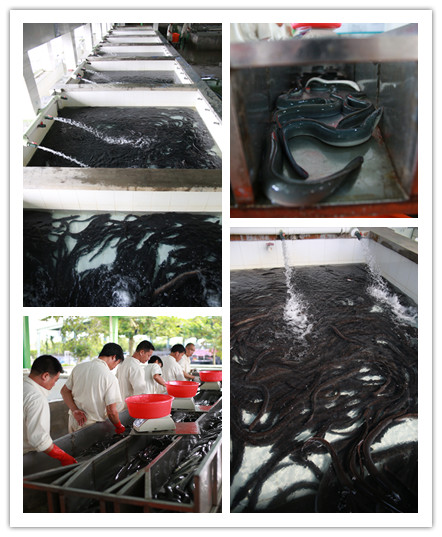
Full-Chain Traceability: Can the supplier trace each batch of eel back to its origin? Demand transparency. A credible unagi kabayaki manufacturer should connect the final product to a specific farming location.
- Our Standard: We operate with ~20 customs-registered eel farming bases covering over 2,150 mu. This allows for complete traceability from farm to shipment.
- Verifiable Food Safety Certifications: Do they hold internationally recognized certifications? Ask for copies of their ISO 22000:2018, HACCP, and HALAL certificates. These aren't just logos on a website; they are proof of a systematic approach to food safety.
-
In-House Quality Control Infrastructure: Does the supplier rely solely on third-party testing, or do they have their own quality control systems? An in-house eel lab and critical control points like metal detectors show a serious commitment to quality.
- Our Standard: Our team includes 25 dedicated technical and quality-control specialists who oversee production, supported by our professional laboratory.
-
Advanced Processing Technology: What makes their product superior? Ask about their specific roasting and saucing techniques. Patented technology is a strong indicator of a market leader.
- Our Standard: We utilize patented low-fat roasting and deodorizing equipment, along with a precise 4-layer soy-sauce coating process to ensure consistent color, flavor, and texture.
-
Production and Logistics Capacity: Can they meet your volume requirements and maintain quality during storage and transit? Inquire about their annual production capacity and cold-chain facilities.
- Our Standard: We have an annual capacity of 4,000 tons and a 1,000-ton cold storage facility, ensuring stable supply and product integrity.
Customizing Eel Products for Your Market
Beyond a standard fillet, the right cut of unagi can dramatically reduce labor costs in a commercial kitchen and enable diverse menu applications. A supplier who offers custom processing understands the needs of the foodservice industry. For example, a restaurant chain in the United States may require standardized sushi slices to ensure portion control, while a caterer in Southeast Asia might need shredded eel for high-volume meal prep.
Standardized, ready-to-heat products mean your kitchen staff doesn't have to spend time deboning, skinning, or portioning. This reduces processing time, minimizes waste, and ensures a consistent end product for your customers. We've built our processing lines to accommodate these specific needs.
Our custom cutting capabilities include:
- Sushi Slices: Perfectly portioned for nigiri or sushi rolls.
- Shredding & Dicing: Ideal for mixed rice dishes, salads, or appetizers.
- Strip & Chunk Cutting: Versatile formats for skewers, bento boxes, or noodle soup toppings.
- Section Cuts: Standard 3-section cuts for traditional unadon presentation.
This flexibility, combined with our negotiable MOQ policies for different buyer types, allows our clients to source exactly the product they need for their specific market and operational model.
For detailed specifications on our frozen unagi kabayaki or to discuss your custom cutting requirements, contact our export team for a quote.