


How to Source Unagi Seafood Seasoning Sauce for Your Business
Choosing the right bulk supplier for unagi seafood seasoning sauce involves more than just taste and price. A mismatched supplier can lead to customs delays, inconsistent product quality, and unforeseen costs that erode your margins. The wrong viscosity can ruin a production line, and a missing certificate can leave a container sitting at port. Before you issue a purchase order, it's essential to verify your supplier's capabilities, not just their product sample.
As a quality assurance specialist who has guided dozens of international clients through import compliance, I’ve seen firsthand how a detailed evaluation process prevents costly mistakes. A reliable partner doesn’t just sell you a product; they provide the documentation, consistency, and supply chain stability you need to serve your own customers without interruption. This guide outlines the critical checkpoints for vetting a supplier of eel sauce for your import, distribution, or foodservice business.
Your Supplier Evaluation Checklist for Unagi Sauce
When you're sourcing a key ingredient like unagi sauce, small details in the supply agreement can have a big impact on your operations. A supplier who understands the complexities of international trade will have clear, documented answers for each of the following points. Use this workflow to structure your RFQ and supplier conversations.
Key Sourcing Evaluation Criteria
This isn't just a checklist; it's a framework for identifying potential risks. Here’s what to ask and why it matters:
-
Ingredient Declarations & Allergen Info: A complete and accurate ingredient list is non-negotiable.
- Why it matters: Vague terms like "spices" are red flags. Your supplier must declare all components to comply with labeling laws in your target market (e.g., US, EU, Japan). This is critical for managing allergens like soy and wheat, preventing recalls and protecting consumers.
- What to look for: A detailed specification sheet listing every ingredient and sub-ingredient. Ask if their formula contains common allergens and how they manage cross-contamination in their facility.
-
Packaging Formats & Pack Sizes: The packaging must fit your operational workflow.
- Why it matters: A foodservice chain needs large totes or pails for back-of-house efficiency. A distributor supplying retailers needs shelf-ready bottles with accurate barcodes. Mismatched packaging creates handling costs and waste.
- What to look for: A supplier offering multiple formats, such as 10kg cartons, 1L bottles, or custom gift boxes. At Eelpro, we offer flexible options from bulk skin-packaging to retail-ready formats.
-
Verified Shelf Life & Storage Conditions:
- Why it matters: Shelf life directly impacts your inventory management and profitability. You need clear data on both unopened and opened product stability. Unclear storage instructions (e.g., "store in a cool, dry place") are insufficient for professional cold chains.
- What to look for: A specific shelf life (e.g., 24 months from production date) supported by stability testing data. Request precise temperature requirements for storage, such as frozen at -18°C. Our 1,000-ton cold storage facility ensures our products are held at stable temperatures until shipment.
-
Availability of Export Documentation:
- Why it matters: This is where imports get stopped. Missing or incorrect paperwork is a common reason for customs holds. Your supplier must be able to provide all required documents without delay.
- What to look for: Confirmation that they can provide a Certificate of Analysis (COA), Health Certificate, Certificate of Origin, and a detailed Bill of Lading. We regularly provide these documents for clients in Japan, the US, and the EU, ensuring our products meet local food inspection standards for veterinary drug residues and microbiological indicators.
-
Minimum Order Quantity (MOQ) Policy:
- Why it matters: A rigid, high MOQ can be a barrier for testing a new market or product. A flexible supplier understands that different business models have different needs.
- What to look for: A supplier with differentiated MOQ policies. For example, we negotiate MOQs based on the client type (catering chains vs. wholesale traders) and product specifications.
Beyond the Sauce: Assessing Production Quality and Food Safety
The quality of an unagi seafood seasoning sauce is a direct reflection of the manufacturer's production discipline and food safety systems. A glossy, flavorful sample means little if the supplier cannot reproduce it consistently across thousands of liters while adhering to international safety standards.
Our facility operates under an ISO 22000:2018 Food Safety Management System and a certified HACCP plan. These are not just certificates on a wall; they are active systems managed by our 25 dedicated quality-control specialists. From our in-house eel lab of eelpro co., ltd to metal detectors at critical control points, every stage is monitored.
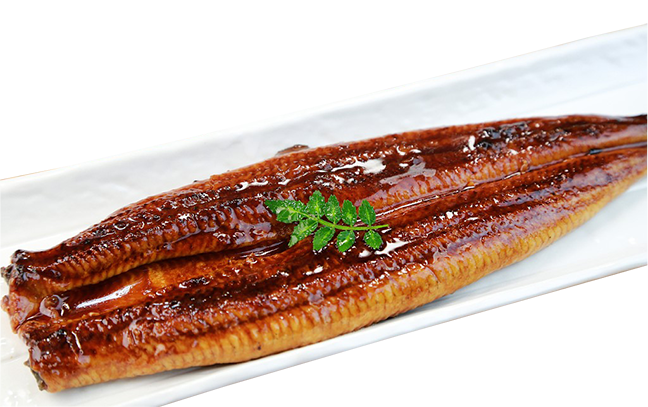
This commitment extends to our sauce production. The rich flavor of our sauce is developed to complement our signature unagi kabayaki eel, which undergoes a precise 4-layer soy-sauce coating process. This same attention to detail—using high-quality raw materials and temperature-controlled cooking—is applied to our bulk sauce production, ensuring a consistent, authentic flavor profile.
Common Production Mistakes That Compromise Sauce Quality
When auditing potential suppliers, be aware of these common shortcuts that can lead to an inferior product:
| Mistake | Why It's a Problem | How We Address It |
|---|---|---|
| Using Low-Grade Soy Sauce | Creates a harsh, overly salty flavor and lacks the complex umami of traditionally brewed soy sauce. It's a common cost-cutting measure. | We source high-quality soy sauce as the base for our tare, ensuring a balanced sweet-and-savory profile that meets Japanese market expectations. |
| Inconsistent Cooking Times/Temperatures | Leads to batch-to-batch variations in viscosity, color, and flavor. A sauce that is too thin won't adhere to food, while one that is too thick can be difficult to work with. | Our production lines use automated temperature controls and standardized cooking times, governed by our ISO-certified processes, to guarantee consistency. |
| Poor Filtration | Can leave undesirable sediment in the final product, affecting mouthfeel and appearance. It may also indicate a lack of attention to detail in the overall process. | We employ multi-stage filtration to ensure our sauce has a clean, glossy finish, perfect for glazing, drizzling, or as a dipping sauce. |
| Lack of Traceability | If a supplier cannot trace their ingredients back to the source, they cannot guarantee their safety or authenticity. This is a major risk for food importers. | Our vertical integration, including ~20 customs-registered eel farms, allows for full-chain traceability from raw material to finished product. |
Ensuring Supply Chain Stability for Large Volume Orders
For distributors and large restaurant chains, a supplier's ability to deliver on time is just as important as the product itself. Supply chain disruptions can lead to stockouts, lost sales, and damage to your brand's reputation. That's why assessing a potential partner's production capacity and logistics infrastructure is a critical step.
With two modern production lines and an annual capacity of 4,000 tons, we are equipped to handle large, recurring orders for clients worldwide. Our experience supplying demanding markets in Japan, the United States, Germany, and Poland demonstrates our ability to maintain quality and consistency at scale. The entire process is supported by a team of over 160 employees, ensuring that production schedules are met.
Once produced, maintaining product integrity is paramount. Our 1,000-ton on-site cold storage facility is not just for storage; it's a critical hub in our cold-chain logistics network. It ensures that our frozen seafood and sauce products are kept at a stable -18°C from the moment they are packed until they are loaded for shipment. This minimizes temperature fluctuations and preserves the quality you approved in the initial sample.
Our standard delivery time is approximately 30 days from order confirmation to shipment. However, we understand that every client has unique needs, and we can often negotiate lead times based on the specific product specifications and order volume.
By partnering with a manufacturer that has proven capacity, certified systems, and end-to-end control over its supply chain, you are not just buying a product. You are securing a reliable source that helps you avoid trade risks and serves as a stable foundation for your own business growth.
To discuss your specific requirements for unagi seafood seasoning sauce and receive a full product specification sheet, please contact our export team.