


Unagi Is Eel but Not Always a Species Label
A lacquered slice of eel over hot rice looks simple. Yet one question can change what you order: if unagi is eel, does that automatically mean Japanese eel? No. “Unagi” is often a menu word, while a species name belongs in technical documents, labels, and sourcing records.
For a diner, the distinction may feel small. For a restaurant buyer, importer, distributor, or product developer, it can affect menu wording, import paperwork, customer expectations, and supplier comparison. The short answer is that unagi is eel in Japanese culinary use, but the word alone does not reliably identify the biological species in a frozen product.
Why the simple translation can lead to the wrong buying decision
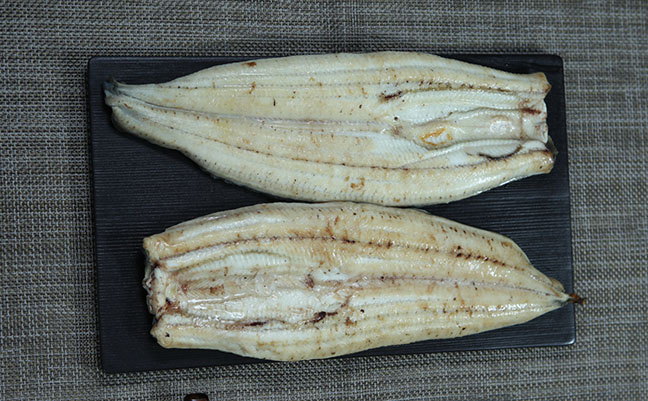
On a restaurant menu, unagi generally refers to freshwater eel prepared in a Japanese style. The familiar version is kabayaki: eel grilled and coated with a sweet-savory sauce. That is why diners often hear that unagi is eel. It is a useful translation, but not a full product specification.
The practical issue is this: a culinary name tells you how the food is understood or served, while a species name tells you what animal is being sold. Those are related facts, but they are not interchangeable.
Recommendation: Treat “unagi” as a menu and product-style description first, then ask for species identification before approving a purchase. This fits foodservice buying, retail private-label work, and import sourcing because each may require a more exact product file. It does not mean every menu needs a Latin species name beside the dish; it means the buyer should hold that information in supplier specifications.
For example, a menu may call a dish “grilled unagi rice bowl.” That is clear to many guests. But an RFQ saying only “unagi” leaves open questions about the species, cut, bone treatment, sauce profile, net weight, packaging, and destination-market label rules.
At Eelpro, buyers can discuss frozen kabayaki eel, white-roasted eel, cut pieces, sushi slices, and customized formats before confirming an order. Product form matters as much as naming. A boneless portion for a restaurant line solves a different problem than diced eel intended for a rice bowl topping.
How culinary unagi, Japanese eel, and export labels differ
The table below separates three terms that are frequently mixed together. If unagi is eel is the starting point, this is the step that prevents an incomplete sourcing brief.
| Term | What it actually means | What it affects in practice | When the term is insufficient |
|---|---|---|---|
| Unagi | A Japanese culinary term commonly used for freshwater eel dishes and products. | Menu language, customer expectations, recipe direction, and familiar Japanese cuisine positioning. | It is insufficient when an importer, retailer, customs document, product specification, or buyer approval requires species identification. |
| Scientific name Anguilla japonica | The Japanese eel species, often called Japanese eel in English. | Biological identity. It allows buyers to distinguish a specific species from a broad culinary category. | It is still insufficient by itself when the buyer also needs the processing form, ingredient list, packaging format, lot traceability, or label review for the destination market. |
| Export product species label | The species declaration used on product labeling, specifications, and associated trade documents, subject to destination-market requirements. | Import review, product registration, customs documentation, retail labeling, and internal buyer approval. | It is insufficient if it does not state the exact product form, such as kabayaki fillet, cut pieces, sushi slices, or seasoned aquatic product. |
Key point: “Unagi” can describe the food experience. Anguilla japonica identifies one particular species. An export label should provide the species information required for the applicable market and match the supplier’s supporting records. So unagi is eel, but it is not automatically a complete species declaration.
A buyer gets into trouble when these levels are collapsed into one. Imagine a purchasing team accepts a quotation for “unagi kabayaki” without asking what appears on the final label. Later, the retail team needs an approved species declaration, while the importer asks for matching technical documents. The product may be suitable, but the approval process slows because the original request lacked detail.
A useful cold fact about Japanese food names
Many Japanese food names describe a culinary category rather than a scientific classification. “Sushi” does not identify the fish species. “Tempura” does not identify the seafood species. In the same way, unagi is eel is a food-language answer, not always a biology answer.
That distinction does not make the menu term less meaningful. It simply gives it the right job. Use “unagi” to communicate cuisine and eating style. Use verified species information to communicate biological identity.
What an export buyer should request before approving eel
When a supplier says unagi is eel, the next question should be, “Which information will appear in the approved specification and shipment documents?” The answer should be written, not assumed.
Recommendation: Request a product specification sheet before placing an order. This is best for importers, foodservice distributors, chain restaurants, and private-label buyers. It may be more detail than a household shopper needs for one dinner, but it avoids costly confusion for commercial orders.
- Confirm the product name. Specify whether you need frozen unagi kabayaki, white-roasted eel, eel cut pieces, sushi slices, strips, diced eel, or another custom cut.
- Request the species declaration. Ask the supplier to identify the species used for the quoted product and confirm how it will be shown in the documents relevant to your market.
- Check ingredient information. Kabayaki is a seasoned product. Review eel, sauce, and any other listed ingredients rather than assuming every grilled product has the same recipe.
- Match the cut to the menu. Sushi slices suit a different service method from shredded or diced eel. The wrong cut creates extra labor and inconsistent plating.
- Confirm packaging. Ask whether skin packaging, gift boxes, or another agreed format is available for the product specification and order quantity.
- Review cold-chain handling. Frozen products need storage and logistics planning that keeps the agreed product condition from factory to receiving point.
- Review destination-market requirements. The importer should confirm applicable local rules for species naming, ingredients, language, and required declarations before artwork is finalized.
Eelpro operates two modern production lines for frozen roasted eel and deep-processed aquatic products, with annual finished-goods capacity of 4,000 tons. Its 1,000-ton cold storage facility supports product storage and cold-chain logistics. Regular order delivery is approximately 30 days from order confirmation to shipment, with timing negotiable according to specification and quantity.
Those operating details matter when your product is not a single standard SKU. A buyer choosing kabayaki eel for Japanese restaurant chains may need a different cutting plan and package format from a distributor buying pieces for prepared-food production.
For sauce-focused development, the product name also needs care. Eel sauce is not the same as species identification. It is a seasoning category used with grilled eel and other dishes. Buyers comparing sauce and finished eel can review our eel sauce product page separately from the fish specification.
Common mistakes when reading an unagi label or quotation
The phrase unagi is eel can become a shortcut that hides missing details. The following mistakes are common because the product looks familiar, especially when kabayaki is already cooked and glazed.
- Mistake: treating “unagi” as proof of Anguilla japonica.
Why it fails: the culinary term does not itself state a species. Use it for menu language, but request the documented species declaration for commercial approval. - Mistake: comparing prices without comparing forms.
Why it fails: a whole fillet, cut piece, sushi slice, and diced product are not directly comparable. Match cut style, sauce status, packing format, and order specification before evaluating quotations. - Mistake: assuming kabayaki always means identical flavor.
Why it fails: roasting and sauce processes vary. Eelpro uses a four-layer soy-sauce coating process with controlled roasting stages and internal standards for white-roasted color plus first-through-fourth coating colors. Ask for the agreed product specification rather than judging only by a product name. - Mistake: leaving label review until production is complete.
Why it fails: destination-market requirements can affect product naming and documents. Review proposed wording before packaging is finalized. - Mistake: choosing a convenient cut that creates kitchen waste.
Why it fails: a restaurant may save more by buying standardized portions than by receiving a format that needs trimming, slicing, or deboning in the back of house.
Recommendation: Compare quotations line by line, not by product headline. This is especially useful when one supplier offers “unagi” and another offers “kabayaki eel.” The names may sound comparable, but the supplied form may not be. The limit is that paperwork alone cannot replace a sample review for flavor, appearance, and kitchen fit.
A worked sourcing example for a restaurant group
Consider a restaurant group planning a grilled eel rice bowl for several locations. The menu team wants to call it unagi donburi because guests recognize the name. The procurement team needs frozen, ready-to-heat product that reduces prep work. Both needs can be met, but only if the brief separates menu terminology from procurement requirements.
| Buying question | Weak request | Better request | Why it matters |
|---|---|---|---|
| Menu term | “We need unagi.” | “We will market the dish as unagi donburi.” | It states the guest-facing name without pretending it is the full technical specification. |
| Species information | “Unagi means Japanese eel, correct?” | “Please provide the species declaration for this quoted product and supporting specification.” | It turns an assumption into a documentable supplier response. |
| Product form | “Send grilled eel.” | “Quote frozen kabayaki portions suitable for reheating and rice-bowl assembly.” | It aligns the product with service speed and portion control. |
| Quality review | “It should meet export quality.” | “Please provide the applicable product documents, traceability information, and agreed quality criteria for our destination.” | It defines what the buyer needs to review before approval. |
| Packaging | “Use normal packing.” | “Confirm packaging format, label information, and carton configuration before confirmation.” | It reduces last-minute changes and receiving issues. |
In this scenario, unagi is eel remains a correct phrase for the diner. It is just not enough for the buyer’s purchase order. The sourcing file should carry the additional facts.
Eelpro supports customized cutting, including shredding, dicing, strip-cutting, chunk-cutting, three-section cuts, and sushi slices. Boneless or deboned formats and ready-to-heat packaging can reduce kitchen processing work where that is the restaurant group’s priority. This does not mean every operation should choose the most processed option; a chef seeking a specific house presentation may prefer a format that allows more finishing work.
For buyers evaluating finished grilled eel, see the available unagi kabayaki product information alongside the commercial specification request.
How traceability and processing controls support a better specification
A precise name is only one part of a responsible purchase. If unagi is eel is the consumer-facing definition, traceability helps connect the product to the records behind it.
Eelpro works with approximately 20 customs-registered eel farming bases covering more than 2,150 mu. Its full-chain control runs from farm registration through process verification, targeted sampling, and traceability tracking. The company is ISO 22000:2018, HACCP, and HALAL certified, holds an Export Food Producer Registration Certificate, and holds SC Food Production License No. SC11135062401122 for quick-frozen prepared foods including cooked products and seasoned aquatic products.
The facility has more than 160 employees, including 25 technical and quality-control personnel. An in-house laboratory and metal detectors at critical control points support quality-control work. These controls are relevant when a buyer needs confidence that the species declaration, finished product, and shipment records can be reviewed as part of one supply chain.
Recommendation: Ask for traceability information that matches the exact item being quoted, not a general company statement. This suits buyers importing into Japan, the United States, Germany, Poland, other European Union markets, Australia, Indonesia, and Southeast Asia. It does not replace each buyer’s own import and label compliance review.
Eelpro has supplied kabayaki eel to Japanese restaurant chains and exports unagi kabayaki and eel sauce to United States food importers. It also supplies eel products to German and Polish importers, Australian Asian foodservice and retail channels, Indonesian importers and foodservice channels, and regional Southeast Asian catering chains. Products are produced to meet Japan, United States, and European Union food inspection standards for veterinary drug residues and microbiological indicators.
For a closer look at farm-side supply control, visit our unagi eel farm information. Buyers who need to understand testing support can also review the eel lab page.
Use the right words for the right purpose
The best practical rule is simple. Say “unagi” when discussing Japanese culinary style, menu appeal, and the familiar grilled eel experience. Ask for a verified species declaration when discussing import files, product specifications, labels, or technical approval. Say “kabayaki” when you mean the glazed roasted preparation, not a species.
That keeps a menu inviting and a purchase order precise. It also protects the buyer from a preventable mismatch. Unagi is eel, but careful sourcing requires more than a translation.
Request a product specification or sample discussion for your required eel cut, packaging format, and destination market.