





What Is the Real Eel Sauce Name on a Japanese Menu?
For food importers and restaurant chains, menu accuracy is directly tied to supply chain consistency. When a customer orders "unagi," they expect a specific experience. But that experience depends on sourcing the right product, which starts with understanding the correct terminology. The most common point of confusion I see with new clients is the interchangeability of terms like "unagi," "kabayaki," and the proper eel sauce name, "tare."
Getting this wrong can lead to sourcing errors, mismatched product expectations, and ultimately, dissatisfied customers. Is "unagi sauce" the same as "kabayaki sauce"? Not exactly. One refers to the eel itself, while the other describes a cooking method. As a quality assurance specialist, I've guided dozens of overseas clients in the US, Japan, and the EU through these distinctions to ensure they order precisely what their market demands. This guide clarifies these terms to help you source with confidence.
Decoding the Menu: Unagi vs. Kabayaki vs. Tare Explained
The terms surrounding Japanese grilled eel are often used loosely, but for a B2B buyer, precision is essential. A single word can define the species, preparation method, and flavor profile. Misunderstanding these can lead to ordering a product that doesn't fit your menu or processing needs. For example, requesting "unagi" when you need fully cooked, glazed eel portions for sushi is an incomplete specification.
To prevent sourcing errors, let's establish clear definitions for the core terms you'll encounter.
| Term | Category | Definition & Commercial Significance |
|---|---|---|
| Unagi (うなぎ) | Eel Species | Refers specifically to freshwater eel, primarily the Anguilla japonica species. This is the rich, fatty eel prized for classic dishes. When you source unagi kabayaki eel, you are buying a product made from this specific type of eel. It's distinct from anago (saltwater conger eel), which is leaner and has a more delicate texture. |
| Kabayaki (蒲焼) | Cooking Method | A preparation style where the eel is split, deboned, butterflied, skewered, and grilled. Crucially, it involves basting the eel with a sweet soy-based glaze—the tare—during the grilling process. This method creates the classic caramelized, savory-sweet flavor profile. Most high-volume unagi kabayaki products are sold frozen and ready-to-heat. |
| Shirayaki (白焼き) | Cooking Method | This is eel that is prepared and grilled in the same way as kabayaki but without any sauce or seasoning. The "shira" means "white," referring to the plain, unglazed finish. This style highlights the natural flavor of the eel. It's a niche product, often served with wasabi and salt. Buyers must specify this method if they do not want the glaze. |
| Tare (タレ) | Sauce Name | This is the correct, general Japanese term for a dipping or grilling sauce. The specific eel sauce name is Unagi no Tare (eel sauce) or simply Kabayaki no Tare. It's a thick, sweetened soy sauce reduction, often containing mirin and sake. The quality of the tare is paramount to the final kabayaki product. |
In summary, "unagi" is the fish, "kabayaki" is the cooking style, and "tare" is the sauce. When you order "unagi kabayaki," you are requesting freshwater eel prepared in the grilled-and-glazed style. The sauce itself is "tare."
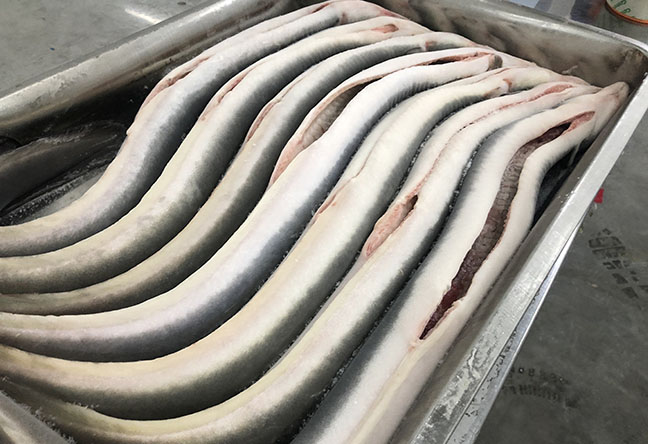
Sourcing High-Quality Kabayaki: A Buyer's Checklist
Knowing the right terminology is the first step. The next is evaluating the quality of the product itself. For large-scale importers, restaurant groups, or distributors in markets like Germany, Poland, or Australia, consistency across batches is non-negotiable. Minor variations in sauce viscosity or eel texture can disrupt kitchen operations and affect the final dish.
At Eelpro, our quality control process, managed by a team of 25 specialists, focuses on key performance indicators that guarantee a stable and premium product. Here is a checklist based on our internal standards to help you evaluate potential suppliers.
- Traceability from Farm to Factory: Can the supplier trace the raw material back to a specific farm? We operate approximately 20 customs-registered eel farming bases, ensuring full-chain control from farming registration to final shipment. This is critical for meeting stringent EU and US veterinary drug residue standards.
- Certifications and Compliance: Does the facility hold internationally recognized food safety certifications? Our operations are certified under ISO 22000:2018 and HACCP systems. We also hold HALAL certification and an Export Food Producer Registration Certificate, which helps buyers in markets like Indonesia and Southeast Asia avoid import compliance issues.
- Sauce Application Process: How is the sauce applied? A single, thick coating can burn easily and fail to penetrate the eel. Our process involves 4 precise layers of soy sauce applied at different, temperature-controlled steps. This patented technique builds a deep, balanced flavor and a perfect glaze that adheres well even after freezing and reheating.
- Processing Technology: What technology is used to manage fat content and off-flavors? Eels can sometimes have an earthy taste. We utilize patented low-fat roasting and deodorizing equipment to ensure a clean, rich flavor without any undesirable notes. This is a key differentiator for premium foodservice channels.
- Cold Chain Integrity: Does the supplier have adequate cold storage? Fluctuations in temperature can ruin product texture. Our 1,000-ton cold storage facility ensures that from the moment production is finished to the time of loading, our products are held at a stable temperature, preserving quality throughout the logistics chain.
- In-House Laboratory Capabilities: Can the supplier conduct its own testing? Relying solely on third-party labs can slow down the quality assurance process. Our in-house professional laboratory and metal detectors at critical control points allow us to perform targeted sampling and process verification efficiently.
How Our Production System Delivers Consistency for Global Supply Chains
For B2B clients, especially those supplying restaurant chains in Japan or food importers in the United States, product consistency is the foundation of a long-term partnership. It’s not enough to produce one good batch; the 100th batch must match the first. Our entire production system is built around this principle, leveraging modern equipment and strict process controls.
Our facility, established in October 2019, covers approximately 4 hectares and houses two modern production lines dedicated to frozen roasted eel and other deep-processed aquatic products. This gives us an annual production capacity of 4,000 tons of finished goods, allowing us to handle large, recurring orders without compromising on quality.
The journey of our eel products begins at one of our 19 self-operated and cooperative certified eel farming bases, which supply over 5,000 tons of high-quality raw eel annually. This vertical integration is the first step in our full-chain traceability system.
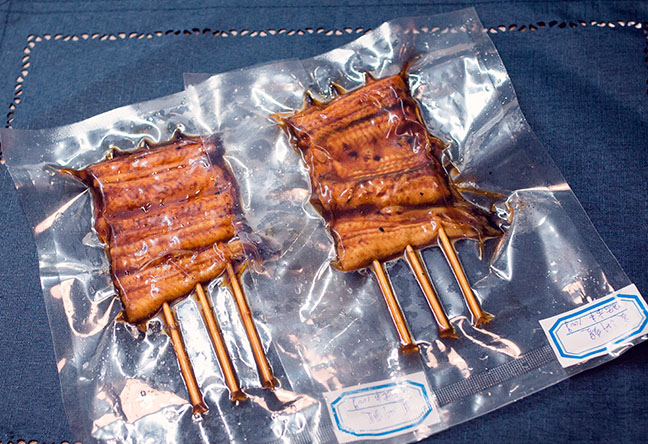
From Raw Material to Ready-to-Ship Product
Once the live eels arrive at our facility, they undergo a rigorous quality check before entering the processing line. Here’s a simplified breakdown of our value-added process:
- Preparation: The eels are deboned and butterflied. Our standardized cutting ensures uniform portions, which is essential for foodservice clients who require consistent sizing for cost control and plating. We offer custom cuts, including shredding, dicing, 3-section cuts, and sushi slices.
- First Roasting (Shirayaki): The eel is grilled without sauce to cook it through and render some of the fat. This step is crucial for achieving a tender texture.
- Steaming: A steaming phase follows the initial roast. This makes the eel meat even more tender and removes excess fat, a key part of our low-fat processing technology.
- Glazing and Grilling (Kabayaki): This is where the magic happens. The eel is passed through the grilling line multiple times, receiving a new layer of our signature eel sauce (tare) with each pass. We have established color standards for the "white-roasted color" and each of the four subsequent soy-sauce coatings to ensure absolute consistency in appearance and flavor.
- Quick Freezing and Packaging: Once the kabayaki is perfected, it is rapidly frozen to lock in freshness and texture. We offer various packaging formats, from bulk foodservice packs to skin-packaging and retail-ready gift boxes.
This systematic approach, supported by over 160 employees, ensures that every piece of frozen unagi kabayaki we ship meets the exacting standards of our international clients. The typical lead time, from order confirmation to shipment, is approximately 30 days, though this is negotiable based on the order specifications and volume.
Understanding the correct eel sauce name is more than a trivial detail—it's the starting point for precise, reliable, and high-quality sourcing. By differentiating between the eel (unagi), the method (kabayaki), and the sauce (tare), you can refine your specifications and ensure you receive a product that perfectly matches your operational needs and customer expectations.
To learn more about our specific eel sauce formulations or to discuss your custom cutting and packaging requirements, please send us your specifications for a detailed quote.
 WhatsApp
 sales@chinaeels.com
 +8619937922411