

Understanding the Key Nutritional Benefits of Eel
Many seafood buyers recognize unagi (freshwater eel) as a premium menu item, prized for its rich flavor and texture. However, a deeper question often arises for importers and foodservice chains: what specific nutritional value does it bring? Understanding the nutritional benefits of eel is not just about health; it's about product knowledge that informs sourcing decisions and marketing to a health-conscious consumer base. Eel is a notable source of Omega-3 fatty acids, vitamin B12, and vitamin D, but these components are influenced by farming, processing, and quality control.
As a quality assurance specialist, I've seen firsthand how a supplier's control over its entire production chain—from the farm to the freezer—directly impacts the final product's consistency and nutritional integrity. Let's break down what these key nutrients are and how to ensure you're sourcing a product that delivers them reliably.
A Technical Breakdown of Eel's Key Nutrients
When discussing nutrition, it's vital to distinguish between factual nutrient content and unsubstantiated health claims. A supplier can and should provide data on the typical nutritional profile of their product. However, making direct claims that a food can treat or prevent disease is prohibited in most regulatory environments, including the US, EU, and Japan. Here, we focus on the verifiable nutritional components found in freshwater eel.
The following table clarifies the role of each key nutrient present in eel and what that means from a food science perspective.
| Nutrient | Technical Role & Significance | Distinction from Health Claims |
|---|---|---|
| Omega-3 Fatty Acids (EPA & DHA) | Eel is a source of eicosapentaenoic acid (EPA) and docosahexaenoic acid (DHA), which are long-chain polyunsaturated fatty acids. These are essential fats, meaning the human body cannot produce them efficiently and must obtain them from food. They are integral components of cell membranes throughout the body. The quality and stability of these fats can be affected by the eel's diet and the supplier's processing and freezing methods. | Content (Fact): "Our eel contains Omega-3 fatty acids EPA and DHA." Claim (Avoid): "Eating our eel will improve your heart health." The presence of a nutrient does not guarantee a specific health outcome. |
| Vitamin B12 (Cobalamin) | Vitamin B12 is a water-soluble vitamin that plays a role in nerve function and the formation of DNA and red blood cells. It is naturally found in animal products, and eel is a significant source. As a quality specialist, we ensure processing temperatures and storage conditions are managed to minimize degradation of such vitamins. | Content (Fact): "Eel is a source of Vitamin B12." Claim (Avoid): "Our unagi boosts your energy levels." While B12 is involved in energy metabolism, this is an oversimplified and regulated health claim. |
| Vitamin D | Often called the "sunshine vitamin," Vitamin D is a fat-soluble vitamin that helps the body absorb calcium. Few foods are naturally rich in Vitamin D, and fatty fish like eel are one of the exceptions. The content can vary based on the eel's diet and living conditions, which is why controlled aquaculture at our customs-registered eel farming bases is so important. | Content (Fact): "Freshwater eel is a natural source of Vitamin D." Claim (Avoid): "Consume our eel for stronger bones." This links the food directly to a disease-prevention outcome, which is a restricted claim. |
How Production Processes Preserve Nutritional Integrity
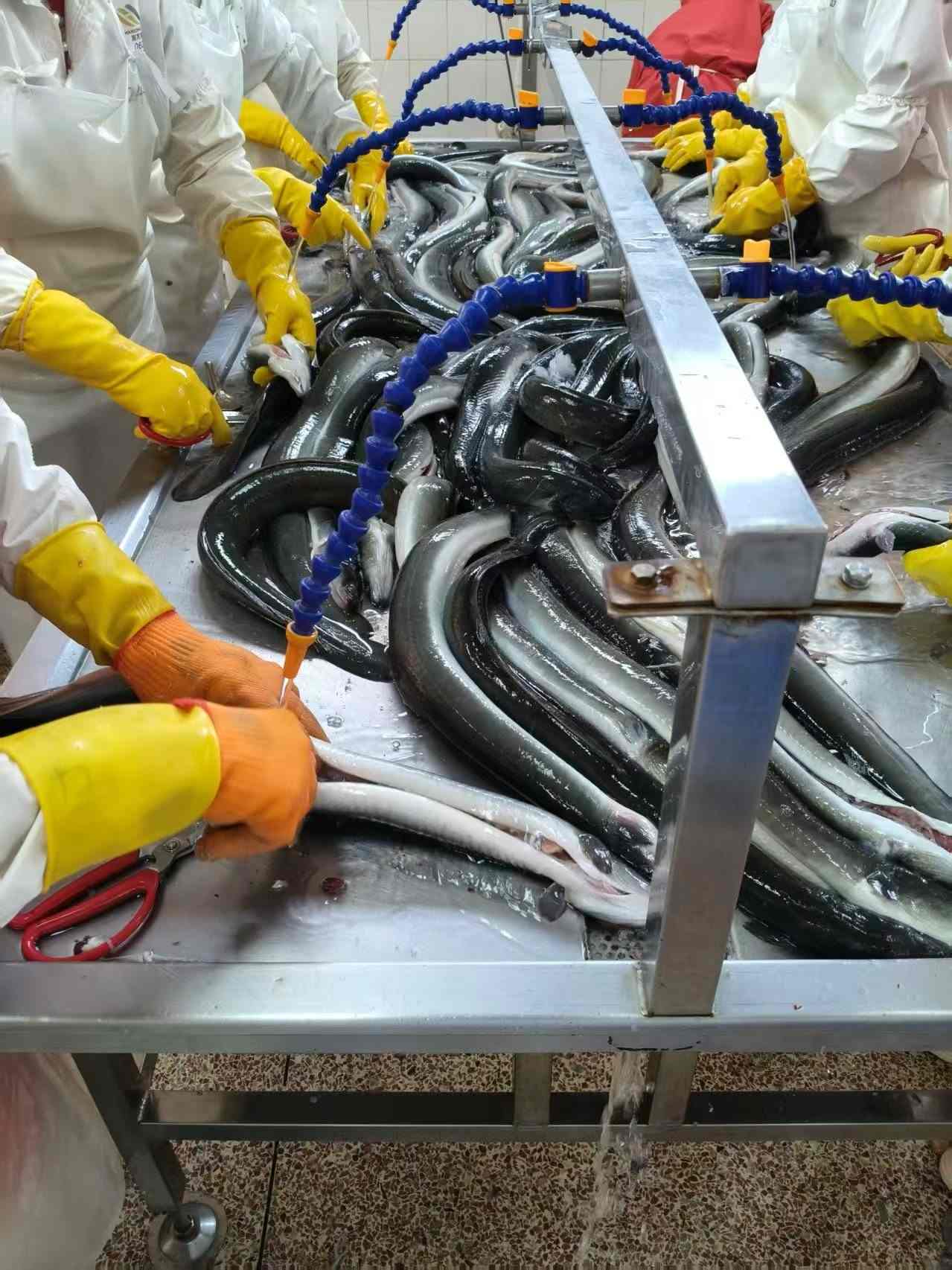
The nutritional profile of raw eel is only the starting point. How that eel is raised, processed, and stored determines the quality of the final product that arrives at your facility. At Eelpro, we've built our entire system around maintaining this integrity from pond to plate, a process verified by our ISO 22000:2018 and HACCP certifications.
From Farm to Factory: The Foundation of Quality
Nutrient consistency begins with the raw material. Our supply chain is built on 19 self-operated and cooperative farming bases, covering over 2,150 mu. These farms are customs-registered, meaning they adhere to strict export standards for water quality, feed, and animal welfare. This controlled environment ensures a consistent supply of over 5,000 tons of high-quality raw eels annually. A healthy, well-nourished eel provides a better nutritional starting point before it ever reaches our production lines.
Full-chain traceability allows us to track each batch from its specific farming base through processing. This isn't just for safety; it allows our 25-person quality control team to analyze for consistency. Our professional in-house laboratory conducts targeted sampling, verifying that our products meet the stringent veterinary drug residue and microbiological standards of Japan, the US, and the EU.
Processing Technology that Protects, Not Diminishes
Over-processing can degrade delicate nutrients. Our facility utilizes patented technologies specifically designed to preserve the eel's natural qualities while enhancing its flavor and texture.
- Low-Fat Roasting & Deodorizing: Our patented roasting equipment and deodorizing technology gently cook the eel, rendering fat without aggressive, high-heat methods that can damage sensitive Omega-3s. This results in a cleaner taste and a more stable product.
- Precise 4-Layer Glazing: The classic unagi kabayaki finish comes from its sauce. Our process involves four precise layers of soy sauce, each applied at a specific, controlled temperature. This method builds flavor without "stewing" the eel, helping to maintain its firm texture and seal in its natural juices. The quality of this sauce is paramount, which is why we've perfected our own unagi tare.
- Rapid Freezing and Cold Storage: Once processed, the eel is quick-frozen to lock in its freshness and nutritional value. Our 1,000-ton cold storage facility ensures the product remains at a stable temperature throughout storage and logistics, preventing the degradation that can occur with temperature fluctuations.
A Buyer's Checklist for Sourcing High-Quality Eel
For B2B buyers in foodservice or distribution, verifying a supplier's capabilities is essential to mitigate risk and ensure you receive a product that meets your specifications. When evaluating potential eel suppliers, use this checklist to guide your inquiries.
1. Verify Core Food Safety Certifications
Ask for copies of current certificates. Do not settle for verbal assurances.
- ISO 22000:2018: A comprehensive food safety management system standard.
- HACCP: A systematic approach to identifying and controlling hazards.
- HALAL: Necessary for accessing specific markets.
- Export Registration: Proof of compliance with the exporting country's government regulations (e.g., our Export Food Producer Registration Certificate).
2. Inquire About Traceability Systems
A credible supplier should be able to explain their traceability process.
- Can they trace a finished product batch back to the specific farm?
- What data is recorded at each Critical Control Point (CCP)?
- Are metal detectors used on the production line? (We use them at multiple CCPs).
3. Request Product Specification Sheets
This document provides the technical details you need.
- Net Content vs. Glaze/Sauce Ratio: Understand how much of the weight is eel versus sauce.
- Cutting Specifications: Ensure they can provide the exact format you need (e.g., sushi slices, 3-section cut, dices, shreds).
- Packaging: Confirm options like skin-packaging or gift boxes and their impact on shelf life and presentation.
4. Discuss Production Capacity and Lead Times
Ensure the supplier can meet your volume requirements consistently.
- Annual Capacity: Our 4,000-ton annual capacity provides reliability for large-volume clients, including restaurant chains in Japan and importers in the US and Germany.
- Standard Lead Time: Our typical delivery is ~30 days from order confirmation, but this is negotiable based on order size and specifications.
- MOQ Flexibility: A good partner understands different business models. We have differentiated MOQ policies for catering chains, wholesalers, and traders.
By focusing on these operational details, you can better assess a supplier's ability to deliver a safe, consistent, and high-quality product that retains its desirable nutritional characteristics. These are the same standards we apply whether supplying to domestic chains or for our export partners in Australia, Poland, and across Southeast Asia.
For more ideas on how to incorporate this versatile product into your menu, consider exploring different preparations like an eel sushi roll, which beautifully showcases the rich flavor of unagi.
To discuss your specific requirements for frozen unagi kabayaki or other eel products, please contact our team for a detailed specification sheet and a customized quote.