


What Is Kabayaki Sauce and How Is It Used?
Is kabayaki sauce the same as eel sauce, or is it a separate product with a different role? For menu planners and foodservice buyers, the answer affects recipe wording, sauce sourcing, and customer expectations. What is kabayaki sauce? It is a sweet-savory, soy-based glaze associated with kabayaki, the Japanese preparation in which fish, especially eel, is grilled and repeatedly coated with sauce.
The sauce is typically built around soy sauce, sweetness from sugar or similar sweetening ingredients, and cooking alcohol such as mirin or sake where the recipe calls for it. It gives grilled eel its dark sheen, caramelized surface, and familiar sweet-salty finish. Despite the common English label “eel sauce,” a packaged sauce does not automatically contain eel.
That distinction matters. A buyer looking for a pourable dipping sauce, a glazing sauce for frozen unagi kabayaki, and a traditional restaurant tare may be referring to different products with the same casual name. The right choice depends on the menu application, ingredient declaration, thickness, and whether the sauce will be heated, brushed, or served cold.
Start with the cooking method rather than the bottle name
Kabayaki sauce takes its identity from its intended use: coating grilled eel or other fish during cooking. In the classic method, the fish is grilled, brushed with sauce, and returned to the heat. Repeated brushing concentrates the glaze on the surface. The sauce is not merely a finishing condiment.
Conclusion: select a kabayaki-style sauce when the menu needs a glaze that can be brushed onto eel during reheating or grilling. The soy-based seasoning should support browning and surface shine without hiding the flavor of the fish.
Why this works: sweeteners help the sauce adhere and color on the heated surface, while soy sauce provides salt, umami, and the recognizable dark tone. A thinner sauce may penetrate or run off more easily. A thicker sauce may cling well but can overwhelm delicate portions if applied too heavily.
Best fit: unagi rice bowls, sushi toppings, grilled eel skewers, eel bento items, and Japanese-style seafood dishes where a glossy finishing coat is part of the visual standard.
Where it does not apply: a kabayaki glaze is not always the best choice for every eel preparation. Smoked eel, fried eel, clear soups, and lightly seasoned European-style eel dishes may need a less sweet sauce or no glaze at all. Menu teams should not use the word “kabayaki” simply because eel is present; it refers to a cooking style and flavor direction.
For a ready-to-serve pairing, review the available unagi kabayaki product formats alongside the sauce specification. Matching the sauce to the eel portion and reheating method reduces inconsistency between outlets.
Comparison separates kabayaki sauce, unagi sauce, unagi no tare, and nitsume by naming context, ingredients, and use
These names overlap in casual conversation, but they do not always mean the same thing in a product catalog, restaurant kitchen, or retail aisle. The safest rule is simple: treat the name as a starting point, then verify ingredients and intended use on the specification sheet.
| Name | Common naming context | Typical ingredient direction | Main use | Buyer interpretation |
|---|---|---|---|---|
| Kabayaki sauce | Menu descriptions, grilled eel products, English-language product listings | Usually soy sauce, sweetness, and often mirin or sake-style seasoning | Brushing and glazing eel during or after grilling | Confirm viscosity and whether it is designed for heating and brushing |
| Unagi sauce | Retail, sushi counters, export foodservice, English-speaking markets | Often similar to a sweet soy glaze; may contain no eel | Dipping, drizzling, sushi finishing, or eel glazing | Do not assume “unagi” means eel is an ingredient; read the declaration |
| Unagi no tare | Japanese restaurant kitchens and traditional eel preparation | A restaurant’s sweet soy tare; formulation can vary and may be maintained or enriched during cooking | Repeated brushing in the preparation of unagi kabayaki | Ask whether it is a standardized packaged sauce or a kitchen-specific tare |
| Nitsume | Sushi-focused menus and traditional Japanese culinary usage | Reduced sweet soy-based sauce, sometimes made with stock or cooking liquids depending on the kitchen | Light finishing glaze, often for sushi or simmered seafood applications | Do not automatically substitute it for a full kabayaki glaze without tasting and testing |
The practical consequence: “eel sauce” is the broadest commercial label. It may be used for kabayaki-style sauce, but it does not guarantee a traditional unagi no tare process. Nitsume is often a more specialized culinary term and may have a different body and flavor balance.
For example, a sushi operator may request “unagi sauce” for a squeeze bottle at the pass. A central kitchen producing glazed eel rice bowls may need a sauce that performs during reheating and brushing. Both requests may be valid, yet the same bottle may not be ideal for both jobs.
Mislabeling can also affect menus. Calling a generic sweet soy drizzle “nitsume” may create expectations for a more sushi-specific preparation. Calling every dark sauce “unagi no tare” can imply a traditional restaurant process that a packaged product may not follow.
How ingredients and texture change kitchen performance
The ingredient list tells buyers more than the front label. It indicates how the sauce may taste, how it behaves on food, and whether it fits dietary or menu requirements. The most useful parameters are not abstract flavor claims. They are operational checks for the kitchen.
| Parameter to check | What it affects in practice | Best-fit scenario | Limit or trade-off |
|---|---|---|---|
| Soy sauce base | Salt level, umami, color, and the recognizable savory profile | Traditional-style eel rice bowls and grilled unagi menus | A stronger soy profile can dominate mild seafood or lightly seasoned side dishes |
| Sweetness level | Surface caramelization, customer perception, and compatibility with rice | Kabayaki-style bowls, bento, and family-oriented Japanese menus | Higher sweetness may not suit menus seeking a more restrained savory finish |
| Viscosity | How well the sauce clings, spreads, drizzles, and coats the eel surface | Thicker sauces for brushing; more fluid sauces for controlled drizzling | One texture rarely performs equally well for both brush application and squeeze-bottle presentation |
| Alcohol-containing seasonings | Flavor aroma and recipe compatibility | Menus aiming for a familiar Japanese-style sauce profile | Ingredient declarations must be checked for market, dietary, and customer requirements |
| Allergen declaration | Menu labeling and customer communication | Any foodservice program serving mixed customer groups | Never infer allergen status from a product name alone |
Conclusion: choose texture first according to application, then confirm flavor balance and ingredient suitability. This order prevents a common mistake: selecting a sauce because it tastes right from a spoon, only to find that it runs off hot eel or coats too heavily after reheating.
A useful receiving test is to apply the sauce to the actual finished eel portion, using the same reheating equipment and plating sequence planned for service. Taste the eel and sauce together with the rice or sushi rice used on the menu. A sauce that appears balanced alone can become overly sweet when paired with a glazed unagi portion.
For buyers comparing standardized sauces, our eel sauce product page is a suitable starting point for matching sauce supply with unagi applications. Ask for the current ingredient statement, packaging format, and application recommendation before confirming a purchase order.
Common buying mistakes and how to avoid them
- Mistake: Assuming eel sauce contains eel.
Many sweet soy-based sauces are named for the food they accompany, not for an eel-derived ingredient. Verify the ingredient declaration when allergen, dietary, or menu transparency requirements apply. - Mistake: Treating kabayaki sauce and teriyaki sauce as interchangeable.
They can share soy and sweet notes, but the intended use and flavor balance may differ. Test the product on eel rather than substituting based on color alone. - Mistake: Buying sauce before confirming the eel format.
A sauce for whole or fillet unagi may behave differently on cut pieces, sushi slices, or shredded eel. Confirm how the finished portion will be heated and served. - Mistake: Using one sauce for every menu item.
A single SKU can simplify purchasing, but it may not be ideal for both hot brushing and cold drizzle service. Use one sauce only when kitchen testing confirms acceptable results in each application. - Mistake: Using traditional names without product verification.
“Unagi no tare” and “nitsume” carry specific culinary expectations. Request a specification sheet and sample when the menu depends on a particular flavor or texture.
A short specification request can prevent these errors. Ask the supplier to state the intended use, ingredient list, allergen information, storage instructions, and whether the sauce is supplied as a ready-to-use glaze or needs kitchen adjustment. If those details are unavailable, the product cannot be reliably matched to a menu standard.
A practical selection process for foodservice buyers
- Define the dish. State whether the sauce will be used for unagi donburi, sushi finishing, grilled skewers, bento, or another seafood item.
- Define the application stage. Specify whether the sauce is brushed before heating, brushed after heating, served at the table, or used as a cold drizzle.
- Match the eel format. Whole portions, cut pieces, sushi slices, and shredded eel expose different surface areas and may need different sauce handling.
- Check the naming requirement. If the menu says “nitsume” or “unagi no tare,” confirm that the culinary team accepts the supplied product’s ingredient profile and intended use.
- Request documentation. Review ingredient, allergen, packaging, and storage information before final selection.
- Run a service test. Test the sauce on the actual eel and rice, using the planned kitchen workflow. Assess coating, appearance, taste, and hold time in the real serving context.
Consider a practical bowl-menu example. A buyer chooses frozen unagi kabayaki for a rice bowl program and plans to add extra sauce after reheating. If the supplied eel already has a finished glaze, adding a second heavy coating can make the final bowl too sweet and mask the eel. The better method is to test a light finishing application first, then adjust only if the rice portion and customer preference require more sauce. This scenario does not apply to every product; the glaze level on the eel portion and the planned serving style must be checked.
Eelpro supports foodservice supply with standardized cutting options, including sushi slices, strips, chunks, and cut pieces. Our facility operates two production lines with annual finished-goods capacity of 4,000 tons, supported by a 1,000-ton cold storage facility. For buyers evaluating eel and sauce together, these resources help support planned cold-chain handling and repeatable product formats.
Connect sauce selection with eel quality and supply documentation
Sauce can improve presentation, but it cannot correct inconsistent eel quality. For a stable foodservice result, review the eel specification alongside the sauce. Ask about cut style, boneless or deboned format, package type, and the intended reheating method. Then assess sauce compatibility with that exact item.
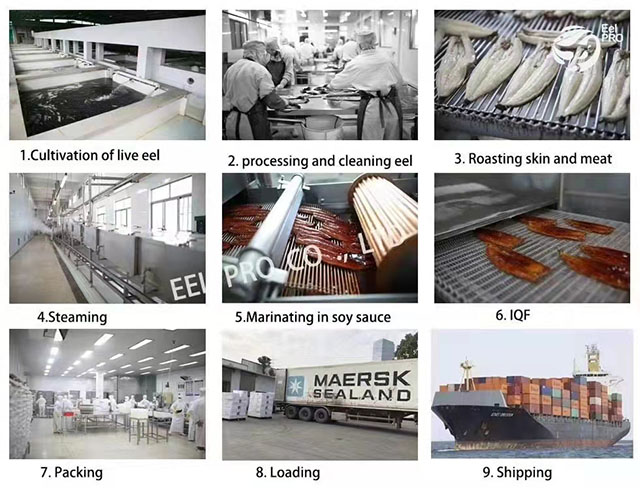
Eelpro applies export-oriented control from farming through shipment. We work with approximately 20 customs-registered eel farming bases covering more than 2,150 mu, with traceability steps from farm registration through process verification and shipment tracking. Our in-house laboratory and metal detectors support product control, while ISO 22000:2018, HACCP, HALAL certification, export food producer registration, and the SC food production license support documented food safety management.
These details matter most when a buyer needs more than a flavor sample. Japanese restaurant chains have received long-term kabayaki eel supply, while US food importers have received unagi kabayaki and eel sauce. Eel products have also been supplied to importers and distributors in Germany and Poland, with export programs aligned to EU food safety and veterinary drug residue standards. Those market examples do not mean every specification is identical; they show why product documentation, market requirements, and intended use should be reviewed together.
For a deeper look at flavor adjustment and common glaze problems, see our kabayaki sauce recipe guidance. Buyers assessing farm-to-product control can also review the eel lab of Eelpro Co., LTD information before building a supply specification.
Request a sauce and unagi sample plan that matches your menu format, target market, and planned serving method.