

Where Can Restaurants Buy Unagi Sauce Near Me?
Running out of a core ingredient mid-service is a restaurant operator’s nightmare. For Japanese and fusion concepts, that ingredient is often unagi sauce. This leads many managers to search for "unagi sauce near me," hoping for a quick local fix. But relying on retail stores or cash-and-carry grocers creates inconsistency in flavor, cost, and availability—risks that a professional kitchen cannot afford.
The real challenge isn't just finding a bottle; it's securing a reliable supply chain partner who can deliver consistent quality at scale. As an export and supply chain manager for over a decade, I've seen firsthand how sourcing decisions for something as fundamental as sauce can impact a restaurant's brand and bottom line. The jump from a local pickup to a stable foodservice supply requires a different set of criteria, moving beyond proximity to focus on production standards, logistics, and supplier reliability.
Comparing Your Local Unagi Sauce Sourcing Options
When you need unagi sauce quickly, local options seem convenient. However, each channel is designed for a different type of buyer. For a restaurant chain, wholesaler, or importer, understanding the trade-offs in case size, lead time, and reorder reliability is critical for maintaining operational stability and menu consistency. A last-minute retail run is a stopgap, not a strategy.
Here is a direct comparison of the most common local sourcing channels for foodservice businesses:
| Sourcing Channel | Typical Case Size | Lead Time | Reorder Reliability | Best For |
|---|---|---|---|---|
| Retail Supermarket | Individual bottles (e.g., 250ml - 500ml) | Immediate (in-store pickup) | Very Low. Stock levels are unpredictable and not meant for commercial volume. | Emergency-only situations for a single, independent restaurant. |
| Local Asian Grocer | Individual bottles or small cases (6-12 units) | Immediate to a few days (if ordering from their local warehouse) | Low to Medium. Prone to stockouts based on their own import schedules and local demand. | Small-scale operations or as a temporary backup to a primary supplier. |
| Regional Foodservice Distributor | Full cases, often in larger formats (e.g., 1.8L bottles, 5L jugs) | 1-7 days, based on delivery schedules | Medium to High. More reliable but you are limited to the brands and specs they carry. | Restaurants and small chains needing consistent, scheduled deliveries without managing direct import. |
| Direct from Manufacturer/Exporter (like Eelpro) | Pallet or container loads (MOQ applies) | ~30 days from order confirmation | Very High. Direct access to production planning, ensuring consistent supply. | Importers, large distributors, and multi-location catering chains seeking cost efficiency, custom specs, and supply chain control. |
While local channels offer speed for small quantities, they fail on the three pillars of professional foodservice sourcing: cost-effectiveness at scale, unwavering product consistency, and guaranteed availability. For any business looking to grow, establishing a relationship with a primary supplier or a qualified manufacturer is the only sustainable path.
Beyond Proximity: Key Criteria for a Stable Foodservice Supply
A truly reliable sauce supply is defined by more than just location. It's about safety, consistency, and the verifiable processes that create the product. For buyers in discerning markets like Japan, the EU, and the United States, these non-negotiable standards protect their brand and their customers.
When evaluating a potential supplier for your eel sauce product page, shift your focus from the warehouse address to the factory's qualifications.
Commitment to Food Safety and International Standards
Product recalls and import rejections are costly disruptions. A supplier’s certifications are your first line of defense against these risks. Look for internationally recognized standards that demonstrate a systematic approach to food safety.
At Eelpro, our operations are built on a foundation of verifiable quality. We are certified under ISO 22000:2018 for Food Safety Management and maintain a rigorous HACCP system. These aren’t just plaques on a wall; they are active frameworks that govern every step of our process, from raw material intake to final packaging. With additional HALAL certification and an Export Food Producer Registration, we ensure our products meet diverse market requirements, helping our clients in Germany, Poland, and Australia avoid trade compliance issues.
Flavor Consistency Through Process Control
Your customers expect the same delicious flavor every time they order. That consistency is impossible when you switch between retail brands based on availability. It can only be achieved through disciplined, standardized production.
We developed our unagi sauce to perfectly complement our core unagi kabayaki product. The process is highly controlled. We use a proprietary 4-layer soy-sauce coating process with precise temperature controls for roasting eel, and that same dedication to precision applies to our sauce. We've even established internal color standards for each stage of sauce application. This technical approach, supported by patented low-fat processing and deodorizing technologies, ensures that every batch of sauce has the same balance of sweet and savory notes, rich color, and ideal viscosity. This is the kind of consistency a chef can build a menu around.
Evaluating a Supplier’s Capacity and Logistics
A supplier’s promises are only as good as their ability to deliver. Before committing to a long-term contract, you must verify their production capacity, raw material sourcing stability, and cold-chain logistics. This diligence protects you from supply chain failures, especially during periods of high demand.
Production Scale and Raw Material Stability
Can the supplier handle your volume today and as you grow? A small workshop may offer an attractive price but can quickly become a bottleneck. We operate two modern production lines with a combined annual capacity of 4,000 tons of finished goods. This scale allows us to serve large-volume clients, from Japanese restaurant chains to US food importers, without compromising on lead times.
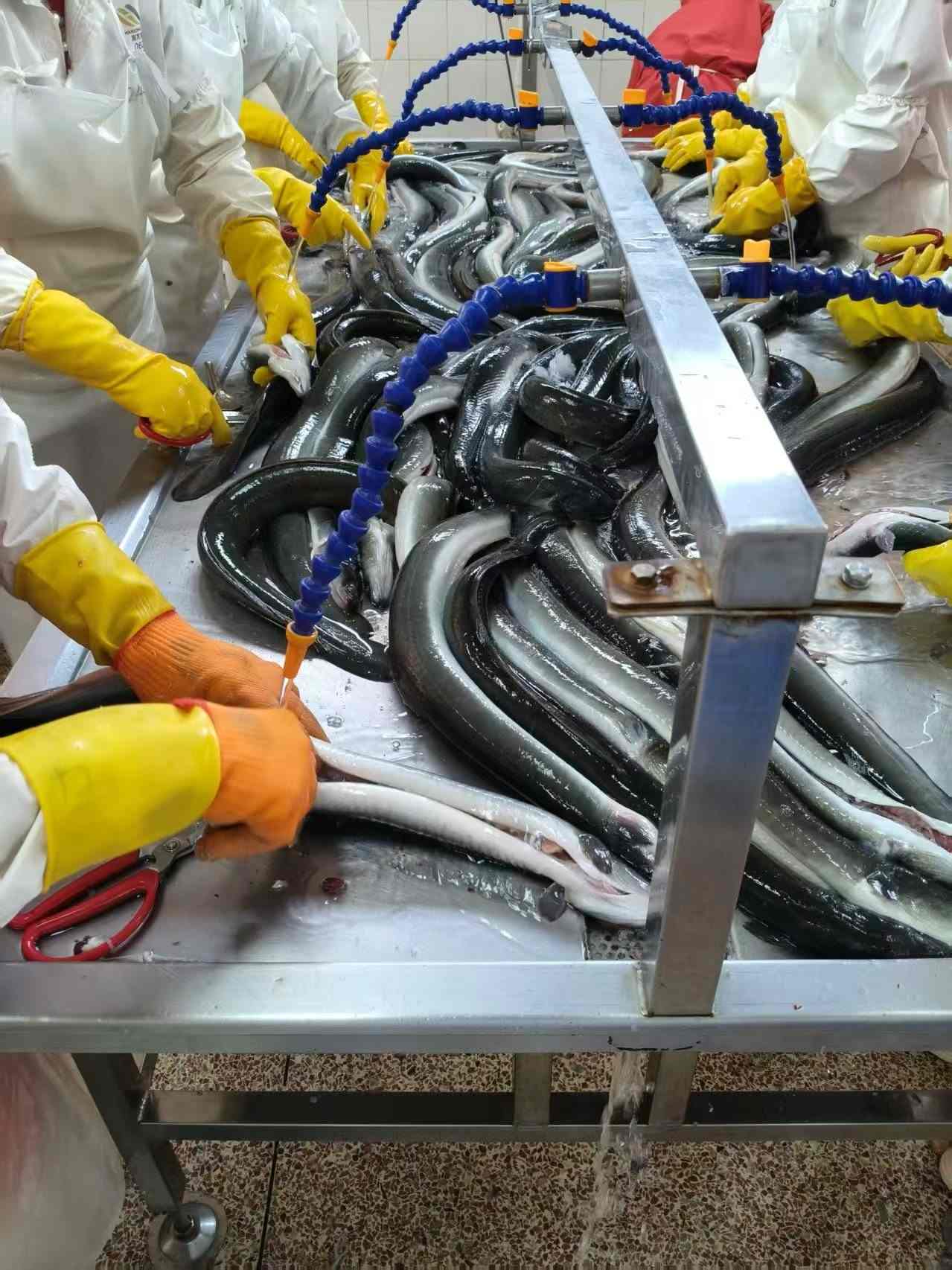
More importantly, this output is supported by a stable raw material pipeline. We manage a network of approximately 20 customs-registered eel farming bases. This full-chain control gives us traceability from the farm to your warehouse, a critical factor for quality assurance and supply security. Our eel lab of eelpro co. / ltd conducts targeted sampling to verify that raw materials meet our exacting standards before they ever enter our facility.
Cold-Chain Integrity
For frozen and perishable products, the supply chain is only as strong as its coldest link. A supplier must demonstrate robust cold-chain management from their facility to the port of loading.
Our 1,000-ton cold storage facility is central to our logistics capability. It allows us to store finished products in optimal conditions, ensuring quality is maintained while orders are consolidated for shipment. This infrastructure provides a buffer that supports reliable order fulfillment, with a standard delivery time of approximately 30 days from confirmation to shipment. For our partners in Indonesia and Southeast Asia, this logistical reliability is key to managing their inventory and distribution networks.
A Buyer's Checklist for Choosing an Unagi Sauce Partner
To move from reactive local buying to strategic global sourcing, use this checklist to vet potential suppliers. A strong partner should be able to provide positive answers to most, if not all, of these questions.
- Verifiable Certifications: Do they hold current, internationally recognized certifications like ISO 22000, HACCP, or others relevant to your market (e.g., HALAL)? Can they provide documentation?
- Production Capacity: What is their annual production capacity in tons? Does it comfortably exceed your projected annual volume?
- Traceability: Can they trace the product back to the raw material source? Do they control or partner with certified farms?
- Quality Control: Do they have in-house quality control personnel and a laboratory? What are their critical control points, such as metal detection?
- Logistics Infrastructure: Do they own or operate dedicated cold storage facilities? What is their standard procedure for maintaining the cold chain during transport?
- Market Experience: Have they successfully exported to demanding markets like Japan, the US, or the European Union? This demonstrates their ability to meet strict regulatory standards for things like veterinary drug residues.
- MOQ Flexibility: Are they willing to negotiate Minimum Order Quantities based on product specifications and packaging? A rigid, one-size-fits-all policy may indicate a less accommodating partner.
- Product Consistency: Do they have a documented, standardized process for manufacturing the sauce to ensure batch-to-batch consistency in flavor, color, and texture? For more details on this, see our kabayaki sauce article.
Finding a dependable source for unagi sauce is less about a "near me" search and more about a "right fit" evaluation. By prioritizing certified processes, production scale, and logistical competence, you build a resilient supply chain that supports your business's quality and growth.
If your business requires a stable, high-volume supply of unagi sauce and other eel products, contact us to discuss your specifications and logistical needs.