

Find Local Unagi Sauce Stockists When You Need Unagi Sauce Near Me
The dinner rush is approaching, the rice cooker is full, and your kitchen discovers there is not enough unagi tare for tonight’s kabayaki bowls. Searching for unagi sauce near me may show retail bottles, Japanese restaurants, and grocery listings, but a restaurant buyer needs different answers before placing an order: Is the stock physically available? What is the printed expiry date? Can the sauce hold your menu flavor until the next shipment arrives?
For chefs, purchasing managers, and independent restaurant owners, the goal is not simply to find a bottle quickly. The goal is to protect portion consistency, avoid an emergency menu change, and keep food-cost decisions under control. This FAQ-style guide sets out the questions to ask a local stockist before service, plus a practical backup plan for approved alternatives.
What should a restaurant ask before buying sauce from a local stockist?
Ask for a live inventory confirmation, not a general statement that the item is “usually available.” This is the best first step when a restaurant needs sauce within the same purchasing cycle. Local listings can remain visible after a product has sold out, and retail-facing stock data may not show quantities suitable for foodservice.
Start with these five questions by phone, email, or ordering platform message:
- Is this exact SKU physically in your warehouse or store today? Ask the stockist to confirm the item name, bottle or pouch format, and quantity that can be allocated to your account.
- How many units can be released now? A single bottle may solve a home-cooking need but not a busy service period. State the number of covers, menu items, or production batches you need to support.
- What is the printed best-before or expiry date on the available lot? Do not accept a broad answer such as “fresh stock.” Request the date on the actual lot assigned to your order.
- Is the item intended for retail or foodservice use? Retail packs can work for a short emergency, but their format, case quantity, and handling requirements may not suit your normal prep system.
- Can you provide a product label or specification sheet before dispatch? The ingredient declaration, allergen information, storage instructions, and origin details must fit your restaurant’s purchasing and food-safety procedures.
The conclusion is simple: buy locally when the stockist can answer all five questions clearly. This approach fits urgent replenishment. It does not replace routine purchasing from an approved source, because local availability may be irregular and product lots may change without notice.
When comparing sauce options, check whether you are buying a true unagi tare designed for grilled eel or a broader sweet soy-style sauce. The distinction affects sweetness, saltiness, viscosity, and how the glaze performs under heat. Review our eel sauce product page when you need a clearer starting point for product discussions with a supplier.
How do you verify local stock, expiry dates, and substitute compatibility before menu service?
Use a short approval sequence before sauce reaches the pass. The right answer is not “use whatever is available.” A substitute can save the evening only if it produces an acceptable result on the menu item and meets your restaurant’s internal ingredient controls.
| Verification step | What to request or test | Decision to make | Limit or warning |
|---|---|---|---|
| Confirm available stock | Exact product name, format, lot quantity, and collection or delivery window | Reserve only the quantity the stockist can allocate | Do not rely on a website listing without direct confirmation |
| Check expiry information | A photo or written confirmation of the printed best-before or expiry date | Accept only a lot that fits your expected usage plan | Do not assume unopened stock has the same remaining life as your usual product |
| Review label details | Ingredients, allergen declaration, storage direction, and pack condition | Confirm alignment with your purchasing rules and menu disclosure practices | Do not substitute if essential label information is unavailable |
| Run a controlled taste test | Warm a small amount and apply it to one prepared eel portion using the normal finishing method | Approve, adjust the application amount, or reject it | Do not test only from a cold spoon; heat changes aroma and coating behavior |
| Control menu use | Record which menu items use the temporary sauce and brief the kitchen team | Use the substitute only for the approved period | Do not let temporary stock become an unreviewed permanent replacement |
This action plan is most useful when your normal sauce is unavailable and service cannot wait for a regular shipment. It does not apply if the substitute has unclear labeling, damaged packaging, an unsuitable expiry date, or an ingredient profile your restaurant cannot approve.
What does a practical substitute taste test look like?
Prepare one standard eel portion exactly as your team would for service. Apply the normal amount of your usual sauce to a reference portion if any remains. Then prepare a second portion with the proposed alternative. Compare the finished portions after the same heating and holding steps.
- Check whether the sauce coats the eel rather than pooling around it.
- Check whether the sweetness becomes heavy after heating.
- Check whether the soy flavor masks the eel or supports it.
- Check whether the color differs enough to affect customer expectations.
- Check whether the result still works with your rice, garnish, and side dishes.
Cold knowledge: a sauce that tastes balanced straight from the bottle can become noticeably sweeter after heating and reduction on grilled eel. That is why a cold tasting alone is not a suitable approval method for kabayaki service.
If the replacement is acceptable but noticeably different, use it for a clearly controlled short-term period and tell the kitchen exactly which portions receive it. If it changes the intended dish too much, remove that item temporarily rather than quietly serving a result that no longer matches the menu standard.
Should you buy retail bottles, distributor stock, or arrange a direct supply order?
Choose the channel based on urgency, usage volume, and the level of consistency your menu requires. There is no single best source for every restaurant. Retail can solve a same-day shortage. Distributor stock may suit regular local replenishment. Direct supply is usually the better route when your restaurant needs defined product specifications and repeatable purchasing terms.
| Supply route | Best-fit situation | Main benefit | Main limitation |
|---|---|---|---|
| Local retail store | Unexpected shortage before an immediate service | Fast collection where stock is confirmed | Limited quantity, changing brands, and retail pack formats |
| Local food distributor | Restaurants with recurring weekly purchasing needs | Potentially easier ordering and local delivery coordination | Product range and lot availability can vary by distributor |
| Direct manufacturer or export supplier | Buyers seeking repeat specifications, planned volume, or import supply | More direct discussion of product format, documentation, and order planning | Not intended as a same-day emergency source |
For planned sourcing, ask whether the supplier can provide sauce alongside your eel program. This helps reduce the risk of building a kabayaki menu around one product and then buying an unrelated sauce at the last minute. Pairing sauce decisions with your unagi kabayaki product specification makes portion testing more meaningful because the glaze is assessed on the eel format you plan to serve.
Eelpro Co., LTD supplies frozen unagi kabayaki and eel sauce for international buyers. Our production operations include two modern production lines with an annual finished-goods capacity of 4,000 tons. For scheduled orders, the regular delivery time is approximately 30 days from order confirmation to shipment, subject to specification and quantity. This is useful for forward purchasing, not for a same-day local stock emergency.
How can a restaurant avoid flavor inconsistency when switching unagi sauce?
Approve a menu standard before the emergency happens. The strongest protection is a simple internal record that identifies your normal sauce, approved backup options, portion application method, and dishes where a change is not acceptable.
Use this buyer’s checklist during regular menu planning:
- Define the standard sauce. Record supplier, product name, pack format, ingredient label, and the way staff apply it during finishing.
- Identify the high-risk dishes. Kabayaki rice bowls, sushi toppings, and grilled eel presentations often show sauce differences quickly because the glaze is a leading flavor and color cue.
- Approve one or two substitutes in advance. Test each alternative on the actual menu item, not only in a tasting cup.
- Set an emergency purchase trigger. Decide when the team must reorder rather than waiting until the final unit is opened.
- Keep receiving records. Note the lot details, printed date, and delivery condition each time sauce arrives.
- Train the service team. If a temporary substitute changes the dish materially, managers should know how to handle customer questions honestly.
A common mistake is treating all dark, sweet soy-based sauces as interchangeable. They are not. A substitute may be acceptable for a marinade or a side dip but unsuitable as the final glaze on an unagi bowl. Another mistake is mixing the old and new sauces in one service without documenting the change. That makes it difficult to identify what guests received and impossible to evaluate the substitute properly.
For menu teams refining a glaze that tastes too sweet, too salty, or too thin, this kabayaki sauce recipe: fix flavor mistakes resource can help frame the tasting discussion. It is a useful reference for flavor evaluation, but it should not replace your own approved purchasing specification.
What food-safety and supply questions matter when selecting a longer-term supplier?
For a one-off local purchase, label review and pack condition are immediate priorities. For a recurring supply relationship, buyers should also ask how the supplier manages traceability, quality checks, and storage before shipment. These questions matter because sauce and eel are often used together, and a menu program depends on reliable documentation across both products.
Eelpro holds ISO 22000:2018, HACCP, and HALAL certifications, along with an Export Food Producer Registration Certificate and SC Food Production License No. SC11135062401122. These credentials are relevant for buyers who need a supplier with documented food-safety systems. They do not remove the buyer’s responsibility to review product-specific labels, import requirements, and destination-market rules.
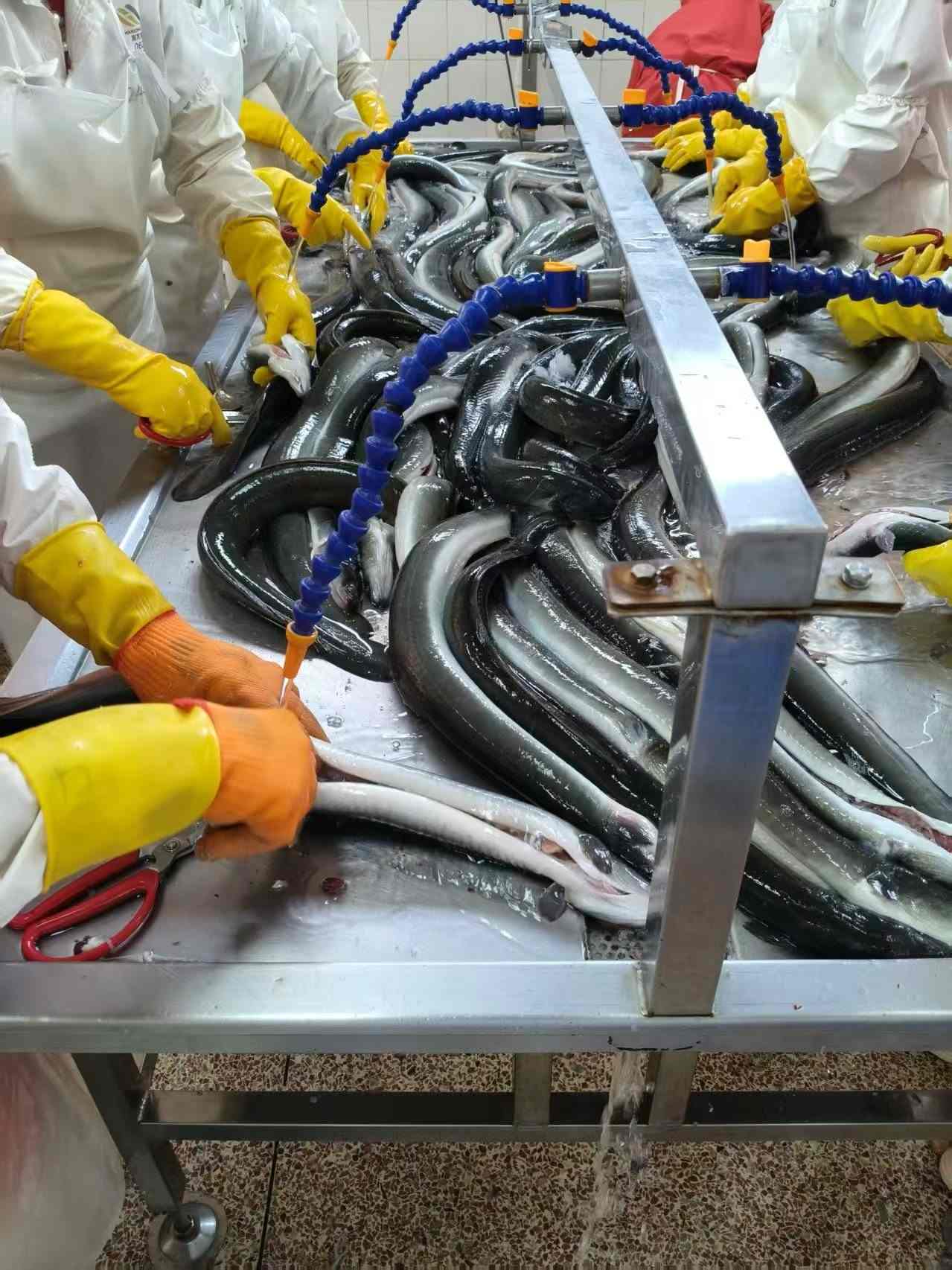
For eel supply, our traceability system covers approximately 20 customs-registered farming bases totaling more than 2,150 mu, from farming registration through process verification, targeted sampling, and tracking. We also operate an in-house laboratory and use metal detectors at critical control points. Buyers evaluating a combined eel-and-sauce program can review the eel lab of Eelpro Co., LTD information when discussing quality-control expectations.
Our frozen roasted eel has been supplied to Japanese restaurant chains and exported with eel sauce to food importers in the United States. Eel products have also been supplied to importers and foodservice channels in Germany, Poland, Australia, Indonesia, and Southeast Asia. These cases show established export activity, but they are not a guarantee that every product, pack format, or delivery arrangement will suit every restaurant. Confirm your required destination, pack format, product specification, and order quantity before requesting a quotation.
Which details should be included in an urgent sauce RFQ?
A short but precise request helps a supplier answer quickly and prevents a confusing comparison between products that are not equivalent. Include the details below whether you are contacting a local distributor or planning direct import supply.
- Required product: unagi sauce or unagi tare.
- Intended use: finishing glaze, sushi application, rice bowl sauce, marinade, or table condiment.
- Required quantity and the date you need it.
- Preferred packaging format and whether retail packs are acceptable.
- Required remaining shelf life based on your internal policy.
- Delivery address or collection location.
- Ingredient, allergen, certification, or import-document requirements.
- Whether you need frozen unagi kabayaki in the same order.
When availability is tight, state whether you can accept an approved alternative brand or format. If you cannot, say so directly. That saves time and prevents a supplier from offering a product that may be technically available but unusable for your menu.
Send us your sauce format, expected volume, and destination market to request a quotation or discuss a planned supply option.