

Build Eel Rolls Sushi That Keep Cucumber Crisp
Your cucumber turns wet, the nori softens, and the roll splits just before serving. The fix is not more pressure from the bamboo mat. For better eel rolls sushi, control moisture before the first ingredient touches the rice.
A good roll has contrast: warm, sweet grilled eel sushi; cool cucumber with a fresh snap; seasoned rice that holds together without becoming heavy; and nori that stays pleasantly firm. This guide explains what goes inside an unagi sushi roll, how to prepare each component, and how to assemble it in an order that protects texture.
Choose ingredients that support a clean, crisp roll
The best starting point for eel rolls sushi is ready-to-use roasted eel rather than an overly wet filling that needs extra sauce. The conclusion is simple: use kabayaki eel as the flavor anchor, then keep the cucumber and rice restrained. This suits first-time home cooks because it reduces knife work and prevents the filling from becoming crowded. It does not apply if you are intentionally making a heavily sauced, dessert-style roll, where crispness is not the priority.
For a simple explanation of the fish component, sushi is built around vinegared rice, while the toppings and fillings can vary. In this roll, the eel should provide richness; it should not flood the rice with glaze.
| Component | What to look for | Why it helps | When to choose another option |
|---|---|---|---|
| Frozen unagi kabayaki | Roasted eel with a balanced glaze and a piece shape that can be cut into strips | It gives grilled flavor without requiring raw-fish handling | Use deboned plain eel when you want to control every part of the seasoning yourself |
| Cucumber | Firm flesh, tight skin, and a dry exterior | Firm cucumber releases less water during rolling | Skip cucumber for a softer roll based on avocado or cooked egg |
| Sushi rice for rolls | Cooled, seasoned rice that clumps lightly when pressed | It holds the shape without crushing the filling | Do not use dry, loose rice; it will scatter and tear the nori |
| Nori | Dry sheets stored away from steam and open air | Dry nori resists softening during assembly | Use soy paper only if nori flavor is not wanted |
| Eel sauce | A brushable sauce used in a thin finish | It adds shine and sweetness without soaking the roll | Leave it aside when the kabayaki already carries enough glaze |
Among the core unagi sushi roll ingredients, the cucumber is the item most likely to spoil the texture. Select a cucumber that feels firm from end to end. Cut away the watery seed core before slicing the remaining flesh into long, even batons. This approach fits rolls served soon after assembly. If you need to hold rolls for a buffet or packed meal, cucumber will naturally lose some snap over time, so prepare it as close to serving as practical.
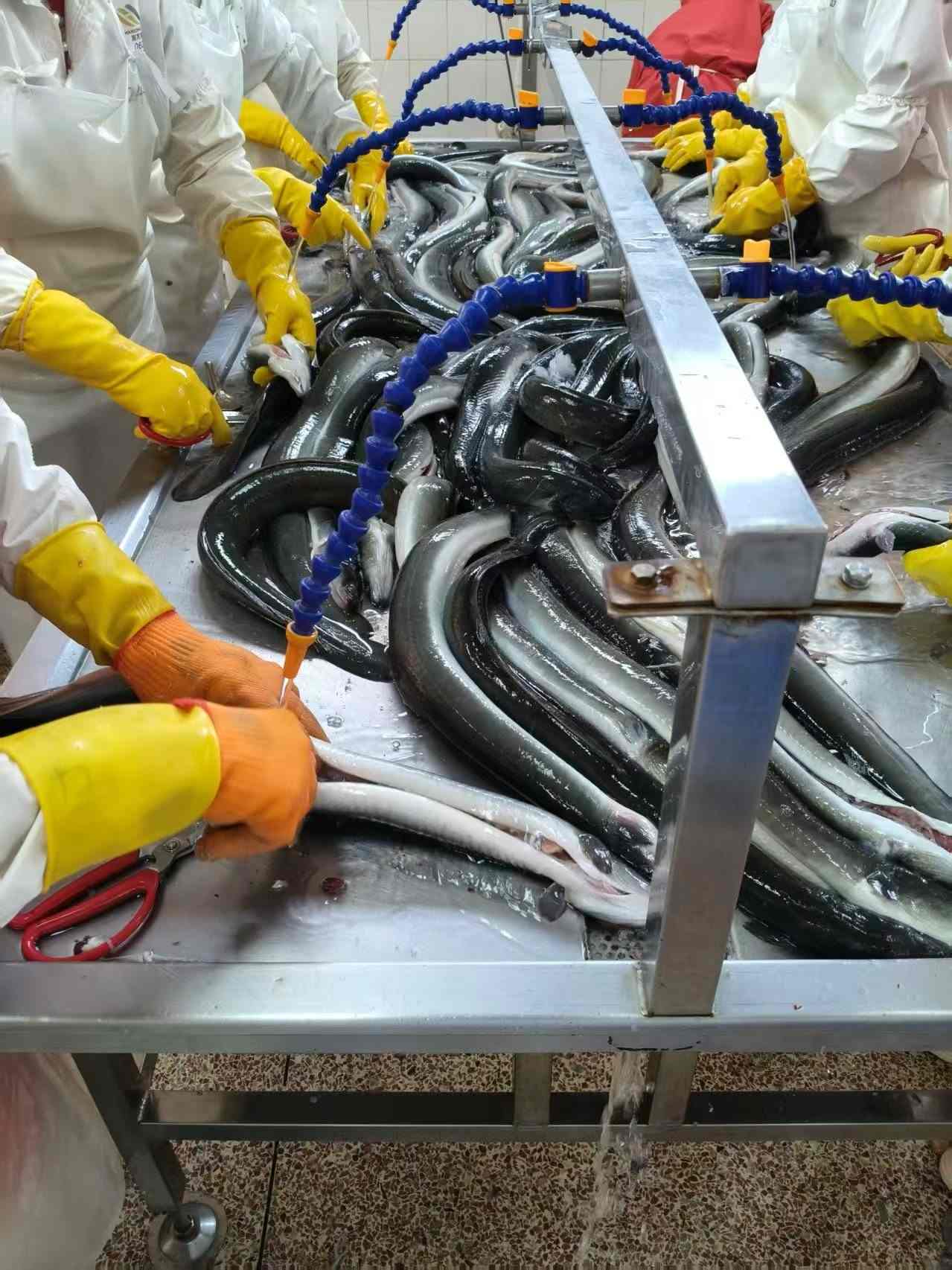
For the eel, a prepared product such as our unagi kabayaki product is a practical choice. Eelpro applies a controlled four-layer soy-sauce coating process and offers custom cutting formats, including strips and sushi slices. Warm the eel according to its package instructions, then let surface steam escape before cutting. Hot eel trapped in a closed container creates condensation, which is the enemy of a crisp cucumber sushi filling.
Layer eel, cucumber, and rice in the right order to prevent watery fillings and soggy nori
This is the make-or-break action for eel rolls sushi: place rice on the nori first, lay cucumber over the rice, then position the eel beside or slightly over the cucumber. The conclusion is that the rice should act as a moisture buffer, while cucumber stays away from direct contact with excess eel glaze. It works especially well for standard inside-out or nori-out rolls made at home. It is less suitable for rolls with sauce spread across the entire nori sheet, because the sauce itself will soften the wrapper.
- Dry the work surface first. Put the nori on a dry bamboo mat or a clean towel-covered board. Wet hands are useful for rice, but water should not pool on the mat.
- Spread sushi rice for rolls in a light, even layer. Leave a bare edge at the far side so the nori can seal. Press gently with damp fingers rather than packing the rice down.
- Build a narrow cucumber line across the rice. Keep the cut side facing upward where possible, so the drier skin side faces the rice. This helps reduce direct moisture transfer.
- Add grilled eel sushi beside the cucumber. Blot visible excess glaze from the eel before it goes into the roll. The eel should be warm, not steaming.
- Keep sauce out of the center. Brush a small amount on the finished top surface instead of pouring it into the filling. A center sauce line travels outward during rolling.
- Roll forward in one controlled movement. Bring the near edge over the filling, tighten lightly, then continue until the bare nori edge closes the roll.
- Rest the knife, not the roll. Wipe the knife between cuts so sauce and rice do not drag across the nori. Cut with a smooth downward-and-forward motion.
The key checkpoint is visual: after rolling, no liquid should squeeze from the sides. If sauce appears at the cut ends, there was too much glaze, too much filling, or both. For home cooks making eel rolls sushi for the first time, it is better to make a slimmer roll with a clean shape than a large roll that breaks apart.
Why this order works
- Rice protects the nori: The rice layer creates separation between moist fillings and the wrapper. This is useful for immediate serving, but it cannot keep nori crisp for an extended holding period.
- Cucumber stays distinct: A single line of cucumber prevents its water from spreading through the roll. It does not work if the cucumber is grated, crushed, or left with its watery center.
- Eel flavor remains focused: Placing eel beside cucumber lets each bite show sweet, savory, fresh, and clean notes. It does not apply if you prefer the eel blended into a creamy filling.
- Top-brushing limits sogginess: Finishing sauce on the outside gives visual appeal and flavor control. Do not add an exterior sauce if you need the roll to travel without a container lid touching it.
A useful cold fact: the cucumber seeds are not just a texture issue. They are the most water-prone part of the vegetable, so removing them is often more effective than adding extra rice or squeezing the finished roll tighter.
Prepare each component before you start rolling
Do not assemble eel rolls sushi in a rush with warm rice, steaming eel, and freshly washed cucumber on the same board. The practical conclusion is to set up dry, cooled, and portioned ingredients first. This suits a home kitchen because the final rolling stage becomes quick. It does not mean ingredients must be cold; eel can be pleasantly warm, but it should not release visible steam onto the nori.
A preparation checklist for crisp texture
- Cook and season the rice, then cool it: Rice that is still releasing steam will soften the nori. Use it when it feels comfortable to handle, not refrigerator-cold and not hot.
- Wash cucumber early, dry it thoroughly, then remove the core: A dry exterior prevents water from transferring to the nori through your hands and board.
- Warm kabayaki, then vent it: Set the eel where steam can escape. Cut it only after excess surface moisture has settled.
- Keep nori protected until the last moment: Open only the sheets you need. Humid air makes nori flexible before you even begin.
- Set sauce aside with a brush or spoon: Controlled application is better than pouring. For sauce guidance, see our eel sauce product page.
- Use a clean, damp knife: The blade should be wiped between cuts, not left dripping wet.
These steps make the unagi sushi roll ingredients easier to manage. They are particularly helpful when children, guests, or other cooks are waiting to eat. If you are preparing rolls far ahead, hold the cut cucumber separately and roll closer to serving; no assembly method can fully preserve fresh nori and cucumber for an indefinite period.
Avoid the common mistakes that make rolls wet or loose
Most failures in eel rolls sushi come from moisture management, not rolling skill. Fix the source instead of trying to compress the roll harder. Compression can crush rice and force cucumber water toward the nori.
| Common mistake | What happens | Direct fix | Limit of the fix |
|---|---|---|---|
| Using cucumber with seeds intact | Water leaks into the rice | Remove the seed core before cutting batons | Very soft cucumber should be replaced, not rescued |
| Rolling with steaming eel | Condensation softens nori | Let steam disperse before assembly | Do not chill eel until firm; cold eel loses its appealing soft texture |
| Adding sauce inside the roll | Sticky, wet center and slipping layers | Use a thin exterior brush of sauce | A very dry eel may still need a modest amount of sauce for flavor |
| Overfilling the center | Nori splits or cannot seal | Use one clear line each of cucumber and eel | Large specialty rolls may need a larger nori sheet and a different method |
| Pressing rice too firmly | Dense texture and squeezed filling | Spread rice lightly with damp fingertips | Rice still needs enough contact to hold the roll together |
Another avoidable problem is using too much sauce because the eel looks dry after reheating. Taste a small piece first. Kabayaki is already roasted with seasoning, and a light finishing brush is often enough. If you prefer a sweeter finish, compare ideas in this kabayaki sauce article before changing the filling ratio.
Answer the questions first-time home cooks ask most
How do you keep cucumber crisp in eel sushi rolls?
Remove the seed core, cut firm cucumber into batons, dry the exterior, and place it over the rice rather than against a wet sauce layer. That is the best approach for eel rolls sushi served shortly after preparation because it protects the cucumber’s clean bite. It will not keep cucumber fully crisp if the finished rolls are held for a long period, especially in a tightly closed container where moisture gathers.
How to assemble eel sushi rolls at home?
Prepare cooled rice, dry nori, cored cucumber, and warm-but-not-steaming eel. Spread rice on the nori, lay cucumber in a narrow line, add eel beside it, then roll with steady, gentle pressure. This is the simplest assembly for home cooks because every component has a defined position. It does not apply to rice-outside styles, which require a covered mat and a separate flipping step.
What goes inside an unagi sushi roll?
The standard answer is seasoned rice, nori, roasted eel, and cucumber. Optional elements can include avocado, toasted sesame, or a light finishing sauce, but each extra item adds bulk or moisture. For a first attempt at eel rolls sushi, keep the filling focused on eel and cucumber. Once the basic roll stays firm, experiment with additional flavors.
Use prepared eel when consistent roll filling matters
For repeatable eel rolls sushi, select eel that can be portioned neatly and handled with minimal back-of-house preparation. Eelpro produces frozen roasted eel and deep-processed aquatic products with export-grade process controls, including defined white-roasted and soy-sauce coating color standards. Our facility is certified to ISO 22000:2018 and HACCP systems, and products are produced under SC Food Production License No. SC11135062401122.
For a home cook, the immediate benefit is simple: prepared kabayaki removes the need to skin, debone, and roast freshwater eel before you can make a roll. For a foodservice buyer, standardized cuts and ready-to-heat formats can reduce preparation steps. The limit is menu style: if your recipe depends on a house-made marinade or a specific raw-eel preparation, a finished kabayaki product will not be the right starting format.
For more filling and rolling variations, see our eel sushi roll recipe. If you are sourcing kabayaki for a home-food retail range or a restaurant menu, request a product sample or selection advice from Eelpro.