

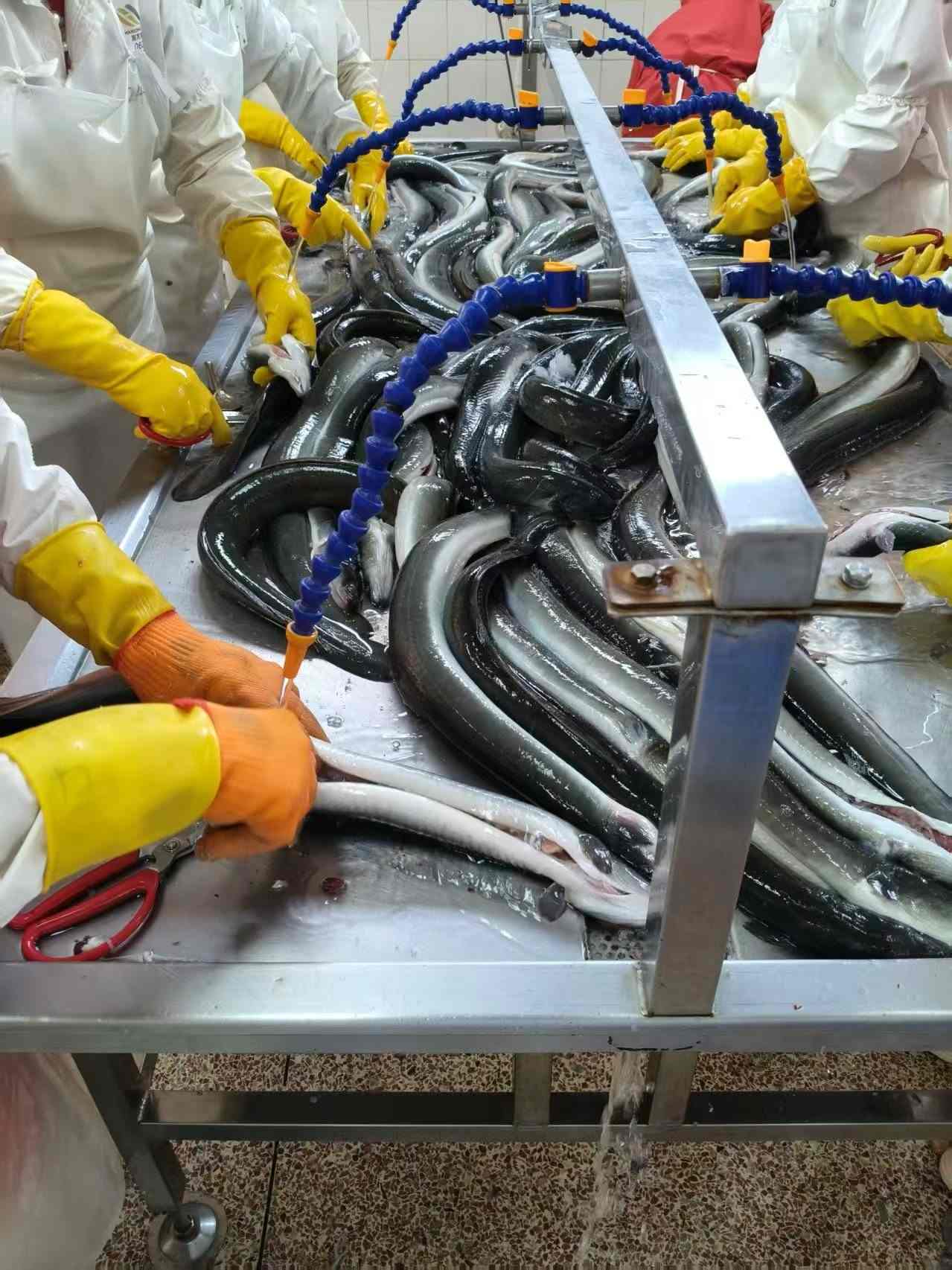
Here is How Industrial Eel Sauce is Made for Consistency
Many people wonder how eel sauce gets its rich, glossy texture that perfectly coats grilled unagi. While home recipes are simple, achieving consistent viscosity, flavor, and shelf stability for thousands of liters is a different challenge. The process involves much more than just simmering ingredients. As a quality specialist, I've seen firsthand how precise control over heat, time, and ingredient chemistry determines the final product's success in demanding export markets like Japan and the EU.
Understanding how is eel sauce made at an industrial scale is key to sourcing a reliable product. The secret isn't a single ingredient but the controlled transformation of simple inputs—soy sauce, mirin, sugar, and sake—through carefully managed physical and chemical processes. This ensures every batch has the same coating properties, flavor profile, and food safety integrity, whether it's destined for a restaurant chain in the United States or a food distributor in Germany.
The Science of Thickening: How Evaporation and Solids Create Viscosity
The signature thickness of unagi tare, or eel sauce, comes from concentrating its components through simmering. It’s a balance of removing water and altering the chemical structure of the remaining ingredients. If the process is too short, the sauce is watery. Too long, and it becomes a burnt, crystalline mass. At Eelpro, we monitor this transformation using precise metrics to guarantee consistency.
Here’s a technical breakdown of the three core mechanisms at play during the simmering and reduction phase:
| Process | Primary Mechanism | Impact on Final Sauce Quality |
|---|---|---|
| Water Evaporation | As the sauce simmers, water turns to steam and escapes. This directly increases the concentration of all other ingredients (sugar, salt, soy solids) relative to the total volume. | This is the most direct driver of thickness. Insufficient evaporation results in a thin sauce that won't adhere to eel. Over-evaporation creates a product that is too thick to pour and may have an overly salty or sweet taste. |
| Sugar Concentration & Caramelization | As water evaporates, the sugar concentration rises significantly. At high temperatures (typically above 160°C or 320°F), the sugar molecules begin to break down and reform in a process called caramelization. This creates complex polymers that are inherently more viscous. | Caramelization is critical for both viscosity and flavor. It adds nutty, toasted notes and a deep amber color. However, uncontrolled heating can quickly lead to scorching, introducing bitter, burnt flavors that ruin the batch. We control temperatures precisely to achieve ideal caramelization without burning. |
| Soy Sauce Solids & Maillard Reaction | High-quality soy sauce contains dissolved proteins and amino acids. During heating, these compounds react with the sugars in a process known as the Maillard reaction. This reaction creates hundreds of new aroma and flavor compounds, and its byproducts contribute to the sauce's body and dark color. | This reaction is responsible for the savory, umami-rich depth of authentic unagi tare. The solids from the soy sauce provide structure, preventing the sauce from being a simple sugar syrup. The quality of the initial soy sauce directly impacts the complexity and mouthfeel of the final product. |
By managing these three factors, we can reliably produce an eel sauce product that meets specifications for viscosity (measured in centipoise), Brix (sugar content), and color. This scientific approach removes the guesswork common in small-scale production.
Key Ingredients and Their Role in Commercial Unagi Tare Production
The final quality of unagi tare is determined long before the simmering starts. The selection of raw materials is a critical control point. For international buyers, understanding a supplier's ingredient sourcing provides insight into their commitment to quality and safety.
At our ISO 22000:2018 certified facility, we adhere to strict specifications for each component:
- Soy Sauce (Shoyu): This is the foundation of the sauce's umami flavor. We use naturally brewed soy sauce with a specific nitrogen content, which indicates a higher concentration of amino acids and a more complex flavor profile. Cheaper, chemically hydrolyzed soy sauces can introduce harsh, off-flavors and lack the depth required for a premium product.
- Mirin: This sweet rice wine adds a subtle sweetness and a characteristic glossy sheen. True mirin (hon-mirin) contains around 14% alcohol and is naturally sweet from the fermentation process. Lower-quality substitutes, often called mirin-fu chomiryo (mirin-style seasoning), contain corn syrup and other additives, which can alter the final texture and taste.
- Sugar: We primarily use crystalline rock sugar. Unlike standard white granulated sugar, it dissolves more slowly and cleanly, which helps prevent premature crystallization in the final product. This is especially important for sauces intended for long-term storage or cold-chain distribution.
- Sake: A quality cooking sake is used to add another layer of umami and help temper any strong fish odors from the eel bones, which are often used in traditional recipes to add depth. The alcohol is cooked off during the long simmering process.
The ratio of these ingredients is adjusted based on client requirements. For example, some Japanese restaurant chains prefer a less sweet, more savory profile, while some foodservice channels in Southeast Asia or Australia request a slightly sweeter, thicker sauce to appeal to local palates.
Controlling Quality: Common Mistakes in Bulk Eel Sauce Manufacturing
Producing a few liters of eel sauce is straightforward. Scaling that to thousands of liters while maintaining batch-to-batch consistency is where many suppliers fail. As a quality assurance manager, I’ve audited facilities where small errors led to large-scale product loss. For buyers, knowing these potential pitfalls is essential when vetting a unagi kabayaki manufacturer.
Here are common defects and the quality control measures we use to prevent them:
| Common Defect | Likely Cause | Eelpro's Preventive Control Measure |
|---|---|---|
| Crystallization | Incorrect sugar-to-liquid ratio, overly rapid cooling, or using low-grade sugar with impurities. The sugar falls out of the solution, creating a gritty texture. | We use high-purity rock sugar and a controlled, multi-stage cooling process. Brix levels are tested in-process with a refractometer to ensure the sugar concentration remains within the specified tolerance. |
| Scorched or Burnt Flavor | Uneven heating in the cooking vessel, creating "hot spots" at the bottom where sugars burn. This is common in direct-heated tanks. | Our production lines use jacketed cooking kettles with agitators. This provides gentle, uniform heat and constant motion, preventing any part of the sauce from scorching on a hot surface. Temperature is monitored continuously. |
| Inconsistent Viscosity | Failure to control the rate of evaporation. This can be caused by fluctuating heat, changes in atmospheric pressure, or inconsistent simmering times. | The reduction process is timed, but the final endpoint is determined by viscometer readings. We do not rely on time alone. Each batch must meet a precise viscosity target before it is approved for cooling and packaging. |
| Microbiological Instability | Improper hot-filling temperatures or inadequate sanitation of packaging materials. This can lead to spoilage and food safety risks. | As an ISO 22000 and HACCP certified facility, we follow strict sanitation protocols. The sauce is hot-filled at a validated temperature to ensure commercial sterility, and our in-house laboratory performs microbiological testing on finished products. |
From Sauce to Glaze: Application in Unagi Kabayaki Production
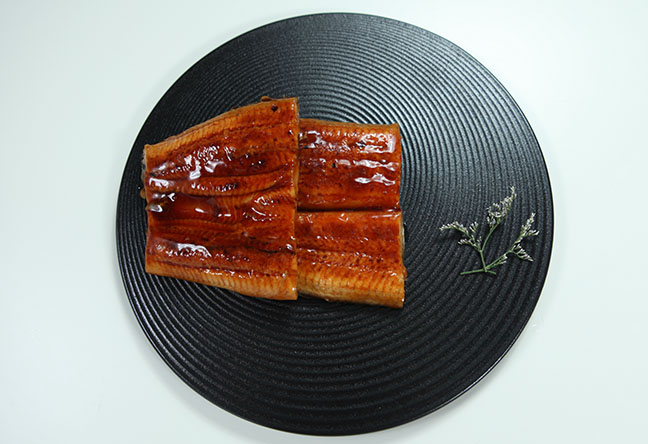
The ultimate test of an eel sauce is how it performs on the product it was designed for: roasted eel. Our unagi tare is engineered to be the perfect glaze for our unagi kabayaki eel. The viscosity is calibrated to cling to the hot eel fillet without running off, creating a thick, even coating that caramelizes beautifully under the heat of the roaster.
Our patented 4-layer soy-sauce coating process relies on this consistency. Each layer of sauce is applied at a specific temperature-controlled step:
- The first light coating helps the eel retain moisture during the initial roasting.
- The second and third layers are applied to build up the flavor and color.
- The final, fourth layer is applied as a finishing glaze, creating the deep, appetizing gloss that customers expect.
If the sauce were too thin, it would simply drip off, resulting in a pale, unevenly flavored product. If it were too thick, it would not penetrate the fillet and would be prone to burning. This synergy between our sauce production and our eel roasting lines—supported by a 4,000-ton annual capacity—is how we deliver a consistent, high-quality product to clients worldwide.
Our control over the entire process, from our 20 customs-registered eel farming bases to our final sauce production, ensures that the unagi kabayaki we ship meets the stringent food inspection standards of Japan, the US, and the EU.
For food importers and distributors, sourcing a high-quality unagi tare is just as important as the eel itself. A consistent, well-made sauce ensures a premium final product for your customers. To learn more about our eel sauce specifications or request a sample for evaluation, please contact our team.