


How Is Unagi Donburi Layered for Even Sauce Coverage?
A bowl can look perfect at the pass and still disappoint at the table. The usual problem is not the eel. It is where the sauce goes. In unagi donburi, sauce placed too early can make the rice heavy, while sauce poured over the finished eel can hide its glossy kabayaki surface. The answer is to divide the sauce into separate jobs: season the rice lightly, protect the eel glaze, and finish only where visual shine is needed.
For chefs and restaurant operators, this is a plating system rather than a casual garnish step. A well-layered bowl keeps the rice fluffy enough to eat with chopsticks, lets the eel sit cleanly on top, and gives each bite a measured sweet-savory note. The goal is even flavor without turning the bowl into a sauce-soaked base.
Build the bowl in layers instead of using one final sauce pour
Recommendation: Treat rice seasoning, eel glazing, and finishing shine as three separate steps. This works best for restaurant service because each step solves a different problem. Rice needs controlled seasoning; kabayaki needs its surface glaze preserved; the final bowl may need a small visual finish. It is less necessary for a staff meal or a casual home bowl where presentation consistency is not a priority.
Unadon is commonly understood as grilled kabayaki eel served over rice. The bowl appears simple, but its structure changes the eating result. Rice is absorbent and warm. Eel is rich and already coated with a sweet-savory tare. When both components receive the same amount of sauce in the same place, they do not respond the same way.
| Layer | What to apply | Practical effect | Trade-off if overused |
|---|---|---|---|
| Rice base | A light, controlled sauce application | Brings flavor into the bowl without masking the rice | Rice becomes dense, dark, and harder to separate |
| Rice-to-eel interface | A thin sauce barrier or lightly seasoned upper rice surface | Connects eel flavor to the rice beneath it | Excess liquid migrates downward and causes uneven absorption |
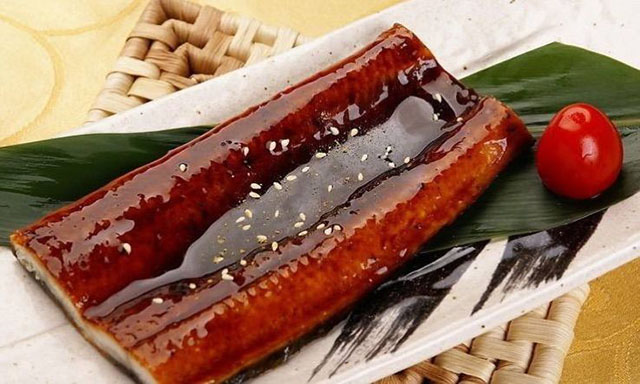
| Eel surface | The existing kabayaki glaze, refreshed only when needed | Keeps the fillet glossy and recognizable | A thick top coating can flatten texture and obscure grill character |
| Final presentation | A restrained finishing touch | Adds visible shine and a fresh aroma at service | Sauce pools at the rim and makes the bowl look careless |
The ingredient choice affects how forgiving this system is. A prepared fillet with a stable glaze is easier to place than a fillet that needs repeated sauce correction. Our unagi kabayaki product is produced with a controlled roasting process and four soy-sauce coating stages. That product-side consistency helps a kitchen decide whether the surface needs a refresh rather than routinely adding a heavy top layer.
How sauce placement between rice and eel controls rice absorption while preserving the kabayaki glaze
Conclusion: Put the main rice-seasoning sauce at the upper part of the rice bed, immediately before the eel is placed, rather than flooding the bowl bottom or coating the eel after assembly. This placement creates a flavor bridge between the two components while reducing the amount of liquid that travels through the full rice portion. It suits bowls served soon after assembly. It does not solve problems caused by overly wet rice, cold eel, or sauce that is already too thin.
The interface between rice and eel is the most useful sauce location because it performs two functions at once. First, it seasons the bites closest to the fillet, where diners expect the strongest kabayaki flavor. Second, it allows the eel’s own glaze to remain visible rather than burying it under another sauce layer.
| Sauce placement | What it changes | Best use case | When not to use it |
|---|---|---|---|
| At the bottom of the bowl | Creates a heavily seasoned lower rice layer | Only for a deliberate, strongly sauced style | Not suitable when fluffy rice texture and clean bowl appearance matter |
| Mixed through all rice | Produces uniform flavor but changes the rice’s visual identity | Useful when the menu concept calls for seasoned rice | Not ideal when the rice should remain pale and distinct beneath eel |
| On the upper rice surface | Focuses flavor near the eel and limits deep saturation | Best default for plated restaurant bowls | Use less when the eel itself carries a particularly generous glaze |
| Over the eel after plating | Increases visible gloss and immediate sweetness | Useful as a small finishing correction | Not suitable as the primary seasoning method |
The interaction is simple but often misunderstood. Sauce does not stay exactly where it lands. Warm rice draws moisture downward. Gravity and steam encourage movement. If a large amount is poured onto the eel, some runs over the fillet edge, enters the rice unevenly, and leaves a dark ring in one section of the bowl. If the same sauce is placed lightly on the top rice surface before the fillet is set down, the eel covers that zone and helps contain the seasoning where it is most useful.
The kabayaki glaze needs a different treatment. Its role is not only flavor; it also signals surface quality. A well-glazed fillet should still show its natural contours and roasting character. Repeated brushing or pouring can make that layer look flat. For more guidance on balancing sweetness, salinity, and body in the finishing sauce, see this kabayaki sauce article.
Use a repeatable assembly sequence for service consistency
Recommendation: Set a single bowl-building order and teach staff not to improvise the sauce stage. This is most valuable during menu rollout, when several cooks may plate the same item. The method has limits: the exact portion size, bowl shape, and sauce viscosity still need to be validated by the restaurant during a tasting session.
- Prepare the rice for a defined service texture. The grains should be cooked and held according to the kitchen’s approved rice procedure, with enough structure to support the eel without compressing into a paste.
- Level the rice without packing it down. A loose, even surface gives the eel a stable seat and reduces isolated sauce channels.
- Apply the rice-seasoning portion to the upper surface. Aim for broad, light coverage rather than one concentrated puddle. The purpose is seasoning, not saturation.
- Place the prepared eel centrally over the seasoned area. The fillet should cover most of the sauce-treated rice, keeping the bowl visually organized.
- Inspect the original glaze before adding more sauce. If the fillet already has an even shine, do not automatically add a top pour.
- Finish only if needed. Use a restrained surface touch when the bowl needs a fresher gloss or when the menu standard calls for a visible finishing line.
- Check the rim before release. Clean edges protect the visual contrast between rice, eel, and bowl.
For a menu test, plate several bowls using the same ingredient batch but vary only the sauce location: lower bowl, mixed rice, upper rice surface, and top finish. Cut through each bowl after a short holding period. Look for dark, wet rice zones; glaze runoff; and whether the eel still reads as the feature. This comparison is more useful than judging a single bowl by appearance alone.
Prevent the mistakes that make rice soggy or the eel look over-sauced
Most failures come from using sauce as a correction for a different problem. If the rice lacks flavor, chefs may add too much tare. If the eel looks dry, they may pour sauce instead of reviewing reheating and holding practice. Separate the diagnosis from the fix.
- Mistake: treating sauce as a bowl-bottom condiment. This creates an uneven eating experience because the first bites may taste mild while the lower bites become overly wet. Use bottom saucing only when that strong gradient is intentional.
- Mistake: mixing sauce through every grain by default. This can be appropriate for a seasoned-rice concept, but it weakens the contrast between white rice and glazed eel. For a traditional visual presentation, keep the rice mostly distinct.
- Mistake: adding a heavy final pour for shine. The immediate result may look glossy, but the glaze can lose definition. First inspect the fillet and use a minimal finish only when appearance requires it.
- Mistake: using one sauce standard for every eel format. Whole fillets, cut pieces, and sushi-style slices expose different surface areas. The same pouring pattern will not produce the same result across formats.
- Mistake: ignoring the bowl shape. A narrow, deep bowl directs runoff differently from a broad bowl. Test the placement standard in the actual service ware, not only on a prep tray.
A useful cold fact for menu developers: the sauce layer diners notice most is not always the layer that gives the bowl its strongest flavor. Much of the perceived flavor comes from the rice-eel contact zone, where steam, glaze, and lightly seasoned grains meet. A large top pour may look generous, yet it can make the bowl less balanced.
Match the layering method to your eel format and service model
Conclusion: Keep the upper-rice seasoning method as the default, then adjust the finishing step according to the eel cut and the service channel. This approach suits plated dine-in bowls and controlled delivery assembly. It may need modification for buffet holding, where moisture movement can continue before the bowl reaches the guest.
| Service format | Recommended sauce approach | Reason | Verification check |
|---|---|---|---|
| Full fillet bowl | Light upper-rice seasoning with limited top finishing | The fillet already provides broad glazed coverage | Confirm that the glaze remains visible from the guest’s viewing angle |
| Cut-piece bowl | Distribute rice seasoning evenly before arranging pieces | Gaps between pieces can expose too much plain rice | Check for sauce pooling in gaps between cuts |
| Delivery bowl | Use measured rice seasoning and avoid excess surface sauce | Movement and holding can spread liquid during transport | Review the bowl after the restaurant’s intended delivery hold test |
| Premium presentation bowl | Prioritize clean placement and preserve the original eel glaze | The eel surface is part of the menu’s visual value | Check rim cleanliness, center alignment, and glaze definition |
Raw material consistency also matters when a restaurant is setting one plating standard across locations. Eelpro operates two production lines with annual finished-goods capacity of 4,000 tons and a 1,000-ton cold-storage facility. Our production controls include ISO 22000:2018, HACCP, HALAL certification, export food producer registration, and an SC food production license. For buyers developing a repeatable bowl, those documented systems can support consistent supplier evaluation alongside kitchen-side recipe testing.
We also maintain full-chain traceability through approximately 20 customs-registered farming bases covering 2,150 mu, supported by in-house laboratory controls and metal detectors at critical control points. This does not replace a restaurant’s own receiving and plating checks. It gives procurement teams a clearer basis for reviewing source control when selecting frozen eel for a standardized menu.
For restaurant groups seeking a familiar kabayaki profile, Eelpro has supplied kabayaki eel to Japanese restaurant chains and exports eel products to food importers in the United States, Germany, Poland, Australia, Indonesia, and other Southeast Asian markets. A menu team should still request product samples and confirm how the selected eel format behaves with its own rice, bowl, and service routine. For related bowl ideas beyond the standard format, review eel rice bowl toppings.
Use this pre-rollout check before approving the final bowl standard
- Does the rice remain separate and appealing after the intended service hold?
- Is the primary sauce layer placed on the upper rice surface rather than pooled beneath it?
- Does the eel retain a visible kabayaki glaze after assembly?
- Are full fillets and cut pieces assigned different plating instructions where needed?
- Has the team tested the method in the actual bowl, lid, and delivery packaging?
- Can every cook describe when a finishing sauce touch is needed and when it is not?
- Has procurement reviewed the product specification, glaze character, cut format, and source-control documentation?
Request a sample and product specification to test your preferred sauce-layering standard before menu rollout.