


How to Prepare Rice That Securely Holds Eel Rolls
In high-volume foodservice operations, consistency is profit. A common point of failure that erodes margins and damages brand reputation is an improperly constructed sushi roll. When your premium eel rolls fall apart during slicing or plating, the problem often isn't the skill of the chef but a fundamental flaw in the rice preparation. The texture, temperature, and handling of the rice are the foundation of a structurally sound roll that presents perfectly every time.
As a quality assurance specialist, I've seen how overlooking these details leads to waste and inconsistent customer experiences. For businesses supplying restaurant chains in Japan or foodservice distributors in the US and EU, delivering a product that performs reliably is non-negotiable. This guide outlines the precise, repeatable steps for preparing sushi rice that ensures your eel rolls maintain their integrity from the rolling mat to the customer's plate, protecting both the product and your bottom line.
Why Rice Structure is Critical for Commercial Eel Rolls
The choice of eel is paramount, but the rice is the vehicle that delivers it. For foodservice channels, where speed and repetition are key, a forgiving and stable rice base is essential. An unstable roll leads directly to higher food costs due to breakage and re-makes, slower service times, and an inconsistent final product that can disappoint customers.
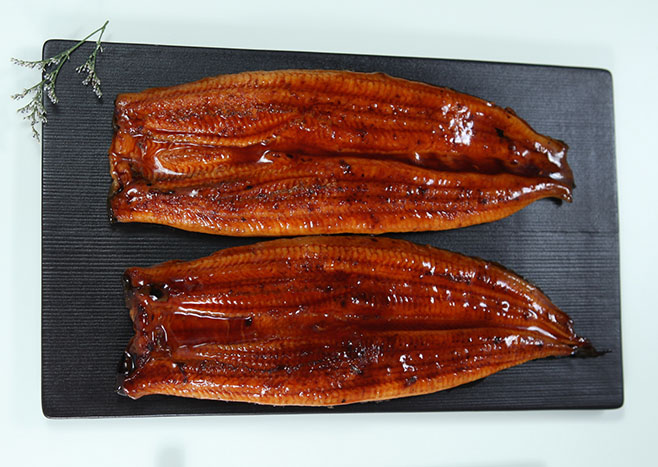
The goal is to create a rice bed that is sticky enough to adhere to itself and the nori, yet allows individual grains to remain distinct. It must be firm enough to withstand pressure during rolling and slicing without turning into a paste. When using high-quality unagi kabayaki, which has a delicate, soft texture after being glazed and roasted, the rice must provide a supportive structure, not a competing mushy texture. A well-made roll enhances the eel's flavor; a poorly made one masks it.
At Eelpro, our process is built on control. We manage everything from our ~20 customs-registered eel farms to our final product testing in our professional laboratory. This end-to-end oversight ensures our eel meets export standards for markets like Japan and Germany. We encourage our clients to apply the same level of process control in their kitchens, starting with the rice.
A Hands-On Method for Cooling and Pressing Rice for Compact Rolls
Achieving the right rice structure is a process of temperature control and precise handling. Rushing these steps is the most common reason rolls fail. Here is a systematic approach used by experienced sushi chefs to ensure a stable foundation for eel rolls, adapted for a commercial kitchen environment.
- Cooling with Control (The "Uchiwa" Method): After mixing the cooked rice with sushi vinegar, immediately spread it in a thin, even layer in a non-metallic container (a traditional wooden hangiri is ideal). The goal is to cool it to just above body temperature (around 35-40°C or 95-104°F) quickly. Use a paddle to "slice" through the rice and a fan (an uchiwa fan or a clean electric fan on low) to evaporate excess moisture. This fanning action creates a glossy sheen on the grains and prevents them from becoming waterlogged and gummy.
- Portioning for Consistency: Use a digital scale. For a standard hosomaki or futomaki roll, consistent rice portions are critical for uniform size and structure. A typical portion might be 120-150 grams per full nori sheet. This standardization is vital for cost control and product consistency across multiple locations or shifts.
- Applying Even Pressure: Moisten your hands in tezu (a mixture of water and a little rice vinegar) to prevent sticking. Take the portioned rice and gently form it into a loose ball. When spreading it on the nori, use your fingertips and the base of your palms to apply gentle, even pressure. The aim is to create a cohesive mat of rice without crushing the grains. You should still be able to see the definition of individual grains. Over-compressing the rice at this stage creates a dense, hard texture and can cause the nori to buckle or tear.
- The Final Press During Rolling: The most important pressure application happens as you roll. After adding your unagi and other fillings, use the bamboo mat (makisu) to lift the edge of the nori over the filling. Tuck it in securely, and then apply firm, even pressure along the entire length of the roll as you complete the turn. This action compacts the roll into a tight cylinder. For eel rolls, this step is particularly important to ensure the soft eel fillet is held securely in place.
Executing these steps correctly prevents the most frequent problems in roll preparation. Below are common mistakes and their direct consequences.
Common Rice Handling Mistakes and Their Consequences
| Mistake | Direct Consequence | How It Ruins the Eel Roll |
|---|---|---|
| Using rice that is too hot or too cold. | Hot rice is too soft and gummy; cold rice is hard and not sticky. | The roll becomes mushy and hard to slice (hot) or fails to seal and falls apart (cold). |
| Spreading rice with dry hands. | Rice sticks to hands, leading to uneven spreading and clumping. | Creates dense spots and empty pockets in the rice layer, resulting in an unstable roll that collapses when cut. |
| Crushing grains while spreading. | Releases excess starch, making the rice layer a dense, sticky paste. | The texture becomes unpleasantly chewy and dense, overpowering the delicate texture of the roasted eel. |
| Applying uneven pressure during rolling. | The roll is tighter in some places and looser in others. | When sliced, some pieces hold their shape while others bulge or fall apart, creating waste and poor presentation. |
Sourcing Eel Cuts Optimized for Roll Stability
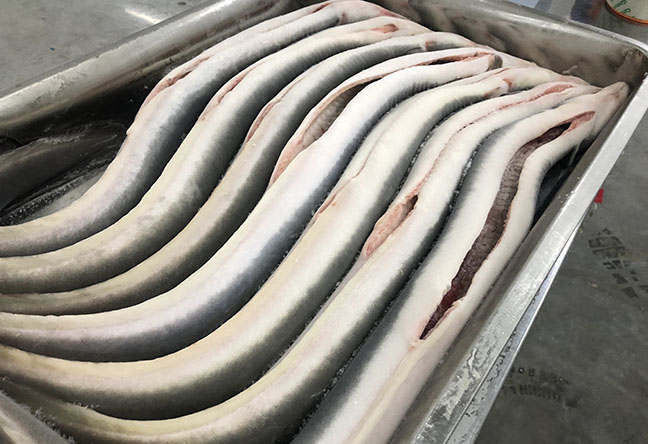
The quality of your raw materials directly impacts the final product. For eel rolls, this means sourcing unagi that is not only flavorful but also structurally suited for rolling. As a frozen eel supplier with a 4,000-ton annual capacity, we produce various cuts designed for specific foodservice applications.
Our boneless, deboned eel fillets undergo a patented low-fat roasting and deodorizing process. The key is our 4-layer soy sauce coating method, where each layer is applied at a specific temperature. This builds a rich flavor without making the fillet overly wet or fragile. A fillet saturated with a thin sauce will introduce too much moisture into the roll, compromising the rice structure from the inside out. Our unagi eel sauce (tare) has the proper viscosity to glaze the eel without seeping excessively.
When sourcing frozen unagi for your sushi program, use this checklist to evaluate supplier capabilities:
- Standardized Cutting: Can the supplier provide consistent custom cuts (e.g., sushi slices, strips, chunks) to fit your roll specifications? This reduces back-of-house labor and ensures uniformity.
- Bone-Free Guarantee: Are the fillets guaranteed to be boneless? A single pin-bone can ruin a customer's experience. Our process includes rigorous checks at critical control points.
- Traceability and Certification: Does the supplier have full-chain traceability from farm to shipment? We are ISO 22000:2018, HACCP, and HALAL certified, providing the documentation needed for import compliance in the US, EU, and other markets.
- Moisture and Glaze Content: Request specifications for the sauce-to-meat ratio. A well-made kabayaki eel should have a flavorful glaze that adheres to the fillet, not a pool of sauce in the package.
- Cold Chain Integrity: Does the supplier have adequate cold storage capacity? Our 1,000-ton cold storage facility ensures product is maintained at the correct temperature, preserving texture and safety from our plant to yours.
By partnering with a supplier that understands these technical requirements, you secure a key component of your supply chain. We have helped foodservice clients in Australia, Indonesia, and across Southeast Asia streamline their operations with our ready-to-heat, consistently portioned eel products, minimizing kitchen variables and maximizing output.
For detailed specifications on our frozen unagi kabayaki cuts and packaging formats suitable for large-scale eel roll production, please request our product catalog.