

Shirayaki Lets Eel's Natural Flavor Shine Without Sauce
A guest orders unagi and says "no sauce, please." Can your kitchen still deliver flavor? That's the real test of shirayaki — plain, salt-grilled eel with nothing to hide behind. Get the reheating and plating right, and the eel speaks for itself. Get it wrong, and the dish tastes like nothing at all.
What Shirayaki Actually Is (Not Just "Eel Without Sauce")
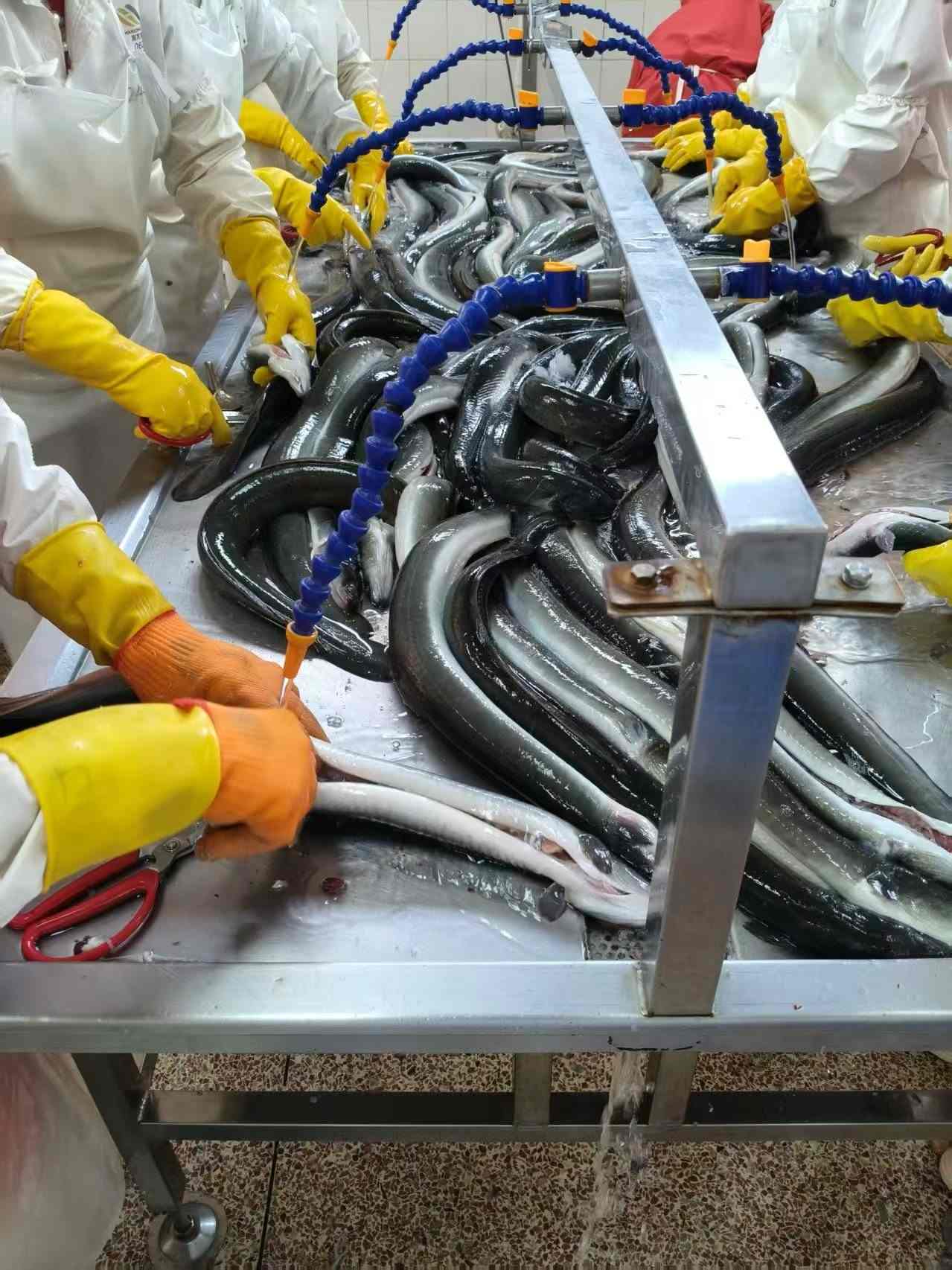
Shirayaki is eel that's been split, deboned, and grilled plain — no soy glaze, no mirin, no repeated basting. The name literally means "white grilling," referring to the pale, unglazed color of the skin before any sauce touches it. In export production, this stage is graded against a specific "white-roasted color" standard — a visual benchmark checked before the fillet ever reaches the soy-sauce coating line used for unagi kabayaki.
Because there's no sauce to mask uneven cooking or a fishy edge, shirayaki demands cleaner raw material and tighter process control than kabayaki does. Any off-note in the fat, any residual smell from the roasting equipment, shows up immediately on the palate. That's why deodorizing during processing matters more for shirayaki than for any other eel format.
How Wasabi, Grated Daikon, Citrus, and Controlled Reheating Preserve the Clean Flavor of Sauce-Free Grilled Eel
Four elements do almost all the work in a well-served shirayaki plate. Each one has a job, a correct dose, and a common failure mode. Get the proportions wrong and you either mute the eel or expose every flaw in it.
| Element | Function | How Much to Use | What Goes Wrong |
|---|---|---|---|
| Wasabi | Cuts fat, adds sharp heat that resets the palate between bites | A pea-sized dab per 2-3 bites, never mixed into the eel | Over-applying it numbs the tongue and buries the eel's own flavor |
| Grated daikon (oroshi) | Adds moisture and mild bitterness that balances richness | 1-2 tbsp alongside, lightly drained to avoid pooling liquid on the plate | Skipping the drain step waterlogs the grilled skin, killing texture |
| Citrus (sudachi, yuzu, or lemon) | A few drops of acid brighten fat and lift aroma without adding sweetness | One light squeeze right before serving, not during reheating | Adding citrus too early cooks off the aroma and leaves only sourness |
| Controlled reheating | Restores a crisp skin and warm center without drying the flesh | Short, even heat — just enough to warm through | Overheating collapses the fat layer, producing a dry, cardboard-like bite |
Notice the pattern: every accompaniment is meant to support the eel, not compete with it. If your kitchen's shirayaki plate needs heavy sauce drizzles or aggressive seasoning to taste good, something upstream — the raw material or the reheating — already failed.
Step-by-Step Procedure for Reheating and Plating Shirayaki
Most foodservice shirayaki arrives frozen and pre-grilled. The kitchen's job is to bring it back to serving temperature without damaging what the processor already built in. Here's the sequence that keeps texture and aroma intact:
- Thaw under refrigeration, not on the counter. Plan for several hours in the cooler; rushing this step with warm water leaches moisture and flattens flavor.
- Pat the surface dry. Any surface moisture turns to steam during reheating and softens the skin instead of crisping it.
- Reheat with gentle, even heat — a short pass under the broiler or a brief steam, just long enough to warm the center. The goal is warming, not re-cooking.
- Rest for one minute before slicing or plating. This lets residual heat even out so the center isn't cold while the edges overcook.
- Plate with accompaniments added last — daikon, citrus, and a small wasabi dab go on right before the dish leaves the pass, never during the hold.
The most common breakdown point is step 3. Kitchens under service pressure tend to blast high heat to save time, and that single shortcut is what makes a $12 eel plate taste like a $4 one. If you want a side-by-side reference for fixing flavor issues at the sauce stage of kabayaki service, this guide to common sauce flavor mistakes covers similar reheating pitfalls.
Shirayaki vs Kabayaki — Choosing the Right Format for Your Menu
Not every menu should run both. The decision usually comes down to what your guests expect and what your kitchen can execute consistently.
| Factor | Shirayaki | Kabayaki |
|---|---|---|
| Flavor profile | Clean, mildly smoky, fat-forward | Sweet, savory, caramelized from a 4-layer soy-sauce coating |
| Best use case | Izakaya-style menus, guests seeking a lighter or sauce-free option | Donburi, sushi rolls, mainstream grill menus |
| Kitchen skill required | Higher — flaws in raw material or reheating are visible immediately | Lower — sauce masks minor inconsistencies |
| Pairing needs | Wasabi, daikon, citrus, maybe a light ponzu on the side | eel sauce for glazing or dipping |
Operators running both formats often use the same frozen eel base, differing only at the final cooking stage — shirayaki stops before the soy-sauce coating; kabayaki goes through all four layers. If you're deciding which to add first, shirayaki is the lower-risk option for menus already known for grilled or raw fish, since guests there expect subtlety. Kabayaki remains the safer default for broader, family-style menus where sweetness sells faster.
Common Mistakes When Serving Shirayaki
- Treating it like kabayaki prep. Basting plain eel with sauce "to be safe" defeats the entire purpose of the dish.
- Over-reheating to compensate for frozen storage time. Longer heat does not fix age — it just dries the fillet faster.
- Using citrus too early. Added during reheating, it turns bitter and loses its lift.
- Skipping the rest period. Slicing straight off the heat releases juices onto the plate instead of into the bite.
- Sourcing eel without checking fat trim and deboning quality. Any stray bone or uneven fat pocket is far more noticeable without sauce to distract from it.
Sourcing Shirayaki for Foodservice — What to Check Before You Order
Since shirayaki exposes raw material quality directly, sourcing decisions carry more weight than they do for sauced formats. Before adding it to a menu, check these points with your supplier:
- Certification scope — confirm ISO 22000:2018 and HACCP coverage, plus HALAL certification if your market requires it.
- Raw material traceability — ask whether the eel comes from certified farming bases with customs registration, not spot-market sourcing.
- Residue and microbiological testing — request documentation that the product meets veterinary drug residue limits for your destination market (Japan, US, or EU standards differ).
- In-house lab verification — suppliers with their own laboratory testing and metal-detection checkpoints reduce the risk of a failed inspection at your border.
- Cold-chain capacity — ask about cold storage volume; a facility holding product in a 1,000-ton cold store generally manages temperature consistency better than one relying on third-party storage.
- Lead time and MOQ — standard order-to-shipment timelines run around 30 days from confirmation, though this varies with cut specification and packaging format, so confirm early if you're planning a menu launch date.
This is where the umami concept actually matters commercially, not just culinarily — a clean, fat-balanced eel with no off-notes reads as more flavorful even without sauce, because there's nothing competing with its natural umami character. Suppliers who control fat content and apply deodorizing steps during roasting are solving for exactly this.
A Worked Example: Adding Shirayaki to an Izakaya Menu
A mid-size izakaya chain testing shirayaki alongside its existing kabayaki donburi found that guests who ordered it once reordered within two visits — but only after the kitchen switched from oven-blast reheating to a shorter, gentler steam pass. The dish failed in week one because the back-of-house treated it like any other frozen protein: full heat, fast turnaround. Once the team added the rest step and standardized the daikon-to-citrus ratio, complaints about "dry" or "bland" eel dropped out almost entirely. The lesson transfers to nearly any kitchen adding shirayaki: the bottleneck is rarely the eel itself — it's the reheating discipline around it.
Operators pairing eel dishes with other components, such as a noodle course, can find complementary ideas in this guide to eel noodle soup, which uses a similar low-heat philosophy to protect delicate flavor.
Quick Reference: Is Shirayaki Right for Your Kitchen?
- Does your team have a steamer or broiler capable of gentle, even reheating? If not, start with kabayaki instead.
- Can your supplier confirm HACCP-aligned processing and export-grade residue testing? Ask before committing shelf space.
- Does your guest base already order raw or lightly-grilled fish? That signals readiness for a sauce-free option.
- Can your kitchen hold a consistent rest step under service pressure? If reheating discipline slips during rush, shirayaki will show it faster than any other eel format.
If you're evaluating frozen eel supply for a shirayaki or kabayaki menu addition, request a spec sheet and sample batch before committing to volume — it's the fastest way to confirm fat content, deboning quality, and reheating behavior match what your kitchen needs.