

Why Your Unagi Recipe Turns Onigiri Soggy and How to Stop It Before Packing
You open the lunch box three hours later and the nori has gone limp. The rice is glued together in one wet clump. This is the single most common complaint from cooks trying a unagi recipe built around glazed eel and rice — and it almost always comes down to three things: sauce quantity, cooling time, and nori placement. Fix those three, and soggy onigiri stops being a mystery.
This isn't a flavor problem. It's a moisture-management problem. Kabayaki eel is basted in a sticky, sugar-heavy tare that behaves differently than plain soy sauce once it cools — and that's exactly where most home cooks and even prep cooks in takeaway kitchens go wrong.
Diagnose First — What the Sogginess Is Telling You
Before changing your recipe, figure out which failure mode you're dealing with. Different symptoms point to different root causes, and fixing the wrong one wastes a batch of good eel.
- Symptom: nori is wet within 30 minutes. This points to nori placed too early, before the rice ball has released its surface heat. Steam has nowhere to go and condenses under the wrap.
- Symptom: rice is sticky and wet all the way through, not just at the surface. This points to excess sauce — usually more than 1 teaspoon of tare per 100g of packed rice.
- Symptom: onigiri is fine at hour 1 but collapses by hour 4. This points to insufficient cooling before packing — the eel and rice were still above 40°C (104°F) when boxed, so residual heat kept driving moisture outward.
- Symptom: bottom of the rice ball is soggy but the top is dry. This points to sauce pooling — the eel was laid glaze-side-down against the rice without a barrier layer.
Run through this list in order. Sauce quantity first, then cooling time, then nori placement — because sauce and heat problems will still show up even with perfect nori technique, but nori mistakes rarely cause deep, all-through wetness on their own.
Boundary Control — Sauce Quantity, Cooling Time, and Nori Placement
Here's the actual mechanism. Unagi tare is roughly 20-30% sugar by weight once reduced. Sugar is hygroscopic — it pulls moisture from the air and from the rice itself. That's fine on a plate eaten immediately. It's a problem when the onigiri sits in a lunch box for 3-6 hours.
| Factor | Safe Range | What Happens If You Exceed It |
|---|---|---|
| Sauce quantity | 0.5-1 teaspoon (tare) per 100g rice, brushed thin, not pooled | Excess sugar draws water out of the rice grains, softening the whole ball from the inside |
| Cooling time | Cool eel and rice to below 30°C (86°F) before shaping, minimum 10-15 minutes open-air | Trapped steam condenses inside the wrap, wetting nori and the outer rice layer |
| Nori placement | Wrap nori separately or add at time of eating; if pre-wrapped, use a moisture barrier (shiso leaf, thin egg sheet, or lettuce) | Nori absorbs ambient moisture from rice surface and turns limp within 30-60 minutes |
A concrete example: a takeaway kitchen prepping 50 unagi onigiri for a lunch delivery batch found that switching from a heavy double-brush of tare (about 2 tsp per rice ball) down to a single light brush at 0.75 tsp per 100g of rice extended the "still crisp" window from roughly 90 minutes to over 4 hours. No other variable changed. That's how much sauce quantity alone matters.
Nori placement matters just as much, but it solves a different symptom. If your sogginess is isolated to the wrap — not the rice itself — you don't need to touch the sauce recipe at all. Just delay nori application or add a barrier layer. This is standard practice in Japanese bento packing and it's worth reading up on onigiri assembly conventions if you're building a menu around it.
Step-by-Step Packing Procedure for Meal Prep or Takeaway
- Grill or reheat kabayaki eel to serving temperature, then let it rest uncovered for 5 minutes to shed surface steam.
- Brush tare thinly — one pass, not two. Target 0.5-1 tsp per 100g portion of rice.
- Cook rice slightly firmer than usual (reduce water by about 5%) — softer rice releases more moisture during storage.
- Shape rice balls and let them cool uncovered on a rack for 10-15 minutes, until the surface is no longer warm to the touch.
- Place eel on top or folded into the center — never glaze-side flat against the rice surface without a barrier.
- Wrap nori last, right before packing, or leave it in a separate compartment for the diner to add themselves.
- Store in a container that allows slight airflow rather than sealing airtight — full vacuum-seal traps residual humidity.
Common Mistakes That Undo an Otherwise Good Unagi Recipe
- Double-glazing the eel "for extra flavor." One thin coat of tare is enough — a second coat almost doubles the sugar load sitting against your rice.
- Wrapping while the rice is still steaming. Even 5 extra minutes of open-air cooling makes a measurable difference in nori texture.
- Using leftover sauce that's been reduced further and thickened. Thicker tare has a higher sugar concentration per teaspoon than fresh tare — adjust the quantity down if your sauce has reduced.
- Skipping the barrier layer for pre-wrapped onigiri. A thin sheet of egg, shiso, or even parchment between eel and nori solves most "wet wrap" complaints.
- Treating all rice the same. Freshly cooked short-grain rice holds more surface moisture than rice cooled and reshaped from the fridge — factor that into your cooling time.
Choosing the Right Eel for Portable Prep
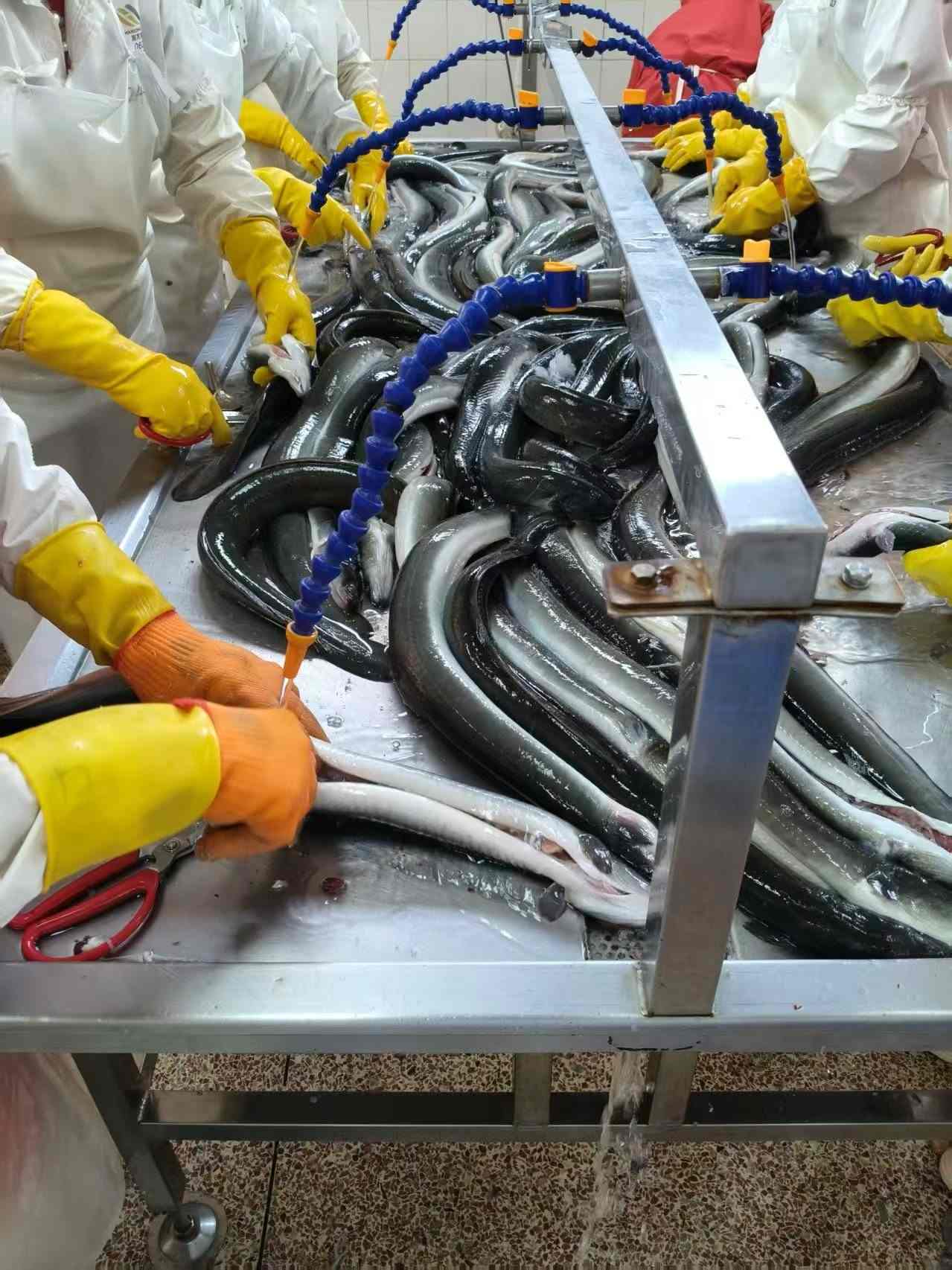
Not every kabayaki product behaves the same once cooled and packed. Frozen unagi kabayaki made with a controlled roasting process tends to hold its glaze better than fresh-grilled eel that's been sitting in sauce for hours, simply because the coating is applied in calibrated layers rather than pooled during service. If you're sourcing for a lunch program or takeaway line, ask your supplier about the fat content of the roasting process — low-fat roasted eel releases less oil into the rice during storage, which is a separate but related cause of "greasy soggy" onigiri that's often confused with sauce-related sogginess.
For the sauce side, a well-balanced eel sauce that isn't overly diluted or over-reduced gives you more control at the brushing stage — you can hit that 0.5-1 tsp target more precisely with a consistent-viscosity tare than with a homemade batch that varies batch to batch. If your sauce has been inconsistent, this kabayaki sauce article covers what separates a stable commercial tare from a runny or overly thick homemade version.
When This Guidance Does NOT Apply
If you're serving unagi onigiri immediately — within 15-20 minutes of assembly, like at a counter or hot bar — none of this matters much. Sogginess is a storage-time problem, not a plating problem. Skip the cooling delay and barrier layers for immediate service; they'll only slow down your line unnecessarily. This guidance is specifically for onigiri that need to survive 1+ hours in a lunch box, delivery bag, or meal-prep container.
Also, if you're working with a very dry, short-grain rice varietal already formulated for onigiri (lower moisture content out of the cooker), you may be able to tolerate slightly more sauce than the 0.5-1 tsp range without sogginess. Test a small batch first rather than assuming the standard ratio applies to every rice type.
Buyer's Checklist for Sourcing Eel for Onigiri Programs
- Does the supplier specify fat content or roasting method for their kabayaki line?
- Is the tare sauce consistency stable batch-to-batch, or does viscosity vary?
- Can the eel be cut to your preferred onigiri portion size (dicing, strip-cutting, chunk-cutting)?
- Does the product meet cold-chain requirements for your delivery radius?
- Is there documentation for food safety certification relevant to your market (ISO 22000, HACCP, or equivalent)?
Eelpro's frozen roasted eel is produced under an ISO 22000:2018 and HACCP-certified system, with a 4-layer soy-sauce coating process designed to control glaze thickness precisely — which is the exact variable that determines whether your onigiri survives a lunch box or turns to mush. Custom cutting specs, including strip-cutting and chunk-cutting suited to onigiri fillings, are available on request.
For more on preparing eel at home or in a commercial kitchen, see our guide on eel recipes or check unagi kabayaki manufacturer specs if you're sourcing for a foodservice program.
Have a batch that's still going soggy after adjusting these three variables? Reach out for a sample of our kabayaki eel or tare sauce to test your own ratios — or drop your packing setup in the comments and we'll help troubleshoot it.