

Why Your Sweet Unagi Sauce Develops a Perfect Gloss as It Cools
The transformation of a simmering, thin sweet unagi sauce into a thick, glossy glaze is a matter of food science, not chance. For food importers, distributors, and large-scale catering chains, understanding this process is critical. A sauce that fails to thicken correctly or lacks that characteristic sheen can compromise the final dish, affecting everything from plate appeal to customer satisfaction. The secret lies in the precise control of sugar concentration and the cooling process.
As a quality specialist with over a decade in seafood exports, I've seen firsthand how these factors determine the success or failure of a commercial sauce batch. At Eelpro, our ISO 22000:2018 and HACCP-certified facility is built around guaranteeing this consistency. We ensure that every shipment of our eel sauce product performs exactly as expected, whether it's destined for a restaurant chain in Japan or a food importer in the United States. This guide breaks down the technical reasons behind the sauce's texture and appearance, providing the knowledge you need to specify and source a product that meets your quality standards.
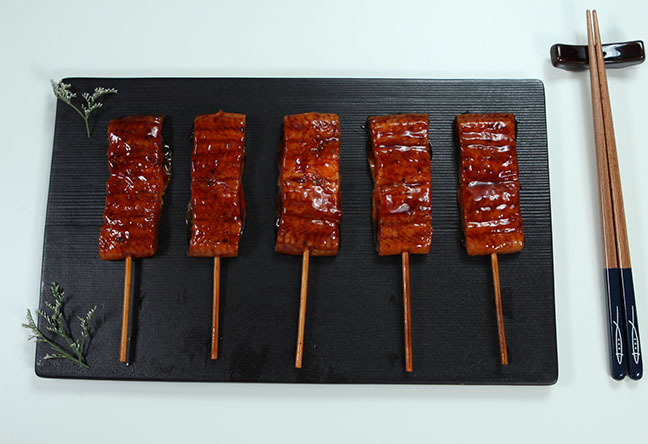
How Sugar and Temperature Control Unagi Sauce Viscosity and Gloss
The final texture and appearance of unagi tare are governed by physics and chemistry. The two most important variables are the sugar concentration (often measured in Brix) and the rate of cooling. Simmering the sauce evaporates water, which concentrates the sugars and other solids. As the sauce cools, the movement of these molecules slows, causing the liquid to thicken and form a stable, light-reflecting surface. Getting this balance wrong leads to a sauce that is either too watery or becomes a solid, crystalline mass.
Here’s a technical breakdown of what happens and why it matters for commercial applications:
| Parameter | Effect on Viscosity (Thickness) | Effect on Surface Gloss | Commercial Sourcing Implication |
|---|---|---|---|
| Low Sugar Concentration (Low Brix) | Remains thin and runny, even when cool. It lacks the body to cling to food. | Dull or matte finish. The surface doesn't have enough dissolved solids to form a smooth, reflective layer. | Unsuitable for glazing applications like unagi kabayaki. May be acceptable for marinades but offers poor plate presentation. Results in product waste as more is needed to coat food. |
| Optimal Sugar Concentration (Target Brix) | Achieves a thick, syrupy consistency upon cooling. It coats food evenly without dripping excessively. | Develops a deep, high-gloss sheen. The tightly packed sugar molecules create a smooth surface that reflects light beautifully. | This is the ideal specification for premium foodservice and retail. It ensures consistent performance for glazing, drizzling, and dipping, delivering the expected visual appeal. |
| High Sugar Concentration (High Brix) | Becomes overly thick, sticky, or even crystallizes upon cooling. It can be difficult to pour or brush. | Can appear glassy but may become opaque if sugar crystallization occurs. The texture can become grainy. | Leads to application problems in the kitchen. The sauce might tear delicate foods (like grilled eel) and can burn easily during reheating. Indicates poor process control during production. |
| Rapid Cooling (e.g., Ice Bath) | Can increase viscosity quickly but may promote the formation of large sugar crystals, leading to a grainy texture. | May trap air bubbles or create an uneven surface, reducing overall gloss. | Producers must use controlled cooling systems to ensure a smooth, amorphous sugar structure. Sourcing from a supplier without this technology risks inconsistent batches. |
| Slow, Controlled Cooling | Allows sugar molecules to settle into a stable, non-crystalline (amorphous) state, resulting in a smooth, consistent thickness. | Produces the best possible surface gloss, as a uniform, glass-like layer forms without imperfections. | This is the hallmark of a high-quality production process. It demonstrates the manufacturer's ability to manage critical control points for a superior final product. |
Specifying Commercial Sweet Unagi Sauce: A Buyer's Checklist
When sourcing unagi sauce for your business, providing a clear technical specification is essential to avoid costly mistakes. A reliable supplier should be able to meet precise targets for key quality attributes. Our work with clients in the EU, Australia, and Southeast Asia has shown that a detailed specification sheet is the foundation of a successful partnership. Use this checklist to guide your RFQ and supplier discussions.
- Brix Level (°Bx): This is the most critical metric for texture. Specify a target Brix range (e.g., 45-50 °Bx). A sauce for glazing grilled eel needs a higher Brix than a dipping sauce. A supplier with an in-house professional laboratory can test and guarantee this for every batch.
- Viscosity (in cP): Request a viscosity measurement at a specific temperature (e.g., 25°C). This provides a more direct measure of thickness than Brix alone and ensures the sauce flows correctly from the bottle or in automated dispensing equipment.
- Ingredient Declaration: Require a full list of ingredients. The quality of the soy sauce, mirin, and sugar directly impacts the final flavor profile. Verify that no prohibited additives or allergens are present for your target market.
- Microbiological and Residue Standards: Ensure the product meets the food inspection standards of your import country (e.g., Japan, US, EU standards for veterinary drug residues and microbiological indicators). This is non-negotiable for avoiding customs rejections. We provide full compliance documentation for all our export clients.
- Certifications: Verify the manufacturer's credentials. Essential certifications include ISO 22000:2018 for food safety management and HACCP for hazard analysis. For specific markets, HALAL certification may be required. Eelpro holds all three, in addition to an Export Food Producer Registration Certificate.
- Packaging Format: Specify your required packaging—from bulk food-grade totes for industrial use to smaller bottles for foodservice or retail. Discuss logistics, including palletization and cold-chain requirements. Our 1,000-ton cold storage facility ensures product stability from production to shipment.
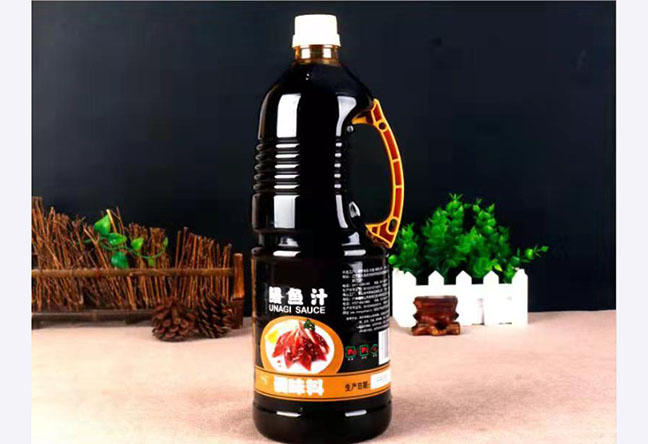
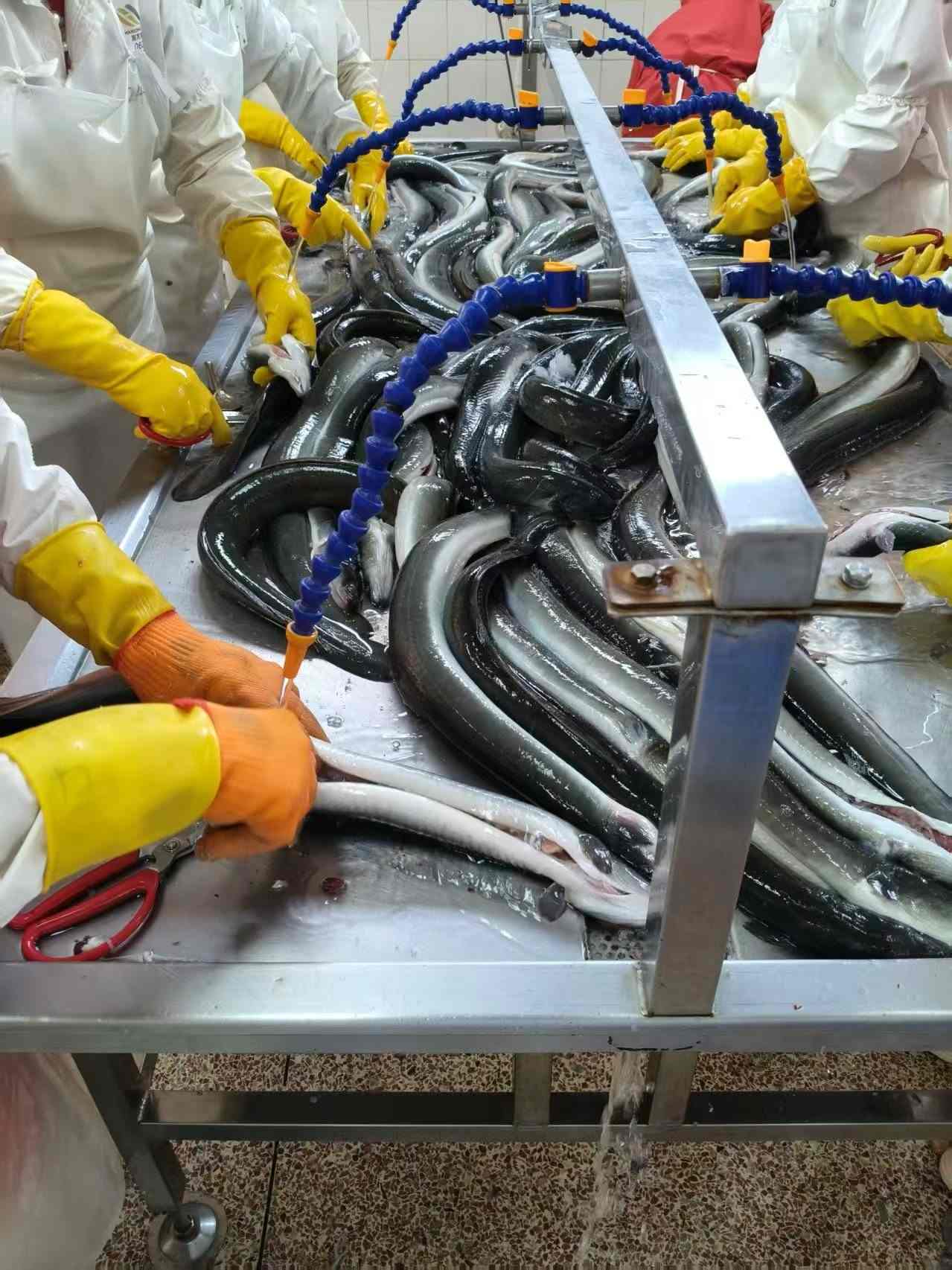
Our Production Process: Ensuring Consistency from Farm to Bottle
Achieving the perfect sweet unagi sauce batch after batch is impossible without rigorous process control. At Eelpro, our system is designed for export-grade consistency, leveraging a 4,000-ton annual production capacity across two modern production lines. The same quality standards we apply to our renowned frozen unagi kabayaki are applied to our sauces.
Here’s how we control the variables that create that signature gloss and viscosity:
- Raw Material Control: It starts with high-quality ingredients. We source our primary ingredients from vetted suppliers and conduct incoming quality checks. This prevents variations in sugar, salt, and protein content that could affect the final product.
- Automated Cooking and Evaporation: Our production kettles are temperature-controlled to ensure a precise simmering rate. This allows us to evaporate water and concentrate sugars to the exact target Brix level without scorching the sauce, which would create bitter off-flavors.
- In-Process Monitoring: Our 25 technical and quality-control specialists take samples at critical control points. Using refractometers and viscometers, they verify that the Brix and viscosity are within specification before the batch proceeds to the next stage.
- Controlled Cooling Tunnels: After cooking, the sauce is moved through a controlled cooling system. This prevents rapid temperature drops that can cause crystallization, ensuring the smooth, amorphous structure needed for a high-gloss finish.
- Metal Detection and Final Checks: Before bottling, the sauce passes through metal detectors. A final quality check confirms color, aroma, and taste, ensuring it matches the master reference sample.
This end-to-end control, from ingredient sourcing to final packaging, is how we confidently supply demanding markets in Germany, Poland, and Indonesia. It eliminates the guesswork and provides our clients with a reliable, ready-to-use product that performs consistently every time.
For foodservice operators, a sauce with predictable viscosity and excellent cling simplifies back-of-house operations. It ensures uniform coating on products like our unagi kabayaki eel, reducing waste and guaranteeing a consistent final dish for customers. This reliability is the core of a successful foodservice supply chain.
If your business requires a consistent, high-quality sweet unagi sauce that meets international food safety standards, our team is ready to help. Contact us to discuss your specifications or to request a product sample.