

Choose Whole or Filleted Eel for Baking
Standing in front of a freezer case, staring at a vacuum-packed whole eel next to a tray of pre-cut fillets — which one do you grab? Get it wrong and you'll spend 20 extra minutes fighting with pin bones, or worse, serve a plate that looks nothing like the glossy baked eel photo you had in mind. The right cut depends less on personal preference and more on what you're actually cooking, how much time you have, and who's eating.
This isn't a trivial choice. Whole eel and filleted eel behave completely differently under heat, and the bone structure alone can turn a simple dinner into a 45-minute project. Let's break down exactly what each format does in practice.
What "Whole" and "Filleted" Actually Mean at the Butcher Counter
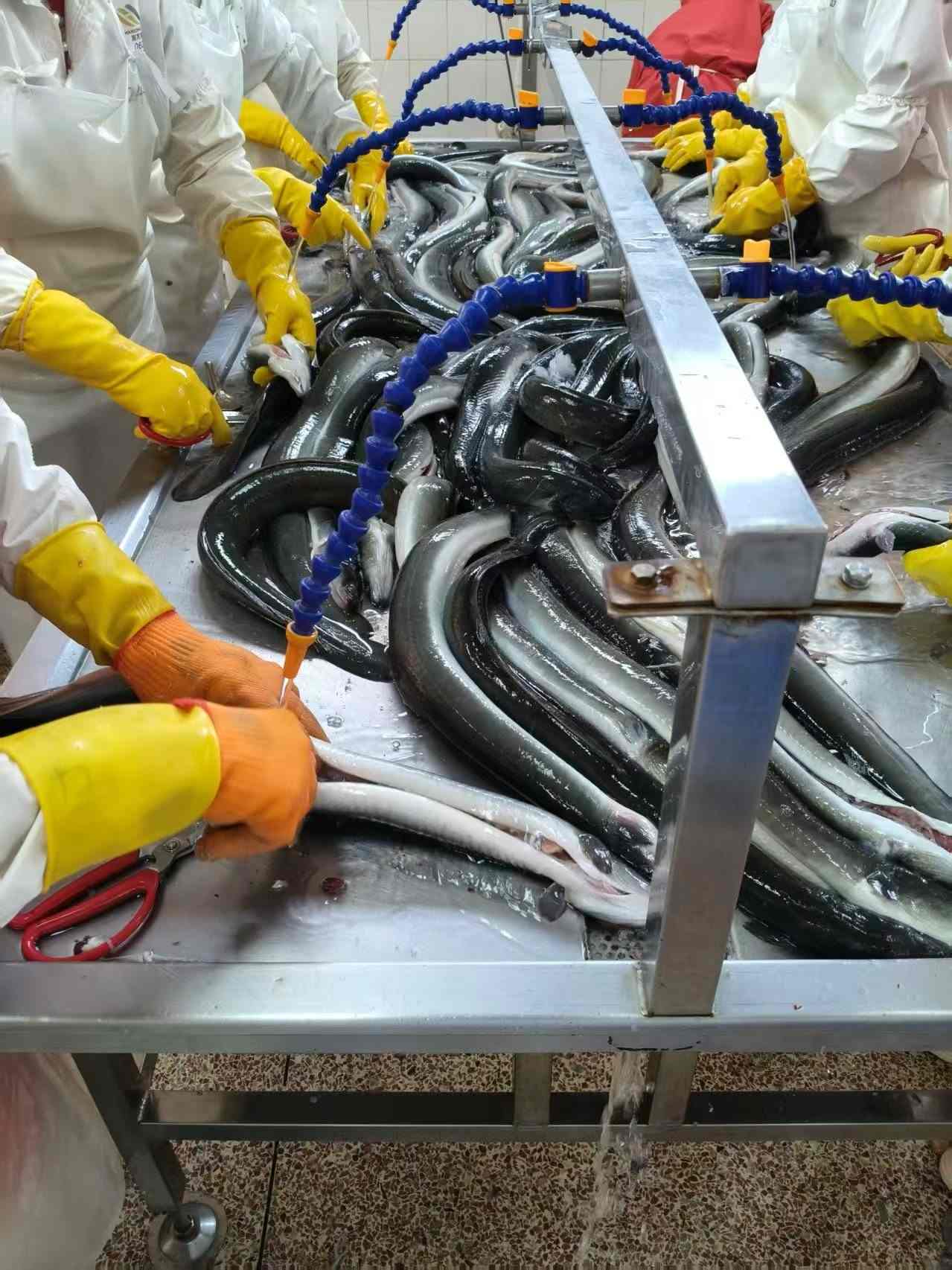
Whole eel usually means the fish has been gutted and cleaned but the spine, ribs, and skin remain intact — sometimes split open butterfly-style, sometimes left as a full cylinder. Filleted eel, by contrast, has already gone through deboning: the backbone is removed, and often the fillet is cut into uniform strips or portions ready for the grill or oven.
The difference sounds cosmetic. It isn't. Bone structure changes heat penetration, skin behavior, and how much sauce the flesh can absorb during the layered glazing process used in traditional unagi kabayaki eel preparation.
Comparison: Whole Eel vs Filleted Eel for Baking
Here's a side-by-side breakdown covering the four factors that matter most when you're deciding what to buy.
| Factor | Whole Eel | Filleted Eel |
|---|---|---|
| Cooking time | 25-35 minutes; heat must travel through bone and thicker flesh, so the center lags behind the surface | 12-18 minutes; even thickness means faster, more predictable results |
| Bone handling | Requires removing the spine and rib bones either before or after cooking — skipping this step risks small bones in the final dish | Pre-deboned; no bone-picking at the table, safer for kids and elderly diners |
| Skin crispness | Skin-on and intact, crisps unevenly because thickness varies along the body | Skin remains but lies flat against a uniform fillet, crisping more evenly under a broiler or grill |
| Serving use | Whole roasted presentation, banquet-style plating, traditional home-style meals | Donburi bowls, sushi rolls, sandwiches, portion-controlled foodservice plating |
If you're cooking for a dinner party where presentation matters, whole eel wins on visual impact. If you're running a restaurant kitchen and need consistent plate costs and prep times, filleted eel is the only practical choice.
What Goes Wrong If You Pick the Wrong Cut
Buyers often assume whole and filleted eel are interchangeable in a recipe. They're not, and here's where things break down:
- Undercooked centers — Using a fillet-timed recipe (12-15 minutes) on a whole eel leaves the thickest part of the body raw near the bone. Always add 10+ minutes when baking whole.
- Sauce burning before flesh cooks — Whole eel's longer bake time means a single sauce coat will scorch. This is why export-grade processors apply 4 separate soy-sauce layers with controlled temperature steps rather than one thick glaze.
- Bone fragments in donburi bowls — Skipping the deboning step on whole eel before slicing for rice bowls is a common service complaint in restaurants.
- Overcooked, rubbery fillets — Because fillets cook fast, timing them like a whole fish dries out the flesh in under 20 minutes.
- Uneven skin texture — Cooking whole eel flat on a tray without adjusting position mid-bake leaves one side soggy and one side crisp.
A Buyer's Decision Checklist
Before you order, run through this list:
- Do you need bone-free eating (banquets, kids' menus, sushi)? → Choose filleted.
- Is visual presentation the priority (whole roasted centerpiece)? → Choose whole.
- Is kitchen labor limited or are you working a high-volume foodservice line? → Filleted reduces back-of-house prep time significantly.
- Do you have a controlled oven with even heat distribution? → Whole eel needs this to avoid patchy cooking.
- Are you slicing for sushi rolls, ramen toppings, or rice bowls? → Filleted, pre-portioned cuts save cutting time later.
- Do you want maximum skin crispness with minimal effort? → Filleted, flat cuts crisp more reliably under a broiler.
A Worked Example: Restaurant Prep vs Home Kitchen
A Japanese restaurant chain sourcing kabayaki eel for a donburi menu typically orders deboned, pre-cut fillets. Why? Because kitchen staff need to plate 50+ bowls during dinner service without spending time picking bones. Portion consistency also keeps food cost predictable across every dish.
Compare that to a home cook preparing a whole roasted eel for a special dinner. Here, the whole fish delivers a dramatic table presentation, and the cook has time to debone carefully after baking, at a relaxed pace. The same product, two very different use cases — and two different correct answers.
Custom Cutting Options Worth Knowing About
Beyond the basic whole-vs-fillet decision, processors can prepare eel in several specific cuts depending on end use:
- Shredding — for salads or noodle toppings
- Dicing — for fried rice or stuffing
- Strip-cutting — for stir-fry or bento boxes
- Chunk-cutting — for stews or hot pot
- 3-section cut — a traditional format for grilling
- Sushi slices — thin, uniform pieces for nigiri and rolls
These cuts matter for foodservice buyers because standardized specifications reduce prep labor and waste. A kitchen that receives sushi-ready slices doesn't need a trained fish butcher on staff just to portion eel.
Cold Chain and Quality Factors That Affect Either Cut
Regardless of whether you choose whole or filleted, storage and thawing practice affects the final bake. Eel held in stable cold storage — ideally under continuous cold-chain logistics from processing through delivery — retains better texture than product that has cycled through temperature swings. Thaw eel slowly in the refrigerator, not on the counter, to keep the flesh firm enough for even roasting.
Quality control also plays a role buyers rarely think about until something goes wrong. Products tested against veterinary drug residue and microbiological standards recognized by the U.S. Food and Drug Administration give importers a lower risk profile, particularly for markets like the US, EU, and Japan where inspection requirements are strict.
Practical Baking Tips for Each Format
For whole eel:
- Score the skin lightly to prevent curling.
- Bake at moderate heat first to render fat, then increase heat for the final glaze layers.
- Debone after the first bake stage — the flesh separates from bone more easily once partially cooked.
For filleted eel:
- Pat the fillet dry before applying sauce — excess moisture prevents proper caramelization.
- Apply sauce in thin coats, letting each layer set under the broiler before adding the next.
- Check doneness at the 12-minute mark; fillets overcook quickly once the sauce starts to darken.
For more on layering technique, see this breakdown of kabayaki sauce application, and if you're building a full menu around eel, check donburi topping ideas for portion planning.
Cold Knowledge Corner
Here's a detail most home cooks miss: the "white-roasted" stage in traditional processing refers to eel baked without sauce first, to set the texture, before the soy-sauce layers go on. Skipping this step and going straight to a heavy glaze is one reason home-baked eel sometimes turns out mushy instead of firm with a crisp edge.

Whether you're sourcing whole eel for a signature dish or pre-cut fillets for high-volume service, matching the cut to the cooking method makes the difference between a dish that works and one that fights you the whole way. Want help figuring out which frozen unagi kabayaki specification suits your kitchen? Request a sample or spec sheet and we'll walk you through the options — or drop your own eel prep tips below, we'd like to hear what's worked in your kitchen.