

Yes Eels Have Bones but They Are Different From Other Fish
As a specialist who has spent over a decade in eel processing, one of the most common questions I hear from chefs, importers, and even curious diners is, "do eels have bones?" The simple answer is yes, they absolutely do. However, the experience of eating a high-quality prepared eel, like unagi kabayaki, is vastly different from eating a typical fish fillet where you might be wary of finding a stray bone.
The key differences lie in the eel's unique anatomy and, more importantly, the meticulous processing methods used to prepare it for culinary use. Understanding this distinction is essential for B2B buyers sourcing eel products, as it directly impacts diner satisfaction, kitchen efficiency, and overall product quality. Unlike many fish, where "boneless" means every single bone is removed, with eel, it's a matter of removing the main skeleton and rendering the thousands of fine, hair-like bones completely unnoticeable and edible through precise cooking techniques.
Eel Skeletons vs. Common Fish: A Structural Comparison
To appreciate why prepared eel feels boneless, we first need to look at its skeletal structure compared to more familiar fish like cod, salmon, or sea bass. While both are vertebrates, the size, type, and distribution of their bones are not the same. This anatomical difference is the starting point for why professional processing is so effective.
Here’s a direct comparison of the bone types you'll encounter:
| Bone Type | Common Bony Fish (e.g., Salmon, Trout) | Freshwater Eel (Anguilla species) |
|---|---|---|
| Vertebral Column (Backbone) | A large, central spine composed of individual vertebrae. This is the primary bone structure that is removed during filleting. | A long, flexible vertebral column with many more smaller vertebrae than most fish, contributing to its serpentine movement. This is always removed in processing. |
| Ribs and Pin Bones | Has distinct ribs protecting the organs and, crucially, a series of "pin bones" or floating ribs embedded in the muscle tissue along the lateral line. These are the bothersome bones diners often find. | Eels have ribs, but they lack the large, firm pin bones found in many other fish. Instead, their flesh contains a network of very fine, hair-like bones. |
| Intermuscular Bones | Possesses forked, Y-shaped intermuscular bones that are firm and sharp, making them a significant texture issue if not removed. | Contains thousands of extremely thin, soft intermuscular bones. These are too numerous and small to be removed by hand. They are the primary target of the specialized cooking process. |
| Diner's Experience (If Improperly Prepared) | A sharp, unpleasant surprise. Pin bones are a common complaint and can be a choking hazard. | The fine bones would create a gritty or "prickly" mouthfeel, but they are not large or sharp enough to pose the same risk as a salmon pin bone. |
The main takeaway for any food business is this: the challenge with eel is not removing large, dangerous bones, but managing a high volume of tiny, hair-like bones. This cannot be solved with a knife alone; it requires a thermal and mechanical process.
How Professional Processing Makes Eel Bones Unnoticeable
This is where specialized production excellence becomes critical. At Eelpro, we've built our entire system around transforming raw eel into a product that delivers a perfectly smooth, tender, and bone-free eating experience. Our process, certified under ISO 22000:2018 and HACCP systems, ensures every fillet meets export-grade expectations for clients in demanding markets like Japan and the European Union.
Here’s how we address the bone structure:
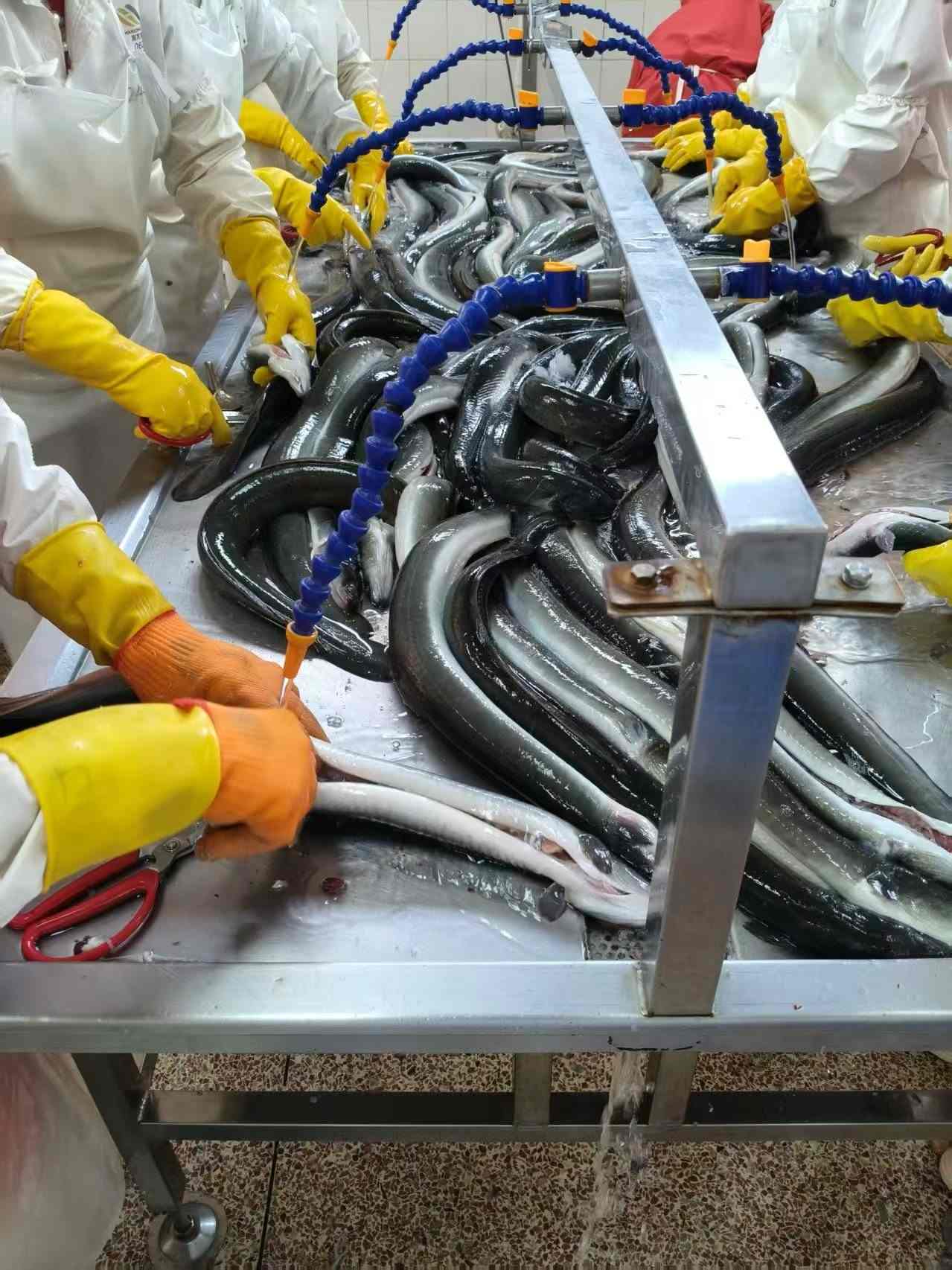
- Deboning the Main Skeleton: The first step after humane processing is to butterfly the eel and skillfully remove the entire vertebral column and attached ribs. This is done by trained technicians and leaves a flat, open fillet.
- Steaming and Roasting: This is the most important stage for bone texture. The eel fillets are steamed and then roasted. The combination of high heat and moisture works to soften and essentially dissolve the fine, hair-like intermuscular bones. They become so tender that they blend seamlessly into the texture of the meat, making them completely undetectable to the palate.
- Patented Technology for Superior Texture: We utilize patented low-fat roasting and deodorizing equipment. This not only enhances the flavor but also ensures the heat penetrates evenly, which is vital for consistently softening all the fine bones. The process is followed by our signature 4-layer soy-sauce coating, where each layer is applied at a specific temperature, further cooking the eel and contributing to the final luxurious texture.
- Quality Control Checks: Throughout the production line, our 25-person quality control team monitors the process. We use metal detectors at critical control points and have our own professional eel lab of eelpro co. / ltd to verify that our products meet strict microbiological and veterinary drug residue standards for Japan, the US, and the EU. This ensures that the final product is not only safe but also has the perfect texture our clients expect.
The result is a fully cooked unagi kabayaki eel that is ready to heat and serve, saving significant back-of-house labor and eliminating any risk of bony texture for the end consumer.

Bone-Related Sourcing Checklist for B2B Buyers
When sourcing frozen eel, assuming all "boneless" products are equal is a common mistake. The quality of the deboning and cooking process directly impacts the final product. An inexperienced supplier may leave the fillets with a gritty texture, which can ruin a dish and a restaurant's reputation. Here is a checklist to guide your purchasing decisions:
- Verify the Supplier's Certifications: Does the supplier hold internationally recognized food safety certifications like ISO 22000 or HACCP? These standards mandate strict process controls, which are essential for the consistent thermal processing needed to soften bones. Eelpro is fully certified, including HALAL, and holds an Export Food Producer Registration Certificate.
- Inquire About the Cooking Method: Ask about the steaming and roasting process. A supplier should be able to explain how their method ensures the fine bones are rendered unnoticeable. Our 4-layer roasting process is a documented standard that we use to guarantee a consistent outcome.
- Request Product Specifications for Different Cuts: The texture expectation can vary. A thin sushi slice needs to be perfectly smooth, while a larger chunk for an eel rice bowl toppings: 7 better donburi ideas must be tender throughout. We offer custom cutting (shredding, dicing, slicing) and can advise on the best format for your application.
- Confirm Traceability: Can the supplier trace the product back to the farm? Full-chain traceability is a powerful indicator of quality control. We manage a supply chain of approximately 20 customs-registered eel farming bases, ensuring we start with high-quality raw materials, which directly impacts the final meat and bone texture after processing. This system is a key reason we successfully supply demanding foodservice chains in Japan and Southeast Asia.
- Evaluate Production Capacity and Logistics: Can the supplier handle your volume and ensure product integrity during shipping? With a 4,000-ton annual production capacity and a 1,000-ton cold storage facility, we provide a stable supply chain for large-scale importers and distributors in markets from the United States to Germany and Australia.
Ultimately, while eels have a complex bone structure, it is a challenge that is completely solved by modern, professional processing. By partnering with an experienced and certified frozen eel supplier, you can confidently serve eel dishes without any concern for bones, delivering the tender, melt-in-your-mouth experience that makes unagi a global delicacy.
If you have specific requirements for boneless unagi kabayaki or other eel products for your market, our team can provide detailed specifications and product samples. Contact us to discuss how we can meet your foodservice or retail needs.