


Calculate Landed Cost for Frozen Fresh Eels Before You Place an Import Order
A low unit quote can become an expensive mistake when freight, glaze weight, customs duty, and cold-storage charges appear later. Before ordering frozen fresh eels, purchasing teams should compare offers on the same usable-weight basis, not simply on carton price or gross shipment value.
For importers of frozen unagi kabayaki, freshwater eel cuts, and related seafood products, landed cost is the number that matters most for menu pricing, wholesale margins, and replenishment planning. An offer may look attractive at the factory gate but lose its advantage once the product reaches your cold room.
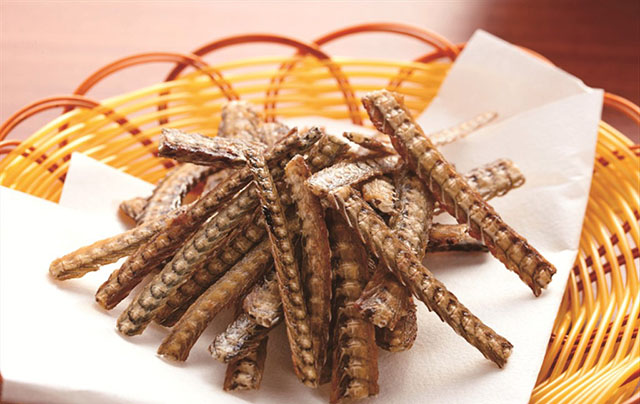
Start With the Product Format That Fits Your Sales Channel
Choose the product format before comparing prices. This is the practical conclusion because a lower-priced format can still create more labor, trimming loss, or packing waste after arrival. The right choice depends on whether you sell to restaurants, retailers, distributors, or foodservice operators.
For example, frozen roasted eel for a Japanese restaurant chain is usually assessed differently from eel supplied to a distributor that requires portioning after import. Eelpro can provide white-roasted skewers, kabayaki eel, cut pieces, shredding, dicing, strip-cutting, chunk-cutting, three-section cuts, and sushi slices. Packaging options can also be discussed according to product specifications and order quantity.
| Buying Option | Best-Fit Scenario | Cost Factor to Check | When It May Not Fit |
|---|---|---|---|
| Frozen unagi kabayaki | Japanese restaurants, retail meal solutions, ready-to-heat menus | Finished-product price, sauce profile, usable portions, retail or foodservice packaging | May not fit buyers who need unsauced eel for their own seasoning process |
| White-roasted eel | Buyers developing their own sauce or regional flavor profile | Further processing, sauce procurement, kitchen labor, final presentation | May not fit operations seeking a fast ready-to-heat product |
| Standardized eel cuts | Central kitchens, meal manufacturers, sushi suppliers | Cut specification, portion control, packing format, handling labor | May not fit customers that require whole fillets for table presentation |
| Eel sauce | Importers selling complete unagi meal components | Separate freight, labeling, inventory handling, recipe consistency | May not fit buyers purchasing only plain seafood ingredients |
The conclusion is simple: compare frozen fresh eels only against offers with the same product state, cut style, sauce treatment, and pack format. Comparing a prepared kabayaki fillet against an unsauced raw or white-roasted product is not a valid price comparison. For sauce purchasing, review the available eel sauce product page alongside the eel quotation so that both components are accounted for.
Eelpro operates two production lines for frozen roasted eel and deep-processed aquatic products, with an annual finished-goods capacity of 4,000 tons. This capacity information is useful when planning repeat supply, but it is not a substitute for confirming the production slot, product specification, and shipment schedule for your own order. Regular orders are generally delivered in approximately 30 days from order confirmation to shipment, subject to negotiation by specification and quantity.
Use a Five-Part Landed-Cost Formula Before Comparing Offers
The safest way to cost frozen fresh eels is to separate confirmed figures from estimated figures and unresolved items. Do not place an estimated freight rate or an assumed duty percentage into your approved margin plan as though it were confirmed.
The five-part formula below separates product price, glazing-adjusted net weight, freight, duty, and cold-storage charges.
Landed cost per usable kilogram = (Product price + Freight + Duty + Cold-storage charges) ÷ Glazing-adjusted net weight
| Formula Part | What to Request or Calculate | Cost Status | Decision Rule |
|---|---|---|---|
| 1. Product price | Quoted product amount, currency, Incoterm, pack format, and quantity | Confirmed only after supplier quotation acceptance | Compare only quotations using the same Incoterm and identical product specification |
| 2. Glazing-adjusted net weight | Declared net product weight and any stated glaze information | Must be verified from the product specification and shipping documents | Use usable product weight as the denominator, not gross carton weight |
| 3. Freight | Ocean or air freight quote, inland movement if applicable, and surcharge validity period | Usually estimated until booked or confirmed by the logistics provider | Keep the freight quote date with the costing sheet |
| 4. Duty | Duty rate based on product classification and importing-country rules | Unknown until classification and customs treatment are confirmed | Confirm with your customs broker before signing the purchase order |
| 5. Cold-storage charges | Port storage, inspection hold charges if any, local cold-room receiving, and storage period | Partly estimated or unknown before arrival | Use a separate contingency line rather than hiding it in freight |
The Harmonized System is the international goods-classification framework used as a basis for customs tariff schedules. The conclusion for buyers is clear: do not guess the product code or duty treatment. This step is most relevant when importing into the United States, Japan, the European Union, Australia, Indonesia, or another market with its own tariff schedule. It does not replace advice from your appointed customs broker or local import authority.
Glaze deserves special attention. A shipment can have an acceptable gross weight while providing less product weight than the buyer expected if the costing sheet was built around the wrong weight basis. When evaluating frozen fresh eels, request the net weight per pack, carton configuration, and whether the quoted unit price is calculated by net product weight, gross weight, or another contractual basis.
Worked Costing Example Without Invented Numbers
Assume Buyer A receives two quotations for the same destination. Supplier One offers a lower carton price. Supplier Two offers a higher carton price but specifies a different pack format and net product weight. Buyer A should not decide from the carton price alone.
- Enter each supplier’s total product price in the same currency.
- Record the confirmed net product weight for each offer.
- Enter freight separately, with the freight quotation date and validity period.
- Ask the customs broker to confirm the expected duty treatment for the exact product.
- Add expected cold-storage and local receiving charges as estimates, clearly marked as estimates.
- Divide each total by its glazing-adjusted net weight.
- Compare landed cost per usable kilogram, then compare the expected selling price and margin.
This process fits purchasing teams evaluating frozen fresh eels from more than one overseas exporter. It does not apply if product descriptions are materially different. In that case, first normalize the comparison by cut, sauce, pack size, certification requirements, and target sales channel.
Separate Confirmed Costs From Estimates and Unknown Import Risks
A costing workbook should show uncertainty instead of hiding it. This is especially useful for buyers purchasing a new origin, a new product specification, or a new shipping lane. A margin forecast is only as reliable as the assumptions behind it.
| Cost Category | Examples | How to Treat It |
|---|---|---|
| Confirmed costs | Accepted product quotation, confirmed net weight, signed packing specification | Use the documented figure and retain the supporting file |
| Estimated costs | Freight quotation awaiting booking, local cold-room budget, projected inland handling | Label with quote date, provider, and validity period |
| Unknown costs | Duty treatment awaiting broker confirmation, inspection-related storage, destination port delays | Flag for resolution before final margin approval |
The conclusion is not that unknown costs should stop every purchase. Rather, the buyer should assign ownership and a deadline to each unknown. This approach fits first-time imports and new product lines. For repeat orders on an established lane, the same worksheet remains useful, but previous invoices should not be treated as a guarantee of future freight or storage rates.
For frozen fresh eels, food safety documentation can also affect the financial risk of the order. Eelpro holds ISO 22000:2018 Food Safety Management System certification, HACCP certification, HALAL certification, an Export Food Producer Registration Certificate, and an SC Food Production License covering quick-frozen prepared foods including cooked products and seasoned aquatic products. The company applies export quality standards to domestic sales and states that products meet Japan, US, and EU food inspection standards for veterinary drug residues and microbiological indicators.
These credentials support supplier qualification, but they do not remove the buyer’s responsibility to verify destination-country import rules, labeling needs, importer registration requirements, and product-specific documentation. Eelpro’s in-house eel laboratory and metal detectors at critical control points are relevant evidence for a quality review. They are not a reason to skip your own import compliance check.
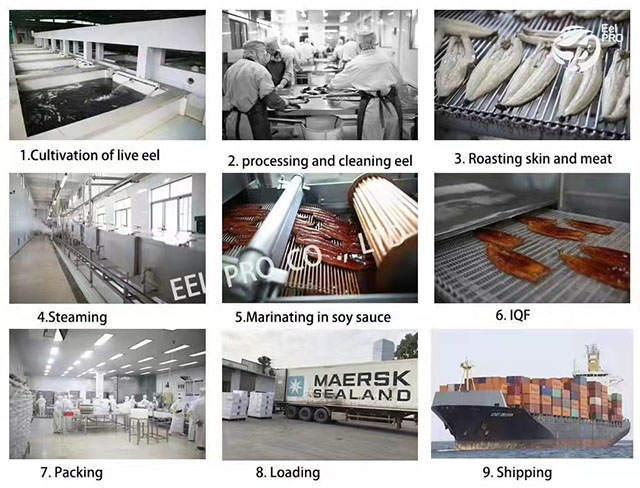
Check Weight, Glaze, and Packaging Before Approving a Purchase Order
The product weight line often decides whether a quote is genuinely competitive. A buyer should request a written specification before issuing a purchase order for frozen fresh eels. The reason is direct: freight, duty, warehouse handling, and resale margins are influenced by the weight basis used in the calculation.
- Confirm the product form. State whether the product is kabayaki, white-roasted eel, whole eel, cut pieces, sushi slices, or another agreed format. This fits every import order. It does not resolve sauce, labeling, or carton-marking requirements by itself.
- Confirm net weight and carton configuration. Ask for the declared net product weight per retail pack and per master carton. Use those figures in the landed-cost sheet rather than relying on a general product description.
- Confirm glaze treatment. Ask how glaze is stated in the specification and which weight basis appears on the quotation and commercial invoice. This is particularly relevant for frozen product. It may be less material for products where glaze is not part of the agreed format, but the weight basis still needs to be clear.
- Confirm packaging format. Eelpro can discuss packaging formats including skin packaging and gift boxes. Choose the format based on your retail, foodservice, or distribution model, not visual preference alone.
- Confirm storage responsibility. Identify when cold-storage charges begin at destination and who pays them under the agreed shipping term.
A useful cold fact: a carton can look identical from the outside while its commercial value differs because the net edible product weight, sauce inclusion, or portion style differs. That is why frozen fresh eels should be assessed by specification and usable-weight economics, not by carton appearance.
Avoid Quote Comparison Mistakes That Reduce Eel Margins
Most quote errors are preventable. The following checks are designed for importers, distributors, restaurant groups, and foodservice purchasing teams planning their first order or reviewing a new supplier.
- Mistake: comparing FOB and CIF prices as if they are identical. Conclusion: normalize the Incoterm first. The reason is that transport responsibility and included charges differ. This rule applies to every overseas quote; it does not replace review of the exact agreed Incoterm in the contract.
- Mistake: using gross weight to calculate product margin. Conclusion: use glazing-adjusted net product weight. The reason is that gross weight can include packaging and other non-saleable weight. This is especially relevant to frozen seafood; confirm the contractual weight basis for each SKU.
- Mistake: assuming one duty rate for every eel product. Conclusion: confirm classification for the exact imported form. The reason is that product state, preparation, and destination rules can affect treatment. This applies before purchase order approval, not after goods are already in transit.
- Mistake: treating cold storage as a minor overhead. Conclusion: show it as its own line item. The reason is that arrival timing and holding periods can affect local storage exposure. This is most relevant when delivery appointments, inspections, or onward distribution are not yet fixed.
- Mistake: buying a lower-cost product that requires extra back-of-house work. Conclusion: compare labor and yield alongside landed cost. The reason is that boneless or deboned eel, standardized cuts, and ready-to-heat packaging may reduce kitchen processing. This does not mean every buyer should choose prepared products; processors with their own labor and sauce program may prefer a different format.
Eelpro supplies kabayaki eel to Japanese restaurant chains and exports unagi kabayaki and eel sauce to US food importers. The company also supplies eel products to importers and foodservice channels in Germany, Poland, Australia, Indonesia, Southeast Asia, and other EU markets meeting applicable EU food safety and veterinary drug residue standards. These cases show relevant export market experience, but they are not a universal promise of duty treatment, local delivery cost, or market approval for every buyer.
Build a Purchase Order File That Supports Margin Planning
Once the landed-cost model is complete, turn it into an approval file. This is the best way to prevent a verbal quote, an email attachment, and a freight estimate from becoming disconnected. It fits procurement teams with multiple approvers and is also useful for smaller importers who need a clear record for repeat orders.
- Save the supplier quotation for the selected frozen fresh eels specification.
- Attach the product specification covering cut, sauce status, package format, net weight, and glaze details.
- Attach the freight quotation and record its validity period.
- Obtain customs broker confirmation or written guidance on classification and duty assumptions.
- List estimated destination cold-storage charges separately from freight.
- Calculate landed cost per usable kilogram and compare it with the planned sale price.
- Record the margin approval, target arrival period, and responsibility for destination receiving.
- Keep traceability and quality documents with the order file for receiving review.
Eelpro is supported by approximately 20 customs-registered eel farming bases covering more than 2,150 mu, with full-chain traceability from farming registration through process verification, targeted sampling, and traceability tracking. For buyers who need a prepared roasted product, the unagi kabayaki product page can help establish the product discussion before requesting an item-specific offer.
When your costing sheet is ready, request a quotation for frozen fresh eels with your required cut, pack format, destination port, and target order quantity.