


Calculate Unagi Kabayaki Frozen Yield per Bowl Before You Place the Order
You order 100 packs of unagi kabayaki frozen, divide the label weight by 80 g, and price your bowl. Then the kitchen reports 8% fewer portions than planned. That gap is margin you never budgeted. Label weight is not plate weight. Here is how to turn one into the other before you sign a purchase order.
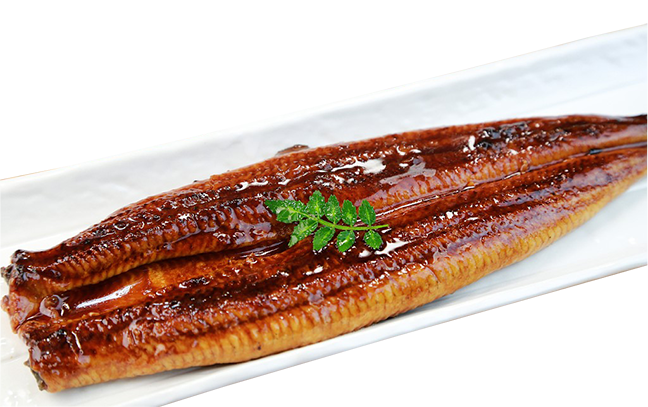
Why Declared Net Weight Is Not Your Portion Count
Most product listings show pack size and storage advice. Few tell you how many bowls a pack really delivers. Grams disappear at four points between freezer and rice.
| Loss point | What happens | How to measure it | When it matters most |
|---|---|---|---|
| Glaze | Ice coating counts toward declared weight but melts away | Weigh frozen, thaw, drain, weigh again | Packs with a visible ice layer. If the pack has none, set glaze to 0%. |
| Thaw loss | Moisture and sauce drip out during defrosting | Weigh before and after thaw under your own method | Fast thawing or rough handling |
| Trimming | Fins, edges, uneven ends and pieces too small to plate are removed | Weigh the trim bin per batch | Whole fillets cut in-house |
| Portion variance | Cooks over-portion "to be safe" | Spot-check ten bowls per shift | Busy lunch service |
Limit: these percentages differ by pack format, thawing method and kitchen. Do not copy someone else's numbers. Measure your own.
Usable-Yield and Portion-Cost Formula: Glaze, Trim, Thaw Loss and Grams per Bowl
This is the calculation we recommend to menu operators and import buyers at the pricing stage.
- Usable grams per pack = declared net weight × (1 − glaze %) × (1 − thaw loss %) × (1 − trim %)
- Bowls per pack = usable grams ÷ target grams of eel per bowl
- Eel cost per bowl = pack price ÷ bowls per pack
- Full bowl cost = eel cost + tare sauce + rice + garnish + packaging
Below is a worked example. Every number is an assumed placeholder for illustration, not an Eelpro specification. Replace them with your measured values.
| Assumption set | Glaze | Thaw loss | Trim | Usable grams (200 g pack) | Bowls at 80 g | Eel cost per bowl (pack at $4.00) |
|---|---|---|---|---|---|---|
| Naive (label weight only) | 0% | 0% | 0% | 200.0 g | 2.50 | $1.60 |
| Realistic, no glaze | 0% | 3% | 5% | 184.3 g | 2.30 | $1.74 |
| Realistic, 10% glaze | 10% | 3% | 5% | 165.9 g | 2.07 | $1.93 |
The naive method understates eel cost per bowl by about 8% in the middle row and about 17% in the last row. On a 5,000-bowl monthly program, that is a real hole in the budget.
Conclusion: always price on usable grams. Why: the loss compounds multiplicatively. Fits: unagi don, sushi rolls and any fixed-gram plating. Does not fit: programs where the eel is chopped into a mixed dish and portion weight is loose.
Run a 10-Pack Yield Test Before You Commit
A spreadsheet is only as good as its inputs. A small test beats a large guess.
- Pull 10 packs from one lot. Record declared net weight on each.
- Weigh each pack frozen, then thaw under your standard kitchen method, not a lab method.
- Drain and weigh again. The difference is glaze plus thaw loss.
- Trim to your plating standard and weigh the trim.
- Portion to your target grams and count whole bowls.
- Reheat one bowl the way service will, and taste. Softness complaints often come from reheating time, so test that too.
Average the ten packs and use that figure in the formula. If results swing widely between packs, raise it with your supplier before ordering volume.
Common Mistakes That Wreck Bowl Cost
- Dividing price by label weight. It ignores every loss in the table above.
- Testing one pack. One pack is an anecdote. Ten is a trend.
- Forgetting the sauce. Tare adds cost per bowl. See our eel sauce product page and the kabayaki sauce article for how glaze and sauce interact.
- Ignoring cut format. A 3-section cut or sushi slice yields different trim than a whole fillet.
- Comparing prices without comparing coating. A cheaper pack with heavier glaze can cost more per bowl.
Good-to-know: the same weight of eel can look very different on the bowl depending on how it is cut. Choose the cut for the bowl, and the portion count becomes predictable. For plating ideas, see eel rice bowl toppings: 7 better donburi ideas.
What Eelpro Can Support in Your Costing
Eelpro is a producer, not a trading middleman. As an unagi kabayaki manufacturer, we can discuss specification, cutting and packaging at the source. Each capability below maps to a buyer concern.
| Buyer concern | Supported fact |
|---|---|
| Consistent product from lot to lot | Two production lines with 4,000 tons annual capacity; a 4-layer soy-sauce coating process with defined "white-roasted" and 1st-through-4th coating color standards |
| Trim and back-of-house labor | Boneless/deboned eel with standardized cutting: shredding, dicing, strip-cutting, chunk-cutting, 3-section cut and sushi slices |
| Food safety and import paperwork | ISO 22000:2018, HACCP, HALAL, export food producer registration and SC production license; own laboratory and metal detectors at critical control points |
| Traceability | About 20 customs-registered eel farming bases over 2,150 mu, with tracking from farm registration to shipment. See our unagi eel farm for Eelpro Co., Ltd and eel lab of Eelpro Co., Ltd |
| Storage stability | 1,000-ton cold storage facility for cold-chain holding |
On evidence: we supply kabayaki eel to Japanese restaurant chains, and export unagi kabayaki and eel sauce to US food importers. We also supply eel products to importers and distributors in Germany and Poland. Our seafood exports are produced to meet EU food safety and veterinary drug residue standards under a HACCP-based system. We have also supplied Australia, Indonesia and Southeast Asian catering channels.
Limits: these cases show market experience. They do not mean we hold local inventory or offices in those countries, and import approval remains subject to each market's rules. We also do not publish a standard glaze or thaw-loss percentage here. Request those figures for your specific spec.
Cooperation Terms to Agree Before an RFQ
Here is what is established. Regular lead time is about 30 days from order confirmation to shipment, negotiable by spec and quantity. MOQ policies are differentiated for domestic catering chains, wholesale clients and export traders. The exact MOQ depends on product (white-roasted skewers, kabayaki eel, cut pieces) and packaging (skin-packaging, gift boxes). After-sales support follows contract terms.
Items not fixed in advance, so settle them in writing:
- Declared net weight basis: with or without glaze.
- Acceptable weight tolerance per pack and how it is checked on receipt.
- Cut format and pack size aligned to your grams per bowl.
- Sampling or verification steps before volume, if you need them.
- Documents required by your destination market.
Send Us Your Bowl Spec
Share your target grams per bowl, preferred cut and monthly volume, and we will help you match an unagi kabayaki product to your numbers. If you have already measured thaw loss in your own kitchen, tell us in the comments what you found.