

Do Eels Have Bones and What Does It Mean for Foodservice
As a quality specialist who has spent over a decade overseeing seafood exports, one of the most fundamental questions I address with new importers is, "Do eels have bones?" The simple answer is yes. However, for a foodservice buyer, wholesaler, or restaurant chain, this simple answer is dangerously incomplete. The real issue isn't their existence, but their type, location, and the rigorous process required to remove them for a safe, high-quality final product.
Failing to understand the specifics of an eel's skeletal structure can lead to significant sourcing mistakes: customer complaints, product inconsistency, and even safety hazards. At Eelpro, our entire quality system, from our customs-registered eel farming bases to our final inspection, is built around managing these details. We ensure that when you order our boneless unagi kabayaki, you receive a product that is ready for the kitchen, saving you back-of-house labor and protecting your reputation.
Understanding Eel Anatomy: Vertebrae vs. Fine Intramuscular Bones
When discussing "boneless" eel, we are not talking about a single type of bone. The term covers several distinct structures, and a supplier's ability to manage each type determines the final product's quality and texture. A professional buyer must be able to distinguish between them to write accurate product specifications and evaluate samples effectively. Here is a breakdown from a food processing perspective.
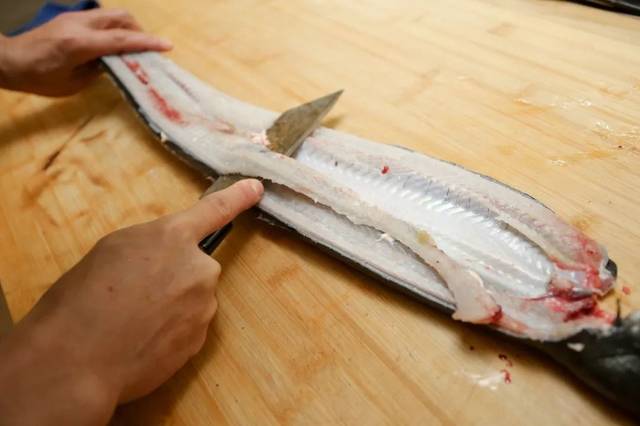
The key challenge in eel processing lies with the hundreds of fine, Y-shaped intramuscular bones. While the central spine is easily removed, these smaller bones require highly skilled technicians and a meticulous, controlled process to extract without damaging the delicate flesh. This is a critical control point in our HACCP-certified facility.
| Bone Type | Description & Location | Impact on Foodservice Product |
|---|---|---|
| Vertebral Column (Backbone) | The primary, central skeleton running the length of the eel. It consists of individual vertebrae and is relatively large and easy to identify. | This is always removed during initial filleting. Its presence in a "boneless" product would be a major processing failure. It is not a common quality concern with experienced suppliers. |
| Intramuscular Bones (Pin Bones) | Fine, needle-like, forked bones embedded within the muscle tissue (fillet). Eels have numerous intramuscular bones, which are not attached to the main spine. | This is the primary quality differentiator. Inadequately removed pin bones lead to a poor mouthfeel and are the most common source of customer complaints. Expert manual deboning is required to remove them effectively. |
| Mineralized Skeletal Tissues | These are not true bones but rather small, calcified connective tissues. They can sometimes feel firm but typically soften significantly or dissolve during the steaming and roasting process. | Generally not a safety or quality issue. Our high-temperature roasting process, which includes four precise layers of soy sauce application, helps break down these tissues, ensuring a tender, smooth texture in our unagi kabayaki products. |
The Professional Deboning Process for Export-Grade Unagi
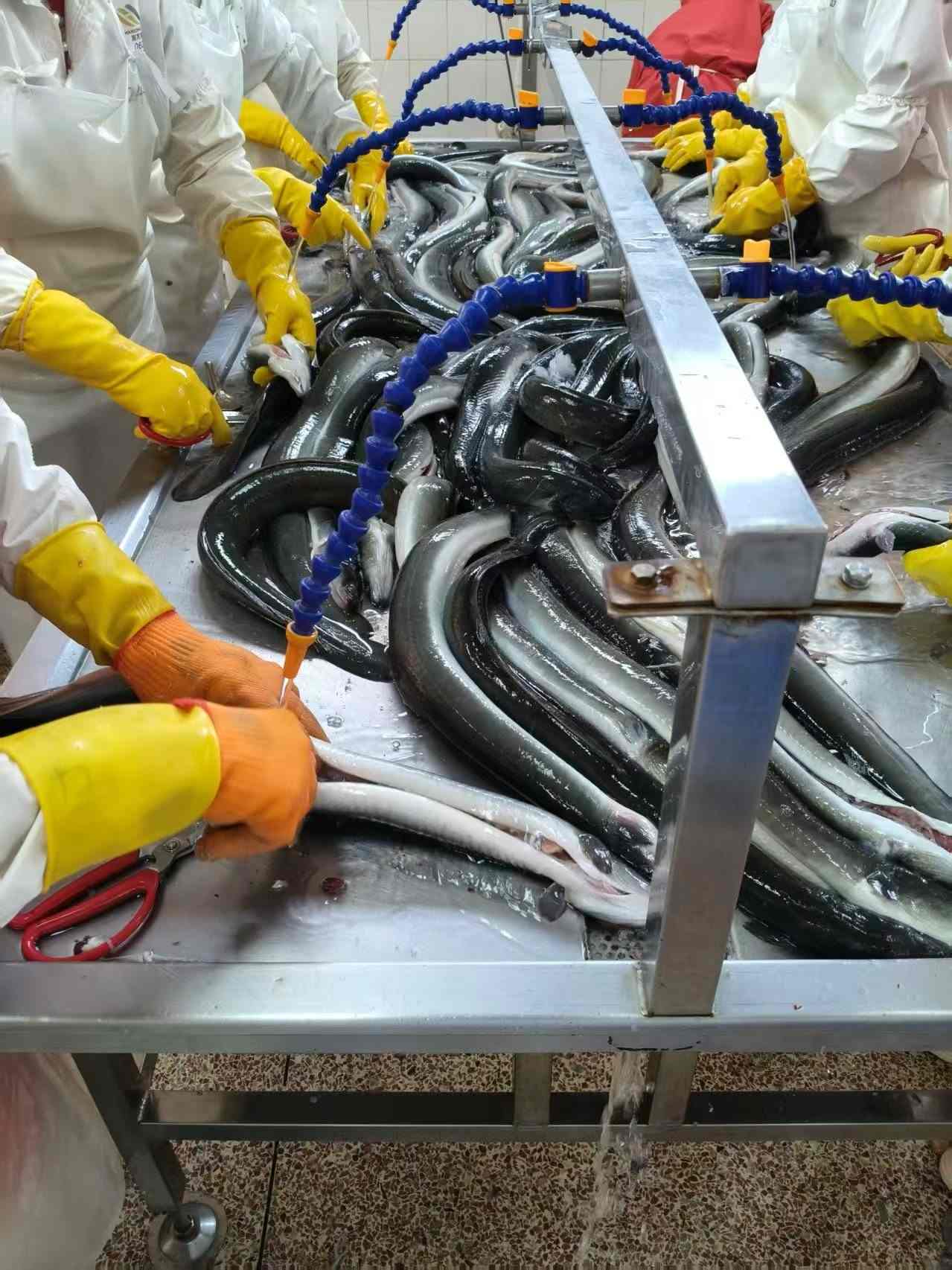
Achieving a truly "boneless" eel fillet that meets the exacting standards of markets like Japan and the EU is a labor-intensive process that cannot be fully automated. It relies on a combination of precision cutting, skilled manual labor, and rigorous quality control. At our ISO 22000:2018 certified facility, the process is a core component of our production line.
The journey from a live eel to a perfectly deboned fillet involves several key stages:
- Filleting: The eel is first cut to remove the head, viscera, and the central vertebral column. This initial step yields two long fillets.
- Manual Pin-Boning: This is the most critical and skill-dependent stage. Our technicians, part of a team of over 160 employees, use specialized tweezers and tactile inspection to locate and remove each of the fine intramuscular bones by hand. This requires extensive training to perform quickly and without tearing the flesh.
- Trimming and Sizing: After deboning, the fillets are trimmed to meet customer specifications. We offer custom cuts including shredding, dicing, 3-section cuts, and precise sushi slices. Standardization here is key for portion control in commercial kitchens.
- Quality Control Verification: A team of 25 quality-control specialists performs checks at this stage. This includes visual inspection and palpation (feeling the fillet) to ensure the deboning meets our export-grade standard. Our in-house laboratory and metal detectors serve as additional critical control points to guarantee product safety.
This meticulous process is why clients in the United States and Germany trust us for consistent supply. By investing in skilled labor and robust QC, we help them avoid the risks of product returns and brand damage associated with poorly processed eel.
Buyer's Checklist: How to Source Truly 'Boneless' Eel Products
Sourcing high-quality boneless eel requires asking the right questions and verifying your supplier's capabilities. A low price often signals shortcuts in the deboning process. Use this checklist during your supplier evaluation to protect your investment and ensure you receive a product that is safe and ready for your customers.
- ☑ Clarify "Boneless" Specifications: Do not assume the term "boneless" is universal. Ask the supplier to define their standard. What is their acceptable tolerance for remaining pin bones (e.g., number of bones per 100g)? A reliable unagi kabayaki manufacturer will have clear internal standards.
- ☑ Inquire About the Deboning Method: Is the process manual, mechanical, or a hybrid? For the highest quality, manual pin-boning by skilled workers is essential. Ask about their training and quality control procedures for these technicians.
- ☑ Request and Evaluate Samples: When you receive a sample, don't just assess the taste. Thaw it and carefully press your fingers along the flesh to feel for any remaining sharp pin bones. Compare samples from different suppliers to gauge the level of quality.
- ☑ Verify Food Safety Certifications: Ensure the supplier holds internationally recognized certifications like ISO 22000 and HACCP. These systems mandate control over physical hazards like bones. Our HALAL certification further demonstrates our commitment to process integrity.
- ☑ Discuss Traceability: Can the supplier trace a finished batch back to its farming origin? Our full-chain traceability from ~20 customs-registered farms provides an extra layer of quality assurance and risk management, which is critical for meeting US, EU, and Japanese import requirements.
- ☑ Understand the Cooking Process: Ask how their cooking process affects any remaining mineralized tissues. Our patented low-fat roasting and 4-layer glazing process is specifically designed to soften the flesh and ensure a premium texture.
How Bone-Related Issues Impact Your Business
The presence of bones in a product marketed as boneless is more than a minor inconvenience; it creates direct business risks. For foodservice operators in Australia or catering chains in Southeast Asia, a single incident can have cascading negative effects.
First, there is the immediate customer experience. A diner finding a sharp bone in their unagi donburi or sushi is, at best, an unpleasant surprise and, at worst, a choking hazard. This leads to returned dishes, negative online reviews, and a loss of repeat business. The perception of low quality can quickly damage a restaurant's reputation.
Second, there are operational costs. If your kitchen staff must spend time re-checking fillets and removing missed bones, it negates the value of purchasing a "ready-to-heat" product. This increases labor costs and slows down service, directly impacting your bottom line. Our frozen seafood products are designed to be kitchen-ready, minimizing back-of-house processing.
Finally, for importers and distributors, supplying bony eel to your clients can destroy trust and lead to costly product recalls or rejections. As a supplier to demanding markets like Japan, we understand that consistency is paramount. Our 4,000-ton annual capacity and 1,000-ton cold storage facility are built to deliver reliable, high-quality products that meet stringent food safety standards, helping you avoid these preventable risks.
So while eels do have bones, a professional and certified supplier ensures that by the time the product reaches your kitchen, this anatomical fact is irrelevant. The focus is on a safe, delicious, and consistent product every time.
If you have specific requirements for unagi kabayaki or other eel products, please contact our team to discuss your specifications and request a sample.