

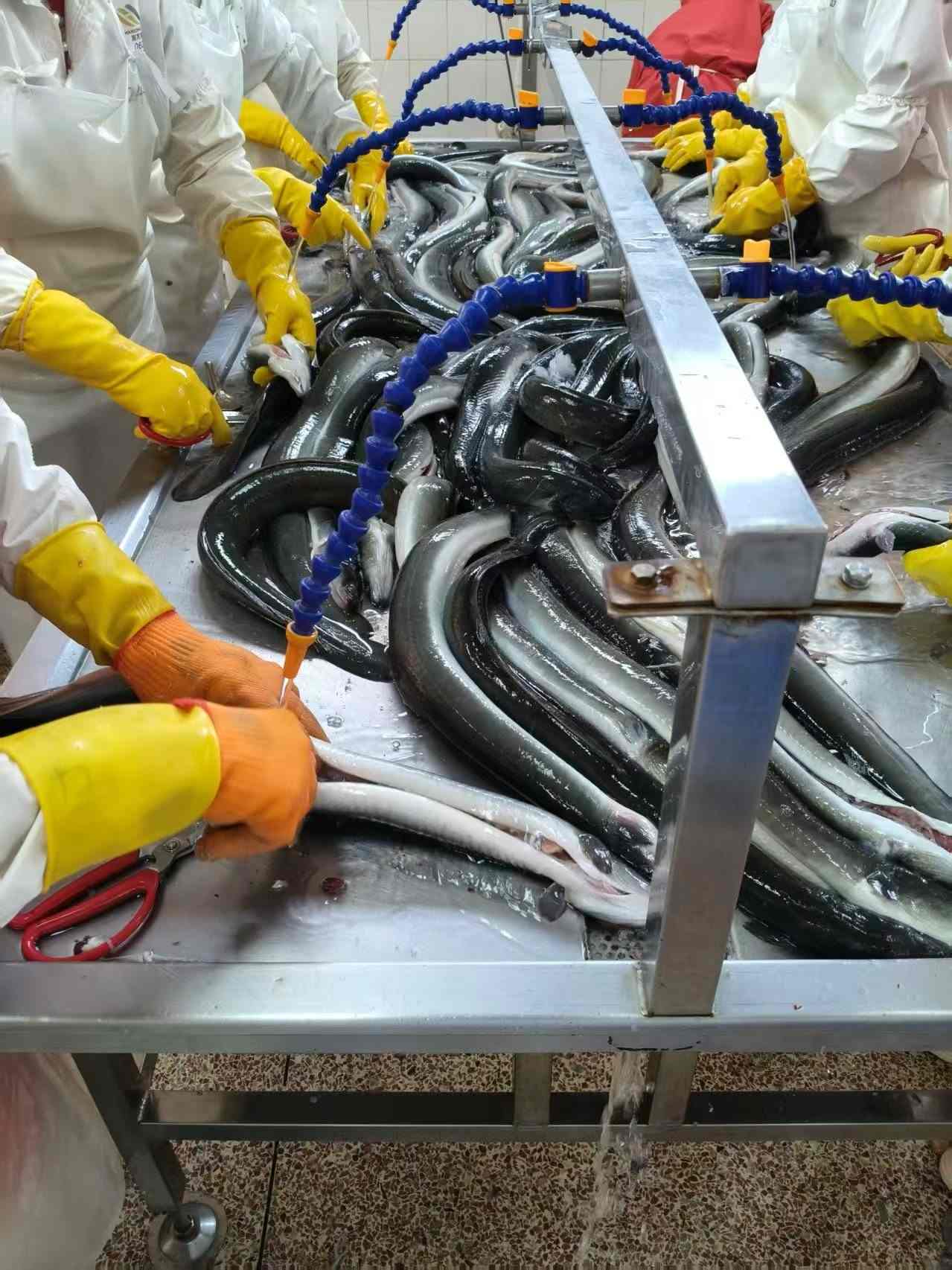
How Commercial Cooking Softens Eel Bones for Foodservice
As a quality specialist with over a decade in seafood exports, one of the most frequent technical questions I receive from new importers concerns eel bones. Many buyers, especially those sourcing for discerning markets like Japan and the EU, are worried about texture and the potential for a negative customer experience. The common assumption is that premium unagi kabayaki is completely deboned. However, the reality is a far more precise and technical process. It isn't about removing every bone, but about rendering the fine, intramuscular bones so soft and brittle that they become unnoticeable to the palate.
This is achieved through a multi-stage thermal and mechanical process that breaks down the bone structure. For foodservice operators and distributors, understanding this process is essential for evaluating a supplier's quality control and technical capability. A failure at any stage results in the exact textural problems you want to avoid. At Eelpro, our entire production line is built around mastering this transformation, ensuring a consistently premium product for our partners in the United States, Germany, and Australia.
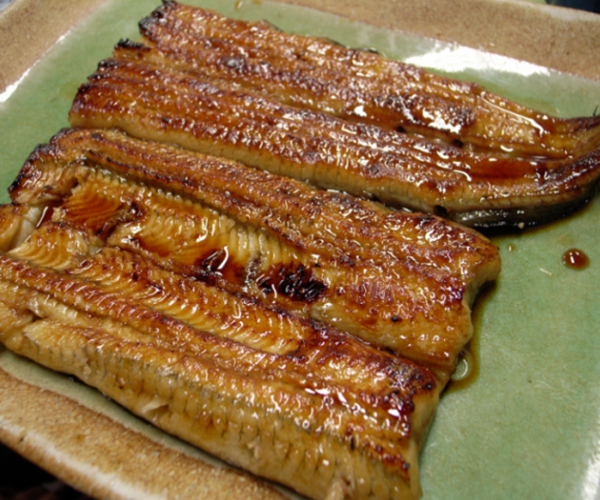
How Processing Techniques Change the Texture of Eel Bones
The key to managing eel bones lies not in their complete removal, but in altering their physical state. The very fine bones (known as intramuscular bones) are deeply embedded within the flesh, making manual removal impractical and damaging to the fillet's integrity. Instead, a combination of precise techniques works to soften them to the point of being undetectable. This is a core competency for any high-quality unagi kabayaki manufacturer.
Here is a breakdown of how each step in our ISO 22000:2018 certified process contributes to the final texture:
| Processing Step | Mechanical/Thermal Action | Effect on Eel Bones |
|---|---|---|
| Fine Knife Scoring | Precise, shallow cuts are made across the fillet's surface before cooking. | This doesn't remove the bones, but it severs them into much smaller, shorter segments. These tiny pieces are far more susceptible to heat and pressure in the subsequent steps. It creates predetermined weak points. |
| Steaming | The eel is subjected to high-temperature steam under controlled conditions. | This is the most critical stage. The combination of intense heat and moisture breaks down the bone's collagen matrix. The calcium phosphate structure becomes extremely brittle and soft, similar to the bones in canned salmon. |
| Grilling & Roasting | The eel passes through a roasting line, where it is grilled and basted multiple times. Our process involves four precise layers of soy sauce application. | The high, dry heat of grilling further dehydrates and crisps the already-softened bone fragments. They become so fragile that they crumble and integrate completely with the texture of the surrounding meat. |
| Sauce Application | The eel is coated with a traditional kabayaki sauce, which contains soy sauce, mirin, and sugar. | While a minor factor, the repeated application of hot, slightly acidic sauce helps in the final breakdown of any remaining connective tissue around the bone fragments, ensuring a smooth mouthfeel. |
By the time the product is flash-frozen, the bones have not been removed. Instead, they have been systematically deconstructed. This is why sourcing from a supplier with a documented and repeatable process is so important. Inconsistent steaming times or improper scoring will lead to batches where bones are still noticeable, creating a significant quality issue for your customers.
A Buyer's Checklist for Evaluating Eel Processing Quality
When you're sourcing frozen eel, you can't be on the factory floor to observe every step. However, you can ask targeted questions to verify a potential supplier's capabilities. A transparent and technically proficient manufacturer will have ready answers. This checklist helps you assess whether a supplier's process is designed to properly manage eel bones and other quality attributes.
- Certifications and Traceability:
- Question: Do you hold food safety certifications like ISO 22000 or HACCP? Can you provide traceability from the finished product back to the farm?
- Why it matters: These certifications demonstrate a systematic approach to quality control. Our full-chain traceability from ~20 customs-registered eel farming bases ensures we start with high-quality raw material of a consistent size, where bones are more manageable.
- Processing Technology:
- Question: Can you describe your cooking process? Do you use patented or specialized equipment for roasting and preparation?
- Why it matters: Vague answers are a red flag. We can point directly to our patented low-fat roasting and deodorizing technology. This, combined with our 4-layer soy-sauce coating process, shows a standardized, engineered approach, not just basic cooking.
- Quality Control Infrastructure:
- Question: What in-house testing and quality control measures are in place? Do you have an on-site laboratory?
- Why it matters: A supplier's commitment to quality is reflected in their investment. With 25 dedicated quality-control specialists and our own professional eel lab, we perform targeted sampling and analysis to verify texture and safety, including metal detection at critical control points.
- Market Experience:
- Question: Which international markets do you currently supply? Can you meet standards for Japan, the US, or the EU?
- Why it matters: Experience matters. Supplying restaurant chains in Japan and importers in the EU, as we do, requires meeting some of the world's strictest standards for texture, taste, and food safety (e.g., veterinary drug residues). This track record is proof of capability.
Common Sourcing Mistakes That Lead to Poor Eel Texture
Over my career, I've seen importers face significant commercial risk from choosing the wrong supplier. These mistakes often stem from focusing solely on price rather than the technical process behind the product. Here are common pitfalls to avoid when sourcing prepared eel products.
Mistake 1: Ignoring the Raw Material Source
The size, age, and species of the eel dramatically affect its bone structure. Larger, older eels will naturally have tougher, more calcified bones that are harder to soften. Sourcing from a supplier without control over their farming bases means you risk receiving products made from inconsistent or suboptimal raw materials. Our 19 self-operated and cooperative farms supply over 5,000 tons of high-quality eel annually, giving us control from the very first stage.
Mistake 2: Underestimating the Importance of Steaming
An inexperienced processor might cut corners on steaming time or use equipment that doesn't maintain consistent temperature and pressure. This is the single biggest cause of noticeable bones in the final product. A properly calibrated system is essential for breaking down the bone collagen effectively. Our two modern production lines have a combined annual capacity of 4,000 tons, built on standardized and validated processes.
Mistake 3: Overlooking Customization and Cutting Specs
A one-size-fits-all product may not be suitable for your specific application. A supplier should be able to offer custom cuts (shredding, dicing, sushi slices) that are optimized for your end-use. This demonstrates a deeper understanding of food preparation. For example, the ideal texture for an eel rice bowl is different from what's needed for a delicate sushi roll. Proper processing ensures that even after custom cutting, the bone texture remains undetectable.
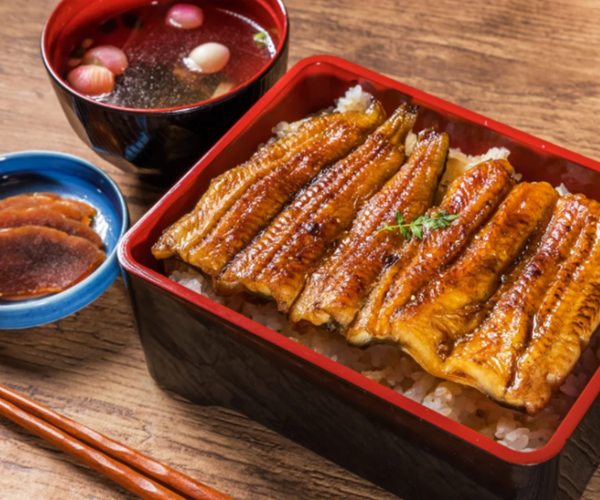
From Farm to Freezer: Ensuring Quality at Every Step
Ultimately, a high-quality finished product with an excellent texture is not the result of a single action, but the outcome of a fully integrated quality management system. The process begins long before the eel enters our 8,497 m² production workshop.
It starts at our customs-registered farming bases, where water quality, feed, and growth rates are monitored. It continues through our processing facility, which is certified for ISO 22000:2018, HACCP, and HALAL standards. Our 25 technical and quality-control personnel oversee every stage, from precise knife scoring to the final four-layer roasting process. Once finished, the products are moved to our 1,000-ton cold storage facility, ensuring the cold chain is never broken.
This end-to-end control is how we confidently supply demanding clients, from Japanese restaurant chains to food importers in Germany and Poland. We ensure that every batch of our unagi kabayaki meets the highest standards for safety, flavor, and the perfectly smooth texture your customers expect.
For importers and foodservice buyers, partnering with a supplier who masters the science of processing eel bones is a direct investment in product quality and customer satisfaction.
If you have specific questions about our processing standards or require custom specifications for your market, please send us your inquiry. Our team can provide detailed documentation and product samples.