

Why Does Eel Have Bones and How Does it Affect Foodservice Quality?
As a quality specialist, one of the most frequent technical questions I get from new importers is, "Does eel have bones?" The simple answer is yes. But for a professional B2B buyer, this isn't the right question. The critical questions are: which bones remain after processing, where are they located, and how will they affect the customer's dining experience? Answering these incorrectly can lead to customer complaints, increased labor costs, and supply chain inconsistencies.
Understanding the nuances of eel anatomy and processing is essential for sourcing high-quality prepared products like unagi kabayaki. A supplier's deboning process directly impacts the texture, safety, and back-of-house efficiency of your foodservice operation. At Eelpro, we manage this from the source, leveraging full-chain traceability from our ~20 customs-registered eel farming bases. This control allows us to deliver fillets that meet the exacting standards of clients in Japan, the US, and the European Union.

Understanding Eel Anatomy: Locating Bones in a Fillet
Not all bones in an eel are equal. A chef can easily work around a large vertebral column, but fine, hair-like pin bones present a significant challenge. For foodservice buyers, knowing the difference is key to evaluating a supplier's processing capabilities. When you assess a sample, you are looking for evidence of meticulous deboning, which indicates a higher-quality, more consistent product.
Here is a technical breakdown of the bones found in a freshwater eel and how they should be handled during processing.
| Bone Type | Location in the Fillet | Characteristics | Impact on Cooked Product if Not Removed |
|---|---|---|---|
| Vertebrae (Backbone) | Central spine running the length of the eel. | Large, hard, and easily identifiable. | Always removed during the initial filleting process. Its presence in a "boneless" fillet is a major processing failure. |
| Rib Bones (Belly Bones) | Attached to the vertebrae, curving down towards the belly cavity. | Thicker than pin bones, but still relatively small. Can be brittle after cooking. | Typically removed when the eel is gutted and butterflied. Some small fragments may remain near the spine if the cut is not precise. |
| Pin Bones (Intermuscular Bones) | Embedded within the muscle tissue, running horizontally from the spine outwards along the lateral line. | Very fine, flexible, and numerous. These are the most difficult to remove. | These are the primary culprits in "bony" eel. When cooked, they become slightly softer but are still perceptible, creating an unpleasant texture and a potential choking hazard. Proper processing significantly reduces their presence. |
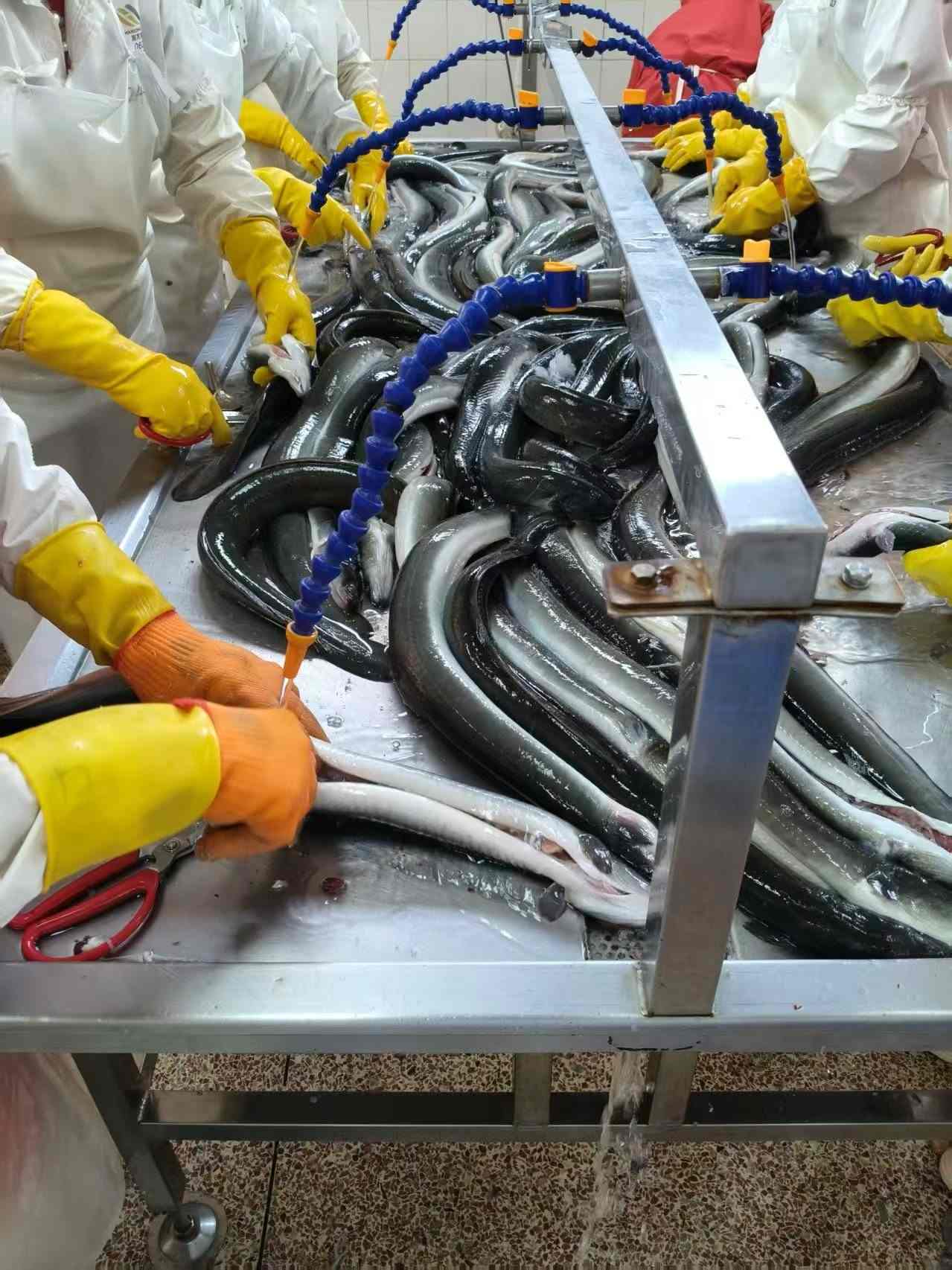
The goal of professional processing is to remove the vertebrae and rib bones completely, and to manage the pin bones so they are unnoticeable to the diner. This is achieved through precise cutting techniques and, in some cases, specialized processing steps that soften these fine bones until they effectively "dissolve" during cooking.
How Professional Processing Reduces Bone-Related Risks and Costs
Sourcing properly processed eel is not just about diner satisfaction; it's a strategic decision that impacts your bottom line. Inconsistent deboning forces your kitchen staff to spend valuable time inspecting and picking out bones, increasing labor costs and slowing down service. This is where a supplier's technical capability becomes a competitive advantage.
At Eelpro, our approach is built on control and technology. Our two modern production lines, with a combined annual capacity of 4,000 tons, are designed for precision. Our quality management is certified under ISO 22000:2018 and HACCP, ensuring every step is monitored.
Key processing steps that minimize bone issues include:
- Standardized Filleting: Our technicians are trained to butterfly the eel with a precise cut that removes the entire vertebral column and the attached rib bones in one smooth motion. This minimizes the chance of bone fragments being left behind.
- Targeted Trimming: After filleting, the eel is trimmed to specification. This process removes the belly flap and any remaining sections where rib bones are most likely to occur.
- Advanced Cooking and Roasting: Our patented low-fat roasting process, which includes a precise 4-layer soy-sauce coating, does more than just add flavor. The specific temperatures and steaming steps help to soften the finest pin bones, rendering them unnoticeable in the final product. This is a critical step for creating a truly premium mouthfeel.
- Rigorous Quality Control: With 25 dedicated quality-control specialists and an in-house laboratory, we conduct regular checks. Critical control points, including metal detectors, ensure product safety and adherence to specifications before anything is packed and stored in our 1,000-ton cold storage facility.
This systematic approach is why we can consistently supply demanding markets, from Japanese restaurant chains to German food importers, who cannot afford inconsistencies in their supply chain.
Buyer's Checklist: How to Assess Prepared Eel for Bone Content
When you receive samples from a potential frozen eel supplier, a thorough evaluation can save you from future quality issues. Use this checklist to assess the deboning quality and overall processing standard. I've used this exact framework to guide clients through import compliance for US and EU markets.
- Visual Inspection (Uncooked):
- Lay the fillet flat, skin-side down.
- Look along the centerline where the backbone was. Do you see any large bone fragments or remnants of the vertebrae? This would be a significant red flag.
- Check the edges near the belly area. Are there any visible pieces of rib bones?
- Manual Palpation:
- Run your fingertips firmly along the thickest part of the fillet, especially along the lateral line where pin bones are concentrated.
- Press gently. You may feel the very fine pin bones, but they should be flexible and not sharp or rigid. A high number of hard, prominent bones indicates poor processing.
- Post-Cooking Evaluation:
- Prepare the eel according to the supplier's instructions (e.g., heating the unagi kabayaki).
- Taste the product, paying close attention to texture. Does the flesh flake apart easily?
- Are there any hard, needle-like sensations? Properly processed pin bones should be soft enough to go unnoticed. If you can distinctly feel multiple bones in a single bite, it's a quality failure.
- Ask Your Supplier the Right Questions:
- "What is your deboning procedure? Is it manual, mechanical, or a combination?"
- "What are your quality control checks for bone fragments?"
- "Can you provide a specification sheet that defines the maximum acceptable level for bone presence?"
- "How does your cooking process help manage the texture of remaining pin bones?"
A transparent supplier with robust quality systems will be able to answer these questions confidently. They should be able to provide documentation and explain how their HACCP plan addresses bone fragments as a physical hazard.
The Impact of Bones on Different Eel Preparations
The importance of thorough deboning varies depending on the final application. For some dishes, the presence of soft pin bones is more acceptable than for others. Communicating your intended use to your supplier is key to receiving the right product.
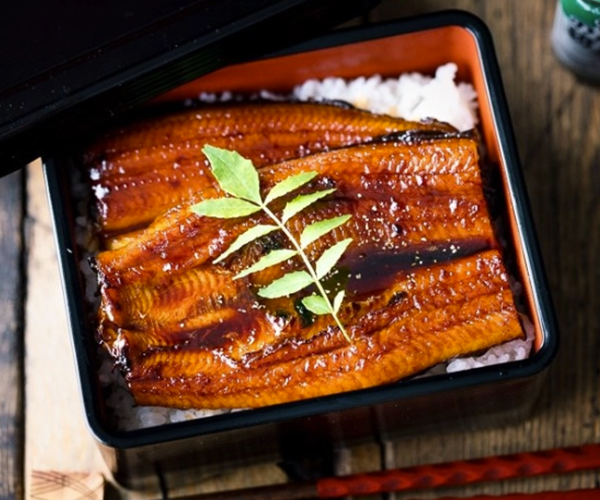
- Unagi Kabayaki for Donburi (Eel Bowls): For classic eel rice bowls, the eel is served in large pieces. The texture is paramount. Any noticeable bones will ruin the soft, tender experience and reflect poorly on the dish. This application requires the highest standard of deboning.
- Eel for Sushi (Unakyu Maki): When eel is used in sushi rolls, it is often cut into smaller strips. While the standard for deboning is still high, the presence of other ingredients like rice and cucumber can sometimes mask the texture of a very fine, softened pin bone.
- Shredded or Diced Eel: For applications like fried rice or as a topping for noodle soup, where the eel is in small pieces, the deboning standard is still important for safety. However, the textural impact of a few remaining fine bones is less pronounced compared to a whole fillet.
At Eelpro, we offer custom cutting specifications—including shredding, dicing, and sushi slices—to match the needs of our foodservice clients. This ensures the product is not only deboned correctly but also portioned for maximum efficiency in your kitchen.
Ultimately, while all eels have bones, a professional supplier’s job is to ensure they never become a problem for you or your customers. Through rigorous farming oversight, meticulous processing, and certified quality management, we deliver a product that is safe, consistent, and ready to use.
If you require deboned eel products that meet strict international food safety standards, please send us your specifications. Our team can provide a detailed quote and product samples for your evaluation.