

Why Does Unagi Eel Migrate From Rivers to the Ocean?
Ever wonder why a fish that spends most of its life in a muddy river suddenly disappears one autumn night, never to return? That's the question behind one of the strangest migrations in the seafood world. The unagi eel (Japanese freshwater eel, Anguilla japonica) lives almost its entire growth phase in rivers, lakes, and estuaries — then, once mature, it swims thousands of kilometers back to the ocean to spawn and die. For buyers sourcing frozen eel products, understanding this lifecycle isn't just trivia. It explains why wild-caught eel is scarce, why farming has become the dominant supply model, and why traceability matters so much in this category.
The Biological Trigger Behind the Migration
Unagi eel is what biologists call a catadromous species — it grows in freshwater but must return to saltwater to reproduce. This is the reverse of salmon, which are anadromous (born in freshwater, grown in the ocean, then return to spawn). The trigger for migration isn't fully mapped, but three factors are well documented:
- Sexual maturity — Eels typically migrate after 5 to 15 years in freshwater, once their bodies accumulate enough fat reserves (over 20% body fat is common at this stage) to fuel a spawning journey that may exceed 2,000 km with no feeding along the way.
- Seasonal water temperature drops — Migration usually starts in autumn as river temperatures fall, a cue tied to hormonal changes that prepare the eel's body for saltwater osmoregulation.
- Lunar and tidal cycles — Many eels begin their downstream run on dark, moonless nights during high river flow, likely to reduce predation risk.
Once in the ocean, eels undergo a physical transformation called silvering — their skin darkens on top, turns silver-white below, and their eyes enlarge to adapt to deep-sea light conditions. This is the last visible stage before they vanish into open water, believed to spawn near the West Mariana Ridge in the Pacific, based on research tracking egg and larval distribution.
Lifecycle Explanation: Where Freshwater Growth Ends and Ocean Migration Begins
The clearest way to understand unagi eel biology is to trace the boundary between its two worlds — the river phase and the ocean phase. Here's the lifecycle broken into stages, with the habitat boundary marked plainly:
| Stage | Habitat | Duration | Key Activity |
|---|---|---|---|
| Egg & larva (leptocephalus) | Ocean (Pacific spawning grounds) | Several months | Drifts with ocean currents toward Asian coastlines |
| Glass eel | Coastal / estuary (boundary zone) | Weeks to a few months | Transparent juvenile enters river mouths |
| Yellow eel | Freshwater rivers, lakes, ponds | 5-15 years | Main growth phase; this is where farmed eel is raised |
| Silver eel | Freshwater to ocean transition | Weeks | Physical transformation begins; downstream migration starts |
| Adult spawning migration | Deep ocean | Months | Long-distance swim to spawning grounds; no return |
The practical boundary buyers should know: farming happens entirely during the yellow eel stage, inside the freshwater window. No commercial aquaculture operation raises eel through its ocean spawning phase — that part of the lifecycle has never been closed in captivity at commercial scale. This is why all farmed eel, including the eel raised at our own eel farm, starts from wild-caught glass eels collected at the freshwater boundary, then grown out in controlled ponds until harvest size.
What This Means for Sourcing
- Glass eel supply is a natural bottleneck — it can't be farmed end-to-end, so global glass eel catch volume directly affects raw material availability and pricing each season.
- Farmed eel quality depends on the yellow eel growth phase, not the ocean stage — this is where water quality, feed, and farming registration matter most.
- Traceability should start at the glass eel intake point. Buyers asking about origin should ask which registered farming base the stock came from, not just which country processed it.
Common Mistakes Buyers Make When Evaluating Eel Origin Claims
Because the unagi eel lifecycle is unusual, it creates room for misleading sourcing claims. Watch for these:
- Mistake 1: Assuming "wild-caught" means sustainable. Wild adult eel catch is heavily restricted in most regions due to population decline. Most legitimate commercial supply is farmed from wild-caught glass eels, not wild-caught adults.
- Mistake 2: Ignoring farming base registration. Not all ponds are customs-registered or eligible for export. Always confirm the supplier's farming bases are registered for the destination market you're importing into.
- Mistake 3: Overlooking veterinary drug residue testing. Because eel spends years in freshwater ponds, feed and water treatment practices affect residue levels. Japan, US, and EU inspection standards test specifically for this.
- Mistake 4: Confusing species. Anguilla japonica (Japanese eel) is farmed differently than European or American eel species, and regulatory treatment differs by species under CITES-related trade rules.
How This Lifecycle Shapes Product Quality and Sourcing Decisions
Because unagi eel can only be farmed during its freshwater growth stage, everything about product consistency traces back to how that phase is managed. This is the practical takeaway for import buyers:
- Conclusion: Choose suppliers who can document farm-level traceability, not just final product certificates.
- Reasoning: Since glass eel origin can't be verified after grow-out, the only reliable checkpoint is the registered farming base and its process records.
- Scenario it fits: Import buyers in Japan, the US, EU, or Australia who need to document supply chain compliance for customs or retail audits.
- Limits: Even full traceability records won't tell you where the original glass eels were spawned in the ocean — that boundary of the lifecycle remains outside verifiable tracking. Traceability applies to the freshwater and processing stages only.
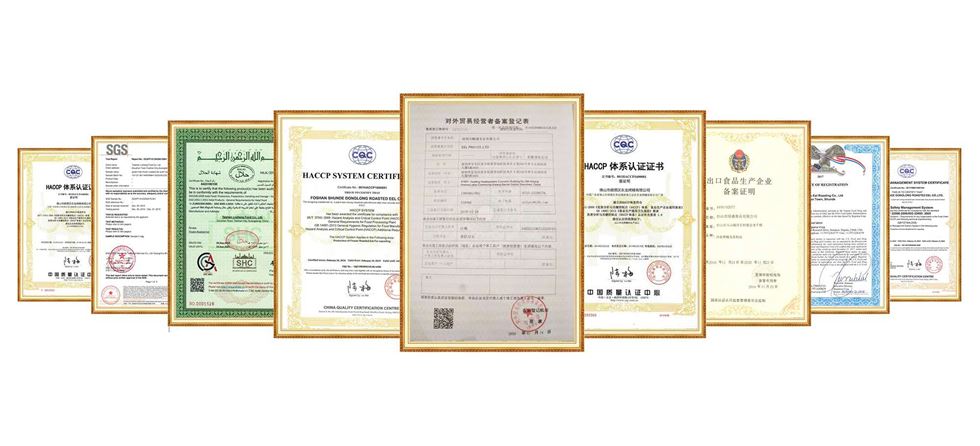
Eelpro operates roughly 20 customs-registered eel farming bases covering over 2,150 mu, with tracking from farm registration through process verification, targeted sampling, and traceability review. Our laboratory and metal detectors at critical control points support this chain, and our SC Food Production License (No. SC11135062401122) covers quick-frozen prepared and seasoned aquatic products, including unagi kabayaki eel.
Buyer's Decision Checklist for Sourcing Unagi Eel Products
Before placing an order, run through this list:
- Does the supplier hold ISO 22000 or HACCP certification covering the specific product line you're buying?
- Can they trace the batch back to a registered farming base, not just a processing facility?
- Do test reports cover veterinary drug residues and microbiological indicators per your destination market's standard (Japan, US, or EU)?
- What is the cold storage capacity, and does it match your order volume and delivery schedule? (Our facility holds 1,000 tons.)
- Is MOQ negotiable based on cut specification — skewers, kabayaki, or cut pieces — and packaging format?
- What's the standard lead time from order confirmation to shipment? (Typically around 30 days, adjustable by spec and quantity.)
Roasting Process and Why the Freshwater Growth Stage Still Matters After Harvest
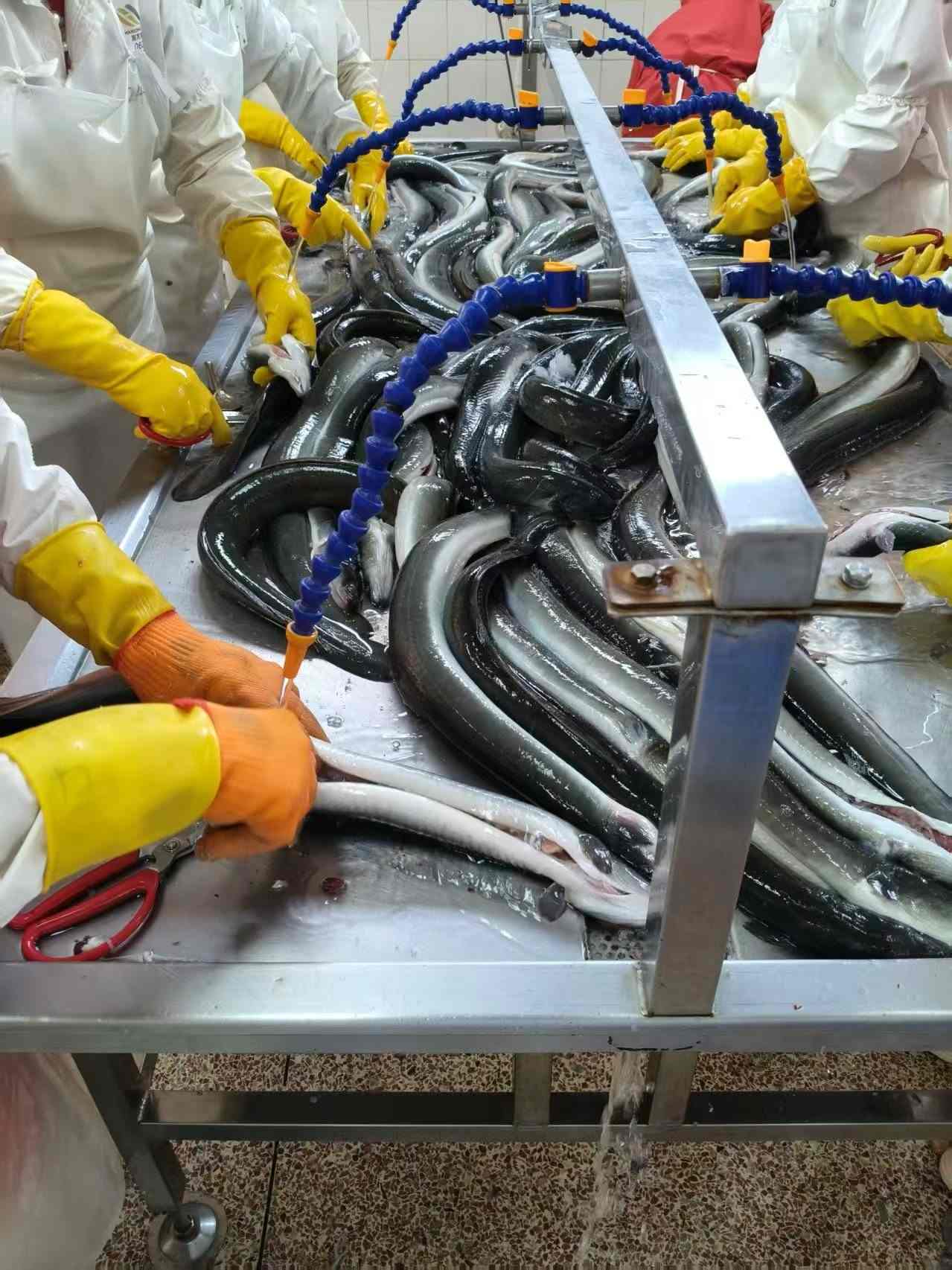
Once eel is harvested at the yellow eel stage — before it ever attempts ocean migration — processing quality depends on consistent fat content and muscle texture built up during freshwater growth. This is where roasting technique comes in. A 4-layer soy sauce coating process, with temperature-controlled steps between each layer, produces the "white-roasted" base color and the graduated "1st-through-4th soy-sauce coating" color standard used for grading kabayaki. Because farmed eel from the yellow eel stage tends to carry more body fat than wild adults preparing for migration, low-fat roasting and deodorizing methods are needed to keep the final product from tasting greasy or fishy. This patented approach is part of why our frozen eel supplier operation can hold consistent grading across production runs, not just single batches.
For foodservice buyers, this also affects back-of-house planning — boneless, standardized-cut kabayaki (shredded, diced, strip-cut, chunk-cut, 3-section, or sushi-slice) reduces prep labor, since the cutting work is already done to spec before freezing. If you're building a menu around eel dishes, our eel noodle soup guide and other recipe resources cover practical serving ideas beyond the standard donburi format.
FAQ: Straight Answers on Unagi Eel Migration and Sourcing
Does farmed unagi eel ever migrate to the ocean?
No. Farmed eel is harvested at the yellow eel stage, well before the silvering transformation that precedes migration. It never reaches the ocean phase.
Can eel be farmed through its full lifecycle, egg to adult?
Not at commercial scale. Glass eels are still collected from the wild at river mouths; full-cycle aquaculture (breeding eels in captivity from egg to glass eel) remains experimental and isn't the source of commercial supply.
Why does this matter for food safety compliance?
Because the freshwater growth phase is the only stage under direct farm management, residue testing and traceability documentation apply specifically to that window — not to any wild ocean stage.
Is there a size or age difference between migrating and farmed eel?
Yes. Migrating silver eels are older (often 5-15+ years) and carry higher fat reserves for the journey. Farmed eel for kabayaki is typically harvested earlier, at a size and fat level suited to roasting quality rather than long-distance swimming.
If you're evaluating suppliers for frozen unagi kabayaki, eel sauce, or other seafood lines, request a spec sheet or sample batch to check cut consistency and lab test coverage before committing to a full order.