

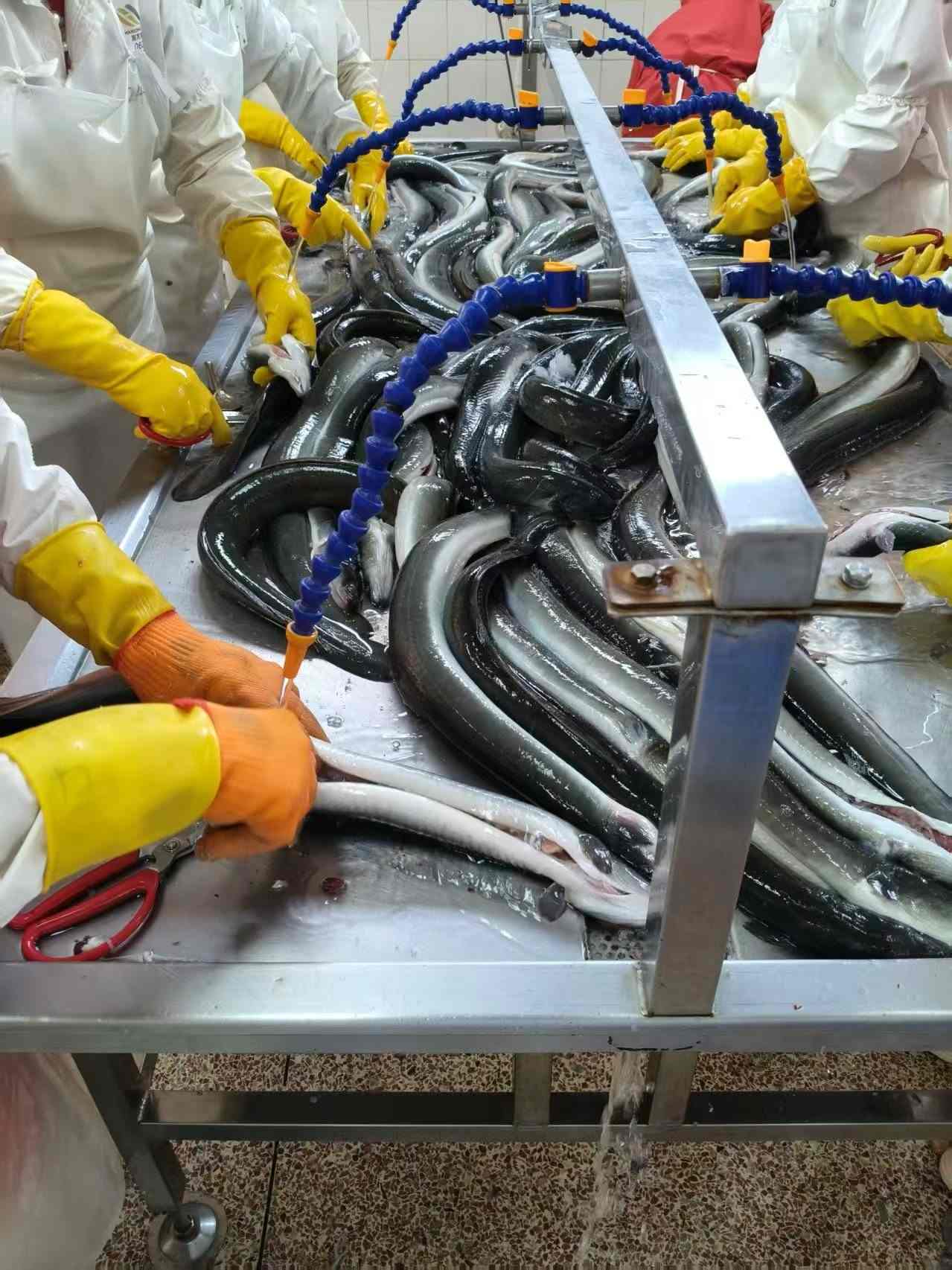
How Farmed vs Wild Unagi Eel Differ in Flavor, Texture, and Grilling Behavior
A chef in Osaka once told me the biggest menu mistake he ever made wasn't a bad sauce — it was buying "wild-style" eel without knowing what that actually meant on the grill. The fat rendered wrong. The skin blistered instead of crisping. Guests noticed. If you're sourcing unagi eel for a restaurant or retail line, this distinction isn't academic — it changes your yield, your cook time, and your final plate.
This article breaks down what actually separates farmed and wild eel in practice, so you can make a sourcing decision based on facts, not marketing language.
Why "Wild Unagi" Is Nearly Absent From Commercial Supply Chains
Before comparing flavor, buyers need to understand a supply reality: true wild-caught Anguilla japonica is heavily restricted due to declining populations, and the species is listed by the IUCN Red List as endangered. Most eel sold globally — including nearly all restaurant-grade kabayaki — is farmed from wild-caught glass eel juveniles raised in controlled ponds. Genuinely wild adult eel, caught and processed at scale, is rare and mostly limited to small regional markets in Japan and parts of Europe. So when buyers ask "farmed vs wild," they're usually really asking: how does pond-raised eel with different feed and growing conditions compare to river-caught eel in taste and cooking behavior? That's the comparison this article addresses.
Comparison of Fat Content, Texture, Feed, and Grilling Behavior
These four factors interact — a change in feed affects fat, which affects grilling time, which affects final texture. Here's the breakdown chefs actually need:
| Parameter | Farmed Unagi | Wild-Caught Unagi | What It Affects in Practice |
|---|---|---|---|
| Fat content | Typically 15-22% due to controlled feed and limited swimming range | Often 8-14%, varies by season and river system | Higher fat means faster fat rendering under the grill — undercooking leaves greasiness, overcooking causes flare-ups and burnt skin |
| Texture | Softer, more uniform flesh; consistent across batches | Firmer, sometimes fibrous; varies by catch | Uniform texture is easier for standardized menu portions; firmer wild texture needs longer, gentler heat to avoid toughness |
| Feed | Formulated pellet feed, controlled protein and lipid ratio | Natural diet — small fish, crustaceans, insects | Feed composition directly shapes fat marbling and subtle flavor notes; pellet-fed eel tends toward a cleaner, milder taste |
| Grilling behavior | Renders fat evenly across the 4-layer soy-sauce coating process; holds shape well | Uneven fat distribution can cause patchy caramelization | Even rendering is what produces the classic glossy kabayaki finish; uneven fat means some sections char before others cook through |
What this means for buyers: if your kitchen needs consistent grilling results across hundreds of portions a week, farmed eel with controlled fat content is the safer operational choice. Wild-style eel can deliver a more complex, variable flavor, but it demands a cook with the skill to adjust heat and timing batch by batch — not practical for high-volume foodservice.
Common Mistakes Buyers Make When Comparing Eel Quality
- Assuming higher fat always means better flavor. Fat carries flavor, but excess fat without proper roasting technique just means grease pooling on the plate.
- Judging quality by color alone. A deep mahogany glaze can come from over-sauced fish hiding thin flesh underneath. Check the "1st-through-4th soy-sauce coating" standard your supplier follows — this is the kind of layered process detail worth asking about directly.
- Ignoring feed source in spec sheets. Buyers rarely ask what farms feed their eel. This affects both flavor and veterinary drug residue risk, which matters for import compliance in the US, EU, and Japan.
- Skipping traceability questions. Without farm-to-shipment tracking, you can't verify consistency between orders — a problem when your menu depends on repeatable results.
A Practical Scenario: Choosing Eel for a Donburi Program
Say you're launching a unadon program across 12 restaurant locations. You need 400 kg of pre-grilled eel monthly, consistent portion size, and a shelf-stable product that reheats without drying out. In this case, farmed eel processed through a controlled roasting line — with standardized cutting into portions — is almost always the right call. Wild-style variability would create inconsistent plating across locations, and firmer wild texture doesn't reheat as forgivingly in a steam table or combi oven. Where wild-style eel does make sense: a single-location, chef-driven tasting menu where variability is part of the appeal, and the kitchen has time to adjust technique per batch. That's a narrow use case — not typical for chain foodservice or retail packaging.
Sourcing Checklist Before You Place an Order
- Ask for the fat content range of the specific cut (whole fillet vs kabayaki-ready vs cut pieces)
- Request documentation on farming base registration and traceability records
- Confirm the roasting process — number of soy-sauce coating layers and temperature control steps
- Check certification: does the supplier hold ISO 22000, HACCP, or HALAL certification relevant to your market?
- Verify compliance with veterinary drug residue standards for your destination market (Japan, US, or EU)
- Ask about cutting spec options — shredded, diced, strip-cut, chunk-cut, 3-section cut, or sushi slices
Eelpro's own supply chain runs through roughly 20 customs-registered farming bases covering over 2,150 mu, with full traceability from farm registration through process verification and sampling. That level of tracking is what lets a buyer confirm the fat and texture profile they're ordering will actually show up in the shipment — not just on paper.
How Roasting Technique Changes the Flavor Outcome
Even with the same raw eel, two roasting methods produce different results. The white-roasted method (grilled without sauce, sometimes steamed first) preserves a cleaner, more delicate flavor closer to what wild eel naturally offers. The kabayaki method — the 4-layer soy-sauce coating process — builds a caramelized, umami-heavy crust that masks some raw material variability, which is part of why farmed eel works so well with this style. If your menu leans toward a lighter, more traditional flavor profile, ask your supplier about white-roasted options. If you want the bold, sticky-sweet flavor most Western diners expect from "unagi," the kabayaki process is the better fit — and it's more forgiving of natural texture inconsistency. You can read more about how the sauce itself is built in this breakdown of the kabayaki sauce process.
Cold Knowledge: Why Low-Fat Doesn't Mean Low-Flavor
A common misconception is that fattier eel always tastes richer. In practice, patented low-fat roasting techniques can render excess fat while a deodorizing step removes the muddy, pond-water off-notes that sometimes affect farmed freshwater fish. The result: a cleaner-tasting eel with fat content in a manageable 15-18% range rather than an unpredictable, greasy extreme. This matters for buyers targeting health-conscious retail segments, where "lower fat, same flavor" is a real selling point — not a compromise.
What to Ask Your Supplier Before the First Order
Before committing to a bulk order, request a sample batch and test it under your own kitchen equipment — not just a description sheet. Compare grilling time, fat rendering, and final texture against your current supplier. For teams building a full menu around eel, it's worth reviewing options like frozen unagi kabayaki spec sheets and pairing them with a properly matched eel sauce formulated for the same fat profile — mismatched sauce viscosity is a quiet cause of inconsistent glaze results.
If you're also exploring flavor pairings beyond the standard donburi format, this guide on eel recipes and flavor pairings for menus is a useful reference for expanding a seasonal menu without changing your core supplier spec.
Request a Sample Before You Commit
If you're deciding between farmed and wild-style eel for a new menu or retail line, request a sample batch with fat content and cutting spec documentation before placing a full order — it's the fastest way to confirm the product matches your kitchen's actual grilling process.