

Yes Eels Have Bones but Proper Processing Makes Them Edible
As a food safety and quality specialist with over a decade in seafood exports, one of the first questions new importers ask is, "Does eel have bones?" The simple answer is yes. Freshwater eels (Anguilla japonica) have a central spine and numerous fine, hair-like intramuscular bones. However, the reason unagi kabayaki is a global delicacy is because the right preparation and cooking methods render these small bones so soft they dissolve or become unnoticeable to the palate.
For restaurant chains and food distributors, understanding this process is key to sourcing a consistent, high-quality product that delights customers and minimizes back-of-house issues. An improperly processed eel can lead to a poor dining experience and negative reviews. At Eelpro, our entire system—from farm to final freezing—is designed to manage this specific attribute. Our quality control, backed by ISO 22000:2018 and HACCP certifications, ensures every fillet meets the texture standards required by discerning markets in Japan, the United States, and the European Union.
Understanding the Anatomy of an Eel's Skeleton
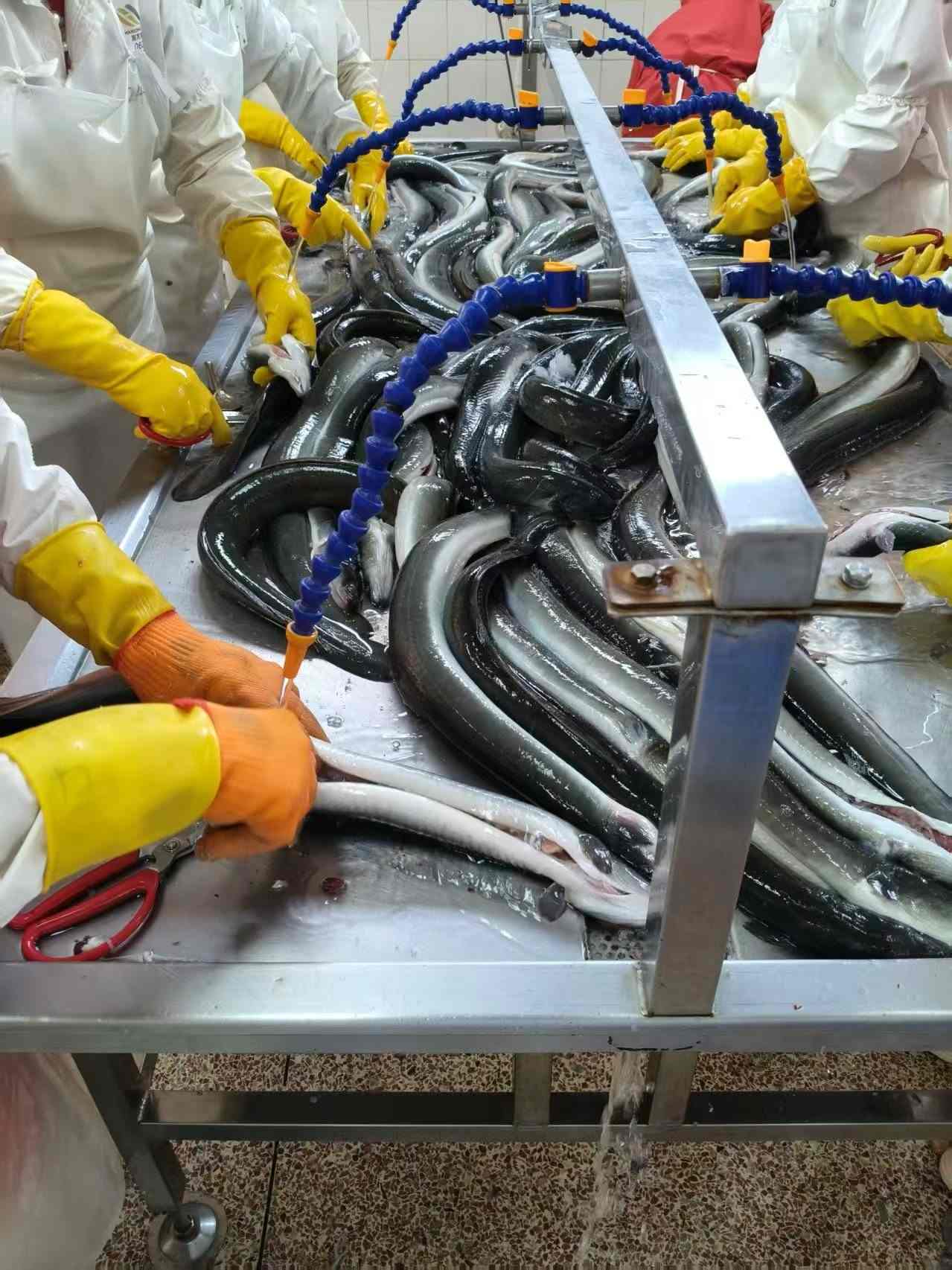
Unlike cod or salmon which have larger, more easily removed pin bones, an eel's bone structure is more complex. The skeleton consists of a main vertebral column (backbone) and hundreds of very fine, Y-shaped intramuscular bones distributed throughout the flesh. These are the primary challenge in eel preparation.
During processing, the main backbone is removed when the eel is butterflied and gutted. However, the tiny intramuscular bones remain embedded in the fillet. Attempting to remove them all manually would destroy the delicate meat. Therefore, the goal of a professional unagi kabayaki manufacturer is not to remove these bones, but to cook them until they are completely tenderized. The success of this process depends entirely on the precise application of heat and moisture, which transforms the bone's primary component: collagen. When heated sufficiently, collagen breaks down into gelatin, a soft substance that blends seamlessly with the texture of the cooked meat.
How Cooking Methods and Fillet Size Transform Eel Bone Texture
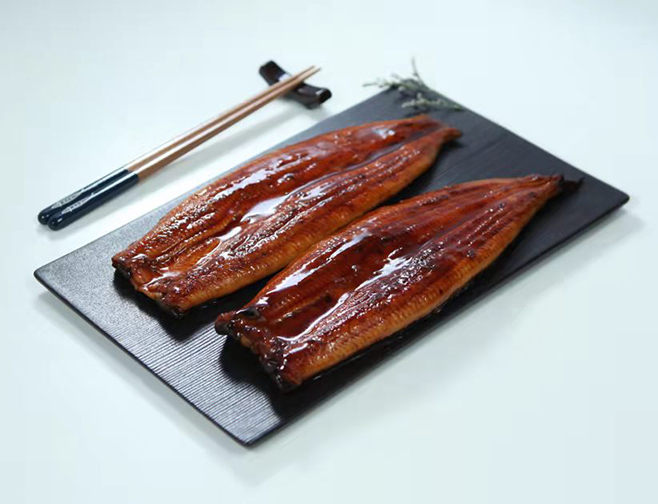
The "boneless" feel of high-quality grilled eel isn't magic; it's a result of controlled thermal processing. Different cooking methods have vastly different effects on the fine bones, and fillet thickness plays a critical role. For foodservice buyers, knowing these distinctions helps in selecting the right product for your menu application and setting correct customer expectations.
Here’s a breakdown of how key factors influence the final texture of eel bones:
| Factor | How It Affects Bone Texture | Common Failure Point |
|---|---|---|
| Grilling (Kabayaki Style) | The combination of intense radiant heat from grilling and the moisture from steaming (a common pre-grilling step) and basting with sauce is ideal. The high heat (over 200°C) rapidly breaks down collagen in the fine bones. Our patented 4-layer soy-sauce coating process not only adds flavor but also traps steam, aiding this process. | Insufficient heat or grilling time. If the core temperature doesn't get high enough for long enough, the bones remain firm and "prickly," creating a poor mouthfeel. |
| Steaming | Steaming uses moist heat, which is very effective at softening bones by hydrating and hydrolyzing collagen. However, steaming alone doesn't produce the desirable Maillard reaction (browning) and smoky flavor of kabayaki. It's often the first step before grilling. | Over-steaming can make the flesh mushy and fall apart. Under-steaming leaves bones too firm before the grilling stage, which may not be long enough to fully soften them. |
| Simmering / Braising | Like steaming, simmering in liquid provides excellent moist heat to soften bones over a longer period. This method is common in some regional eel recipes. The texture of the meat becomes very tender. | The final product lacks the firm, slightly crisp exterior of grilled eel. The flavor profile is also very different, absorbed from the braising liquid rather than a caramelized glaze. |
| Fillet Thickness | Thicker fillets require longer cooking times to ensure heat penetrates to the center and softens all intramuscular bones. A process calibrated for a 150g fillet will not work for a 300g fillet, which will need more time or higher initial heat. | Applying the same cooking process to fillets of varying thickness. This is a common issue with suppliers who lack rigorous size grading, resulting in inconsistent bone texture within the same batch. |
Eelpro’s Certified Process for a Consistent, "Boneless" Experience
Achieving a consistently soft bone texture at a commercial scale requires more than just a good recipe; it demands an industrialized, process-controlled system. At Eelpro, our 8,497 m² production workshop is built around this principle. Our two modern production lines—one for frozen roasted eel and one for deep-processed aquatic products—have a combined annual capacity of 4,000 tons, allowing us to serve large-scale clients like Japanese restaurant chains and US food importers with unwavering consistency.
Here is how our certified quality system addresses the challenge of eel bones:
- Full-Chain Traceability: Quality starts at the source. We manage ~20 customs-registered eel farming bases covering over 2,150 mu. By controlling the eel from farm to processing, we ensure the raw material is of a consistent size and quality, which is the first step to predictable cooking outcomes. Our unagi eel farms are a core part of our quality promise.
- Patented Roasting Technology: Our process includes patented low-fat roasting and deodorizing equipment. The roasting phase is critical for bone texture. We use a precise four-stage grilling and saucing process, where each layer of our rich eel sauce is applied at a specific temperature. This method ensures the fillet is cooked through perfectly, breaking down the fine bones into an unnoticeable state.
- Rigorous Quality Control: Our team of 25 technical and quality-control specialists oversees the entire production. We have an in-house professional laboratory and use metal detectors at critical control points. This team enforces our HACCP and ISO 22000:2018 food safety management systems, verifying that every batch of unagi kabayaki product meets our strict texture and safety standards.
- Cold-Chain Integrity: Once processed, the product is immediately transferred to our 1,000-ton cold storage facility. Maintaining an unbroken cold chain ensures the quality and texture achieved during cooking are perfectly preserved until it reaches our clients in markets like Germany, Poland, and Australia.
Buyer's Checklist: Sourcing Eel with Optimal Texture
For importers and distributors, inconsistent product is a major business risk. A batch with noticeable bones can damage your reputation with foodservice clients. When evaluating a supplier of frozen eel, use this checklist to assess their capability to deliver a consistently high-quality product.
- Verify Certifications: Does the supplier hold internationally recognized certifications like ISO 22000 and HACCP? Are they registered for export (e.g., holding an Export Food Producer Registration Certificate)? These are non-negotiable indicators of a professional operation. Eelpro is also HALAL certified.
- Inquire About Traceability: Can the supplier trace the product back to the farm? Ask about their relationship with their farming bases. Full-chain control, like our system with ~20 registered farms, significantly reduces variability in raw material.
- Ask About the Cooking Process: Don't just ask if the eel is grilled. Ask for details. How is temperature controlled? Is it a multi-stage process? Do they have proprietary technology? This is where a supplier's expertise shows. Our 4-layer coating process is a key differentiator.
- Confirm Quality Control Measures: How large is their QC team? Do they have an in-house lab for routine checks? What are the critical control points in their production line? The presence of a dedicated QC team (we have 25 specialists) and facilities like our eel lab are signs of a serious commitment to quality.
- Discuss Size Grading and MOQ: How do they grade fillets by size? How does this affect pricing and Minimum Order Quantity (MOQ)? A supplier with clear policies on specifications (e.g., white-roasted skewers vs. kabayaki cuts) and packaging can better meet your specific needs. We offer negotiable MOQs based on these factors.
Ultimately, the "boneless" quality of prepared eel is a direct reflection of the supplier's investment in technology, process control, and quality assurance. By asking the right questions, you can protect your business and ensure the product you import will consistently meet the high standards of your customers.
If you require unagi kabayaki processed to the highest international standards for a consistently premium dining experience, contact us to request a product specification sheet or discuss your sourcing needs.