


Eel Recipes by Region: Asian and European Flavor Ideas
Eel recipes differ widely by region, from Japanese kabayaki glazed in sweet soy-based tare to European smoked eel, grilled eel, and hearty stews. Its naturally rich, fatty texture suits bold sauces, sharp garnishes, and gentle cooking methods.
For foodservice buyers, distributors, and restaurant operators, regional preparation styles offer practical ways to create new menu items around one ingredient. Pre-cooked frozen unagi kabayaki can be used in Japanese rice bowls, noodle dishes, sushi toppings, and fusion plates. Freshwater eels also lend themselves well to European methods, including smoking, grilling, and stewing.

Why eel works in so many regional cuisines
Eel is a fatty fish that becomes tender yet pleasantly firm after cooking. Its richness allows it to carry sweet, salty, spicy, smoky, and sour flavors without getting lost. Compared with delicate white fish, eel remains satisfying alongside assertive seasonings such as soy sauce, garlic, ginger, black pepper, mustard, and vinegar.
Cooking methods also give the fish distinctly different character:
- Grilling: creates a lightly charred exterior and works especially well with thick glazes.
- Smoking: adds a wood-fired aroma that suits sandwiches, salads, and cold plates.
- Stewing: tenderizes the meat while building a deep, flavorful broth or sauce.
- Steaming: keeps the flesh soft and moist and pairs well with aromatic seasonings.
- Pan-searing: gives cooked eel crisp edges for rice dishes, noodles, and small plates.
For commercial kitchens, the product format matters from the start. Frozen unagi kabayaki is already grilled and coated with sauce, while plain frozen eel requires full preparation. Each option suits a different production schedule, labor level, and menu price point.
Asian eel recipes and serving traditions
Japanese unagi kabayaki
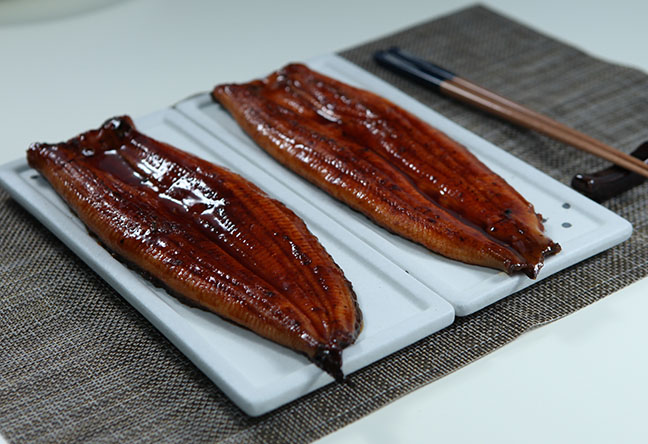
Among Asian eel recipes, Japanese unagi kabayaki is one of the most recognizable. The eel is filleted, grilled, steamed or cooked until tender, then grilled again while being brushed with tare. Repeated glazing gives it a glossy finish and a well-balanced mix of sweetness, salt, and umami.
It is commonly served over steamed rice as unadon or unaju. Restaurants may finish the dish with sansho pepper, shredded nori, pickled ginger, or a light Japanese pepper seasoning. In quick-service settings, sliced kabayaki can be arranged over rice and finished with extra eel sauce.
Frozen kabayaki is useful for restaurants because portions can be thawed, reheated, sliced, and served consistently. Eel bowls, sushi toppings, bento boxes, and donburi are all strong applications for frozen unagi kabayaki.
Hitsumabushi and eel noodle dishes
Hitsumabushi, a specialty associated with Nagoya, provides several serving styles from one preparation. Diners first eat grilled eel over rice, then add condiments such as scallions and wasabi, and finally pour hot dashi or tea over the remaining portion.
This format suits tasting menus and interactive dining particularly well. A restaurant can serve one portion of kabayaki with three small garnishes: spring onion, shredded nori, and wasabi. For the final course, add a light broth instead of more tare.
Eel also works naturally with noodles. Japanese eel noodle soup can feature dashi, soy sauce, shiitake mushrooms, and greens. Our guide to eel recipes for noodle soup offers a practical starting point for this style.
Korean and Chinese flavor directions
Korean restaurants often grill freshwater eel with garlic, ginger, soy sauce, sesame oil, chili, or gochujang-based sauces. The result tends to be more savory and spicy than classic Japanese kabayaki. Serve grilled eel with lettuce wraps, steamed rice, sliced garlic, and a small dish of fermented chili paste.
For a Chinese-inspired dish, braise eel with soy sauce, rice wine, ginger, garlic, and scallions. A little sugar rounds out the sauce, while dried chili brings heat. Eel can also be stir-fried with vegetables, although cooking time should remain brief once the fish is fully cooked.
These preparations offer useful eel menu ideas for restaurants already serving grilled seafood, hot pots, or rice plates. The same raw material can take on a completely different identity through the sauce, garnish, and side dishes.
European eel recipes and traditional preparations
Smoked eel in Northern Europe
Smoked eel is part of long-standing food traditions in the Netherlands, Germany, Denmark, and parts of the United Kingdom. The eel is cured or salted before smoking, resulting in a rich flavor and firm, oily texture.
Serve smoked eel cold or gently warmed with rye bread, boiled potatoes, cucumber, dill, horseradish, or mustard. Because the fish already brings salt and smoke, the accompanying ingredients should stay fresh and restrained. Even a small portion can add depth to a seafood platter without the need for a heavy sauce.
For a modern restaurant plate, pair smoked eel with apple, pickled onion, crème fraîche, and toasted rye. Fruit and vinegar cut through the eel’s richness. This is one of the more adaptable regional eel dishes for cafés, hotel breakfast service, and cold seafood counters.
Italian grilled and stewed eel
In Italy, eel appears in several local preparations, especially in areas near lagoons and waterways. Grilled eel is often seasoned simply with olive oil, garlic, parsley, salt, and pepper. It may also be stewed with tomato, onion, white wine, and herbs.
For an Italian-style menu item, grill eel pieces and serve them with lemon, grilled polenta, or a bitter green salad. A tomato-based stew works well with crusty bread. The sauce should bring enough acidity to balance the eel, rather than covering its flavor completely.
British jellied eels and pie-style dishes
Jellied eels are a traditional British preparation in which eel is cooked in seasoned stock that sets into jelly as it cools. The dish is closely associated with London’s East End. It is less common on everyday menus now, yet it remains a notable example of how European cuisines use the fish.
Another option is an eel pie or seafood pie. Cooked eel can be mixed with onion, parsley, cream, or light stock, then topped with pastry or mashed potato. For contemporary restaurant menus, a small savory pie featuring smoked or grilled eel may be easier to introduce than a traditional serving of jellied eel.
How to adapt regional eel dishes for commercial menus
Begin with the service format rather than the country of inspiration. A rice bowl needs a portion that reheats quickly. A cold appetizer calls for a firm-textured product and a sauce that will not overwhelm delicate garnishes. Stews can make good use of trimmed pieces alongside absorbent ingredients such as potatoes, noodles, or bread.
Five practical eel menu ideas
- Japanese eel rice bowl: serve sliced kabayaki over rice with tare, sansho pepper, and pickled ginger.
- Korean-style grilled eel plate: pair grilled eel with spicy chili sauce, lettuce, garlic, and steamed rice.
- Smoked eel rye toast: add smoked eel, mustard cream, cucumber, dill, and pickled onion.
- Italian eel and polenta: grill eel with garlic and parsley, then serve with lemon and soft polenta.
- Eel noodle soup: use eel with dashi or light seafood broth, noodles, mushrooms, and scallions.
Portion control is important. Eel is rich, so a modest serving with rice, noodles, potatoes, or vegetables can still feel complete. With pre-cooked kabayaki, avoid extended reheating, which can dry the flesh and make the sauce overly thick. Steam, grill, or microwave briefly according to the product specification, then serve at once.
It is also worth testing the sauce separately. Some kitchens use the supplied tare only as a final glaze, while others loosen it with stock for noodles or add citrus, chili, garlic, or vinegar for a new regional profile. Our article on kabayaki sauce explains how the glaze adds sweetness, salt, and umami to a finished dish.
Which flavors pair best with eel?
The best pairings depend on the cooking method, but several flavor groups work reliably:
- Sweet and savory: soy sauce, sugar, mirin-style seasoning, and caramelized onion.
- Fresh and acidic: lemon, yuzu, rice vinegar, apple, cucumber, and pickled vegetables.
- Warm aromatics: ginger, garlic, scallion, parsley, dill, and black pepper.
- Heat: sansho, chili, gochujang, mustard, and horseradish.
- Earthy sides: mushrooms, potatoes, polenta, seaweed, and toasted grains.
For Asian eel recipes, soy-based sauces, sesame, chili, and rice are natural partners. For European eel recipes, common directions include smoke, herbs, mustard, vinegar, potatoes, bread, and citrus. These are not strict rules. A Japanese-style eel sandwich or an Italian-inspired eel rice bowl can both succeed when the flavors are kept in balance.
Choosing eel products for international recipes
Eelpro Co., LTD supplies frozen unagi kabayaki, eel sauce, frozen seafood, and freshwater eels for overseas buyers. Product selection should match the intended preparation. Pre-cooked kabayaki reduces kitchen labor and supports consistent production of rice bowls, sushi, and bento. Plain freshwater eel gives chefs greater control over smoking, grilling, braising, and European-style sauces.
Before placing an order, confirm pack size, glaze specification, fillet format, freezing method, labeling requirements, and destination-market regulations. Eel species and sourcing rules vary by region, so importers should review the documentation required for their market and product category.
FAQ about regional eel recipes
What eel recipes are popular in different countries?
Japan is known for unagi kabayaki, unadon, unaju, and hitsumabushi. Korea uses grilled eel with spicy, savory seasonings. The Netherlands and Germany are associated with smoked eel, while the United Kingdom has traditional jellied eel dishes and eel pies. Italy prepares eel by grilling or stewing it with herbs, tomato, or wine.
How do Asian and European eel recipes differ?
Asian preparations often focus on rice, noodles, soy-based sauces, sesame, chili, ginger, and repeated grilling. European preparations more often highlight smoking, simple grilling, herbs, mustard, vinegar, potatoes, bread, and stews. The distinction is not absolute, but the balance of sauce, garnish, and serving format is usually different.
Which flavors pair best with eel?
Sweet soy, ginger, garlic, scallion, chili, citrus, mustard, horseradish, vinegar, parsley, dill, cucumber, potatoes, and rice all pair well with eel. Rich eel benefits from acidity and fresh garnishes, while smoked eel works especially well with rye, apple, pickled onion, and creamy sauces.
Can frozen unagi kabayaki be used in European eel recipes?
Yes. Slice the cooked kabayaki into smaller portions and use it in salads, rye toast, noodle dishes, or warm grain bowls. Because it already contains tare, reduce additional salt and add acidic or herbal ingredients to create a more European flavor profile.
Build your next eel menu with Eelpro
Regional eel dishes give buyers practical ways to expand a seafood range without changing the core ingredient. Use kabayaki for efficient Japanese and fusion service, or select freshwater eel for custom grilling, smoking, and stewing. Contact Eelpro Co., LTD to discuss frozen unagi kabayaki, eel sauce, freshwater eels, and other frozen seafood for your market.
[xss_clean] { "@context": "https://schema.org", "@type": "FAQPage", "mainEntity": [ { "@type": "Question", "name": "What eel recipes are popular in different countries?", "acceptedAnswer": { "@type": "Answer", "text": "Japan is known for unagi kabayaki, unadon, unaju, and hitsumabushi. Korea uses grilled eel with spicy, savory seasonings. The Netherlands and Germany are associated with smoked eel, while the United Kingdom has traditional jellied eel dishes and eel pies. Italy prepares eel by grilling or stewing it with herbs, tomato, or wine." } }, { "@type": "Question", "name": "How do Asian and European eel recipes differ?", "acceptedAnswer": { "@type": "Answer", "text": "Asian preparations often focus on rice, noodles, soy-based sauces, sesame, chili, ginger, and repeated grilling. European preparations more often highlight smoking, simple grilling, herbs, mustard, vinegar, potatoes, bread, and stews." } }, { "@type": "Question", "name": "Which flavors pair best with eel?", "acceptedAnswer": { "@type": "Answer", "text": "Sweet soy, ginger, garlic, scallion, chili, citrus, mustard, horseradish, vinegar, parsley, dill, cucumber, potatoes, and rice all pair well with eel. Rich eel benefits from acidity and fresh garnishes." } }, { "@type": "Question", "name": "Can frozen unagi kabayaki be used in European eel recipes?", "acceptedAnswer": { "@type": "Answer", "text": "Yes. Slice the cooked kabayaki into smaller portions and use it in salads, rye toast, noodle dishes, or warm grain bowls. Because it already contains tare, reduce additional salt and add acidic or herbal ingredients to create a more European flavor profile." } } ] } [xss_clean]