

Do Eels Have Spines and How to Tell True Eels From Spiny Eels
A fish market label says “spiny eel,” an aquarium shop lists an “eel,” and a recipe calls for unagi. Are they the same kind of animal? Usually, no. The name “eel” is used for several long-bodied fish groups, and visible fin spines are one of the fastest ways to separate them.
The short answer to do eels have spines is this: true eels have a backbone, like other fish, but they are generally not identified by a row of obvious, rigid fin spines. Fish sold or described as “spiny eels” are often members of a different fish family, not true eels at all.

This distinction matters in three settings. Seafood buyers need accurate species and product specifications. Aquarium keepers need to avoid treating unrelated fish as if they have the same care needs. Readers of marine biology content need to know whether “spine” means a backbone, a fin support, or the common name of a fish.
What does “spine” mean when people talk about eels?
First, separate the backbone from fin spines. Nearly all fish called eels have a vertebral column, which is their internal backbone. That is not usually what a fish seller means by “spiny.” In fish identification, the more useful question is whether the animal has visible, stiff supporting elements at the front of its dorsal fin.
True eels belong to the order Anguilliformes. Their long dorsal, anal, and tail fins often look connected or nearly continuous around the rear of the body. They are not generally recognized by a separate row of prominent dorsal fin spines.
By contrast, many fish marketed as spiny eels have a series of individually visible dorsal spines ahead of the softer part of the dorsal fin. This feature gives the group its common name. It is a useful visual clue, but it should not replace a scientific name on a product specification, import document, aquarium label, or research source.
| Term | What it usually means | What to look for | Best use of the clue |
|---|---|---|---|
| Backbone | An internal vertebral column | Not normally visible from outside | Not useful for quick market identification |
| Fin spine | A firm, unsegmented support in a fin | Separate rigid points, often before softer fin tissue | Helpful for identifying many spiny eels |
| Soft fin ray | A more flexible fin support | Fin edge appears more continuous or fan-like | Common in the long fins of true eels |
| “Spiny eel” | A common name, often for non-true-eel fish | Long body plus visible dorsal spines in many species | Requires scientific-name verification |
Practical limit: a close-up photo can be misleading. Fin folds, damaged fins, handling position, juvenile growth stages, and low image quality can hide the features you need. For a purchase decision, use the scientific name and supplier documentation rather than a single visual impression.
When does “spiny eel” mean a non-true-eel group rather than an eel with ordinary fin spines?
“Spiny eel” usually refers to a non-true-eel group when it is used for fish in the family Mastacembelidae. These fish are eel-shaped, but their body form does not make them members of the true eel order. They are commonly associated with visible dorsal spines and are often discussed in freshwater aquarium content.
This is the naming trap. “Eel-shaped” describes appearance. “True eel” describes biological classification. A long body alone does not settle the question.
| Fish group | True eel? | Visible fin spine pattern | Common naming risk |
|---|---|---|---|
| Freshwater and marine true eels | Yes, generally within Anguilliformes | Usually not sold or identified by prominent separate dorsal spines | Assuming every long fish is a spiny eel |
| Spiny eels | No, commonly Mastacembelidae | Many have distinct dorsal spines ahead of the soft dorsal fin | Thinking “spiny” only means a true eel has sharper fins |
| Moray eels | Yes, morays are true eels | Not defined by a row of ordinary visible dorsal spines | Calling all marine eels spiny eels |
| Swamp eels and other eel-shaped fish | Not necessarily | Fin structure varies by group | Using the word eel as a biological identification |
The direct buying rule: if “spiny eel” appears on a listing, ask whether it is a common name for Mastacembelidae or a loose description. The answer affects care information, legal naming, menu language, and product traceability. This rule applies especially to aquarium specimens and whole-fish market listings. It does not reliably identify a cooked, skinned, or cut seafood product.
A useful cold fact: moray eels are true eels, even though they look very different from the freshwater eel used in many Japanese dishes. Meanwhile, a fish sold as a “spiny eel” can be biologically farther from a true eel than its shape suggests.
How can you identify a true eel, spiny eel, or moray from a whole fish?
Use a sequence of checks instead of relying on color or body length. Patterning can vary widely within a group. Fin structure, head shape, and a scientific name are more dependable.
- Read the full label. Look for the scientific name, not only “eel,” “spiny eel,” or “freshwater fish.” A common name can change by country, seller, or language.
- Inspect the dorsal fin area. A line of separate, firm-looking points before the soft dorsal fin supports a spiny-eel identification. A long, low fin fold without obvious individual spines is more consistent with many true eels.
- Check the head and gill area. Morays have a recognizable broad-headed profile and open-mouth appearance in many photographs, but visual identification still has limits across species and life stages.
- Ask what the fish is intended for. Aquarium specimens, food fish, bait fish, and educational displays may all use different common names for different reasons.
- Confirm against records. For seafood, match the scientific name, country of origin, processing form, lot identification, and traceability documents.
When this method fits: it works best for whole fish, clear specimen photographs, and supplier listings that include proper identification. When it does not: it cannot establish taxonomy from a boneless, sauced, roasted, or sliced finished product. At that stage, paperwork is more useful than anatomy.
What are the most common mistakes when comparing eel-shaped fish?
The biggest mistake is treating a common name as a species name. That can lead to unsuitable aquarium information, incorrect menu claims, or inconsistent procurement records. Avoid these errors before you make a selection.
- Mistake: “All eel-shaped fish are true eels.”
Why it fails: body shape appears in several unrelated or more distantly related groups. Use classification and fin anatomy instead. - Mistake: “Spiny eel means a dangerous eel.”
Why it fails: the name usually refers to dorsal fin structure, not a universal handling or safety statement. Species-specific guidance is still needed. - Mistake: “Morays are spiny eels.”
Why it fails: morays are true eels, but they are not normally grouped with Mastacembelidae spiny eels. - Mistake: using food photos to confirm species.
Why it fails: skinning, deboning, roasting, sauce, and portion cutting remove the identifying features. Request product records instead. - Mistake: assuming unagi means any fish called eel.
Why it fails: culinary naming and biological naming serve different purposes. A buyer should still confirm the supplied species and product form.
For home cooks, this distinction helps prevent a recipe search from becoming confusing. A grilled eel rice bowl, sushi topping, or noodle soup guide will usually refer to a food ingredient category and preparation style, not an aquarium “spiny eel.” For preparation ideas based on finished eel products, see our how to cook eel: easy methods and tips.
What should food buyers verify when an eel product name is unclear?
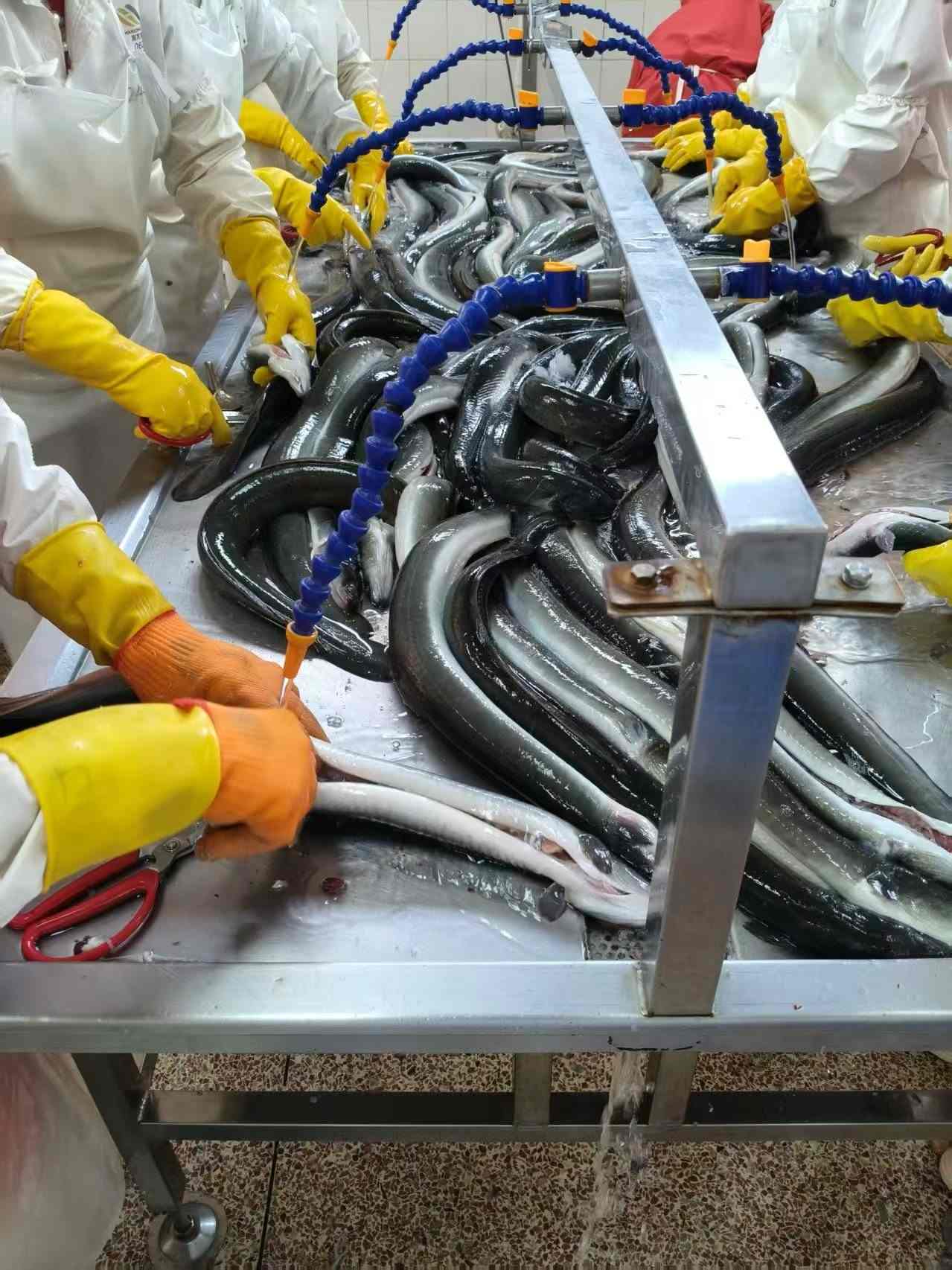
For processed food, verify documentation first and anatomy second. This is the right approach for frozen roasted eel, marinated portions, sliced products, and sauce-packed items because the fish’s diagnostic fins are no longer available for inspection.
Use this buyer checklist before approving a new item:
- Scientific species name: Ask for the precise species identification shown in the supplier’s records.
- Product style: Confirm whether the item is whole, filleted, boneless, cut, sliced, skewered, or roasted.
- Ingredient declaration: Review sauce, seasoning, allergens, and additives for the intended market.
- Traceability information: Match the production lot and origin details to the shipment documentation.
- Inspection and food-safety records: Confirm that records fit the destination market and buyer program.
- Sample review: Evaluate flavor, cut size, glaze coverage, and packaging format against the agreed product specification.
At Eelpro, our food products are supported by full-chain traceability from registered farming bases through processing and shipment. We work with around 20 customs-registered eel farming bases covering more than 2,150 mu, and our in-house laboratory and metal detectors support quality checks at key production points. These controls are relevant for a food buyer who needs records behind a finished product, rather than a visual guess from an eel-shaped fillet.
Our facility holds ISO 22000:2018, HACCP, and HALAL certification, plus export food producer registration. For buyers sourcing finished roasted products, our two production lines have an annual finished-goods capacity of 4,000 tons, with a 1,000-ton cold storage facility supporting storage and cold-chain handling.
That does not mean a certification alone identifies a species. The correct approach is to combine food-safety documentation with the product’s species declaration, lot information, and agreed specification. This is particularly relevant for importers buying unagi kabayaki product for restaurant, retail, or distributor channels.
Which name should appear on a menu, product page, or educational label?
Use the name that matches the purpose, then add the scientific identity when accuracy matters. A menu may use a familiar culinary term. An import specification needs the scientific name and processing details. An aquarium listing should use a common name plus the proper taxonomic identity and care category.
| Use case | Recommended naming approach | Why it works |
|---|---|---|
| Restaurant menu | Use the accepted culinary name, with an ingredient description where needed | Customers need a clear dish description, not a taxonomy lesson |
| Seafood procurement sheet | Use common name, scientific name, product form, origin, and packing details | Reduces confusion between different eel-shaped fish |
| Aquarium label | Use common name and scientific name together | Helps prevent care advice from being transferred between unrelated groups |
| Educational article | Define true eel, spiny eel, and moray before comparing them | Removes the naming trap early |
For foodservice buyers, familiar menu wording can sit alongside accurate procurement language. A restaurant may list grilled unagi, while the back-office specification records the exact product details, required documents, packaging, and approved supplier. Sauce should be specified separately as well; product buyers can review our eel sauce product page when a prepared eel item requires unagi tare.
Eelpro supplies frozen eel products to markets including Japan, the United States, Germany, Poland, Australia, Indonesia, and Southeast Asia. Japanese restaurant chains are among the established kabayaki supply cases. Still, every buyer should confirm the applicable species declaration, packaging format, and destination-market requirements for their own order.
If you need a species-linked specification for frozen eel products, request a quote or sample review from Eelpro before approving your next purchase order.