





Does an Eel Have a Backbone? Here's the Anatomy Answer Seafood Buyers Need
Someone at the sushi counter once asked me, half-joking, whether unagi was "basically a snake." It's not. And yes, an eel does have a backbone — a full column of vertebrae running from head to tail, just like salmon, tuna, or any other bony fish. That single fact shapes how eel gets processed, cut, and packed before it ever reaches your kitchen or menu.
This matters more than it sounds. Buyers sourcing frozen unagi kabayaki or raw eel for foodservice need to understand bone structure — it affects yield, cutting specs, and how much back-of-house labor a product saves you.
The Short Answer: Eels Are Vertebrates With a Full Spinal Column
True eels belong to the order Anguilliformes, a group of roughly 800 species that includes the freshwater eels used in kabayaki production. They are vertebrates, meaning they have a segmented spine made of individual vertebrae, a skull, and a nervous system protected by bone rather than cartilage.
Here's what that spine actually looks like in a processed eel:
- A central vertebral column running the full length of the body, roughly 100–120 vertebrae depending on species and size.
- Fine intermuscular bones branching off the spine — these are the small "pin bones" that require careful removal during deboning.
- A cartilage-free skeleton — unlike sharks or rays, eel bones are true bone, which is why X-ray and metal-detection checks matter at quality control points.
So when someone asks does an eel have a backbone, the anatomical answer is unambiguous. What's less obvious is why that question even comes up — and that's where hagfish enter the picture.
True Eels vs Eel-Shaped Hagfish: Why One Has Vertebrae and the Other Doesn't
Hagfish look like eels. Long, slippery, snake-shaped, sometimes even labeled "slime eels" at markets. But biologically, they are almost nothing alike. Hagfish belong to a much older lineage of jawless fish, and they lack a true vertebral column entirely. Instead of a spine, they have a flexible rod of cartilage called a notochord — a structure that in most vertebrates only exists briefly during embryo development before being replaced by bone.
This is the core biological split: eels developed a bony spine through normal vertebrate evolution, while hagfish retained a more ancient, cartilage-only body plan. Here's a direct comparison:
| Feature | True Eel (Anguilliformes) | Hagfish (Myxini) |
|---|---|---|
| Backbone / vertebrae | Yes — full bony vertebral column | No — cartilage notochord only |
| Jaw | True hinged jaw with teeth | No true jaw; rasping tooth-like plates |
| Skeleton material | Bone | Cartilage |
| Skin | Scaled, slime-coated | Scaleless, heavy slime production |
| Culinary use | Kabayaki, unagi don, grilled fillets | Rarely eaten fresh; occasionally dried or used in leather products |
| Classification | Bony fish (Actinopterygii) | Jawless fish (Agnatha) |
Cold-knowledge moment: hagfish can tie their own bodies into a knot and slide the knot down their length — a trick they use to escape predators and to scrape off their own slime. True eels can't do this because a bony spine simply doesn't bend that way.
Why Backbone Structure Matters When Sourcing Frozen Eel Products
For a home cook, the eel-vs-hagfish distinction is trivia. For a foodservice buyer, it's operational. Because eels have a true bony skeleton with fine pin bones, deboning quality directly affects your kitchen's labor cost and plate consistency.
A few practical points worth knowing before placing an order:
- Boneless kabayaki cuts reduce back-of-house prep. If your kitchen doesn't have staff trained for eel deboning, request pre-deboned fillets rather than whole-body cuts.
- Cutting specs should match your menu format. Shredding, dicing, strip-cutting, chunk-cutting, 3-section cut, and sushi slices each serve different plating needs — confirm the spec before confirming your order.
- Bone fragments are a food-safety control point, not just a quality issue. Reliable suppliers run metal detectors at critical control points precisely because fine bone and processing equipment fragments both need to be caught before packing.
If you're comparing suppliers, ask directly how they verify bone removal. A supplier that can explain their process — not just claim "boneless" — is the one worth trusting with a larger order. Our own frozen eel supplier operation runs this check as a standard step, not an add-on.
Common Mistakes Buyers Make When Judging Eel Quality by Bone Structure
- Assuming "boneless" means zero pin bones. Even well-processed fillets can retain a few fine bones near the tail section — ask for the supplier's tolerance rate, not just the label.
- Confusing hagfish products with true eel. Some markets sell "eel-style" hagfish skin products at lower prices; these are not interchangeable with true Anguilliformes eel in flavor, texture, or nutrition.
- Skipping a sample order before bulk purchase. Bone content and cutting consistency vary by batch and by cutting method — a sample run confirms fit before you commit to volume.
- Overlooking traceability documentation. Backbone-related deboning quality is only as consistent as the farming and processing chain behind it — ask whether the eel can be traced back to a registered farming base.
How Roasting and Deboning Work Together in Kabayaki Production
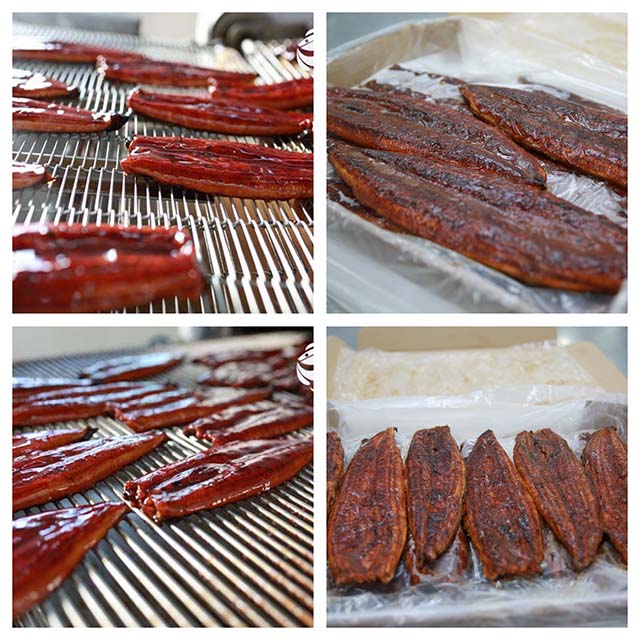
Kabayaki relies on a fully bony but carefully deboned eel body — the spine and pin bones are removed before the fillet goes through the soy-sauce roasting stages. Our production applies a 4-layer soy-sauce coating process with temperature-controlled steps, moving from the "white-roasted" stage through the first to fourth sauce coatings. This is only possible because the fillet has already been cleaned of its vertebral structure — a bone-in fillet won't hold sauce evenly or grill consistently.
The raw material itself comes from eel farming bases under customs registration, which supports full-chain traceability from farm through processing. Quality checks continue in our in-house laboratory, where residue and microbiological testing happen before any batch ships. For readers curious about the sauce side of kabayaki, our kabayaki sauce article covers how the coating process builds flavor layer by layer.
Buyer's Checklist Before Ordering Frozen Eel or Kabayaki
- Confirm the species — true freshwater eel, not hagfish or an eel-shaped substitute.
- Specify cutting format: whole, sushi slice, dice, or 3-section cut.
- Ask for pin-bone tolerance data, not just a "boneless" claim.
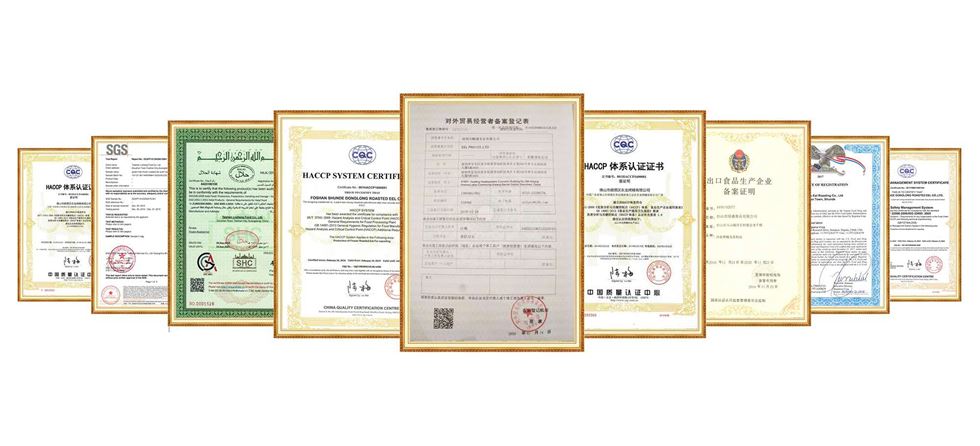
- Request certification proof — ISO 22000, HACCP, HALAL, and export food producer registration where relevant to your market.
- Check cold-chain capacity if ordering in volume; storage stability affects texture after thawing.
- Order a sample batch first, especially for a new cutting spec or packaging format.
This checklist applies mainly to bulk or repeat foodservice orders. For a one-off retail purchase, certification review and a small trial pack are usually enough — full traceability audits matter more once volume and shelf life become a business risk, not a curiosity.
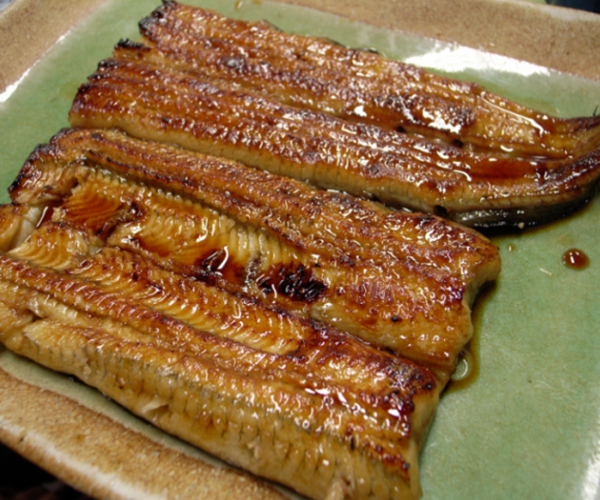
So, does an eel have a backbone that affects how it cooks, cuts, and ships? Yes, on every count. That bony structure is exactly why deboning skill, cutting precision, and lab-verified quality control separate a good kabayaki supplier from an average one. If you want to see how bone-free cuts perform on the grill, our unagi kabayaki line and eel sauce pairing are a good place to start comparing specs.
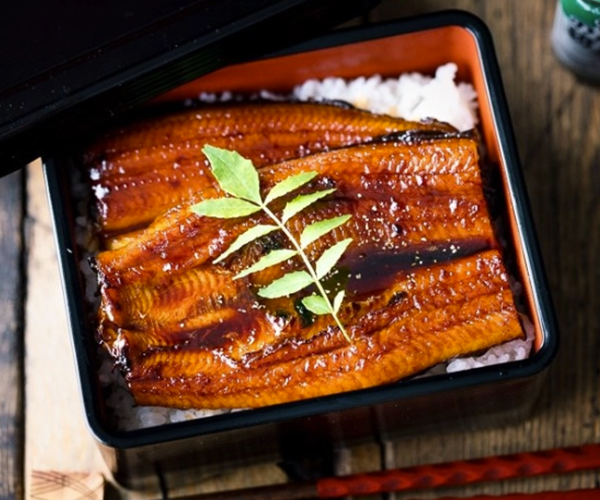
Want cutting specs, a sample pack, or a spec sheet for a specific kabayaki format? Send us your target spec and order volume, and we'll walk you through what fits your kitchen or retail line.

 WhatsApp
 sales@chinaeels.com
 +8619937922411