





What is Eel in Japanese and How It Affects Your Import Order
When sourcing frozen eel for international markets, you will encounter multiple Japanese terms: unagi, anago, kabayaki, shiroyaki. These are not interchangeable. Choosing the wrong product can lead to menu inconsistencies, unexpected flavor profiles, and sourcing errors that impact your bottom line. Understanding what is eel in Japanese is the first step to specifying a product that meets your customers' expectations for taste, texture, and quality.
As a quality specialist with over a decade in seafood export, I've guided dozens of clients through the complexities of import compliance. The most successful importers are those who understand the fundamental differences in species and preparation. This knowledge allows them to write precise purchase orders, reduce supply chain risks, and deliver a consistent, high-quality product to their end-users, from restaurant chains in Japan to foodservice distributors in the European Union.
Unagi vs. Anago, Kabayaki vs. Shiroyaki: A Buyer's Guide to Japanese Eel
Confusing these terms is a common mistake for new buyers. An order for "Japanese eel" is too vague and can result in receiving a product that is entirely wrong for your intended application, like a sushi restaurant or a high-end donburi chain. This breakdown clarifies the four most important terms you'll encounter.
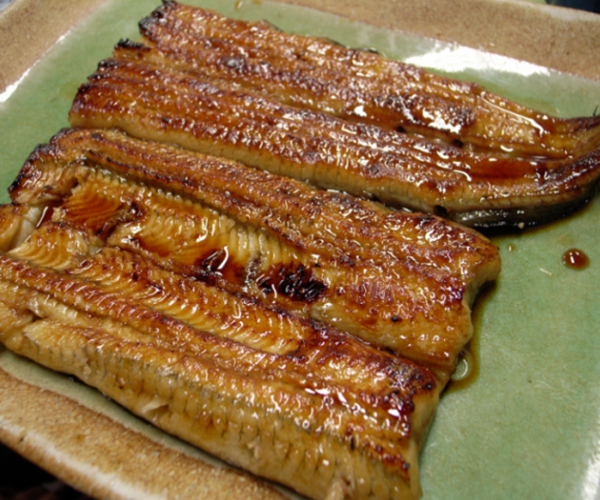
The primary distinction is between species: unagi (freshwater eel) and anago (saltwater conger eel). The secondary distinction is preparation style: kabayaki (grilled with a sweet soy glaze) and shiroyaki (grilled plain).
| Term | Type | Environment | Flavor & Texture Profile | Common Application |
|---|---|---|---|---|
| Unagi (うなぎ) | Species | Freshwater | Rich, fatty, bold flavor. Soft, tender texture that melts in the mouth. The high fat content crisps up well when grilled. | The classic choice for unadon (eel rice bowls) and other premium dishes where the eel is the star. This is the species we farm and process at Eelpro. |
| Anago (あなご) | Species | Saltwater (Conger Eel) | Leaner, less fatty. Subtly sweet, delicate, and lighter flavor. Fluffy, very soft texture. | Often used for tempura, simmered dishes (nimono), and certain types of eel sushi rolls where a less overpowering flavor is desired. |
| Kabayaki (蒲焼) | Preparation | N/A (Applies to Unagi) | Sweet and savory. The eel is grilled, steamed to remove excess fat, then basted multiple times with a sweet soy-based sauce (tare) and grilled again. | The most popular preparation for unagi. Our unagi kabayaki is the flagship product for restaurant chains and foodservice. |
| Shiroyaki (白焼) | Preparation | N/A (Applies to Unagi or Anago) | Pure, unadulterated eel flavor. The eel is grilled plain with only salt, allowing its natural taste to shine. Often served with wasabi and soy sauce on the side. | Favored by purists. It highlights the pristine quality of the raw material, as there is no sauce to mask imperfections. |
For most international B2B buyers, especially those supplying Japanese restaurants and foodservice channels in the US, Europe, and Australia, the target product is frozen unagi kabayaki. Its rich, satisfying flavor profile has broad appeal and is central to many popular Japanese dishes.
From Farm to Freezer: Verifying Quality for Export-Grade Unagi
Sourcing high-quality unagi goes beyond just specifying the right name. For importers, ensuring food safety, traceability, and consistent supply is paramount. Without proper verification, you risk shipment rejections, customs delays, and damage to your brand's reputation. At Eelpro, we've built our entire operation around mitigating these risks for our B2B partners.
I've personally overseen audits and compliance checks for clients in demanding markets like Japan and Germany. The key is a fully controlled supply chain. Our process begins at our ~20 customs-registered eel farms, covering over 2,150 mu. This allows us to implement full-chain traceability, tracking each batch from farming registration and targeted sampling all the way to final shipment. We supply over 5,000 tons of high-quality raw eel annually to our processing facility.
Buyer's Quality Verification Checklist
When evaluating a frozen eel supplier, use this checklist to ensure they meet international standards:
- Food Safety Certifications: Does the facility hold current ISO 22000:2018 and HACCP certifications? These are non-negotiable for ensuring a systematic approach to food safety. We also hold HALAL certification to serve specific market needs, like those in Indonesia and Southeast Asia.
- Export Registration: Is the supplier registered as an Export Food Producer? This is a critical government credential (our SC License is No. SC11135062401122) that confirms their eligibility to export.
- Residue & Microbiological Testing: Can the supplier provide documentation showing their products meet the strict veterinary drug residue and microbiological standards of your target market (e.g., Japan, US, EU)? Our in-house professional eel lab performs rigorous testing to prevent trade compliance issues.
- Traceability System: Is there a clear system for tracing the product back to its farm of origin? This is essential for accountability and quality control.
- Cold Chain Management: Does the supplier have adequate cold storage capacity? Our 1,000-ton cold storage facility ensures product integrity from production to loading, maintaining a stable cold chain.
How Processing and Customization Impact Your Final Product
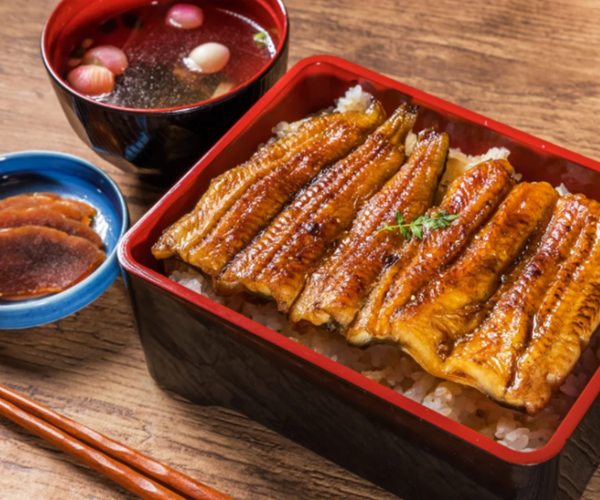
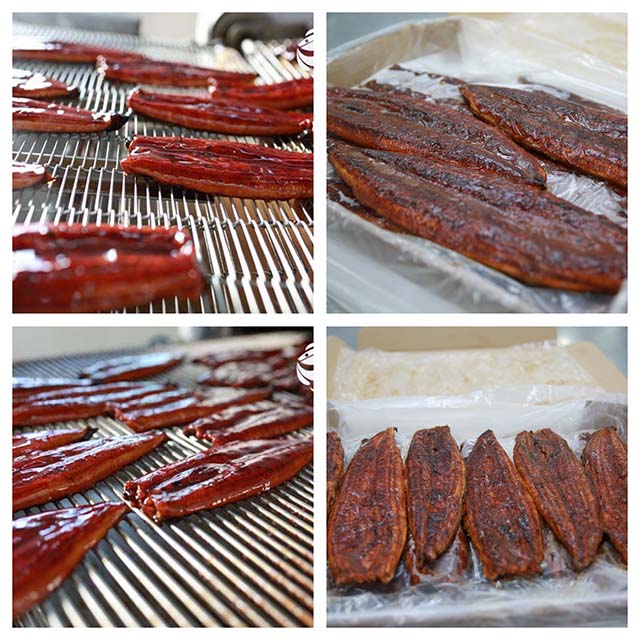
The final quality of frozen unagi kabayaki is determined during processing. The taste, texture, and even fat content are refined through precise, repeatable steps. Our export-grade roasting process is a perfect example. We use a proprietary 4-layer soy sauce coating technique, with each layer applied at a specific, controlled temperature. This builds a deep, complex flavor that isn't just painted on top. We've even established internal color standards for 'white-roasted color' and each of the four soy-sauce coatings to guarantee consistency across our 4,000-ton annual production capacity.
Furthermore, our patented technologies for low-fat roasted eel processing and deodorizing equipment address common consumer complaints about eel being overly greasy or having a "muddy" taste. These technical advantages result in a cleaner, more refined product that performs well in professional kitchens.
Standardization for Foodservice Efficiency
For catering chains and large-scale foodservice clients, back-of-house efficiency is critical. Raw, unprocessed eel requires skilled labor to debone and prepare, adding to operational costs. Our value-added processing directly addresses this:
- Boneless & Deboned: All our eel products are prepared to be boneless, eliminating a time-consuming and difficult step for chefs.
- Standardized Cuts: We offer custom cutting specifications to match menu requirements. This includes shredding, dicing, strip-cutting, chunk-cutting, the traditional 3-section cut, and precise sushi slices. Receiving pre-portioned product minimizes waste and prep time.
- Ready-to-Heat Packaging: Our products are quick-frozen and packaged (including skin-packaging and gift box options) to be ready-to-heat, allowing for fast and consistent meal preparation during busy service hours.
Understanding the nuances of what is eel in Japanese—from the species in the water to the sauce on the grill—is essential for making informed purchasing decisions. By partnering with a certified and vertically integrated supplier like Eelpro, importers can secure a reliable supply of high-quality unagi kabayaki eel that meets the exacting standards of international markets.
For details on our product specifications or to discuss how we can meet the unique compliance needs of your market, please contact our export team for a consultation or to request a product sample.

 WhatsApp
 sales@chinaeels.com
 +8619937922411