

Does an Eel Have a Backbone? Vertebrae Explained
Ever bitten into a piece of grilled unagi and hit a tiny bone you weren't expecting? That question — does an eel have a backbone — comes up more than you'd think, especially among buyers sourcing frozen kabayaki for restaurant menus. The short answer: yes, an eel has a true bony backbone made of vertebrae, not a soft cartilage rod like some other long, slippery animals it gets confused with. Understanding that difference matters if you're comparing suppliers, checking deboning quality, or just trying to figure out why some eel fillets are cleaner than others.
Yes, Eels Have a Backbone — Here's What It Actually Looks Like
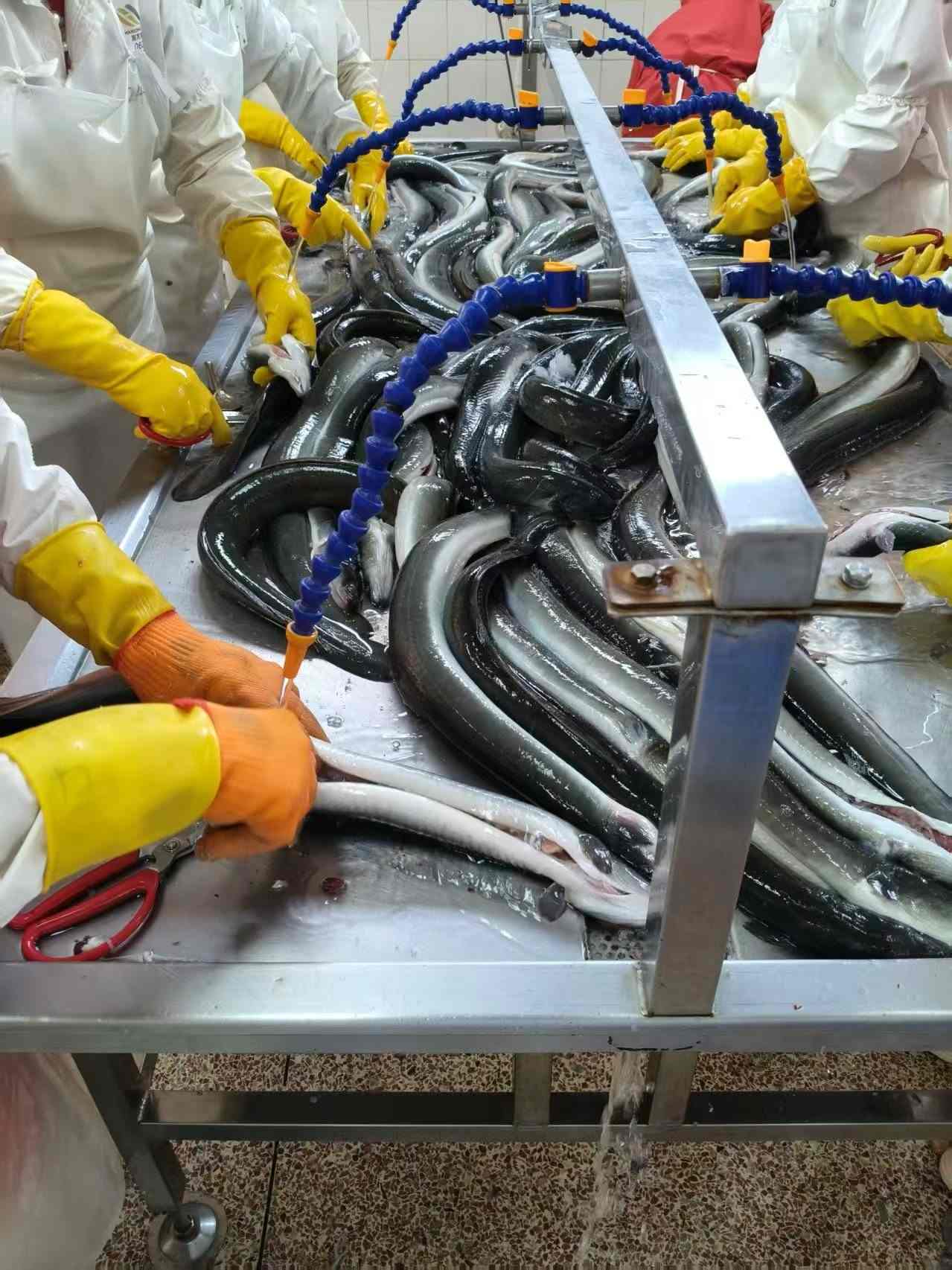
An eel is a bony fish, classified under Actinopterygii, the ray-finned fish group. That means its skeleton is built from calcified bone, not cartilage. A single freshwater eel (genus Anguilla) can have somewhere around 100 to 120 vertebrae running from just behind the skull to the tip of the tail. Compare that to a typical grouper or salmon, which usually carries far fewer — often under 40. The eel's body is basically a long chain of small vertebrae, each with thin rib bones branching off, which is exactly why deboning an eel is more labor-intensive than deboning a flatter, shorter fish.
This high vertebra count is also why whole-eel processing takes real skill. Every extra joint is another point where a bone fragment can be left behind if the cutting technician rushes. For buyers, this is the anatomical reason "boneless eel fillet" is a genuine value-add on a spec sheet — not marketing fluff.
Eel Backbone vs. Cartilaginous Eel-Shaped Animals: A Side-by-Side Comparison
Here's where a lot of confusion starts. Several animals look like eels — long, cylindrical, slippery — but have completely different internal support structures. Some are true bony fish like the eel. Others aren't fish at all, and their "spine" is nothing like a vertebral column.
| Animal | Support Structure | Material | Practical Implication |
|---|---|---|---|
| Freshwater eel (Anguilla) | True vertebral column (~100-120 vertebrae) | Calcified bone | Requires deboning; bone fragments possible if processing is careless |
| Lamprey (often called "eel") | Notochord with cartilaginous arches, no true vertebrae | Cartilage | Not a bony fish; different regulatory and culinary category |
| Hagfish | Notochord only, no vertebrae at all | Cartilage/fibrous | Not classified as a true fish; rarely used in kabayaki-style products |
| Moray eel | True vertebral column, similar to freshwater eel | Calcified bone | Bony fish, but different species, texture, and export use than Anguilla |
| Electric eel | True vertebral column | Calcified bone | Bony fish, but not a food-trade species — different family entirely |
The practical takeaway for a buyer: if a product is labeled "eel" but comes from a lamprey or hagfish, it's not the same category biologically or commercially. Only true bony eels like Anguilla species carry the vertebral structure that requires the deboning process kabayaki production is known for. If your supplier can't explain which species is in the bag, that's a red flag worth chasing before you sign a purchase order.
Why Vertebra Count Affects Cutting Specs and Product Quality
Once you know an eel's backbone runs the full length of its body with over a hundred small vertebrae, the next question is practical: how does that affect the product you're actually buying? Here's what each cutting decision actually controls, and what happens if a buyer skips the detail.
- Whole butterfly cut (bone-in, opened flat): Cheaper to produce, but the buyer's kitchen staff has to remove the fine rib bones before serving. Fits budget-driven wholesale, not premium foodservice.
- Deboned fillet: Central vertebral column and rib bones removed by hand or machine. Reduces back-of-house prep time significantly. If a supplier skips quality checks here, thin bone slivers near the belly area are the most common miss.
- Cut pieces (chunk, strip, dice, 3-section cut): Bone-free by spec, but only if the original deboning was done correctly. Cutting a poorly deboned fillet just spreads bone fragments across more pieces.
- Sushi slices: Demand the cleanest deboning of all, since thin slices expose any missed bone immediately on the plate.
Get this wrong, and the consequences aren't abstract. A restaurant chain serving unagi don with a stray bone risks a customer complaint or, worse, a choking hazard claim. A retailer packaging pre-sliced eel for grab-and-go meals risks returns and negative reviews. This is exactly why metal detectors and trained quality-control staff at critical cutting points aren't optional line items — they're where bone-related defects actually get caught before shipment.
How to Check Deboning Quality Before You Commit to an Order
You can't dissect every case in a container, but you can build a short checklist into your supplier qualification process. Use this before signing off on a bulk order:
- Ask for the vertebra-removal method. Manual deboning by trained staff tends to catch fine rib bones better than fully automated lines on small-diameter eel.
- Request a sample cut in the exact spec you plan to order — whole kabayaki, cut pieces, or sushi slices — not just a generic fillet.
- Ask whether metal detection is applied at the cutting stage, not just at final packaging. Bone fragments and stray metal are different risks, but both should be screened.
- Confirm species identification (Anguilla vs. other eel-shaped species) on the certificate of analysis or origin documentation.
- Check the SC production license and food safety certifications tied to the specific facility, not just the parent company name.
This process fits best for import-scale orders, typically container quantities, where a single bone complaint can affect an entire batch's reputation. It matters less for small retail test orders, where sample-by-sample inspection on your end is more practical anyway.
Common Mistakes Buyers Make When Sourcing Boneless Eel
- Assuming "boneless" always means zero bones. Industry-grade deboning targets the main vertebral column and larger rib bones; ultra-fine bone slivers can occasionally remain even in good product. Ask about defect rate tolerances, not just the word "boneless."
- Confusing species names. "Eel" is used loosely for lamprey, moray, and even electric eel in casual conversation. For food import, confirm you're buying freshwater eel (Anguilla), the species used in kabayaki and unagi tare production.
- Skipping the cutting-spec conversation. Whole roast, cut pieces, and sushi slices carry different bone-risk profiles. Don't assume one spec's quality control applies to another.
- Ignoring cold-chain continuity. Bone quality control means nothing if the product thaws and refreezes in transit. A stable cold-chain — from a facility with dedicated cold storage capacity — protects both texture and food safety.
From Anatomy to the Plate: Why This Matters for Frozen Kabayaki Buyers
Knowing the eel has a real bony spine isn't just trivia — it explains every step between a live eel and the unagi kabayaki eel product landed at your dock. The roasting process itself, including the layered soy-sauce coating steps used in export-grade production, only works well once the vertebral column and rib bones are fully removed and the fillet lies flat and even. Uneven deboning leads to uneven roasting, and uneven roasting leads to inconsistent color and texture across a batch — something quality-control teams check for at every stage.
If you're sourcing for a restaurant chain or retail line, it helps to look at the whole picture: species confirmation, deboning method, cutting spec, and cold-chain handling. A supplier's eel lab of eelpro co., ltd and metal-detection checkpoints are there specifically to catch what a quick visual check on your end can't. For teams building out a menu, it's also worth reading how the kabayaki sauce pairs with different cutting formats before finalizing your order spec.
For home cooks and smaller foodservice operators exploring formats beyond the classic roasted fillet, it's worth browsing how eel gets used in other dishes — from eel noodle soup to sushi-style presentations — to understand which bone-free cut actually suits your menu.
Request a Spec Sheet Before You Place Your Next Order
If you're comparing eel suppliers and want clarity on deboning method, cutting specs, or cold-chain handling, ask for a product spec sheet and sample before committing to volume. It's a small step that avoids a much bigger headache once the container lands.